128 Senior Officers on the Move: IGP Disu's Reshuffle Signals a Police Force Preparing for a New Era
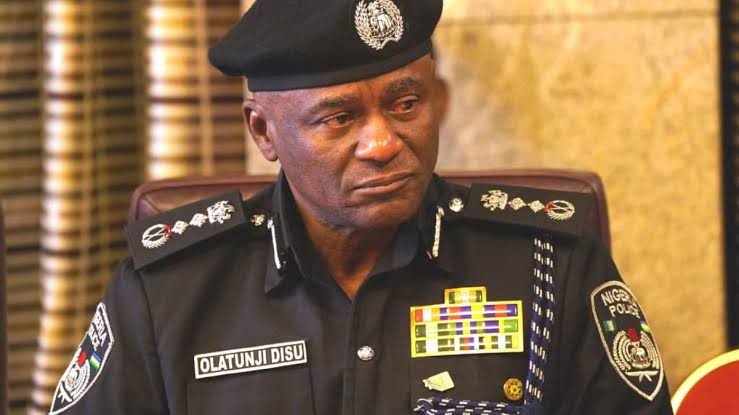
The Inspector General of Police, Olatunji Disu, has ordered the redeployment of 128 senior officers of the Nigeria Police Force. The group includes 22 Commissioners of Police and 106 Assistant Commissioners of Police, posted to departments, formations and commands across the country. The postings were contained in two police wireless messages dated November 16, 2026. They affect key operational, investigative, administrative and specialized units of the force. One of the messages stated: "The IGP has ordered the posting of the following CPs as indicated against their names." The reshuffle comes at a pivotal moment. All 36 state Houses of Assembly have just approved the constitutional amendment to establish state police, and the bill now awaits President Bola Tinubu's assent. Nigeria also continues to face insurgency in the northeast, banditry and mass kidnappings in the northwest, communal violence in the Middle Belt and unrest in the southeast. Large-scale postings are routine in the Nigeria Police Force, but their timing and scale often reveal an Inspector General's priorities. This one suggests a leadership focused on strengthening operational command, sharpening investigations and positioning the federal force for a future in which it will share the policing landscape with state forces. The true test will be whether new commanders deliver measurable gains in public safety, discipline and public trust.
Two wireless messages, both dated November 16, 2026, have set in motion one of the most significant leadership changes inside the Nigeria Police Force this year.
The Inspector General of Police, Olatunji Disu, has ordered the redeployment of 128 senior officers. The list includes 22 Commissioners of Police and 106 Assistant Commissioners of Police. They are headed to departments, formations and commands across the country, touching nearly every part of the force's structure. Operational units, investigative departments, administrative offices and specialized formations are all affected.
The language of the order was brief and formal. According to one of the messages, "The IGP has ordered the posting of the following CPs as indicated against their names."
Behind that routine phrasing lies a decision with real consequences. Commissioners of Police lead state commands and major departments. Assistant Commissioners run area commands, head key sections and manage the daily work of policing. When more than 100 officers at these levels change roles at once, the force's operational leadership is effectively being redrawn.
The timing makes the move even more notable. Days earlier, all 36 state Houses of Assembly approved the constitutional amendment to establish state police. Nigeria now stands at the edge of the biggest change to its policing structure in more than half a century. The federal force that Disu leads is about to share its mandate with new state forces for the first time since the late 1960s.
In that context, this reshuffle reads as more than an administrative exercise. It looks like a force preparing itself for a new era.
What the Redeployment Covers
The scale of the postings stands out first.
Twenty-two Commissioners of Police represent a substantial share of the officers who head state commands and senior departments at Force Headquarters. One hundred and six Assistant Commissioners represent a much broader layer of middle and senior management. Together, the 128 officers form a significant part of the leadership that turns policy from Abuja into action on the ground.
The wireless messages indicate that the postings affect four broad categories of police work.
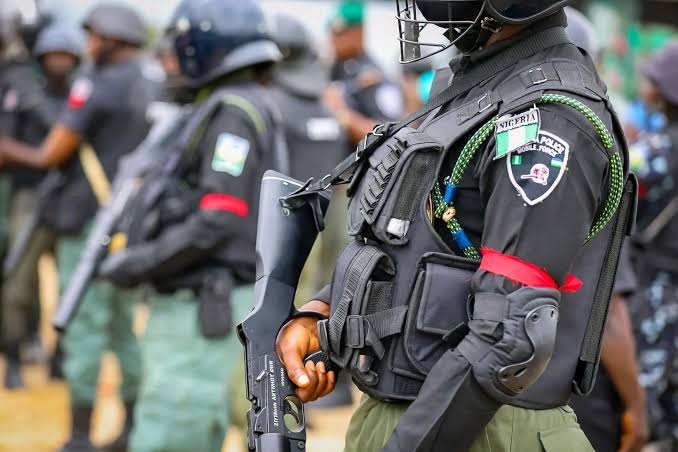
Operational units handle patrols, crime prevention, public order and rapid response. These are the units most visible to ordinary Nigerians, from highway patrols to tactical teams deployed during crises.
Investigative units handle criminal intelligence, detective work and the prosecution of serious crimes. In Nigeria, that includes the Force Criminal Investigation Department and its specialized sections dealing with homicide, kidnapping, fraud, cybercrime and other offenses.
Administrative units manage personnel, logistics, finance, training and planning. They rarely make headlines, but they determine whether officers in the field are paid, equipped and supported.
Specialized units cover areas that require particular expertise. These include counterterrorism, explosive ordnance disposal, marine policing, protection of critical assets and other dedicated formations.
A reshuffle that reaches across all four areas suggests a deliberate, force-wide review rather than a narrow response to a single problem.
Why Commissioners and ACPs Matter
To understand the weight of this redeployment, it helps to understand the ranks involved.
The Nigeria Police Force is organized in a clear hierarchy. At the top is the Inspector General, followed by Deputy Inspectors General, who oversee major departments, and Assistant Inspectors General, who oversee zonal commands and senior portfolios. Below them are Commissioners of Police, then Deputy Commissioners, then Assistant Commissioners.
Commissioners of Police are among the most consequential officers in the system. A CP posted to a state command is the most senior police officer in that state. He or she directs operations, coordinates with the state government and other security agencies, and is held responsible for crime trends and public order. CPs also head important departments and units at Force Headquarters.
Assistant Commissioners occupy a crucial middle layer. Many serve as area commanders, overseeing several divisional police stations across a part of a state. Others head departments within state commands, such as operations, intelligence or criminal investigation. Some lead specialized squads or serve as senior staff officers.
In practical terms, ACPs are often the officers who decide how resources are deployed day to day. They manage the commanders of divisions, respond to emergencies and sit at the point where strategy meets reality. Moving 106 of them at once reshapes the operational fabric of the force across many states.
A Routine Practice With Real Significance
Large-scale postings are not unusual in the Nigeria Police Force. Every Inspector General orders them, often several times a year.
Postings happen for many reasons. Officers are promoted and need to fill new roles. Others retire, creating vacancies. Some commanders reach the end of a typical tour of duty in a state. Others are moved because of performance concerns, security needs or strategic priorities. New Inspectors General also tend to reshape leadership to reflect their own vision for the force.
Previous Inspectors General have regularly announced redeployments involving Assistant Inspectors General, Commissioners and other senior officers. Such moves have become a familiar feature of police administration in Nigeria.
Yet routine does not mean insignificant. Postings are one of the clearest tools an Inspector General has to shape the force. They determine who commands which states, who leads which investigations and who controls which resources. They can reward performance, address failures and place trusted officers in sensitive positions.
Observers often read reshuffles as signals. A wave of new commissioners in states facing rising insecurity suggests a push for fresh operational leadership. Changes in investigative departments may reflect a desire to improve case outcomes or clean up units facing criticism. Movements in administrative and logistics roles may point to reforms in how the force manages money, equipment and personnel.
The scale and breadth of this redeployment suggest that Disu is using that tool deliberately.
IGP Disu's Leadership Approach
Olatunji Disu brings an operational background to the force's top office.
He is widely known for his years in frontline command roles, including leading the Lagos State Police Command's Rapid Response Squad. That unit became one of the most visible tactical formations in Nigeria's largest city. He later headed the Intelligence Response Team, a specialized unit focused on high-profile criminal investigations, including kidnapping and armed robbery cases.
That record has shaped perceptions of his leadership. Officers and observers generally associate him with a focus on rapid response, intelligence-led operations and visible results.
His tenure as Inspector General has reflected that orientation. Disu has ordered major redeployments of Assistant Inspectors General and Commissioners in earlier reorganizations. He has directed the deployment of additional personnel and air support to communities facing attacks. He has also taken a public role in the state police debate. He inaugurated an implementation committee tied to the introduction of state policing and reassured officers that state police will not replace the federal force.
Those actions point to a leader trying to do two things at once. The first is to respond to immediate security threats with stronger operational capacity. The second is to prepare the federal force for structural change without losing its role, morale or relevance.
The latest redeployment fits both goals. It reshapes operational leadership while placing officers in positions that will matter as the policing landscape changes.
The State Police Context
The redeployment cannot be separated from the constitutional shift now underway.
All 36 state Houses of Assembly have approved the proposed amendment to establish state police. The Clerk to the National Assembly, Kamoru Ogunlana, described the unanimous endorsement as an unprecedented demonstration of cooperation between the federal and state legislatures. The bill far exceeded the requirement of Section 9(2) of the 1999 Constitution, which calls for approval by at least 24 states. It now awaits President Tinubu's assent.
For the Nigeria Police Force, the implications are profound. Since the abolition of local and Native Authority police forces in the late 1960s and early 1970s, the federal force has held a monopoly on policing. That monopoly is about to end.
State police forces, once established, will take on many of the local crime prevention and public order roles currently handled by federal officers. The federal force is likely to focus more heavily on national and interstate crimes, terrorism, organized crime, protection of federal institutions and coordination across states.
That transition will require careful leadership. Commissioners of Police in state commands will become the federal force's main point of contact with new state police structures. They will need to manage relationships with governors, share intelligence with state forces, settle jurisdictional questions and keep federal officers focused during a period of uncertainty.
Several officers at the CP and ACP levels are also likely to play roles in transition planning, training and coordination. Experienced federal officers may be asked to help states design their forces, set standards and build institutions.
In that light, the redeployment may be about more than filling vacancies. It may be about putting the right people in the right places before the policing map changes.
Preparing the Federal Force for Partnership
Disu's public reassurance that state police will not replace the federal force speaks to a real concern inside the institution.
Officers have legitimate questions. Some wonder whether their roles will shrink. Others ask whether they will be transferred to state forces, whether their career paths will change and how pay, pensions and promotions will be managed. Uncertainty of this kind can damage morale and discipline if it is not handled well.
A reshuffle offers a chance to send a message of continuity. By moving senior officers into key positions across operational, investigative, administrative and specialized units, the Inspector General signals that the federal force remains active, structured and essential.
It also gives the leadership an opportunity to align command structures with a future of shared policing. Officers with strong coordination skills, community relationships and investigative experience will be valuable as the federal force works alongside state forces. Specialized units, such as counterterrorism and cybercrime formations, are likely to become even more central to the federal mandate.
The success of the state police reform will depend heavily on cooperation between federal and state forces. Commanders who understand that partnership, rather than resisting it, will be critical.
Nigeria's Security Challenges Demand Strong Command
The redeployment also comes against a backdrop of persistent insecurity across the country.
In the northeast, Boko Haram and the Islamic State West Africa Province continue to carry out attacks, despite years of military pressure. In the northwest, armed bandits raid villages, steal livestock and abduct people for ransom. Mass school abductions have repeatedly shocked the nation. In the Middle Belt, communal and farmer-herder violence has claimed many lives in states such as Benue and Plateau. In the southeast, separatist-linked unrest and attacks by unknown gunmen have disrupted daily life.
Kidnapping for ransom has spread beyond its traditional hotspots, reaching highways, rural communities and urban outskirts in many regions. Cybercrime, fraud and organized crime have also grown more sophisticated.
These threats place heavy demands on police leadership. Commissioners in high-risk states must coordinate with the military, the Department of State Services, the Nigeria Security and Civil Defence Corps and state security outfits. They must manage limited resources across large territories and respond to fast-moving crises.
Area commanders at the ACP level must keep divisional officers alert, disciplined and responsive. Investigative heads must turn arrests into successful prosecutions. Specialized units must be ready for complex operations.
A redeployment of this scale gives the Inspector General a chance to match commanders to challenges. Officers with strong operational records may be sent to states facing escalating threats. Experienced investigators may be placed where serious cases have stalled. Administrators with strong management skills may be tasked with improving logistics and welfare.
Whether those choices pay off will become clear in the months ahead.
What Large-Scale Reshuffles Typically Signal
Experience from past police leadership changes in Nigeria suggests several common messages behind major redeployments.
A reset of priorities. New postings often reflect an Inspector General's focus areas. A heavy emphasis on operational and investigative units suggests a push for results in crime fighting.
Accountability for performance. Commanders whose areas have seen rising crime or public complaints may be moved. Others whose units have delivered strong outcomes may be rewarded with more strategic roles.
Responses to emerging threats. Reshuffles often follow spikes in violence or changes in crime patterns. New commanders may be expected to bring fresh approaches.
Preparation for major events. Elections, national programs and institutional reforms often prompt leadership changes. With the 2027 general elections approaching and the state police reform pending, the force faces both.
Institutional renewal. Moving officers can break up entrenched networks, reduce the risk of corruption and bring new perspectives to units that have operated the same way for years.
Reshuffles also carry risks. Frequent movement can disrupt continuity, especially in investigations. Officers need time to understand new environments, build relationships with communities and gain the trust of their subordinates. If postings are perceived as political or arbitrary, they can damage morale and fuel suspicion.
The value of any redeployment depends on the quality of the choices behind it and the support officers receive in their new roles.
The Election Factor
The 2027 general elections loom over every major security decision in Nigeria.
Police play a central role in electoral security. They protect polling units, escort electoral materials, secure collation centers and respond to violence. Commissioners of Police in each state are key figures during elections, working closely with the Independent National Electoral Commission and other security agencies.
Senior postings in the period before elections attract close scrutiny. Politicians, civil society groups and observers watch for signs that officers are being placed to favor particular interests. Even routine moves can become controversial if they appear to benefit one party or candidate.
This makes transparency important. Clear explanations of the rationale behind postings, strong adherence to professional standards and visible neutrality from commanders can help maintain public confidence.
The arrival of state police adds another layer of complexity. If state forces are operational before or during the elections, federal commanders will need to work alongside them while ensuring that electoral security remains impartial. Many advocates have called for federal agencies to retain the lead role in election security to reduce the risk of governors using state police for political advantage. Federal commanders posted now could be the officers responsible for managing that balance.
Discipline, Professionalism and Public Trust
Any discussion of police leadership in Nigeria must address public trust.
The Nigeria Police Force has long faced criticism over extortion, abuse of power and extrajudicial violence. The #EndSARS protests of October 2020 brought those grievances to the streets on a massive scale. Panels of inquiry in several states documented cases of abuse, and many Nigerians remain skeptical of police conduct.
Senior officers set the tone for the ranks below them. Commissioners and area commanders who demand discipline, punish misconduct and engage with communities can change how officers behave. Those who tolerate abuse or corruption can undo years of reform.
A large redeployment gives the leadership a chance to reinforce professional standards. New commanders can review practices in their units, address complaints and rebuild relationships with local communities. Investigative heads can focus on evidence-based policing and respect for suspects' rights.
The move toward state police raises the stakes further. If the federal force wants to remain credible as state forces emerge, it will need to demonstrate professionalism and accountability. Nigerians will compare the two systems, and public trust will influence how each develops.
The Role of the Police Service Commission
The redeployment also touches on the institutional framework that governs the force.
Under the 1999 Constitution, the Police Service Commission holds responsibility for appointments, promotions and discipline of police officers below the rank of Inspector General. The Police Act 2020 sets out the powers of the Inspector General to manage the operations and deployment of the force.
Over the years, the relationship between the Inspector General's office and the Police Service Commission has occasionally produced friction, particularly over recruitment and personnel matters. Clear coordination between the two institutions is important for stability, especially during periods of large-scale personnel changes.
As the state police framework develops, questions about oversight will become even more important. State police forces will likely need their own service commissions or similar bodies to manage appointments and discipline. The experience of the federal system, including both its strengths and its tensions, will shape how those institutions are designed.
What Comes Next
The officers named in the November 16 wireless messages are expected to take up their new positions in the coming days and weeks. Their first tasks will include assessing the security environment in their new commands, reviewing ongoing operations and investigations, and building relationships with local stakeholders.
For Commissioners heading state commands, early meetings with governors, traditional rulers, community leaders and other security agencies will be important. These relationships will matter even more as state police structures take shape.
For Assistant Commissioners, the immediate focus will be on operational continuity. Area commands, specialized squads and departmental units must keep functioning during the transition. Handover processes need to be smooth to avoid gaps in security.
At the national level, attention will turn to President Tinubu's assent to the state police bill and the enabling laws that will follow. The Inspector General's implementation committee is likely to play a role in shaping how federal and state forces coordinate.
Nigerians will judge this reshuffle by its results. Fewer kidnappings, safer highways, quicker responses to attacks, better investigations and fewer complaints of abuse will matter far more than the number of officers moved.
The Bottom Line
IGP Olatunji Disu's redeployment of 128 senior officers, including 22 Commissioners of Police and 106 Assistant Commissioners of Police, is one of the most significant leadership changes in the Nigeria Police Force this year. Contained in two wireless messages dated November 16, 2026, the postings reach into operational, investigative, administrative and specialized units across the country.
On its own, a reshuffle is a familiar part of police administration. In this moment, it carries added weight. Nigeria has just moved decisively toward state policing, with all 36 state assemblies backing the constitutional amendment. The federal force is preparing to share its mandate for the first time in more than five decades. Insecurity continues to test every region. And the 2027 elections are approaching.
The redeployment suggests an Inspector General focused on strengthening command, sharpening operations and positioning the federal force for partnership rather than decline. Whether that strategy succeeds will depend on the quality of the officers chosen, the support they receive and their commitment to professional, accountable policing.
For the Nigeria Police Force, the coming years will bring change on a scale not seen in generations. The officers now taking up new posts will be among those who decide whether that change makes Nigerians safer.