18-YEAR-OLD GHANAIAN PRINCE ABDUL MALIK SHOT DEAD IN TORONTO AS POLICE HUNT TWO SUSPECTS
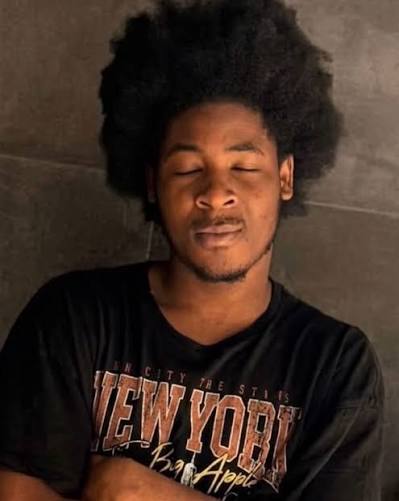
An 18-year-old Ghanaian identified by his family as Prince Abdul Malik has been shot dead in Toronto, Canada. Toronto Police officially identified the victim as Malik Abass of Mississauga after officers responded to a shooting near Rathburn Road and The East Mall in Etobicoke at about 4:27 p.m. on Saturday, November 7. He was taken to hospital after emergency treatment but died from his injuries. The suspect or suspects fled before police arrived, no arrests have been announced and investigators have not established a motive. His death is Toronto’s 33rd homicide of 2026.
An 18-year-old Ghanaian identified by his family as Prince Abdul Malik has been shot dead in Toronto, Canada, in a killing that has left his relatives grieving and homicide detectives searching for two men believed to have fled the scene before police arrived. Toronto Police formally identified the teenager as Malik Abass of Mississauga after officers responded to reports of gunfire near Rathburn Road and The East Mall in Etobicoke on Saturday afternoon and found him suffering from gunshot wounds. Emergency responders immediately began life-saving treatment before paramedics rushed him to hospital, but doctors were unable to save him and he was later pronounced dead, turning a late-afternoon shooting into Toronto’s 33rd homicide investigation of 2026 and leaving investigators with no publicly identified motive and no arrest as of the latest police update.
The shooting happened at approximately 4:27 p.m. on Saturday, November 7, in the Rathburn Road and The East Mall area, a busy part of Etobicoke in Toronto’s west end that includes residential buildings, shops, road traffic and public transit routes. Police said officers arrived after receiving a call reporting a shooting and located Malik with serious gunshot injuries. Life-saving measures were performed at the scene before he was transported to hospital, but his injuries proved fatal. By the time officers secured the area, the people responsible had already left, forcing investigators to shift immediately from emergency response to a search for witnesses, surveillance footage and any other evidence capable of identifying who fired the shots.
Toronto Police Inspector Jeff Allington told reporters at the scene that the initial suspect description involved two male suspects wearing dark clothing. That description remains limited, and authorities have not released names, photographs, ages, vehicle information or any other identifying details that would allow the public to know who investigators are looking for beyond that basic description. The formal homicide release issued the following day was even more cautious, referring generally to the suspect or suspects fleeing before police arrived. Taken together, those statements indicate that investigators believe more than one person may have been involved, but the public has not yet been told whether both men are suspected of directly participating in the shooting or whether one may have assisted the other.
The Toronto Police Service’s Homicide and Missing Persons Unit has taken control of the investigation and is appealing to residents, motorists and businesses in the area for information. Detectives are particularly interested in security-camera and dashcam recordings from around the time of the shooting, because footage captured even a few streets away could help reconstruct the suspects’ movements before and after the gunfire. In urban homicide investigations, seemingly minor details such as a vehicle leaving an intersection, a person running through a parking lot or two individuals changing direction immediately after shots are heard can become critical when combined with other evidence. Police have not disclosed whether they have already obtained useful footage, whether a getaway vehicle has been identified or whether investigators believe Malik was deliberately targeted.
The question of motive remains completely open. Police have not said whether the teenager knew his attackers, whether there had been an earlier confrontation, whether robbery is being considered or whether the shooting was connected to any broader dispute. There is also no public evidence that Malik was involved in criminal activity, and responsible reporting should not fill that gap with assumptions simply because he was the victim of gun violence. Until detectives release more information, the established facts remain limited to the location, time, victim identification, fatal injuries and the fact that the suspected attackers had fled by the time officers arrived.
The difference between the name released by police and the name used by his family has also attracted attention in Ghana. Canadian authorities formally identified the victim as Malik Abass, while his relatives and Ghanaian media know him as Prince Abdul Malik. There is no indication that these are different people or that the naming difference has any investigative significance. Families in immigrant communities frequently use familiar, religious or family names that differ from the names appearing on formal documents, and the photograph released in connection with the Toronto Police homicide investigation matches the young man identified by Ghanaian outlets as Prince Abdul Malik.
For his family, however, the official naming convention is secondary to the reality that an 18-year-old son has been killed. Ghanaian reporting has shown the emotional toll of the death on his mother, who was heard grieving in a video shared after news of the shooting reached relatives. Her reaction captured the shock familiar to families suddenly drawn into homicide investigations: a young person leaves home with ordinary expectations for the day, and within hours the family is receiving calls from police, hospitals or relatives confirming that he will never return.
At 18, Malik had only just entered adulthood. Whatever plans he had for education, work, family life or his future in Canada were ended in a matter of minutes. That fact is central to the story because homicide statistics can quickly become abstract when cities record dozens of killings over the course of a year. Toronto Police classify his death as homicide number 33 of 2026, but for the people who knew him, that number represents a specific life, a son and relative whose death now depends on detectives and witnesses to explain what happened.
The Etobicoke location is also significant because the shooting occurred in the late afternoon rather than in the middle of the night, increasing the likelihood that people were nearby and may have seen or recorded something without immediately realizing its importance. Residents living in nearby buildings may have doorbell or security-camera footage, businesses may have exterior surveillance and motorists passing through Rathburn Road or The East Mall may have dashcam recordings that captured vehicles or pedestrians connected to the case. Police appeals for such material are often crucial in homicide investigations because suspects can leave a scene within seconds while cameras continue recording their escape route long after the gunfire stops.
Investigators are likely to reconstruct Malik’s movements before the shooting as part of the inquiry. That process can involve examining phone records, social-media communications, location data and the accounts of friends or relatives to establish where he had been, who he may have been meeting and whether there were any signs of threats or conflict. Such investigative steps do not imply wrongdoing by the victim. They are routine efforts to understand the final hours of a homicide victim’s life and identify any connection between the victim and those responsible.
The fact that Malik lived in Mississauga but was killed in Etobicoke is not unusual in itself. The two areas are closely connected within the Greater Toronto Area, and thousands of people move between them daily for school, work, shopping, family visits and social activities. Detectives will nevertheless want to know why Malik was in that particular location, how long he had been there and whether anyone arranged to meet him. Those answers could help determine whether the shooting was planned or whether it arose from an unexpected confrontation.
Police have not announced whether shell casings, a firearm or other physical evidence were recovered from the scene. If ballistic material was found, investigators can compare it with databases and evidence from other shootings to determine whether the same weapon has previously been used in Toronto or elsewhere in the region. A weapon recovered in a later arrest can also be forensically linked to a shooting through ballistic testing, potentially connecting a suspect to the crime even if no arrest occurs immediately.
Similarly, if the suspects used a vehicle, traffic cameras and automated licence-plate systems could become important. Detectives can compare the timing of vehicles entering and leaving an area with witness statements and video evidence, sometimes narrowing a large number of possibilities into a specific route. Toronto Police have not publicly said whether a vehicle is part of the investigation, so any such possibility remains only one of the avenues detectives may explore.
The homicide has attracted immediate attention in Ghana because of Malik’s age and nationality and because it follows closely after the killing of another young Ghanaian in North America. Fifteen-year-old Javits Badu Nkansah Frimpong was shot dead in the Bronx, New York, while on his way to school just days earlier, prompting intervention by Ghanaian diplomatic officials and a public call for justice. The two cases are entirely unrelated based on available evidence, but the proximity of the deaths has intensified concern among Ghanaians following the safety of young people living abroad.
The comparison should remain emotional and contextual rather than investigative. There is no evidence linking the Toronto and New York shootings, no indication of a common offender or motive and no basis for portraying them as part of a coordinated pattern. What connects them is the painful fact that two Ghanaian families in different North American cities have recently lost teenagers to gun violence under separate circumstances.
Canada has a large Ghanaian diaspora, particularly in Ontario, where Toronto, Mississauga, Brampton and surrounding communities are home to families with strong ties to Ghana. A killing involving a young Ghanaian in the Greater Toronto Area can therefore quickly become a story followed closely in Accra, Kumasi and other parts of Ghana as relatives and diaspora communities share information across borders. The rapid circulation of Malik’s photograph and family name reflects that transnational connection.
That attention can be useful to investigators if people who knew Malik come forward with information, but it can also create a dangerous environment for rumor. Homicide cases often generate speculation about gangs, relationships, money or personal disputes before police establish any facts. In Malik’s case, none of those explanations has been confirmed. VNTV’s reporting should therefore continue to separate what police have established from what may circulate on social media or among community members.
There has also been no confirmed announcement from Ghana’s Ministry of Foreign Affairs regarding the Toronto killing at the time of the latest reporting. That absence should not be interpreted as a lack of concern; diplomatic missions often become involved after confirming citizenship details, speaking with families and establishing what consular assistance is required. If the family seeks support, Ghanaian officials in Canada could potentially assist with communication, documentation and other consular matters, but the homicide investigation itself remains entirely under Canadian jurisdiction.
If Ghanaian diplomatic officials become involved, their role would be supportive rather than investigative. They cannot direct Toronto Police, determine charges or control the prosecution. They can, however, help ensure the family receives information, understands procedures and has assistance with matters such as documentation, travel or funeral arrangements if required.
The Toronto Police Homicide and Missing Persons Unit now carries the responsibility for identifying the suspects and establishing a case strong enough to support criminal charges. Investigators will need to prove who participated in the shooting, what role each suspect played and whether the evidence meets the standard required for arrest and prosecution. If suspects are eventually charged, they would remain presumed innocent unless and until convicted in court.
For now, no one has been charged, and Malik’s killing remains an unsolved homicide. That distinction is important because early descriptions of suspects should not be treated as proof of guilt against any individual who happens to resemble the limited description released by police. Two males wearing dark clothing is an extremely broad description, and public accusations based on appearance alone could create serious risk to innocent people.
The strongest contribution the public can make is therefore evidence rather than speculation. A witness who remembers seeing two men leave the area, a driver whose dashcam recorded a passing vehicle or a resident whose camera captured movement around the time of the shooting may possess information investigators can verify and place within a broader timeline. Even a few seconds of footage can become significant when combined with other recordings from nearby streets.
Police have attached case number 2026-2357398 to the investigation and have asked anyone with information to contact the Homicide and Missing Persons Unit. The release of Malik’s photograph is itself part of that strategy, because detectives may be hoping people who knew him will recognize the image and provide context about his recent movements, relationships or conversations.
For Malik’s family, the investigation may bring a difficult period of waiting. Homicide cases do not always produce immediate arrests, even when police have promising evidence. Detectives may need time to verify witness statements, obtain warrants, analyze phones and video, compare forensic evidence or monitor suspects before laying charges. Families are often left knowing that investigators are working while being told little about the details because police do not want to compromise the case.
That uncertainty can deepen grief because relatives are not only mourning a death but living with unanswered questions. They want to know who killed their son, why he was targeted and whether the people responsible remain close to the community. Police may eventually answer those questions, but there is no confirmed timetable for when an arrest might happen.
The broader issue of gun violence in Toronto will also form part of the public conversation surrounding the case. The city is often viewed internationally as relatively safe compared with many major North American urban centers, but shootings and firearm-related homicides remain persistent concerns for police and communities. Each homicide renews debate about illegal firearms, youth violence, organized crime, prevention programs and whether enforcement and social interventions are adequately reaching those at risk.
It would nevertheless be misleading to use broader gun-violence concerns to define Malik’s death before investigators establish the circumstances. Citywide patterns can provide context, but they do not prove that any individual homicide is gang-related, targeted or connected to wider criminal networks. The facts of Malik’s case must come from the investigation itself.
The most important confirmed fact remains that an 18-year-old Ghanaian lost his life after being shot in a Toronto neighborhood on a Saturday afternoon. The suspected attackers left before police arrived, and despite an early description of two males in dark clothing, no arrest has been publicly announced. Detectives have not revealed a motive, and there is no verified account explaining why Malik became the victim.
As the investigation moves forward, police will be looking for the pieces that turn an unexplained shooting into a prosecutable case: footage that establishes movements, witnesses who can identify suspects, forensic evidence linking a weapon to the scene and information showing what happened before the first shot was fired. Until those pieces are assembled, much of the story remains unresolved.
For Ghanaian communities in Canada and at home, Malik’s death has become another painful reminder that migration and opportunity do not insulate families from violent tragedy. An 18-year-old who was building a life in Canada is now the subject of a homicide investigation, while relatives thousands of kilometres away are forced to follow developments through police statements and media reports.
The next significant development will come when Toronto Police either release a fuller suspect description, identify a vehicle, announce an arrest or disclose new information about motive. Until then, investigators are asking the public to help fill the gaps in a case that still has more questions than answers.
What can be reported with certainty is that Prince Abdul Malik, officially identified by Toronto Police as Malik Abass, was shot in Etobicoke on November 7, transported to hospital and pronounced dead at the age of 18. Two suspected attackers were reported to have fled the area, homicide detectives are now leading the investigation and no motive has been established. For his family, the immediate hope is no longer simply for information but for accountability, while police continue the methodical work required to identify those responsible and bring the case before the courts.