₦264BN EDUCATION FUNDS SIT UNUSED AS FG FACES POTENTIAL ₦465.7BN TRANSPORT ALLOWANCE BILL
State governments had ₦264.12 billion in already disbursed UBEC matching grants still unspent when the commission carried out financial monitoring, despite persistent infrastructure problems in public schools. Separately, the Federal Government’s approved ₦70,000 monthly transport allowance for public servants could cost about ₦465.7 billion over six months if all approximately 1.1 million federal payroll records qualify. The ₦465.7 billion figure is an estimate, not an approved transport infrastructure master plan. Punch Newspapers
Nigeria is facing renewed questions over how public money is being managed after official records showed that states had more than ₦264 billion in already released Universal Basic Education Commission funds sitting unspent while public schools continued to struggle with damaged classrooms, overcrowding and shortages of basic learning materials. At the same time, the Federal Government is preparing a six-month transport allowance for public servants that could cost as much as ₦465.7 billion if every employee represented on the federal payroll qualifies, placing fresh attention on the government’s spending priorities as workers demand relief from high living costs and communities continue waiting for improvements in essential public services.
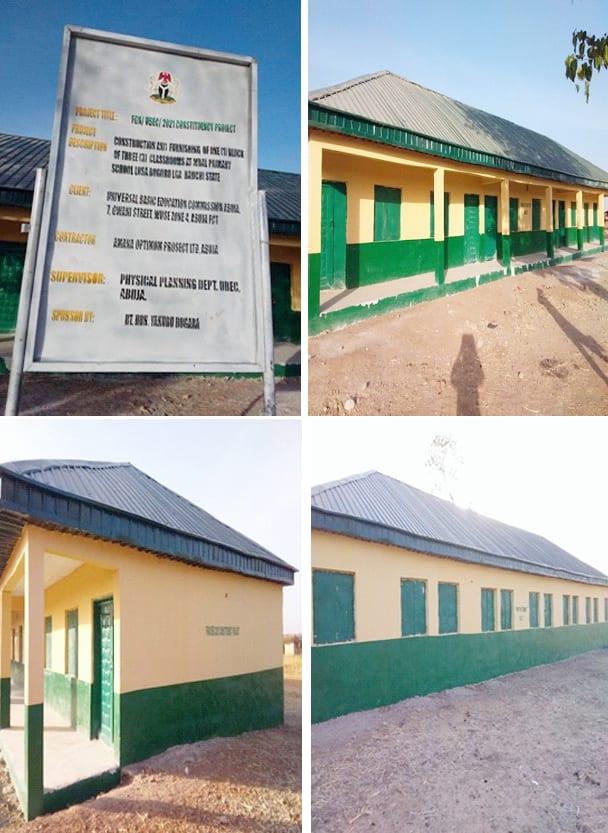
The education figure comes from the Universal Basic Education Commission’s 2025 annual report, which showed that ₦264.12 billion in matching grants had already been disbursed to State Universal Basic Education Boards but remained unspent in state government accounts when UBEC carried out financial monitoring visits. The money was intended to support interventions such as classroom construction and rehabilitation, furniture, instructional materials, sanitation facilities and teacher-development programmes, yet significant balances remained unused while many schools continued operating in difficult conditions.
Benue State recorded the largest unspent balance at approximately ₦19.18 billion, followed by Imo with ₦14.12 billion, Osun with ₦14.02 billion, Kwara with ₦13.99 billion and Delta with ₦13.40 billion. Together, those five states accounted for roughly ₦74.72 billion, representing more than a quarter of the total unspent amount identified in the UBEC report. Several other states also held balances above ₦10 billion, including Borno, Anambra, Kano, Adamawa and Gombe.
The figures have generated particular concern because the money in question is different from UBEC funds that states were unable to access because they had not supplied the required counterpart funding. The ₦264.12 billion had already been released into state education structures and remained unexpended at the time of monitoring, raising questions about planning, procurement, project execution, contract administration and the ability of state education agencies to turn approved funding into functioning classrooms and improved learning conditions.
Nigeria’s basic education system continues to face significant infrastructure challenges. Pupils in different parts of the country attend schools with damaged roofs, inadequate furniture, overcrowded classrooms and insufficient sanitation facilities. In some communities, temporary structures and community-built shelters are still being used for lessons, creating a striking contrast with billions of naira reported as sitting unused in education accounts.
The Federal Ministry of Education’s education statistics have also highlighted the pressure on available classroom space. The national learner-to-classroom ratio has been reported at around 60 pupils for every classroom, considerably above the benchmark of approximately 35 pupils per classroom. Conditions vary considerably between states, but the data reinforce concerns that Nigeria requires substantial and timely investment in basic education infrastructure.
UBEC’s intervention system was designed to provide federal support while requiring states to share responsibility for education funding. Under the matching-grant structure, states generally provide counterpart funding and submit approved action plans before the federal contribution becomes available. Once money has been released, projects are expected to follow those approved plans and comply with procurement and financial-management requirements.
The existence of large unspent balances therefore raises a different question from whether money has been provided. It asks whether governments have sufficient administrative capacity and political urgency to implement the projects for which funds have already been released. Delays can occur because of procurement disputes, changes in government, contract problems, incomplete documentation, project redesigns or other administrative issues, but prolonged non-utilisation means pupils do not receive the intended benefit while the money remains idle.
UBEC has previously expressed concern about slow utilisation of intervention funds and weaknesses in the financial management of some state education boards. The commission has identified issues including non-compliance with funding guidelines, departures from approved action plans, problems with tax remittances and procurement concerns. Those findings have strengthened calls for tighter monitoring and clearer timelines for spending money that has already been released.
The figures do not by themselves establish theft, diversion or criminal wrongdoing. An unspent balance simply shows that the money remained unused at the time of the monitoring exercise. Establishing whether any particular administration failed in its responsibilities would require examining when each release was made, which projects were approved, which government received or inherited the funds, whether contracts had already been awarded and how much work had actually been completed.
That distinction is particularly important because some of the balances span multiple administrations. A current governor could have inherited projects and funds from a predecessor, while an outgoing administration could have left substantial money unspent. Responsibility therefore cannot automatically be assigned solely on the basis of who was in office when UBEC carried out its monitoring visit.
Nevertheless, the sheer size of the total has created understandable public scrutiny. More than ₦264 billion represents a major pool of education funding at a time when communities regularly appeal for classroom rehabilitation and parents complain about inadequate learning environments. The central accountability question is not simply who holds the money but why approved education resources have not been translated into visible improvements quickly enough.
Benue provides one of the clearest examples of the tension between funding and need. The state had the largest reported unspent balance despite years of insecurity that damaged infrastructure and displaced communities. Some public schools in affected areas require substantial rehabilitation or reconstruction, and education stakeholders have questioned why large available balances have not produced faster intervention.
Officials and local stakeholders have offered different explanations for some of the delays, including administrative processes and the consequences of insecurity. Those explanations may account for individual projects, but they do not remove the need for governments and education boards to publicly explain how much money remains available, which projects have been approved and when implementation will be completed.
In Osun, officials have separately pointed to financial pressure and difficulties providing fresh counterpart funding for additional UBEC grants. The state government has said it inherited earlier obligations and subsequently cleared several years of counterpart contributions, but current fiscal challenges have made additional commitments difficult. That issue should not be confused with the separate question of previously disbursed money identified as unspent in UBEC’s monitoring data.
Kwara has also disputed the reported amount attributed to it, with state education authorities questioning the accuracy of the ₦13.99 billion balance. However, officials did not immediately provide an alternative figure supported by detailed documentation, leaving the difference between the UBEC report and the state’s position unresolved.
The education controversy comes as the Federal Government faces another large public-spending question involving its newly approved transport allowance for public servants. Under an agreement reached with the Nigeria Labour Congress, eligible federal workers are expected to receive ₦70,000 per month for six months beginning in November 2026 as an intervention against high transportation and living costs.
The agreement itself did not specify a total national cost because the final number of eligible workers had not been publicly established. However, an analysis based on approximately 1,108,800 employee records on the Integrated Personnel and Payroll Information System estimated that the programme could cost around ₦77.6 billion per month if every record represented an eligible beneficiary.
Over six months, that would produce a potential cost of approximately ₦465.7 billion. The figure is therefore an estimate rather than a confirmed budget allocation. The actual bill could be lower depending on the verified number of workers who qualify and the final payment arrangements adopted by the government.
The distinction is important because presenting ₦465.7 billion as an approved transport infrastructure programme would be inaccurate. It is instead the estimated maximum cost of a temporary worker-support payment based on the federal payroll population used in the calculation.
The allowance emerged from negotiations between the Federal Government and labour representatives over rising transportation costs, workers’ welfare and unresolved salary issues. Petrol prices and other transportation expenses have remained a major burden for households, particularly in large cities where workers can spend significant portions of their income commuting to and from work.
Government officials have presented the six-month payment as immediate relief while broader negotiations continue. The arrangement is expected to run from November 2026 for six months and applies across federal public-service levels, although detailed eligibility rules and the precise number of beneficiaries remain subject to administrative clarification.
The Trade Union Congress has rejected the temporary arrangement and argued that the government should instead implement a permanent salary increase. TUC leaders have said previous wage-award programmes were not always implemented consistently and warned that temporary interventions do not provide workers with lasting protection against increasing food, transport, housing and healthcare costs.
The TUC has also called for the implementation of outstanding agreements affecting health workers and has proposed a much larger increase in the salary of the lowest-paid federal worker. Its position differs from the arrangement reached between government and the Nigeria Labour Congress, illustrating divisions within organised labour over the most effective response to the cost-of-living crisis.
The potential ₦465.7 billion cost has also prompted economists to question how the intervention would be financed. A temporary allowance can provide meaningful immediate assistance, particularly to lower-paid workers, but such a programme still represents a substantial fiscal commitment if implemented across more than one million employees.
Economists have argued that government should disclose whether the payments will be funded through existing budget allocations, expenditure savings, higher revenues or additional borrowing. The source of financing matters because a welfare intervention intended to reduce hardship can create additional fiscal pressure if it requires substantial new debt.
Some analysts have also argued that a transport allowance should be accompanied by longer-term policies aimed at reducing transportation costs themselves. Proposals include greater investment in mass transit, more buses, compressed-natural-gas transport systems, improved urban rail and workplace transport programmes that can benefit a broader population rather than only federal workers.
The debate highlights a recurring challenge in Nigerian public finance. Government frequently faces pressure to provide immediate financial relief during periods of high living costs while simultaneously needing to invest in infrastructure and public services that could reduce those costs over the longer term.
The education and transport figures illustrate that tension in different ways. In one case, substantial money intended for long-term improvements in classrooms and learning conditions has already been released but has not been fully used. In the other, government is considering a potentially enormous temporary cash intervention designed to relieve workers’ immediate transportation expenses.
The combined value of the two figures exceeds ₦700 billion, although they represent completely different categories of public finance and should not be added together as if they formed a single programme. The ₦264.12 billion belongs to education intervention funding distributed across the states, while the ₦465.7 billion is an estimate of the possible six-month cost of a federal worker transport allowance.
What connects them is the growing public demand for accountability over how government resources are allocated, released and ultimately used. Nigerians facing weak schools, high transport costs and pressure on household budgets increasingly want to know not only how much money government announces but whether those resources produce measurable improvements.
For education, the central issue is implementation. Funds sitting in government accounts do not repair classrooms, provide desks or improve sanitation until projects are actually executed. Public reporting therefore needs to move beyond how much money was released and show what was completed, where it was completed and how many pupils benefited.
For the transport allowance, the central issue is sustainability. A six-month payment may provide temporary relief, but workers will eventually return to the same transportation market unless structural changes reduce commuting costs or wages increase sufficiently to absorb those expenses.
This is why economists have continued to advocate for mass-transit investment alongside immediate worker support. Affordable buses, urban rail and better transport networks can spread benefits across millions of Nigerians, including private-sector workers and informal workers who would not qualify for a federal public-service allowance.
The Federal Government must also determine how the programme interacts with ongoing minimum-wage negotiations. The transport allowance was approved while several broader compensation issues remained unresolved, meaning the intervention does not end the dispute over what workers should earn permanently.
The government and the NLC are expected to review implementation after the programme begins, while other worker demands involving allowances, health-sector compensation and salary structures remain under negotiation. That process could affect the eventual fiscal cost if additional commitments are made.
Meanwhile, pressure will continue on states to explain their UBEC balances. The release of the figures has placed renewed attention on governors, state education boards and the systems responsible for approving and executing basic education projects.
Transparency will be essential because the figures alone cannot explain the reason for each balance. States with significant funds should be able to identify which projects the money is tied to, whether contracts have been awarded, how much work has been completed and when the remaining funds are expected to be spent.
UBEC also faces the responsibility of ensuring that monitoring does not end with documenting unspent money. Where states repeatedly fail to implement approved projects, the commission may need stronger enforcement, clearer deadlines or improved technical support to ensure intervention funds achieve their intended purpose.
Nigeria’s education crisis is too significant for large sums to remain inactive indefinitely. Millions of children depend on public schools, and deteriorating classrooms directly affect learning outcomes, attendance and safety. The longer money remains unspent, the greater the gap between budgetary provision and actual educational improvement.
The transport challenge is similarly urgent. High commuting costs reduce disposable income and place particular pressure on lower-paid employees who may spend a large percentage of monthly wages simply traveling to work. The government’s proposed allowance reflects the severity of that problem, even if the programme remains temporary.
Both developments therefore reinforce a broader point about public finance in Nigeria. Large headline figures do not automatically translate into better living conditions. Money must be properly targeted, transparently administered and implemented quickly enough to solve the problem for which it was approved.
For the ₦264.12 billion in UBEC grants, the question is why funds that had already reached state education systems were still sitting unspent while schools needed intervention. For the potential ₦465.7 billion transport allowance, the question is whether government can finance such a large temporary intervention and what happens to workers when the six-month period ends.
Those questions will continue to shape scrutiny of government spending as Nigeria enters another budget cycle. Citizens are likely to demand greater clarity over both unused funds and new commitments, particularly at a time when government revenues, borrowing, wages and infrastructure spending remain under intense public attention.
The figures may concern different sectors, but together they illustrate one of Nigeria’s central fiscal challenges: converting enormous public allocations and interventions into visible results. Whether the issue is education funding that has not been spent or a temporary worker allowance that could cost hundreds of billions of naira, the test will remain the same — whether public money produces lasting improvements in the lives of the people it is intended to serve.