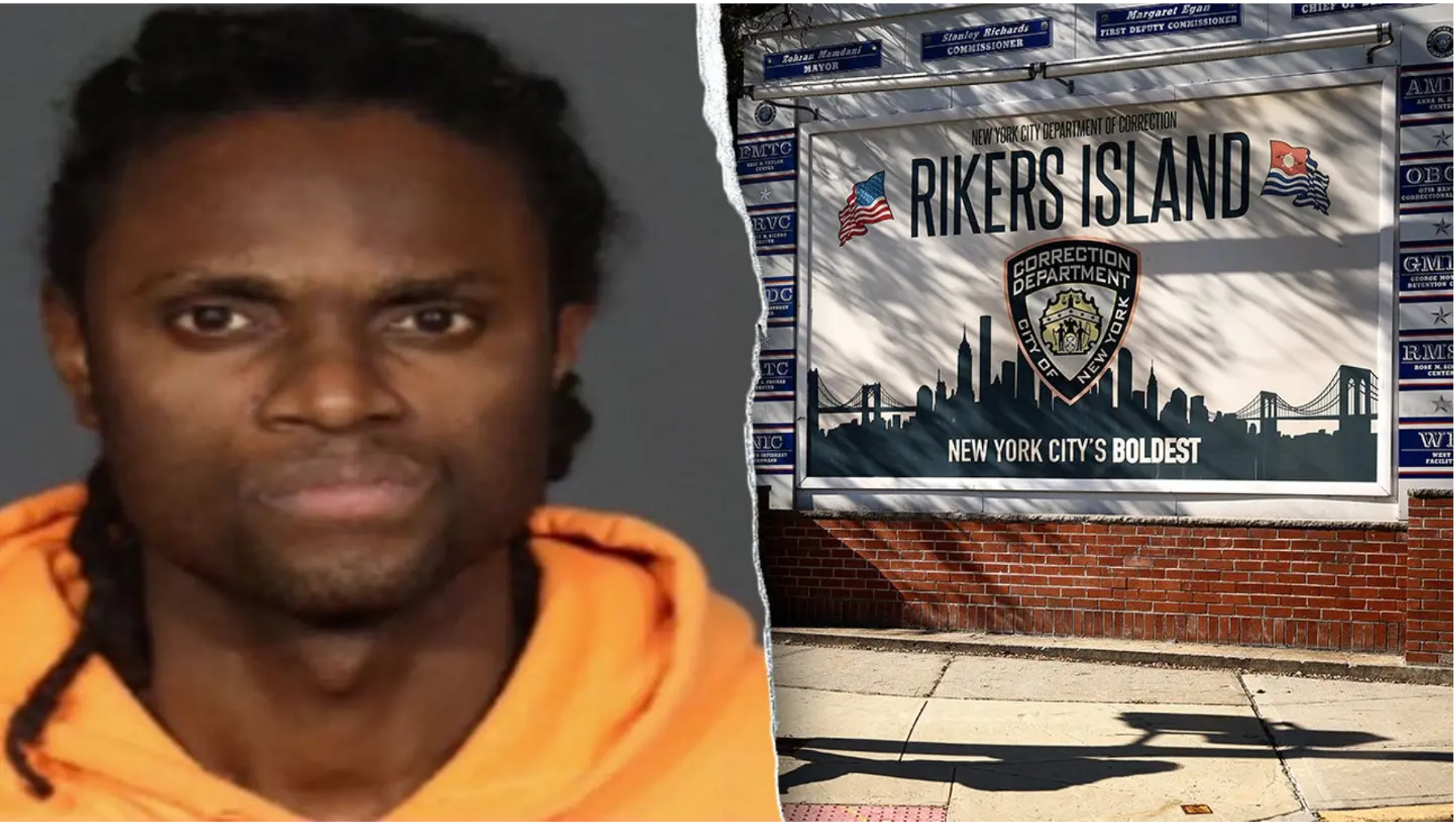
A 16-YEAR-OLD IS CHARGED AS AN ADULT FOR KILLING HIS IDENTICAL TWIN: WASHINGTON'S TWIN TRAGEDY PUTS GUN ACCESS AND JUVENILE JUSTICE ON TRIAL

A 16-year-old boy in Washington, D.C., has been charged with murder as an adult after allegedly shooting and killing his identical twin brother inside the family's home. According to reports, Jamari Young allegedly shot Jabrell Young during a family argument over personal belongings. Their mother reportedly tried desperately to save Jabrell, who died at the scene. After the shooting, Jamari allegedly said, "I didn't mean to. It just went off." That statement could become central to the case, because the gap between an accident, a reckless act and an intentional killing may decide what happens to him next. The charges are allegations. Jamari has not been convicted, and many key facts have not been publicly established. These include how a firearm came to be in the home, who owned it, and the exact sequence of events. The case has stirred painful questions about how easily young people in the United States can get guns, how ordinary family conflicts can turn fatal when a weapon is within reach, and whether a 16-year-old should face the adult criminal justice system. In a single moment, one family lost one son to death and may lose the other to prison.
There are tragedies that shock because of their scale, and there are tragedies that shock because of their intimacy. The killing of Jabrell Young belongs to the second kind. It did not happen on a crowded street, in a school hallway or in a shootout between strangers. It happened inside a family home in Washington, D.C., during an argument between two 16-year-old brothers who shared a birthday, a face and, by every outward measure, a life. By the time it was over, one twin was dead, the other was in police custody, and their mother had been left to try to save one son from a wound allegedly caused by the other.
According to reports, Jamari Young is accused of shooting his identical twin brother, Jabrell, during a dispute over personal belongings. The argument, as described so far, was the kind of quarrel that plays out in countless households every day. Siblings fight over clothes, phones, shoes, money and space. Teenagers in particular can be fiercely protective of the few things they consider their own. In most homes, such fights end in raised voices, slammed doors and, eventually, an uneasy peace. In this home, the argument allegedly ended with a gunshot.
Jamari reportedly said after the shooting, "I didn't mean to. It just went off." Those words, if they are confirmed as accurately reported, may become the most important sentence in the case. They suggest shock and perhaps remorse. They also suggest a defense, or at least the outline of one. Whether a firearm "just went off" or was deliberately fired is the sort of question that separates a tragic accident from manslaughter, and manslaughter from murder. It is a question investigators, prosecutors, defense lawyers and possibly a jury will now have to examine closely.
While that question hung in the air, the family's mother was reportedly fighting to keep Jabrell alive. It is difficult to imagine a more harrowing scene. A parent trying to stop the bleeding of one child while the other child stands nearby, allegedly responsible. Emergency help could not save him. Jabrell died inside the home.
Jamari now faces a murder charge as an adult. That decision moves his case out of the juvenile system, which is designed around rehabilitation, and into the adult criminal courts, where the potential penalties are far more severe. It also sets off a debate that has been building in Washington and across the United States for years. How should society respond when a child commits, or is accused of committing, the most serious crime there is?
It is important to be clear about what is known and what is not. The allegations against Jamari have not been proven in court. He is presumed innocent unless and until a court finds otherwise. Public reports have not fully explained where the gun came from, who owned it, whether it was legally possessed, how it was stored or how the teenager came to be holding it during the argument. The exact sequence of events inside the home has not been publicly detailed. The words attributed to Jamari have been reported but not tested in court. Every one of these gaps matters, and each could shape the outcome of the case.
What is already clear is that this story reaches far beyond one family. It touches some of the most difficult issues in American public life: the presence of guns in homes, the vulnerability of teenagers to impulsive decisions, the hidden reality of violence between siblings, and the long-running argument over whether children who commit grave harm should be treated as children or as adults.
To understand why a shooting between twin brothers has drawn so much attention, it helps to begin with the relationship itself. Identical twins develop from a single fertilized egg that splits in two. They share essentially the same genetic makeup. Many grow up as constant companions, sharing bedrooms, friends, classrooms and routines. People often mistake one for the other. Some twins describe a closeness that is hard for others to grasp, a sense of being known completely by another person from the very start of life.
That closeness does not prevent conflict. In some cases it can intensify it. Psychologists who study twins have long noted that the very things that bind them can also create friction. Twins are often compared with each other by parents, teachers and peers. They may compete for attention, possessions and a sense of individual identity. Adolescence, when young people are trying to define who they are, can be an especially tense period for twins who have spent their whole lives being seen as a pair. A dispute over belongings, which might look trivial from the outside, can carry deeper weight. It can be about ownership, fairness, respect and the struggle to be treated as a separate person.
None of this explains or excuses a killing. Millions of siblings, twins included, fight bitterly without anyone being seriously hurt. What turned this argument into a homicide, according to the allegations, was the presence of a gun. That fact sits at the center of the tragedy, and it is the part of the story that policymakers, public health experts and gun violence researchers keep returning to.
Firearms are now the leading cause of death for children and teenagers in the United States. Data from the Centers for Disease Control and Prevention show that guns overtook motor vehicle crashes as the top killer of Americans aged 1 to 19 around 2020, and they have remained in that position since. Thousands of young people die from gunfire every year through homicides, suicides and unintentional shootings. Many thousands more are wounded. No other wealthy nation comes close to these figures.
A significant share of these deaths happen at home or involve guns taken from home. Researchers have repeatedly found that in many school shootings, teen suicides and unintentional shootings involving young people, the firearm came from the young person's own household or the home of a relative or friend. Surveys of American gun owners have found that a large number of households with children keep at least one firearm unlocked, loaded or both. Public health experts often describe the risk in simple terms. A gun that is within reach turns a moment of anger, despair or carelessness into something that cannot be undone.
That is the logic behind what researchers call the "lethality of means." Arguments, fights and impulsive decisions are common, especially among adolescents. What changes the outcome is the tool available in that moment. A fight with fists may cause injuries. A fight in which one person picks up a gun can end a life in a fraction of a second. Studies of suicide make the same point. Many suicidal crises are short, and whether a person survives often depends on whether a highly lethal method is at hand. The same principle applies to heated family disputes.
Washington, D.C., has some of the strictest gun laws in the United States. The District requires firearms to be registered, bans certain categories of weapons and has historically restricted the carrying of guns more tightly than many states. It also has a child access prevention law. In general terms, it can be a crime to store a firearm in a way that allows a minor to gain access to it, particularly when a child then gets hold of the weapon. Yet the city has also struggled with persistent gun violence for decades. Guns flow into the District from neighboring states and from across the country, often through illegal channels. Strict local laws cannot fully seal off a city surrounded by places with very different rules.
It is not yet publicly known how the gun in this case entered the Young home. It may have been legally owned by an adult. It may have been obtained illegally. It may have belonged to one of the teenagers, which would itself raise serious questions, since minors cannot legally possess handguns in the District. Each possibility points to a different set of failures and potentially a different set of legal consequences. If an adult's firearm was left accessible to minors, investigators could look at whether storage laws were broken. If the weapon came from the street, the case would add to long-running concerns about how easily young people in some neighborhoods can acquire guns. Until authorities provide more information, any conclusion would be speculation. What can be said is that the question of how this gun came to be there will likely be one of the most important in the entire case.
That question has a direct bearing on the claim that the gun "just went off." Firearms experts generally note that modern, well-maintained guns rarely discharge without the trigger being pulled. There are exceptions. Defective weapons, poorly maintained guns and certain mechanical failures can cause unintended discharges. A person can also pull a trigger without fully meaning to, especially if they are handling a gun carelessly, waving it during an argument or holding it with a finger on the trigger. In legal and practical terms, "it went off" often describes an unintentional trigger pull rather than a truly spontaneous discharge.
That distinction matters for the charges. In American criminal law, the line between murder and manslaughter usually turns on a person's state of mind. Murder generally requires intent to kill, intent to cause serious harm, or an extreme disregard for human life. Manslaughter can cover killings that happen in the heat of passion or through reckless or criminally negligent conduct. A person who points a loaded gun at someone during an argument may face serious charges even if they insist they never meant to fire. Prosecutors may argue that pointing a loaded firearm at another person, especially during a heated dispute, shows a dangerous disregard for life. The defense may argue that a frightened, impulsive teenager made a terrible mistake without the intent the law requires for murder.
Forensic evidence will be central to resolving those questions. Investigators typically examine the firearm itself, the position of the wound, the distance from which the shot was fired and the physical layout of the room. They speak with witnesses, including family members who were present. They may review phone records, messages and any history of conflict between the brothers. All of this helps them reconstruct what happened in the seconds before the shot. In this case, the most important witnesses may be members of the same grieving family, which adds a painful emotional dimension to an already difficult investigation.
The decision to charge Jamari as an adult has drawn particular attention. In Washington, D.C., prosecutors have authority to charge 16- and 17-year-olds as adults for certain serious offenses, including murder. Because of the District's unique status, adult felony cases in D.C. are generally prosecuted by the U.S. Attorney's Office, a federal agency, rather than a locally elected prosecutor. That structure has made juvenile justice in the capital a subject of political debate at both the local and national level.
Charging a teenager as an adult changes almost everything about the case. In the juvenile system, the focus is officially on rehabilitation. Proceedings are often more private. Sentences are generally limited, and young people are usually released by the time they reach adulthood. In the adult system, the defendant faces the same courts, procedures and potential sentences as a grown man. A murder conviction in an adult court can carry decades in prison. Adult cases are also public, which means a teenager's name, face and alleged actions can follow them for life, whatever the outcome.
Supporters of trying serious juvenile offenders as adults argue that the gravity of the crime should matter more than the age of the person accused. They say a killing is a killing, and that families of victims deserve justice that reflects the loss they have suffered. They argue that some teenagers commit acts of deliberate, serious violence and that the juvenile system, with its shorter sentences, may not adequately protect the public. In recent years, as concerns about youth crime have grown in Washington and other cities, this view has gained political strength. Federal officials and some local leaders have pushed for tougher responses to violent offenses committed by young people in the capital, arguing that leniency has failed to stem violence.
Critics see it very differently. They point to a large body of scientific research showing that the adolescent brain is still developing well into a person's twenties. The prefrontal cortex, which helps govern judgment, impulse control and the weighing of consequences, is among the last regions to mature. Teenagers are more likely than adults to act on impulse, to be driven by intense emotion and to take risks without fully considering the outcome. Under stress, especially in heated conflict, those tendencies can become stronger.
The U.S. Supreme Court has recognized these differences in a series of landmark rulings. In Roper v. Simmons in 2005, the Court barred the death penalty for crimes committed by people under 18. In Graham v. Florida in 2010, it ruled out life without parole for juveniles convicted of non-homicide offenses. In Miller v. Alabama in 2012, it struck down mandatory life-without-parole sentences for juveniles, even in murder cases, holding that courts must consider a young person's age and its "hallmark features," including immaturity, impetuosity and failure to appreciate risks and consequences. The justices repeatedly stressed that children are constitutionally different from adults for purposes of sentencing, and that they have a greater capacity for change.
Washington, D.C., has taken its own steps in this direction. The District's Youth Rehabilitation Act allows judges to impose more flexible sentences on some young offenders and can, in certain cases, allow convictions to be set aside after successful completion of a sentence. The Incarceration Reduction Amendment Act allows people who committed crimes when they were young, and who have served a significant portion of their sentence, to ask a judge for a reduced sentence based on their maturity and rehabilitation. These laws reflect the belief that a person's worst act at 16 should not automatically define the rest of their life. They have also been sharply criticized by those who argue they are too lenient and have contributed to a sense that violent crime goes unpunished in the city.
Jamari Young's case sits right at the center of this tension. On one hand, a young man is dead, killed in his own home by a gunshot. On the other hand, the person accused is himself a child, by the reported account an identical twin who may have just killed the person closest to him in the world. If his words were sincere, he may have to live with the knowledge of what he did for the rest of his life, regardless of any sentence. Many observers will struggle with the question of what justice looks like in a case like this.
Experts who work with young people who have killed often describe complicated grief. A surviving sibling who caused a death, whether intentionally or not, can experience overwhelming guilt, trauma and despair. Research and clinical experience suggest that such young people may face an increased risk of depression, post-traumatic stress and suicide. Whatever happens in court, Jamari is likely to need serious mental health support. So are the other members of his family.
That family is perhaps the most overlooked part of the story. The boys' mother has, in a single moment, lost one son to death and may lose the other to prison. She was reportedly in the home and tried to save Jabrell. She may now be asked to testify about what she saw. She will have to bury one child while attending court hearings for the other. Families in this position are both victims and relatives of the accused at the same time. They may be pulled in opposite directions by grief for the dead and love for the living. They often receive little support from the systems that process the case.
The family's grief also carries complex implications for prosecutors. In many homicide cases, the victim's family pushes for the harshest possible punishment. In cases where the victim and the accused belong to the same family, that dynamic is far more complicated. The family may plead for mercy. They may want the surviving child home. They may be torn. Prosecutors and judges often take the views of victims' families into account, and in this case those views may not align with a demand for the maximum sentence.
Violence between siblings is far more common than many people realize, even though fatal cases are rare. Researchers have long described sibling aggression as one of the most frequent forms of family violence, partly because so much of it is dismissed as ordinary rivalry. Pushing, hitting, threats and fights over possessions are often treated as a normal part of growing up. Most of these conflicts are not dangerous. But studies have found that persistent sibling aggression can harm children's mental health, and that serious sibling violence is often overlooked by parents, schools and authorities.
Killings of one sibling by another, sometimes called siblicide, are rare in the context of overall homicide figures. When they do happen, they often involve teenage or young adult males and are frequently linked to arguments that escalate quickly. Access to weapons is a recurring factor. In many cases, the conflict itself was not unusual. What was unusual, and fatal, was the presence of a gun.
That pattern is one reason public health advocates push for safe storage of firearms in homes with children and teenagers. Their message is that responsible gun ownership must account for the predictable behavior of young people. Teenagers argue. They act on impulse. They sometimes experiment with dangerous objects or show them off. A gun stored unloaded, locked and separate from ammunition is far less likely to be used in a moment of anger. Safe storage campaigns encourage gun-owning parents to use lockboxes, trigger locks and gun safes. Some states and cities, including Washington, D.C., have laws that impose penalties when a child gains access to an improperly stored weapon.
Gun rights advocates generally support safe storage as a matter of personal responsibility, but many oppose laws that mandate specific storage methods. They argue that such rules can make it harder for people to defend themselves quickly in an emergency and that responsibility should rest with individuals rather than the government. That disagreement is part of a much broader national debate over gun policy, one that has proved remarkably resistant to compromise.
The Washington case adds a sharp and painful example to that debate. Whatever the source of the gun, it was apparently available inside a home where two teenagers lived. A dispute over personal belongings, which could have ended with an angry exchange, allegedly ended with a death. Each side in the gun debate will likely see in this tragedy confirmation of its own views. Gun control advocates may argue that more guns in more homes inevitably leads to more deaths like this one. Gun rights advocates may argue that the problem lies in illegal access and irresponsible storage, not in lawful ownership. Both sides will be speaking about a family that is now facing the worst loss imaginable.
The case also lands in a city that has spent years wrestling with youth violence. Washington has faced periods of sharply rising homicides and carjackings, many involving young people, along with periods of decline. City leaders, federal officials, police, community groups and families have all argued over the causes and the solutions. Some point to poverty, unstable housing, under-resourced schools and limited opportunities for young people. Others point to lenient policies, insufficient policing and a lack of consequences. Many residents simply want their children to be safe.
Teenagers in Washington have often found themselves on both sides of the violence, as victims and as those accused. Youth advocates warn that many young people who end up charged with serious crimes have themselves experienced trauma, including exposure to violence at home or in their neighborhoods. Researchers have found that exposure to violence can affect how young people respond to conflict, increasing hypervigilance and the tendency to react quickly to perceived threats. None of this has been publicly established in the Young case. But it is part of the broader context in which the case will be judged.
The national conversation about youth crime has often been heated and sometimes misleading. Single shocking cases can shape public perceptions far more than broader data. A teenager who kills his twin brother inside the family home is the kind of story that spreads widely, shared with outrage, disbelief or sorrow. It is important that such cases be understood on their own facts rather than turned into symbols for one argument or another. Every case involving a young person accused of homicide is different. The circumstances, the evidence and the individuals involved all matter.
Public reaction to the case has been sharp and divided. Some people focus on the loss of Jabrell and argue that the law must treat his death with full seriousness. Others focus on Jamari's age and reported words and argue that a child who may have made a catastrophic mistake should not be thrown into the adult prison system. Many people struggle to hold both positions at once. A young man's life ended violently, and another young man's life may be destroyed by the consequences of a moment.
For readers far from Washington, including in Nigeria, the case may seem remote. Yet it speaks to concerns that are increasingly global. Washington and its surrounding suburbs in Maryland and Virginia are home to one of the largest Nigerian diaspora communities in the United States. Many Nigerian families there are raising teenagers in neighborhoods where gun violence is a real concern, and they follow stories like this closely. In Nigeria itself, the spread of small arms and light weapons has become a major security challenge, fueling banditry, kidnapping and communal clashes. The question of how weapons reach young people, and what happens when they do, is not uniquely American.
Nigeria has also faced its own debates over how to treat young people who break the law. The Child Rights Act of 2003, adopted in many but not all states, sets out protections for children in the justice system and emphasizes rehabilitation over punishment. Advocates have long warned that children in conflict with the law in Nigeria are sometimes detained alongside adults, held for long periods without trial or denied adequate legal support. The tension between punishment and rehabilitation that runs through the Young case is one that Nigerian policymakers, lawyers and families also recognize.
The case also touches on universal questions about family life and conflict. Parents everywhere worry about sibling fights, about teenagers' moods and about the dangers that can enter a home. The lesson many experts draw from tragedies like this one is not that sibling rivalry is inherently dangerous, but that dangerous objects can turn ordinary conflict into catastrophe. Keeping weapons away from children, taking persistent violence between siblings seriously, and helping teenagers learn to manage anger and resolve disputes are measures that matter in any society.
As the case moves forward, several questions will shape its outcome. The first is the exact charge Jamari faces and what prosecutors must prove. A murder charge typically requires proof of a particular mental state, and the defense is likely to challenge whether the evidence supports that standard. The second is how the gun entered the home and who was responsible for it. If an adult left a firearm accessible, that person could face separate legal consequences. The third is how the court will treat Jamari's age. Defense lawyers may seek to move the case back to the juvenile system or to secure a sentence that reflects his youth. The fourth is how the family itself will respond and what role their views will play.
There is also the question of whether Jamari's reported words will be admissible and how they will be interpreted. Statements made immediately after an event, sometimes called "excited utterances," can carry weight in court because they are made before a person has time to reflect or fabricate. Prosecutors may argue that the words show awareness of having fired the gun. The defense may argue that they show the act was not intentional. How a judge or jury understands that sentence could have enormous consequences.
Beyond the courtroom, the case may influence the broader debate in Washington over juvenile justice and gun safety. Lawmakers and advocates on different sides may point to it in arguments over whether more teenagers should be prosecuted as adults, whether safe storage laws should be strengthened or more strictly enforced, and whether more should be done to prevent youth violence before it happens. Tragedies often shape policy, though not always in ways that address the underlying causes.
For now, the most certain facts are also the most painful. A 16-year-old boy named Jabrell Young is dead. His identical twin brother, Jamari, is accused of shooting him during an argument over personal belongings. Their mother tried to save him and could not. Jamari is facing a murder charge in the adult system. The words "I didn't mean to. It just went off" have been reported as his reaction, though their accuracy and meaning will be tested in court.
Everything else remains unsettled. The legal process will determine what can be proven. It cannot undo what happened. Whatever the outcome, one family has been shattered in a way few others ever experience. Two brothers who came into the world together have been separated by a single gunshot, one in death and the other in a courtroom.
The case is a reminder of how thin the line can be between an ordinary family quarrel and a life-altering catastrophe. It is a reminder that teenagers, however mature they may seem, remain vulnerable to sudden, devastating decisions. And it is a reminder that a gun in the home changes the stakes of every argument that happens there. For a society still deeply divided over guns, youth crime and punishment, the deaths and losses in this one household raise questions that do not have easy answers.
What happens to Jamari Young will be decided in court. What happens to the conversation his case has started will be decided by everyone else.