A CAREGIVER WHO SPENT HER NIGHTS PROTECTING CHICAGO'S MOST VULNERABLE WAS SHOT DEAD ON HER OWN DOORSTEP. BINTOU SALAMI'S KILLING ASKS WHO PROTECTS AFRICA'S IMMIGRANT WORKERS IN AMERICA

Bintou Salami, a 24-year-old Togolese woman, was shot and killed outside her apartment in the Rogers Park neighborhood of Chicago on the night of Wednesday, November 18, 2026. Police found her at about 11:15 p.m. in the 1400 block of West Chase Avenue with a gunshot wound to the head. She was pronounced dead at the scene. She had just finished her shift as a direct support professional at Misericordia Heart of Mercy, a non-profit that supports people with intellectual and developmental disabilities. She had worked there for four months. Salami was returning home on a shared scooter when she was shot in what family members describe as an attempted robbery. However, nothing was taken from her, and her brother, Raoufou Salami, has questioned that motive. Police say the shooting is linked to two other shootings on Chicago's North Side that night. No suspects have been publicly identified. Salami moved from France to the United States in 2024 and planned to start nursing school in January. She leaves behind a husband and a young son in Togo. Members of Chicago's Togolese community held a vigil to honor her and demand justice. Her death has struck a nerve across the African diaspora. It highlights the risks faced by immigrant care workers, many of them young West Africans, who keep America's care system running, often on late shifts and with little protection.
Bintou Salami spent her final working hours doing the quiet, tiring work that rarely makes the news. At Misericordia Heart of Mercy, on Chicago's North Side, she helped seven women with disabilities through the routines of their evening. She helped serve meals. She helped with bathing. She helped them get ready for bed. Then, sometime after her shift ended on Wednesday night, she set off for home on a shared electric scooter, as she often did. She never made it inside.
At about 11:15 p.m. on November 18, police officers responded to the 1400 block of West Chase Avenue in the Rogers Park neighborhood. They found the 24-year-old on the sidewalk with a gunshot wound to the head. She was pronounced dead at the scene. Local reporting citing police sources said a passerby discovered her about 10 minutes after the shooting and called 911.
A neighbor who had moved onto the block that very day told reporters she heard two gunshots, the second sounding especially close. She asked to be identified only by her first name, Carol, because of safety concerns. Hours earlier, she said, she had noticed a man standing on a scooter near the spot for a long time. She did not claim he was the shooter. She simply said his behavior seemed "odd."
Salami's family has described the killing as an attempted robbery. But that explanation has left her loved ones with more questions than answers. Nothing was taken from her. Her phone was still with her. Her brother, Raoufou Salami, has said openly that the robbery story does not add up.
"What I can't understand about that is, how are you trying to rob somebody and you haven't taken her phone, nothing?" he said.
It is a question many in Chicago's African community are now asking too.
The police investigation has widened in the days since. Chicago police said on Friday that Salami's killing was one of three connected shootings on the North Side over roughly three hours late Wednesday and early Thursday. The first came at about 10:25 p.m., when a 35-year-old man was shot in the head on the Lakefront Trail near Belmont Harbor. He was taken to Illinois Masonic Medical Center in critical condition. A cyclist who knew the wounded man from group rides said he had used the lakefront path for years and could not remember a shooting there before.
Local outlets reported, citing an officer who reviewed surveillance video, that investigators believe the gunman took that victim's scooter north before switching to a Lime scooter. Less than an hour after the lakefront shooting, Salami was shot as she returned home on her own scooter.
Shortly after 1 a.m. on Thursday, a 25-year-old man was found unresponsive in a stairwell at the Morse Red Line station, a short distance away. He had a gunshot wound to the head, and a firearm was found nearby. The Cook County Medical Examiner later ruled his death a suicide but did not release his name. An abandoned Lime scooter, which may have had blood on it, was reportedly recovered about two blocks from the station.
Police have not publicly identified any suspect in Salami's killing, and they have not said publicly what role, if any, the man found at the Morse station played in the night's events. Ald. Maria Hadden, whose 49th Ward includes Rogers Park, said her office was still waiting for official communication from detectives. For Salami's family, that silence is painful. They want to know who killed her, why, and whether anyone will be held to account.
The facts of her life make her death even harder to accept.
Salami was born in Togo, the narrow West African nation that sits between Ghana and Benin. Like many young Togolese, she looked beyond home for opportunity. She first lived in France, a common destination for people from French-speaking West Africa. In 2024, after her marriage, she moved to the United States. Her brother Raoufou was the only other member of her family in America. In a fundraising appeal, he wrote that the two of them had made the journey together in a sense, building new lives far from home.
She found work in care. At Misericordia, she worked in one of the 16 residences at Sister Rosemary Connelly Park, a campus community for adults with intellectual and developmental disabilities. Her job title was direct support professional. In practice, it meant being present for some of the most personal moments of other people's days. It is demanding work. It requires patience, strength and genuine kindness. It is also, across the United States, often poorly paid.
She had been there only four months, but she made an impression quickly. Her supervisor said she "always brought a positive life, no matter what the situation was," according to Misericordia spokesperson Ryan Carey. "She was always in such a positive, uplifting spirit, and the residents really felt connected with her," he said.
Salami was not planning to stay in that role forever. She was due to begin nursing school in January. It was the next step in a plan that thousands of young African immigrants in America will recognize: start in care work, gain experience, study, qualify and build a professional career. She was weeks away from that new chapter.
She leaves behind her husband and a young son in Togo. Her brother's fundraiser described her simply: "Bintou was more than a sister. She was a mother, a daughter, a sister and a friend whose life was taken far too soon." The appeal, set up to cover funeral costs and support the family, raised more than $10,000 within days.
Alderman Hadden said Salami had chosen to make Rogers Park her home and had quickly become part of the community through her work. "Our sincerest condolences go to Bintou's family as they deal with this unimaginable loss," she said.
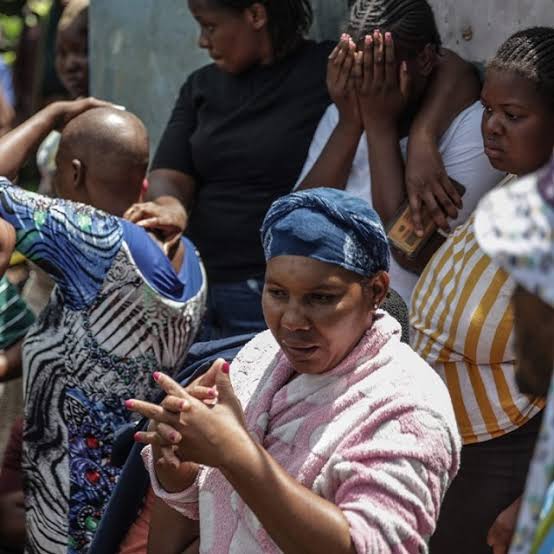
On Saturday, members of Chicago's Togolese community gathered for a vigil in her memory. They came with grief, but also with demands. They want a full investigation. They want answers about the motive. They want assurance that the killing of a young African woman will be treated with the urgency it deserves.
That demand carries weight because of who Bintou Salami was. She was not only a victim of gun violence. She was part of a workforce that America depends on but rarely sees.
Immigrants make up a large share of the direct care workers in the United States, the home health aides, nursing assistants and support professionals who care for elderly people and people with disabilities. Roughly one in four direct care workers is an immigrant, and in big cities the share is often higher. Many come from West Africa, the Caribbean, Latin America and Southeast Asia. Nigerian, Ghanaian, Cameroonian, Liberian, Sierra Leonean and Togolese workers fill shifts in group homes, nursing facilities and private homes from Chicago to Houston, Atlanta, Minneapolis, New York and Maryland.
These jobs come with specific risks. Shifts often end late at night or start before dawn. Many workers do not own cars, especially in their first years in the country. They walk, take buses and trains, or rely on bikes and shared scooters to get home. They travel through streets when they are emptiest and when help is hardest to find. A worker leaving a shift at 11 p.m. faces a very different city from one leaving an office at 5 p.m.
Pay adds to the pressure. Direct care work in the United States has long been among the lowest-paid jobs in health care, even as demand rises with an aging population. Many workers take double shifts or two jobs to support families both in America and back home. Money sent home by African workers abroad pays school fees, rent, medical bills and business costs across the continent. For many families in Lomé, Lagos, Accra or Kumasi, a relative working nights in an American care home is a lifeline.
That is why the death of a caregiver like Salami resonates far beyond one Chicago street. The people who care for others at the most vulnerable moments of their lives often have little protection themselves. When they are harmed, the loss ripples across two continents at once.
For Nigerian readers, this story will feel uncomfortably familiar. The "japa" wave, the large-scale emigration of young Nigerians seeking better lives abroad, has sent nurses, doctors, caregivers, students and young professionals to the United Kingdom, Canada, the United States and beyond. Many arrive with qualifications and ambition but start in jobs below their training. Care work is one of the most common entry points. Nigerian nurses and care assistants have become a backbone of health systems abroad, especially in Britain, while many others have built careers in American hospitals and care homes.
Ghanaians know this path well too. Ghanaian nurses and caregivers have long worked across the United States, Britain and Europe. Like Salami, many follow the same ladder: care work first, then nursing school, then a professional license and a better life for their families.
The japa conversation at home often focuses on the brain drain: the doctors, nurses and engineers that Nigeria and Ghana are losing. It focuses less on what happens to those who leave. Life abroad can bring opportunity, steady wages and safer institutions. It can also bring isolation, discrimination, long hours, high living costs and, in some places, real physical danger. The image of success abroad shared on social media rarely shows the 11 p.m. ride home after a draining shift.
Bintou Salami's story is a reminder that migration is not a single decision made at an airport. It is a long series of risks taken every day. She moved from Togo to France, from France to the United States, from a new city to a new job, from that job toward a nursing career. Each step required courage. Her death on her own doorstep shows how fragile that journey can be.
None of this means Africans should not seek opportunities abroad, or that every American city is dangerous. Chicago is home to large and thriving African communities, from Nigerians and Ghanaians to Ethiopians, Eritreans and francophone West Africans. Rogers Park itself is one of the city's most diverse neighborhoods, long known as a landing place for immigrants from around the world. Chicago's overall shooting numbers have fallen in recent years. But for families, statistics mean little when a loved one does not come home.
The killing also raises practical questions that employers, city officials and communities need to answer. Should care organizations provide safer transport options for staff working late shifts? Should cities expand late-night transit safety measures in neighborhoods where many essential workers live? How can immigrant workers, who may be new to the country and unfamiliar with local systems, get better information about safety, legal rights and support services? And how can police keep immigrant families informed during investigations, especially when language, distance and unfamiliarity with American institutions make the process harder?
There are also questions closer to home. African embassies and consulates in the United States often play a limited role when citizens are harmed abroad. Families back home can face huge costs to repatriate remains, travel for funerals or follow legal cases from thousands of kilometers away. Crowdfunding has become the default safety net, as it has for Salami's family. Diaspora associations, like the Togolese community that gathered for her vigil, step in where governments do not. Their solidarity is powerful. It should not have to replace official support.
For the Togolese community in Chicago, Salami's death is personal. Many knew her or knew someone who did. Many have walked the same streets after late shifts. Many have relatives back home depending on them, and children who are growing up across an ocean. At the vigil, mourners spoke of her warmth and her plans. They also spoke of fear. When a young woman can be shot outside her home after a day of caring for others, every immigrant worker riding home at night feels a little less safe.
Her family's question about the motive deserves a clear answer. If the killing was a robbery, why was nothing taken? If it was connected to the other shootings that night, what links them? If the person responsible is dead, the family deserves to know that too, with evidence and openness. If the person responsible is still free, the public deserves to know that police are pursuing every lead. Closure cannot bring Bintou Salami back. But truth can give her family something to hold on to.
For now, there are more questions than answers. What is clear is the life she was building. A young mother from Togo crossed two continents in search of a better future. She found work caring for women who needed her. She brought, in her supervisor's words, a positive life to every situation. She was weeks away from nursing school.
Her son in Togo will grow up hearing about the mother who left to build something better for him. Her husband and brother must now carry her plans without her. And her colleagues at Misericordia must explain to the women she cared for why she will not be coming back.
Bintou Salami's story belongs to Chicago, to Togo and to every African family with a loved one working late shifts in a foreign city. It deserves more than a vigil and a fundraising page. It deserves justice, answers and a serious effort to protect the immigrant workers who care for everyone else.