A KEBBI COMMISSIONER SAYS STRANGERS IN A TINTED VAN TRIED TO GRAB HIM ON HIS MORNING WALK. IF OFFICIALS FEEL HUNTED IN BIRNIN KEBBI, WHO IS SAFE?
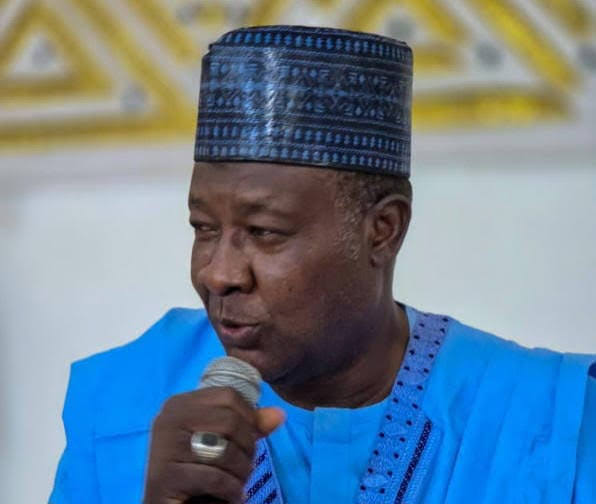
Kebbi State Commissioner for Information and Culture Yakubu Ahmed-BK has petitioned the Department of State Services (DSS). He alleges that unidentified persons have tried to abduct him and members of his family in Birnin Kebbi, the state capital. The petition is dated November 15, 2026. It is addressed to the Director-General of the DSS through the Deputy Director-General, Operations. A copy was made available to journalists on Monday, November 23. According to the petition, the first incident happened on Tuesday, November 10. Ahmed-BK says he was on his usual early-morning walk with his wife along the Sani Abacha Bypass when a white, fully tinted Hilux or Innoson van approached. The vehicle carried a red Agege registration number. He alleges that its occupants slowed down near the couple and tried to open one of the doors closest to them. These are allegations. As far as public reporting shows, no suspect has been identified or arrested. The DSS has not publicly confirmed an investigation, and no motive has been established. Even so, the petition lands in a state and region where kidnapping has become a grim part of daily life. Over the past decade, northwest Nigeria has been hit by banditry, mass school abductions and the rise of armed groups such as Lakurawa. Public officials have increasingly become targets alongside farmers, travelers and students. If a serving commissioner feels unsafe on a main road in the state capital, the case raises hard questions about security, intelligence and governance in Kebbi.
A morning walk is one of the simplest freedoms a person has. For Yakubu Ahmed-BK, it may have nearly become something else.
Ahmed-BK is Kebbi State's Commissioner for Information and Culture. He is the official whose job is to speak for the state government and explain its work to the public. Now he has a story of his own to tell. It is a frightening one, and it has gone not to a press conference but to the country's domestic intelligence agency.
In a petition dated November 15, 2026, Ahmed-BK asked the Department of State Services to act on what he describes as attempts by unidentified persons to abduct him and members of his family in Birnin Kebbi. The petition was addressed to the Director-General of the DSS through the agency's Deputy Director-General, Operations. A copy reached journalists on Monday, November 23, more than a week after it was dated.
The account at the center of the petition is brief but vivid. On Tuesday, November 10, Ahmed-BK says, he was taking his usual early-morning walk with his wife along the Sani Abacha Bypass in Birnin Kebbi. A white, fully tinted vehicle approached. He describes it as a Hilux or an Innoson van, with a red Agege registration number. According to the commissioner, the occupants slowed as they reached the couple. Then they tried to open one of the vehicle's doors close to where the couple was walking.
That is where the publicly reported details of the first incident end. The petition describes it as the first incident, which suggests the commissioner believes there have been further attempts or warning signs. But the full details of any later events have not been widely reported. It is also not publicly clear how the couple got away, whether anyone else saw the encounter, or whether the vehicle was caught on camera.
It matters to be precise about what this story is and what it is not.
It is a formal complaint by a senior state official to a federal security agency. It describes events that, if accurate, look like an attempted abduction. It is a serious matter, and it deserves a serious response.
It is not, at this stage, proof that a kidnapping plot existed. No suspect has been named. No arrest has been publicly announced. No security agency has publicly confirmed the commissioner's account, and none has disputed it either. There is no public evidence about who was in the vehicle, what they wanted, or whether the commissioner was targeted because of his office, his wealth, his politics or simple opportunity. An encounter on a road can be read in more than one way, and only an investigation can settle it.
Still, few Nigerians will hear this story and shrug. In Kebbi and across the northwest, a slow-moving vehicle with tinted windows and an opening door is not an abstract image. It is a fear many families live with.
The details that stand out
Several elements of the petition will likely draw the attention of investigators.
The first is the vehicle. A Toyota Hilux is one of the most common pickup trucks in northern Nigeria. Security agencies, contractors, businesses and private owners use it widely. Innoson is a Nigerian vehicle maker based in Nnewi, Anambra State, and its vans and pickups are also on the road. That the commissioner could not say for certain which of the two he saw is not surprising. An encounter that lasts seconds, early in the morning, with a vehicle whose windows are fully tinted, leaves little time to take notes.
The second is the tint. Fully tinted windows have long been a sensitive issue in Nigeria. Police rules require permits for heavily tinted vehicles, and enforcement drives have come and gone over the years. Security officials have repeatedly argued that dark tints help criminals hide their identities and their captives. Many legitimate users also hold permits, including officials and security personnel. A tinted vehicle is not, by itself, evidence of crime. But it does make a vehicle harder to identify and its occupants impossible to see.
The third is the registration. Nigerian plate numbers carry a code showing where a vehicle was registered. Agege is a local government area in Lagos State, roughly 1,000 kilometers by road from Birnin Kebbi. Red lettering on Nigerian plates is generally associated with commercial vehicles. A Lagos-registered commercial vehicle in Birnin Kebbi is not unusual in itself. Goods and people move between the two regions every day. But in this context, the plate could become an important lead.
There is a caution here too. Criminal gangs in Nigeria have been known to use fake, cloned or stolen plates to avoid detection. A plate number can lead investigators to a vehicle's owner, or it can lead to someone who has nothing to do with the incident. The commissioner's petition gives the DSS something to work with. It does not, on its own, identify anyone.
The fourth detail is the routine. Ahmed-BK described the walk as his "usual" early-morning exercise. That matters because kidnappers who target specific people often study their habits first. A predictable route at a predictable hour is the kind of pattern criminals look for. If the commissioner's account is accurate, the attempt may have followed some period of observation. That is speculation, and should be treated as such. But it is the kind of question any investigation would ask.
Why go to the DSS?
The commissioner's choice of agency is telling.
In most criminal matters, Nigerians report to the police. The Nigeria Police Force has primary responsibility for preventing and investigating crime, including kidnapping. The DSS has a different role. Created in 1986, when the old National Security Organisation was split into separate agencies, it is Nigeria's main domestic intelligence service. Its focus is on threats to national security, including terrorism, insurgency, subversion and serious organized crime. It is also responsible for protecting certain high-ranking officials and gathering intelligence on threats against them.
Petitioning the DSS signals that the commissioner sees the matter as more than an ordinary crime. It may reflect a belief that the threat is organized, linked to wider criminal networks, or tied to his status as a public official. It may also reflect a judgment that the DSS has the intelligence tools needed to trace the vehicle and its occupants. Addressing the petition through the Deputy Director-General, Operations, points it toward the arm of the agency that handles active security work.
The DSS has had a mixed public record. Supporters credit it with foiling attacks and tracking down kidnapping kingpins in several states. Critics have accused it, at various times, of political interference, of detaining critics and of ignoring court orders. Under Director-General Adeola Ajayi, who took office in 2024, the agency has worked to present a more professional, less political image. How it handles a petition from a serving state official will be watched as a small test of that effort.
As far as public reporting shows, the DSS has not commented on the petition. Agencies often stay silent during active investigations, and silence should not be read as inaction. But the commissioner's petition has now become public, and with that comes public expectation. Kebbi residents will want to know whether the matter is being taken seriously and whether anyone will be held to account.
A state that knows this fear
To understand why the commissioner's account carries such weight, it helps to look at what Kebbi has lived through.
Kebbi sits in Nigeria's far northwest. It borders the Republic of Niger and the Republic of Benin, and shares internal borders with Sokoto, Zamfara and Niger states. It is a farming heartland, known nationally for rice production. It is also a state on the front line of the country's insecurity crisis.
In June 2021, gunmen attacked the Federal Government College in Yauri, in southern Kebbi. They abducted students and staff. Some were freed within weeks. Others spent months in captivity, and a few were held for years. The Yauri case became a symbol of how deeply banditry had spread across the northwest and how slowly the state's response could move.
In November 2025, attackers struck the Government Girls Comprehensive Secondary School in Maga, in the Danko-Wasagu area of Kebbi. More than 20 schoolgirls were abducted, and a staff member was killed. The attack drew national outrage and federal attention. The girls were later freed, but the episode showed that schools in the state remained vulnerable four years after Yauri.
Kebbi has also faced a newer threat. Lakurawa, an armed group operating in the border areas of Kebbi and Sokoto, drew national attention in late 2024. Its fighters have been linked to attacks on villages, cattle rustling and the imposition of their own rules on rural communities. Nigeria's military said the group had links to jihadist networks in the Sahel. Its rise added a new layer to a crisis already shaped by bandit gangs, communal conflict and weak policing in remote areas.
Most of the violence in Kebbi has hit rural communities hardest. Farmers have been attacked on their land. Villagers have been forced to pay levies to armed groups. Travelers have been seized on highways. In parts of southern Kebbi, especially around Zuru, Danko-Wasagu and Sakaba, communities have lived for years with raids and abductions.
The state capital has generally been seen as safer. That is what makes the commissioner's account so striking. The Sani Abacha Bypass is not a forest track in a remote local government area. It is a major road in Birnin Kebbi. If his account is accurate, it suggests that people willing to attempt an abduction felt confident enough to try it in the city, near the seat of state government, in front of a senior official and his wife.
Kidnapping as an industry
Across Nigeria, kidnapping for ransom has grown from a localized crime into something closer to an industry.
In the early 2000s, it was most closely associated with the Niger Delta, where militants and criminal gangs seized oil workers, often foreigners, for ransom. Over time, the practice spread. Gangs in the southeast and southwest targeted wealthy individuals, travelers and clergy. In the northwest and north-central, armed bandit groups turned mass abductions of villagers, travelers and students into a major source of income.
The scale is staggering. A crime survey published by the National Bureau of Statistics in late 2024 estimated that Nigerians paid more than N2 trillion in ransom over a single year. The figures were based on household surveys and should be read as estimates rather than exact counts. But they pointed to a crime that touches millions of families directly. In the northwest, the survey found, kidnapping was especially common.
Ransom economics explain much of the targeting. Gangs often go after people they believe can pay. That includes business owners, civil servants, religious leaders, traditional rulers and politicians. Public officials are attractive targets for two reasons. They are seen as wealthy or well-connected. And their abduction carries publicity value, putting pressure on governments to negotiate.
Nigeria has seen many cases of officials and their relatives being targeted. Lawmakers, local government chairmen, permanent secretaries, judges and traditional rulers have been kidnapped in various states over the years. Relatives of governors and ministers have been seized. Some victims were released after ransom payments. Some were rescued by security forces. Some were killed. Each case sent the same message: rank does not guarantee safety.
That message is part of what makes the commissioner's petition significant. Senior officials usually have more protection than ordinary citizens. They may have police orderlies, official vehicles and access to security briefings. Many choose to walk or move without escorts for their own reasons, including a wish to remain close to the public. An early-morning walk with a spouse is a personal choice. If that choice now carries serious risk in the state capital, it shows how far insecurity has narrowed the space for normal life.
The motive question
Every attempted abduction raises the same question: why this person?
In the commissioner's case, there is no public answer. Several possibilities exist, and none should be assumed.
The first is ransom. Criminal gangs may have seen a senior official as a valuable target and planned to demand money for his release. This is the most common motive for kidnapping in Nigeria, and it would fit the broader pattern in the northwest.
The second is opportunity. It is possible the occupants of the vehicle did not know who the commissioner was. They may simply have seen a couple walking at an early hour and judged them easy targets. Many abductions in Nigeria are crimes of opportunity rather than careful planning.
The third is political. As Commissioner for Information and Culture, Ahmed-BK is a public face of the state government. Nigeria is moving toward the 2027 general elections, and political tension is rising in many states. Political violence, including intimidation of officials, has a long history in Nigerian elections. There is no public evidence that politics played any role in this case. It would be irresponsible to suggest it did. But investigators will likely consider the full range of possibilities.
The fourth possibility is that the encounter was misread. A vehicle slowing down and a door being opened could, in rare cases, have an innocent explanation. The commissioner clearly does not believe that, and his use of the word "attempts" suggests he sees a pattern. Only the investigation can establish what happened.
The honest position is that the motive is unknown. Readers should be wary of claims online that name suspects or offer confident explanations. Until security agencies make findings, those claims are rumors.
What this means for governance in Kebbi
Whatever the investigation finds, the petition carries a political message.
When a member of a state executive council writes to the DSS about threats to his life and family, it says something about the security environment in which the state government operates. Governor Nasir Idris and his administration have repeatedly promised to protect residents and work with federal forces against bandits and armed groups. The state has backed military operations, supported community security efforts and called for more federal deployment in troubled areas.
Critics will argue that if a commissioner does not feel safe in Birnin Kebbi, ordinary residents in rural areas face far greater danger. That is a fair point to raise, and residents will raise it. Supporters of the government will respond that crime can strike anywhere and that the commissioner's decision to report the matter shows trust in the system. Both views will shape public reaction.
There is also an institutional question. In Nigeria, the police, the military, the DSS and the Nigeria Security and Civil Defence Corps all play roles in fighting kidnapping. Coordination between them has long been a weakness. Information is not always shared. Responses can be slow. Petitions can sit on desks. If the commissioner's case moves quickly from complaint to investigation to results, it could show that the system works when it is pushed. If it stalls, it will feed public cynicism.
State capacity matters too. Under Nigeria's constitution, the police remain a federal force. Governors are often described as chief security officers of their states, but they do not command the police. Some states have created their own security outfits to fill the gap. Others have backed community vigilante groups. The debate over state policing has gained momentum in recent years, with federal leaders signaling openness to reform. Cases like this one feed that debate. When even officials feel exposed, the argument for policing closer to communities grows louder.
The human cost behind the headlines
It is easy to discuss kidnapping as a policy problem. For those who live through it, it is personal.
The commissioner was not alone on that walk. He was with his wife. His petition speaks of attempts to abduct him and members of his family. For any family, the possibility that someone has been watching their movements, waiting for the right moment, is deeply unsettling. It changes how people live. They vary their routes. They stop walking outside. They keep their children closer. They look twice at every slow-moving car.
This is the hidden cost of insecurity across northern Nigeria. Beyond the deaths and abductions that make headlines, millions of people live with constant caution. Farmers avoid their fields. Traders skip markets. Parents pull children from school. Travelers avoid certain roads after dark, or at any hour. Communities that once gathered freely now stay indoors. The economy suffers, but so does the ordinary texture of life.
When a public official speaks about that fear, it can help ordinary people feel seen. It can also prompt action, because officials have access to decision-makers that most citizens lack. The test is whether the response helps only the official, or whether it strengthens security for everyone who uses that road.
Lessons beyond Kebbi
The story carries lessons for readers beyond Nigeria, including in Ghana and the wider West African region.
Kidnapping for ransom is not a uniquely Nigerian problem. Ghana has seen cases of its own in recent years, including the high-profile abduction of young women in Takoradi in 2018 and 2019, which shocked the country and raised hard questions about police response. Across the Sahel, armed groups have used kidnapping to fund their operations, seizing locals and foreigners alike. Coastal West African states, including Ghana, Togo and Benin, have warned for years about the risk of violence spreading south from the Sahel.
Kebbi's position on Nigeria's border with Niger and near Benin places it at the edge of that wider regional crisis. Armed groups move across borders. Weapons, money and fighters flow through porous frontiers. Lakurawa's emergence in the borderlands shows how instability in one country can take root in another. For Ghana and its neighbors, northwest Nigeria offers a warning about how quickly insecurity can spread once it gains a foothold.
There is also a lesson about intelligence. The commissioner's petition is, at its core, an intelligence report. It describes a vehicle, a plate number, a location and a time. Effective security depends on turning reports like this into action. Countries that build strong systems for gathering, sharing and acting on such information are better placed to stop kidnapping gangs before they strike.
What to watch next
Several developments will show where this case goes.
The first is the DSS response. A public acknowledgment of the petition, or news that an investigation is underway, would reassure the commissioner and the public. A breakthrough, such as tracing the vehicle or identifying its occupants, would be even more significant.
The second is the vehicle itself. The red Agege plate number is the most concrete lead in the public account. Whether it leads to a real owner, a stolen vehicle or a fake plate will shape the direction of any investigation.
The third is security in Birnin Kebbi. Residents may see more patrols, checkpoints or enforcement against tinted vehicles in the capital. Such measures often follow high-profile incidents. Their value will depend on whether they are sustained.
The fourth is any further account from the commissioner. His petition describes the November 10 encounter as the first incident. More details about later events, if he chooses to share them, could help the public understand the scale of the threat he believes he faces.
The fifth is the wider security picture in Kebbi. The state's fight against bandits and armed groups, the safety of schools and rural communities, and the federal government's support will matter far more in the long run than any single case.
The bottom line
For now, the facts are limited. Yakubu Ahmed-BK, Kebbi State's Commissioner for Information and Culture, has petitioned the DSS over what he describes as attempts by unidentified persons to abduct him and his family. His petition, dated November 15, 2026, describes an incident on November 10 in which occupants of a white, fully tinted Hilux or Innoson van with a red Agege plate slowed beside him and his wife on the Sani Abacha Bypass and tried to open a door near them. No suspect has been publicly identified. No arrest has been announced. No motive has been established.
What is not in doubt is the setting. Kebbi has lived through school abductions, rural raids and the rise of new armed groups. Across the northwest, kidnapping has become a business that preys on the rich and the poor, the powerful and the vulnerable. A commissioner's morning walk should be one of the safest routines in a state capital. If his account is accurate, it was not.
The DSS now has a petition, a description and a plate number. Kebbi's residents have a question that goes far beyond one official's safety. If those who govern the state feel hunted on its main roads, what protection can the rest of the people expect?