A PRO GOLFER, A KENYAN CHEF AND 50KG OF "LOUD" AT LAGOS AIRPORT: NDLEA SAYS TRAFFICKERS NOW TRACK THEIR COURIERS LIKE PARCELS
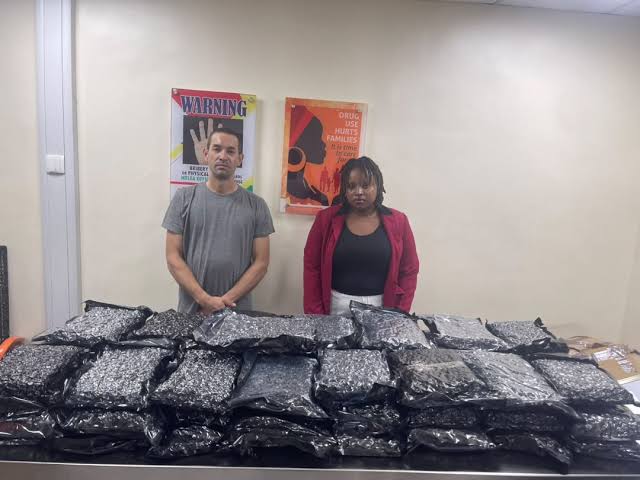
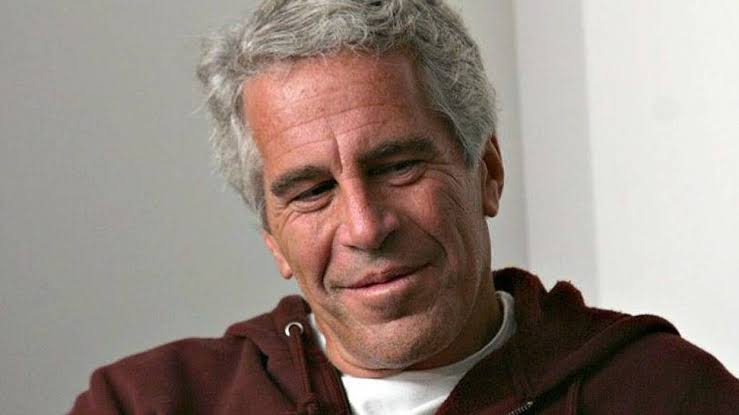
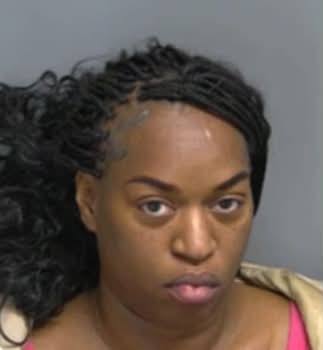
Nigeria's National Drug Law Enforcement Agency (NDLEA) says it arrested Henlo Grobler, a 37-year-old South African professional golfer, at Murtala Muhammed International Airport in Lagos on October 11, 2026. The agency alleges he arrived from South Africa with luggage linked to 50.4 kilograms, about 111 pounds, of a potent cannabis strain known on the street as "Loud." The NDLEA made the arrest public in a statement on Sunday, November 22, 2026, about six weeks after it says Grobler was detained. The agency also named a second suspect. She is Faiza Njambi Abubakar, a 25-year-old Kenyan private chef, whom authorities describe as Grobler's accomplice. According to the NDLEA, the two swapped luggage tags to hide who owned the cannabis. Grobler allegedly carried bags tagged in her name. She allegedly collected two bags bearing his tags and left the airport. Authorities say she was later arrested. NDLEA spokesman Femi Babafemi said the luggage and Grobler's phone had been fitted with tracking devices. In the agency's account, the trafficking network used them to monitor its couriers and their cargo. Neither suspect has been convicted of any offense. As far as public reporting shows, neither has responded publicly, and no details of charges or court dates have been released. The allegations remain unproven. Still, the case points to a shift in how drug networks may be operating. They appear to recruit couriers whose profiles draw little suspicion, split ownership of bags across several travelers, and use cheap consumer tech to watch their goods in real time. It also places Lagos airport, a South Africa-Nigeria-Kenya axis and the world of professional sport at the center of a story that matters to travelers, regulators and fans across West Africa, including in Ghana.
Professional golfers travel more than most people. They move from tournament to tournament with oversized bags, heavy equipment and tight schedules. Check-in staff are used to seeing them. Customs officers rarely look twice. According to Nigeria's anti-narcotics agency, that is part of what made Henlo Grobler useful to a drug network, and part of why his arrest is so unusual.
The NDLEA says it arrested Grobler, 37, a South African professional golfer, on October 11 at Murtala Muhammed International Airport in Lagos. He had arrived from South Africa. The agency alleges that officers linked him to luggage holding 50.4 kilograms of cannabis. That is about 111 pounds. The strain is the one Nigerians call "Loud," a high-potency variety that commands premium prices on the streets of Lagos, Abuja and other cities.
The agency did not make the arrest public until Sunday, November 22. Its statement also named a second suspect, Faiza Njambi Abubakar, a 25-year-old Kenyan private chef. The NDLEA described her as Grobler's accomplice. Authorities say she was later arrested in connection with the same case.
The scheme the agency describes is simple in idea and clever in practice. According to the NDLEA, the pair swapped luggage tags to hide who really owned the bags with the cannabis. Grobler allegedly carried bags tagged in Abubakar's name. Abubakar allegedly collected two bags bearing Grobler's tags and walked out of the airport. If one traveler were stopped, the paperwork would point to the other. Some accounts of the NDLEA statement say Grobler abandoned two checked-in bags bearing his name and tried to leave. The full sequence of what happened in the arrivals hall has only been described in outline, and it has not been tested in court.
Then came the detail that has caught the most attention. NDLEA spokesman Femi Babafemi said both the luggage and Grobler's phone were fitted with tracking devices. In the agency's telling, these were not there to protect the travelers. They were there so the network behind the shipment could follow its couriers and its cargo every step of the way, from departure in South Africa to the streets of Lagos.
It is important to be clear about what is known and what is not. What is known is what the NDLEA has said. The agency has named the suspects, given their ages and nationalities, described the alleged method and stated the weight of the drugs. What is not known is just as important. Neither Grobler nor Abubakar has been convicted. As far as public reporting shows, neither has made a public statement, and no lawyer has spoken for either of them. No details of formal charges, court appearances or pleas have been released. The identity of the network behind the alleged shipment has not been disclosed. Nor has any information about who recruited the pair, how much they may have been paid, or whether they knew what was in the bags.
Under Nigerian law and basic fairness, both suspects are presumed innocent. Drug cases in Nigeria often involve couriers who later say they were deceived, threatened or used. Courts are where those claims are tested. Until then, every detail in the agency's account should be read as an allegation.
The six-week gap between the arrest and the announcement deserves a note too. The NDLEA does not always publicize arrests right away. Investigators often hold back to follow leads, trace linked suspects or recover more evidence before going public. That may explain the delay here, especially since a second suspect was involved. But the agency has not explained the timing publicly, and readers should not assume what happened in between.
Even with those cautions, the case stands out. Nigeria's drug agency announces arrests at Lagos airport almost every week. Most involve Nigerians coming home from abroad, or travelers heading out to Europe, Asia or the Middle East. A foreign professional athlete, allegedly working with a young chef from another African country, carrying more than 50 kilograms of premium cannabis and watched by trackers, is a different kind of story.
To understand why, it helps to understand the drug at the center of it.
"Loud" is not a single strain. It is a street name for high-potency cannabis, usually grown indoors under controlled conditions. It is often hydroponic, meaning the plants grow in nutrient-rich water rather than soil. The name refers to its strong smell and powerful effects. It typically carries far higher levels of THC, the main psychoactive compound in cannabis, than the local cannabis grown in Nigeria's forests and farms.
Over the past several years, Loud has become a fashionable and expensive drug among some young Nigerians, especially in cities. It is marketed as a premium product. Much of it is imported. NDLEA statements have repeatedly reported seizures of Loud arriving at Lagos airport from North America, Europe and Asia, often hidden in luggage, packed in vacuum-sealed bags or disguised as food and household goods. South Africa has also appeared in recent seizure reports as a source.
That raises an obvious economic question. Nigeria grows a great deal of cannabis. Why would anyone fly it in? The answer is price and potency. Local cannabis is cheap. Imported Loud sells for much more, sometimes many times the price per gram. Traffickers can earn large profits by moving relatively small volumes. A 50-kilogram shipment of premium cannabis is a serious commercial load, far beyond personal use. The NDLEA has not publicly given a street value for this seizure, but at Lagos prices it would be worth a very large sum.
South Africa's own laws add another layer. In 2018, South Africa's Constitutional Court ruled that adults could use and grow cannabis privately. In 2024, the country signed the Cannabis for Private Purposes Act into law, building on that ruling. Commercial sale and export of recreational cannabis remain illegal. But the change has helped create a large and growing culture of private cultivation, including indoor growing of high-potency strains. Critics have warned that legal gray areas can make it easier for illegal supply chains to form. Nothing in the NDLEA's statement says where the cannabis in this case was grown. It is reasonable, though, to note that South Africa has become a more significant player in the regional cannabis economy.
Nigeria's law is far stricter. Cannabis is illegal to grow, sell, possess or import. The NDLEA Act provides heavy penalties for importing and dealing in narcotics, including long prison terms. In 2024, the Senate passed amendments that would have toughened penalties further, including a proposal for the death penalty for some trafficking offenses. That proposal drew strong criticism from rights groups and lawyers, and the debate showed how seriously Nigeria's lawmakers view the drug trade. Whatever the final shape of the penalties, anyone convicted of importing 50 kilograms of cannabis into Nigeria would face a very long sentence.
That gap between South Africa's approach and Nigeria's is part of what makes the route attractive and dangerous. A drug that can be grown with relative ease in one country can fetch high prices in another where it is banned. That is the classic engine of trafficking.
The Kenyan link points to another feature of the African drug trade. Nairobi's Jomo Kenyatta International Airport is one of the busiest hubs on the continent. Kenya's coast has long been flagged by international agencies as a transit point on the so-called "southern route" for heroin from Asia. Kenyan, Nigerian and South African nationals have all appeared in drug cases across Africa and beyond. Networks increasingly cross borders, recruit from several countries and move goods through more than one hub. A South African traveler and a Kenyan traveler working together on a Lagos-bound shipment, as the NDLEA alleges, would fit that pattern. Reports do not say whether Abubakar flew from Kenya, flew with Grobler from South Africa, or traveled by another route. Those details have not been made clear.
What is clear is that Lagos sits at the center of many of these routes.
Murtala Muhammed International Airport is Nigeria's busiest international gateway. It handles flights from across Africa, Europe, the Middle East and North America. Its scale is part of the challenge. Thousands of passengers and huge volumes of luggage pass through every day. Traffickers bet that some bags will slip through. The NDLEA bets that its officers, scanners, sniffer dogs and intelligence will catch them.
In recent years, the agency has made that airport a showcase for its work. Since retired Brigadier General Mohamed Buba Marwa took charge of the NDLEA in 2021, the agency has adopted a far more public and aggressive style. It releases frequent statements, often with photos of seized drugs and arrested suspects. It reports seizures of cocaine, heroin, methamphetamine, tramadol, codeine and cannabis at airports, seaports and highways. It regularly arrests travelers who swallow drug pellets, hide drugs in shoes and clothing, or pack them into food items.
Some of its cases have drawn national and international attention. In 2022, the agency charged Abba Kyari, then a celebrated senior police officer, in a cocaine case, a dramatic moment that showed how far drug networks can reach into official ranks. In the same year, the NDLEA announced the seizure of about 1.8 tonnes of cocaine from a warehouse in Ikorodu, Lagos, one of the largest cocaine seizures in Nigeria's history. The agency has also arrested freight agents, airport workers and baggage handlers accused of helping traffickers beat the system.
Supporters credit the agency with real progress and say its public statements help deter traffickers and warn travelers. Critics raise concerns about the practice of naming and showing suspects before trial, and about the risk that public announcements can shape opinion before courts weigh the evidence. Both views have merit. Public communication helps build trust in law enforcement. It also places a duty on readers and journalists to remember that an arrest is not a conviction.
Against that backdrop, the tag-swapping method the NDLEA describes is worth close attention.
Airline luggage tags are the link between a bag and its owner. When a bag goes through screening and something suspicious is found, officers check the tag and find the passenger. Smugglers know this. Some leave bags unclaimed on the carousel if they sense danger. Others use "ghost" bags checked in by corrupt insiders. The scheme the NDLEA describes appears to go a step further. By switching tags between two travelers, a network can confuse the trail. If one person is stopped with a bag, the tag says it belongs to someone else. That person may already have left the airport. It buys time. It creates doubt. It may help a courier argue in court that the bag was never theirs.
Investigators in many countries have seen versions of this before. What makes this case stand out, according to the agency's account, is the combination of tag-swapping with active tracking.
Small tracking devices are now cheap and easy to buy. Millions of ordinary travelers slip them into suitcases to find lost luggage. They work by connecting to nearby phones or networks and reporting their location. They are useful, legal and popular. They can also be misused.
If the NDLEA's account is accurate, the trafficking network fitted trackers to the luggage and to Grobler's phone. That would let organizers watch the shipment move from departure to arrival and see where the bags, and the couriers, went after landing. It would warn them if a bag stopped moving inside the airport for too long, which could signal a seizure. It would show whether a courier tried to take a detour, vanish or sell the drugs on the side. And it would let the network track the person, not just the parcel.
That last point is chilling. It suggests that, at least in this case, the alleged couriers may have been treated as tools to be watched, not partners to be trusted. It is also, potentially, a double-edged sword for the network. Tracking data can become evidence. If investigators recover the devices and trace who was receiving their signals, it could lead them to the people further up the chain. The NDLEA has not said whether it has done so, or whether any other suspects have been identified.
There is another possibility that courts may have to consider. In some trafficking cases, couriers claim they did not know what they were carrying, or that they were pressured into it. Trackers on a courier's phone could, depending on the facts, support either side of that argument. They might show a person closely tied to the network. Or they might suggest a person being controlled. Without access to the evidence, it is impossible to know which. That is a question for investigators, lawyers and judges.
Then there is the question everyone is asking: why would a professional golfer be involved at all?
The honest answer is that nobody outside the investigation knows. Reports describe Grobler as a South African professional golfer. Public reporting has not detailed his career record, his ranking or which tours he played on. It has not explained whether golf was his main source of income at the time of his arrest. Professional golf is a sport of stark contrasts. The stars at the top earn fortunes. Many players below them struggle to cover the costs of travel, entry fees, caddies and accommodation. For a lower-ranked professional, a season can lose money. Financial strain is one of the most common reasons couriers give for agreeing to carry drugs. But nothing in the NDLEA's statement says Grobler was in debt or under pressure, and it would be wrong to assume it.
What can be said is that people like professional athletes may appeal to traffickers. They travel often. They carry bulky luggage. They often have legitimate reasons to visit many countries. They may not fit the profile officers are trained to look for. Recruiting people with clean records and respectable jobs is a known tactic. Traffickers have long used students, nurses, retirees, tourists, business travelers and others who do not look like smugglers.
Reports have not said whether any of the cannabis was found in sports equipment. It would be wrong to suggest it was. The point is broader. A sports career can provide a cover story, and drug networks know it.
Sport and drug crime have crossed paths before. In 2009, former England cricketer Chris Lewis was jailed in Britain for 13 years after he was caught at Gatwick Airport with liquid cocaine hidden in cans of fruit juice inside a cricket bag. The case shocked cricket fans and showed how an athlete's fame offered no protection once caught. In other sports and countries, former players have been convicted of drug offenses after their careers faded. Drug money has also shaped football in parts of Latin America, where cartels have invested in clubs. Each case is different. Together, they show that sport is not sealed off from organized crime.
Golf has its own reasons to care. South Africa has one of the proudest golfing traditions in the world. It has produced major champions such as Gary Player, Ernie Els, Retief Goosen, Louis Oosthuizen and Charl Schwartzel. The country's Sunshine Tour has helped develop generations of players. Golf in South Africa is closely tied to tourism, business networking and national pride. A drug case involving a South African professional, even an unproven one, is not the kind of headline the sport wants.
Golf's governing bodies and tours typically have codes of conduct that cover behavior bringing the game into disrepute. If Grobler is a member of any tour, those bodies may need to decide how to respond. Most sports bodies wait for criminal processes to run their course before taking final action, though some suspend players during serious investigations. As far as public reporting shows, no golf body has commented on this case.
There are wider integrity questions too. Sport worries a great deal about doping and match-fixing. It worries less about whether athletes are being targeted by criminal networks as couriers. Yet the risk is real, especially for lower-paid professionals who travel often across borders. Player welfare programs, financial education and clear warnings about approaches from strangers could help. So could clear channels for athletes to report pressure or threats. The cost of one bad decision, in a country with harsh drug laws, can be a decade or more in prison.
For Nigeria, the case matters on several levels.
First, it is a reminder that the country is not just a transit point for drugs. It is a destination. The 2018 National Drug Use Survey, carried out with support from the United Nations Office on Drugs and Crime, estimated that about 14.3 million Nigerians aged 15 to 64 had used drugs in the previous year. Cannabis was by far the most common, with around 10.6 million users. Those figures are several years old, but they show the scale of demand. Premium imported strains like Loud feed a market that already exists. Health workers have warned about rising cases of drug-related mental health problems among young people, including those linked to high-potency cannabis.
Second, it shows that trafficking networks targeting Nigeria are international and adaptive. If the NDLEA's account is correct, this network recruited people from two other African countries and used technology to manage its risk. That means Nigerian authorities need strong cooperation with their counterparts in South Africa, Kenya and elsewhere. Intelligence sharing between airports, police forces and drug agencies is essential. A shipment that leaves Johannesburg and arrives in Lagos is a problem for both countries.
Third, it raises questions about Nigeria's image and its relationships. Nigeria and South Africa have a complicated history. They are Africa's two largest economies and natural partners. Yet relations have been strained at times, especially after waves of xenophobic violence against foreigners, including Nigerians, in South Africa. Nigerians have long complained about being stereotyped abroad as drug dealers or fraudsters. A case in which a South African national is accused of trafficking drugs into Nigeria flips that stereotype. Some Nigerians online have pointed this out sharply. That reaction is understandable. But the lesson is not that one nationality is better than another. It is that drug networks recruit from everywhere, and no country is immune.
Fourth, the case tests the system that follows an arrest. Nigeria's courts are often slow. Drug cases can take years. Suspects may spend long periods in detention before trial. Foreign suspects face extra challenges, including language barriers, distance from family and the need for consular support. South Africa's and Kenya's diplomatic missions in Nigeria may be asked to help their citizens. How the case is handled, including access to lawyers and a timely trial, will matter for Nigeria's reputation for fair justice.
For Ghana, the story should ring familiar alarm bells.
Ghana has fought its own long battle with drug trafficking. In the 2000s, international agencies flagged West Africa, including Ghana, as a key transit zone for cocaine moving from South America to Europe. Ghana's Kotoka International Airport in Accra has seen many arrests of drug couriers over the years. The country's Narcotics Control Commission, created under the Narcotics Control Commission Act of 2020, now leads its anti-drug work.
Ghana also has its own debate on cannabis. The 2020 law allowed licensed cultivation of cannabis with low THC levels for industrial and medicinal purposes. In 2023, the Supreme Court struck down that provision on procedural grounds. Parliament later passed an amendment to restore a licensing framework. Ghana's approach is still much stricter than South Africa's on recreational use. But it shows how the region is wrestling with how to treat a plant that is increasingly legal elsewhere in the world.
The tactics described in the Lagos case could easily be used on Accra-bound flights. Tag-swapping, multiple couriers and tracking devices are not tied to one airport. Ghanaian authorities, airlines and ground handlers would do well to study the case. So would ordinary travelers.
There are practical lessons for anyone who flies in or out of Lagos, Accra or any other African hub. Never agree to carry a bag or package for someone else, however small the favor seems. Never check in luggage you did not pack yourself. Watch your bags closely at check-in and keep your claim stubs. Be wary of offers of free travel, cash or gifts tied to carrying luggage. Report anyone who asks you to do these things. And remember that in Nigeria and many other countries, saying "I didn't know" is not always enough to avoid prison.
Above all, the case is a warning about how drug networks think about the people they use. In the NDLEA's account, the couriers were tagged and tracked like the bags they carried. Whatever role Grobler and Abubakar actually played, the alleged setup shows a business that values its cargo and treats its couriers as disposable. When things go wrong, it is the couriers who stand in the dock. The organizers, watching dots on a map from far away, often stay out of reach.
What happens next will depend on several developments.
The first is formal charges. The NDLEA usually charges suspects in the Federal High Court. Details of the charges, and when the suspects appear in court, will show how prosecutors frame the case.
The second is the suspects' response. Grobler and Abubakar have the right to defend themselves. Their account of what happened, including how they came to be involved, what they knew and who approached them, may differ sharply from the agency's.
The third is the wider investigation. If the trackers lead investigators to the people who were monitoring the shipment, the case could reach well beyond two couriers. The NDLEA has not said whether other arrests are expected.
The fourth is diplomatic and sporting reaction. South African and Kenyan authorities may comment on the cases of their citizens. Golf bodies may also be asked to respond.
The fifth is policy. The case may push airports and airlines to look again at how luggage tags are issued, checked and matched to passengers. Better reconciliation between bags and travelers would make tag-swapping harder.
For now, the facts that can be stated are these. Nigeria's NDLEA says it arrested South African professional golfer Henlo Grobler, 37, at Lagos airport on October 11, after he arrived from South Africa. The agency alleges he was linked to 50.4 kilograms of Loud cannabis. It says Kenyan private chef Faiza Njambi Abubakar, 25, swapped luggage tags with him to conceal who owned the drugs, and that she was later arrested. Spokesman Femi Babafemi said the luggage and Grobler's phone carried tracking devices used by the network. The allegations have not been proven in court.
A golfer's life is built on travel, precision and reputation. If the NDLEA's account holds up, Henlo Grobler's travels ended in an arrivals hall in Lagos, with his reputation on the line and his phone reporting his location to someone else. If it does not, the courts will say so. Either way, the case shows how modern drug trafficking works: across borders, through ordinary-looking travelers, and with the same tracking tools that millions of people use to find a lost suitcase.