A SCHOOL ENROLLMENT FORM IN THE WRECKAGE: WHY AFRICA'S YOUNG ARE FLEEING, FIGHTING AND LOSING FAITH IN THEIR LEADERS
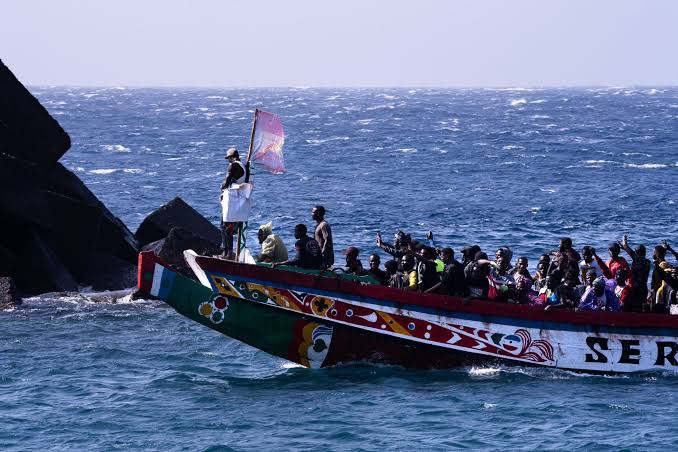
Three stories from across Africa this week reveal one shared crisis: a continent where young people are fleeing, suffering or waiting for leaders to deliver. Off the coast of Senegal, dozens of people are missing after a migrant pirogue capsized near Yenne, south of Dakar, early on Wednesday. Accounts put the number on board at between 50 and 100. At least four bodies have been recovered. Senegal's navy says it rescued more than 1,400 people at sea in just 48 hours this week. The UN refugee agency reports more than 8,000 arrivals in Spain's Canary Islands in the first 12 days of November, and nearly 600 deaths and disappearances on the route so far in 2026. President Bassirou Diomaye Faye has ordered a report on what drives the crossings and called for a focus on youth jobs. Across the continent, regional coverage continues to document how conflict is devastating children, from Sudan and the Democratic Republic of Congo to the Sahel and Somalia. UN data show grave violations against children in war at record levels. In South Africa, renewed coalition talks are unfolding as the rand hovers near a one-year low, testing investor confidence in the country's power-sharing politics. Some specific figures and negotiating details on the last two stories have not been independently confirmed and should be treated with caution. Together, the three stories raise one urgent question: what happens to a continent whose future keeps being postponed?
At around two o'clock on Wednesday morning, residents of Yenne, a fishing village on Senegal's Petite Côte south of Dakar, heard something they will not forget. "Cries could be heard coming from the pirogue that were audible even from the beach," Oumar Sow, a representative of the village chief, told the AFP news agency. By daylight, a badly damaged wooden boat had washed onto the sand. Inside it, police found identity documents, mobile phones, personal belongings and, among them, a school enrollment document. Someone on that boat had been enrolled in school not long ago. Now they were on their way to Europe, or to the bottom of the Atlantic.
The exact number of people on board is still unclear. A survivor questioned by police reportedly said there were about 100 passengers, including five women. A local official told Reuters the boat carried about 50 people. According to that official, the vessel struck a rock while migrants were being moved from small fishing boats launched from the beach onto a larger pirogue waiting offshore. Boubacar Séye, president of the Senegalese nonprofit Horizons Sans Frontières, said on Thursday that four bodies had been recovered. Dozens more remain missing. Search operations ran through Wednesday and resumed on Thursday.
The Yenne tragedy came less than two weeks after another deadly shipwreck off Senegal's northwestern coast, in the area of Thieppe near the town of Kébémer. That disaster killed at least 39 people, with some reports putting the toll above 40. It was one of the deadliest migration disasters in the country's recent history. After it, President Faye urged Senegalese people not to risk their lives at sea. He vowed that his government would "fight against those who organize these crossings" and work to "provide our youth with reasons to have hope here at home."
The warnings have not stopped the boats. This week, Senegal's navy said it had rescued more than 1,400 people trying to reach Europe aboard pirogues over just 48 hours on Monday and Tuesday. That is the population of a small village, intercepted in two days. On the other side of the ocean, the numbers are just as stark. The UN refugee agency says more than 8,000 people reached Spain's Canary Islands in the first 12 days of November alone. Almost 1,500 arrived on a single day, Saturday, November 14, the highest daily figure since 2020.
The pressure has hit hardest on El Hierro, the smallest and most remote of the main Canary Islands and often the first landfall for boats coming from Senegal and Mauritania. On November 7, El Hierro declared a state of emergency. Officials said more than 3,300 people had arrived in about 30 boats since the start of the month. That is almost a third of the island's own population.
The cost in human life is rising with the traffic. The UN refugee agency says nearly 600 people have died or gone missing trying to reach the Canary Islands from West Africa so far in 2026. That compares with around 1,200 for the whole of 2025, so the year is not yet as deadly as the last one. But the November surge could change that quickly. The International Organization for Migration recorded at least 454 deaths and disappearances off the West African coast by October. It warned that its figures are likely an underestimate, because many boats vanish without survivors or any trace. Independent groups that track the route have often reported far higher death tolls than official agencies, because they count boats reported missing by families. The real toll of the Atlantic route may never be known.
At a cabinet meeting on Wednesday, the same day the Yenne boat went down, President Faye expressed concern about the renewed rise in irregular departures. He told the interior ministry to prepare a detailed report on the factors driving the journeys and to propose measures to curb them. According to a government statement, he also stressed the need to improve job prospects for young people.
Séye, whose organization has spent years supporting migrants and their families, was blunt about what has and has not worked. "We need to wake up to the gravity of the situation," he told Reuters. "The strategy deployed until now is not working. We need to fix the root causes of this problem."
That debate, between policing the coast and fixing the conditions that empty it, sits at the heart of the Atlantic migration crisis. Spain and the European Union have invested heavily in the first approach. Spain has deployed a helicopter to patrol the Senegalese coast in cooperation with the country's navy. A local official in Yenne told Reuters this partnership has increased interceptions and could reduce departures. Spain's embassy in Dakar has pinned a warning on its X account telling Senegalese that they will not be allowed to stay or move freely in Europe if they arrive illegally. "Don't believe false promises. Don't risk your life," the post reads.
The message is clear. Whether it is believed is another matter. The Atlantic route has gone through repeated cycles of crackdown and resurgence. In 2006, during the so-called "cayuco crisis," more than 30,000 people reached the Canary Islands. Spain and Senegal responded with joint patrols, repatriation agreements and aid programs, and arrivals fell sharply. The route quieted for more than a decade, then revived in 2020 as tighter controls in North Africa and the Mediterranean pushed people west. In 2023 and 2024, arrivals in the Canaries reached record levels, with more than 46,000 people landing in 2024. Arrivals then dropped markedly in 2025 as Mauritania, Senegal and their European partners stepped up enforcement. The November surge suggests that the decline may have been a pause rather than a turning point.
The geography of the route explains much of its danger. From Senegal's coast to El Hierro is a journey of well over 1,000 kilometers across open Atlantic water. Pirogues are long, narrow wooden boats built for fishing near the shore, not for a voyage that can last a week or more. They are often overloaded, short of fuel, water and food, and powered by outboard engines that can fail far from land. Winds and currents can push boats off course into the empty ocean. Some have drifted as far as the Caribbean and South America, their passengers long dead. Families often learn the fate of their loved ones through rumors, social media posts or, sometimes, not at all.
Why do young Senegalese keep taking that risk? The IOM points to limited job opportunities, family pressure and established migration networks. Each of those factors has deep roots.
Senegal has long been seen as one of West Africa's more stable democracies. Its 2024 election, which brought President Faye and his ally Ousmane Sonko to power on a wave of youth support, was hailed as a democratic triumph. Faye, at 44, became Africa's youngest elected head of state. He and Sonko campaigned on promises of sovereignty, economic renewal, an end to corruption and, above all, opportunity for the young. Many of the people now boarding pirogues are the same young voters who celebrated that victory. Their departure is, in a sense, a verdict on how slowly promises turn into paychecks.
The government inherited serious problems. An audit commissioned after the change of power found that Senegal's public debt and deficits had been significantly understated under the previous administration. The revelation damaged the country's standing with lenders, led the International Monetary Fund to pause its program and forced the government into a painful search for new financing. Senegal also began producing oil and gas in 2024, raising hopes of new revenue. Those hopes have not yet translated into broad-based jobs. Energy projects employ relatively few people, and their revenues take time to reach ordinary households.
The fishing industry tells a sharper story. Coastal communities like Yenne have relied on fishing for generations. Over the past two decades, many fishermen say their catches have collapsed. They blame overfishing by industrial fleets, including foreign trawlers operating under licenses and fishing agreements, as well as the growth of fishmeal factories that turn small fish into animal feed for export. Climate change and warming waters may also be shifting fish stocks. As catches fall, fishing families lose income. Their boats, and their knowledge of the sea, become assets for a different trade. Fishermen with nothing to catch can earn more by carrying migrants than by fishing. Some become passengers themselves.
Smuggling networks exploit this desperation. They charge large sums, often paid by families who pool savings, sell land or borrow money in the hope that a son abroad will send money home. Migration in Senegal is not only an individual decision. It is often a family investment. Remittances from Senegalese abroad make up a significant share of the country's economy, and many households depend on them. In some communities, a young man who stays home while his peers leave can face quiet pressure or open ridicule. Senegalese youth have a phrase for the choice they face: "Barça ou barsakh." It means "Barcelona or death."
This is the context in which Faye's report and Séye's call for root causes will be judged. Policing can stop some boats. It cannot create jobs, restore fish stocks or change the arithmetic that makes a dangerous crossing look like a rational bet. Europe's own policies are part of that arithmetic. Fishing agreements, trade rules, development aid and the near-total absence of legal routes for low-skilled African workers to reach Europe all shape the choices young West Africans make. Spain has experimented with circular migration programs that allow some Senegalese workers to take seasonal jobs legally. Such programs remain small compared with demand.
For Nigerian readers, the Senegal story is not distant. Nigerians have long been among the many nationalities on irregular routes to Europe, through the Sahara, Libya and the Mediterranean, and at times along the Atlantic coast. Nigeria's own youth unemployment, inflation and the "japa" wave of emigration among skilled professionals reflect the same pressures that drive young Senegalese to the sea. The difference is often a matter of means. Those with qualifications and savings leave on visas. Those without leave on boats. Both are responses to economies that have not created enough opportunity for the young people they produce.
If migration is one way Africa's young are paying for the continent's failures, conflict is another, and a far more brutal one. Regional coverage this week has once again focused on how wars across Africa are devastating children. The specific new figures in some of these reports have not all been independently confirmed. The wider picture, however, is well documented by UNICEF and the United Nations, and it is grim.
The UN Secretary-General's annual report on children and armed conflict, released in 2025, recorded more than 41,000 grave violations against children worldwide in 2024. That was the highest number since the UN began systematic monitoring nearly three decades ago, and a sharp rise from the previous year's record. The UN defines six grave violations: killing and maiming of children, recruitment and use of children by armed forces and groups, sexual violence against children, abduction, attacks on schools and hospitals, and denial of humanitarian access. African conflicts account for a large share of the cases. The Democratic Republic of Congo, Somalia, Nigeria, Sudan and countries of the central Sahel have repeatedly ranked among the worst places in the world for children caught in war.
Sudan stands out as the largest humanitarian catastrophe on the continent. Since fighting broke out in April 2023 between the Sudanese Armed Forces and the paramilitary Rapid Support Forces, the war has killed tens of thousands of people and driven more than 12 million from their homes, creating what UN agencies have described as the world's largest displacement crisis. Roughly half of the displaced are children. Famine has been confirmed in parts of the country, including areas of Darfur. Hospitals have been bombed, looted or abandoned. Most schools in conflict areas have closed for long periods, leaving millions of children out of the classroom.
UNICEF has documented horrific sexual violence against children in Sudan, including cases involving very young children. When the RSF seized El Fasher, the last major army-held city in Darfur, in late 2025 after a long siege, the UN and rights groups reported mass killings, abductions and atrocities against civilians. Exact figures from Darfur remain difficult to verify because access is severely restricted. But aid agencies have warned that a generation of Sudanese children faces hunger, trauma, lost education and lasting disease. Many of those who have fled to Chad, South Sudan, Egypt and elsewhere live in overcrowded camps with limited food, water and health care.
In the eastern Democratic Republic of Congo, decades of conflict escalated sharply in early 2025, when the M23 rebel group, which UN experts say is backed by Rwanda, seized the major cities of Goma and Bukavu. Rwanda has denied supporting the group. The offensive displaced hundreds of thousands of people, many of whom had already fled earlier fighting. UNICEF reported that at the height of the violence, a child was being raped roughly every half hour in eastern Congo. Diplomatic efforts, including a US-brokered agreement between Congo and Rwanda and talks hosted by Qatar between Kinshasa and M23, raised hopes of de-escalation. Implementation has been uneven, and reports of clashes, displacement and abuses have continued. Armed groups across the region recruit children as fighters, porters, spies and cooks. Girls are especially vulnerable to sexual violence and forced marriage.
In the central Sahel, the crisis is quieter in international headlines but deep in its effects. Burkina Faso, Mali and Niger, all now governed by military juntas that have broken with their former Western partners and left ECOWAS to form the Alliance of Sahel States, face sustained insurgencies by groups linked to al-Qaeda and the Islamic State. Jihadist fighters have attacked villages, blockaded towns and targeted schools as symbols of the state. At the peak of the crisis, thousands of schools were closed in Burkina Faso alone, cutting off education for hundreds of thousands of children. Rights groups have also documented abuses by state forces and allied militias, including killings of civilians in counterinsurgency operations. Children in the region face displacement, hunger, recruitment and the loss of years of schooling. Independent reporting from the Sahel has become increasingly difficult as governments restrict foreign media and humanitarian access, so the full scale of harm may be underreported.
Somalia has for years recorded some of the highest numbers of grave violations against children anywhere. Al-Shabaab has long recruited children, sometimes forcibly, and pressured communities to hand over boys for its ranks. Children are killed and injured in fighting, airstrikes, explosive devices and clan conflicts. Somalia's suffering is compounded by repeated droughts and floods, which drive families from rural areas into displacement camps around cities like Mogadishu and Baidoa. In those camps, malnutrition, disease and sexual violence are constant threats. Humanitarian funding cuts by major donors, including sharp reductions in US aid since 2025, have forced agencies across the continent to scale back nutrition, health and protection programs. Aid groups warn that those cuts are costing children's lives.
Nigeria is part of this story too. The insurgency in the northeast, driven by Boko Haram and the Islamic State West Africa Province, has killed and displaced children for more than 15 years. The 2014 kidnapping of the Chibok schoolgirls became a global symbol of the danger children face in conflict zones, and some of those girls remain missing more than a decade later. Mass abductions from schools have continued in the northwest and north-central regions, carried out by armed gangs often described as bandits, who hold children for ransom. Each new kidnapping deepens fear among parents and pushes more children out of school. Nigeria already has one of the largest populations of out-of-school children in the world.
The damage from conflict lasts far longer than the fighting. Children who lose years of school rarely make them up. Children who suffer malnutrition in early life can face lifelong physical and cognitive effects. Trauma from violence, displacement and abuse can shape mental health for decades. Children recruited by armed groups often struggle to return to their communities, and some are stigmatized as perpetrators rather than victims. Girls who survive sexual violence face health risks, social stigma and, in some cases, forced marriage. Every year of war deepens the gap between what these children could have become and what they are allowed to become.
This is where the migration and conflict stories meet. Conflict and insecurity are among the forces pushing people to move, first within their countries, then across borders and sometimes across seas. Many of the people on boats from West Africa come from countries far from the shore, including Mali, Guinea and Burkina Faso, where violence, poverty and political instability overlap. A child displaced by war in the Sahel today may become a young adult boarding a pirogue in Senegal or Mauritania a decade from now. Europe's anxiety about arrivals in the Canaries and the world's fading attention to Africa's wars are, in many ways, two views of the same crisis.
The third story of the week comes from Africa's most industrialized economy, and it is about a different kind of uncertainty. In South Africa, renewed attention has turned to coalition talks as the rand hovers near a one-year low against the US dollar. The precise state of the negotiations and the exact currency levels cited in some reports have not been independently confirmed here. The direction of concern, however, is clear: investors and citizens alike are watching whether South Africa's experiment in coalition government can hold together and deliver growth.
South Africa entered the coalition era in 2024. In that year's general election, the African National Congress lost the outright majority it had held since Nelson Mandela led it to power in 1994, winning only about 40 percent of the vote. President Cyril Ramaphosa responded by forming a Government of National Unity with the Democratic Alliance, historically the ANC's main rival, along with several smaller parties. Markets welcomed the arrangement. The rand strengthened, bond yields fell and business leaders spoke of a new era of pragmatic, reform-minded government.
The partnership has been turbulent from the start. The ANC and the DA have clashed over a range of issues. These include a proposed increase in value-added tax in the 2025 budget, which the DA opposed and which was eventually dropped after a bruising political standoff. The parties have also fought over the Expropriation Act, which allows land to be taken in some cases without compensation, and over education legislation on language and admissions policy. Each dispute raised questions about whether the coalition could survive. Each time, it held, partly because both parties concluded that the alternatives were worse.
Coalition politics in South Africa is not limited to the national government. Many of the country's major cities, including Johannesburg, Tshwane and at various times Cape Town's neighbors, have been run by fragile coalitions for years. Those local arrangements have often been chaotic, with mayors removed through no-confidence votes, budgets delayed and basic services suffering. Johannesburg has cycled through mayors at a dizzying pace. Residents have endured water outages, crumbling roads and failing infrastructure. As the country moves through its local government election cycle, coalition negotiations in municipalities could shape whether South Africa's cities become more stable or remain stuck in political trading. Details of the current talks remain fluid, and it is too early to judge their outcome.
The rand is often described as one of the most traded and most volatile emerging market currencies in the world. It reacts quickly to global investor mood, the strength of the US dollar, commodity prices and domestic political news. A rand near a one-year low may reflect several factors at once. Global markets have recently shown signs of risk aversion, which typically hurts emerging market currencies. Shifts in US interest rate expectations can strengthen the dollar and weaken the rand. Prices for South Africa's key exports, including platinum group metals, gold, coal and iron ore, influence the country's trade balance. Political uncertainty, including any sign that the coalition is weakening, can push investors to demand a higher return for holding South African assets. It is difficult to say with certainty how much of the currency's recent weakness reflects domestic politics and how much reflects global forces.
What is clear is that the rand's moves have real consequences for ordinary South Africans. A weaker rand makes imports more expensive, including fuel, which feeds into transport and food prices. That can push up inflation and limit the South African Reserve Bank's room to cut interest rates. Households already struggling with high living costs feel the pressure quickly. On the other hand, a weaker currency can help exporters, including mining companies and farmers, by making their goods more competitive abroad.
South Africa's economy has struggled for more than a decade with weak growth, which has rarely exceeded 1 or 2 percent a year. Unemployment remains among the highest in the world, above 30 percent by the official measure and far higher among young people. Years of electricity blackouts caused by failures at the state power utility Eskom damaged business and investor confidence, though load shedding eased significantly from 2024 as repairs and private power investment took effect. Problems at Transnet, the state rail and port operator, have limited the country's ability to export coal and minerals. Crime, corruption and the long shadow of the "state capture" era under former President Jacob Zuma have also weighed on confidence.
There have been signs of progress. South Africa was removed from the Financial Action Task Force's "grey list" of countries under increased monitoring for money laundering and terrorist financing in 2025, a significant step for its financial reputation. The country hosted the G20 in 2025, the first time the group's summit was held on African soil, giving it a prominent diplomatic platform. Reforms to open the electricity and rail sectors to private operators have begun to show results. The Government of National Unity has been credited by many investors with bringing greater stability than an ANC-only government or an ANC alliance with more radical parties might have.
External pressures have added to the strain. Relations with the United States deteriorated sharply in 2025. Washington imposed steep tariffs on South African exports, cut aid and clashed with Pretoria over land reform, its genocide case against Israel at the International Court of Justice and claims about the treatment of white farmers that South Africa strongly disputes. The future of South Africa's preferential trade access to the US market has also been uncertain. These tensions have hit sectors such as autos, citrus and manufacturing, adding another layer of risk for investors weighing South African assets.
All of this gives the coalition talks real economic weight. Investors want to know whether the GNU will survive until the next general election, due in 2029, and whether it can pass reforms that lift growth. Within the ANC, the question of who will succeed Ramaphosa when his term as party leader ends in 2027 adds further uncertainty. Different factions have very different views on economic policy and on the DA partnership. Any sign that the coalition might collapse, or that the ANC might turn to more radical partners, could unsettle markets further. Any sign that the coalition is stable and capable of reform could support the rand and the wider economy.
For the rest of Africa, South Africa's political and economic health matters more than many realize. It is the continent's most industrialized economy, home to its deepest financial markets and a major source of investment across the region. South African banks, retailers, telecom operators and mining companies operate in dozens of African countries, including Nigeria and Ghana. A weaker South African economy means less investment and slower growth for its partners. South Africa is also a major destination for migrants from the region, especially from Zimbabwe, Mozambique, Malawi and Lesotho. Rising unemployment there has fueled outbreaks of xenophobic violence against foreign nationals, including Nigerians, and the political mobilization of anti-immigrant movements. Economic stress in South Africa can quickly become social tension.
There is a thread that ties South Africa's story to the boats off Senegal and the children in Sudan. In each case, the central question is whether African states can create enough opportunity, security and hope for their young people. South Africa's youth unemployment rate, which by some measures exceeds 45 percent, is a quieter version of the same crisis pushing young Senegalese into pirogues. The difference is that South Africa's young people are more likely to stay and struggle at home, protest or turn to informal work and crime, rather than cross an ocean. Their frustration is no less real.
Africa is the youngest continent in the world. Its median age is under 20. By the middle of this century, it is expected to be home to a quarter of the world's population and a large share of its working-age adults. That demographic reality is often described as either a "dividend" or a "time bomb." It becomes a dividend if young people find education, jobs and stable societies in which to build their lives. It becomes a time bomb if they do not. The stories from Senegal, the conflict zones and South Africa this week suggest that, for millions of young Africans, the dividend is still a promise rather than a reality.
None of the three crises can be solved by one government, one summit or one policy. In Senegal, a report on migration drivers will be useful only if it leads to real investment in jobs, better management of fisheries, credible action against smuggling networks and new legal pathways to work abroad. Partnerships with Europe will need to move beyond patrols and warnings toward real economic cooperation. In the conflict zones, children need ceasefires, humanitarian access, funding for education and nutrition, and accountability for those who commit atrocities against them. The decline of international aid makes those needs harder to meet, and African governments and regional bodies such as the African Union, ECOWAS and the East African Community will face pressure to do more. In South Africa, coalition partners will need to put the economy ahead of party advantage, keep reforms on track and show investors and citizens that power-sharing can deliver.
For Nigeria, there are lessons in all three. The country faces its own version of every pressure described here: young people leaving in large numbers, children suffering from insecurity and kidnapping, and a currency that has lost much of its value in recent years, testing public trust in economic policy. Nigeria's leaders, like those in Dakar and Pretoria, face voters whose patience is limited and whose expectations are high. The question for all of them is whether they can turn promises into results before more young people decide that the only future worth pursuing lies somewhere else, or nowhere at all.
On the beach at Yenne this week, a school enrollment document lay among the wreckage. It belonged to someone who had once been in a classroom, presumably with plans and hopes. Somewhere in Darfur, eastern Congo, the Sahel or northeastern Nigeria, a child is missing school today because of a war they did not start. In Johannesburg or Soweto, a young graduate is watching the rand slide and wondering whether there will ever be a job. These are not three separate stories. They are three chapters of the same one. How that story ends will depend on decisions being made right now, in capitals across Africa and beyond.