ABIA GOVERNMENT DISSOLVES ENYIMBA MANAGEMENT AND TECHNICAL CREW IN SWEEPING OVERHAUL OF NIGERIA'S MOST DECORATED CLUB
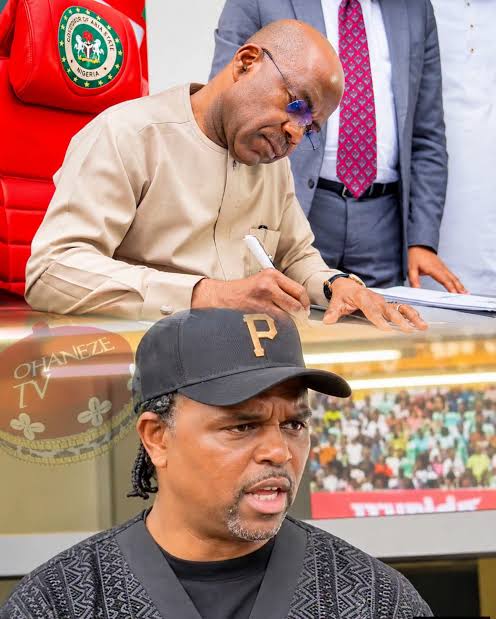
The Abia State Government has dissolved the management structure and technical crew of Enyimba International Football Club, Aba, with immediate effect. The state Commissioner for Information, Okey Kanu, announced the decision in a statement on Tuesday. He said it was taken "in a decisive move to address the club's recent disappointing performances and identified administrative and structural challenges." The government said the move reflects its resolve to undertake a "comprehensive restructuring" of the two-time CAF Champions League winners, restore the club's competitive identity and reposition it for sustainable success in Nigerian and continental football. According to the statement, a review of the club's current state found that "far-reaching interventions are necessary" to fix problems affecting its performance, administration and overall operations. Enyimba holds a special place in African football. In 2003, it became the first Nigerian club to win the CAF Champions League, and it defended the title in 2004. It is also Nigeria's most successful league side. In recent seasons, however, the People's Elephant has struggled to match the standards that once made it the pride of Aba. The dissolution signals that the state government is no longer willing to accept gradual decline. The real test will be whether the restructuring brings lasting reform in leadership, finances and football operations, or simply a new set of faces.
The Abia State Government has taken one of the most decisive actions in recent Nigerian club football, stripping Enyimba International Football Club of its entire management structure and technical crew in a single move that sent shockwaves through Nigerian football on Tuesday.
The announcement came in a formal statement from the state Commissioner for Information, Okey Kanu, who described the decision as "a decisive move to address the club's recent disappointing performances and identified administrative and structural challenges." The language was firm, the action even firmer. The government did not simply change the head coach. It did not reshuffle a few board members or issue a warning. It cleared out everyone, the men who trained the team and the men who ran the institution above them, in one sweeping act of institutional authority.
The statement left no ambiguity about the government's intent. It said the decision "underscores the government's resolve to undertake a comprehensive restructuring of the two-time CAF Champions League winners, restore the club's competitive identity and reposition it for sustainable success in Nigerian and continental football." Then it went further. "Following a review of the club's current state of affairs, the government has concluded that far-reaching interventions are necessary to address the underlying issues affecting its performance, administration and overall operations." Those two sentences together tell a story that supporters of the club have lived through for years. This is not a problem of tactics or of one bad season. This is a problem that runs from the pitch all the way to the boardroom, and those in power have finally acknowledged it in public.
To understand why this moment matters, you have to understand what Enyimba represents. Founded in Aba in 1976, the club known as the People's Elephant grew from a regional outfit into the most successful football club in Nigerian history. It is the most decorated side in the Nigeria Professional Football League, holding more league titles than any other club. It has won the Federation Cup multiple times and built a supporter base that stretches far beyond the borders of Abia State. But it was what the club achieved on the continent that truly set it apart from every Nigerian club that ever lived.
In 2003, Enyimba became the first Nigerian club to win the CAF Champions League, the premier club competition in African football. That was a historic achievement in itself, a statement that Nigerian football had arrived on the continental stage after years of trying. But in 2004, Enyimba did something that many in African football had thought was beyond any Nigerian club. It won the CAF Champions League again, back to back, defending the title against the best clubs across the continent. Those two triumphs, in 2003 and 2004, remain the pinnacle of Nigerian club achievement in Africa. No Nigerian side has matched them since. The club then added back-to-back CAF Super Cup victories in 2004 and 2005, cementing its place as the most dominant Nigerian club of its era and one of the strongest on the continent.
That history is not just a trophy cabinet. It is the standard against which every version of Enyimba has been measured ever since. It is the reason supporters in Aba cheer so loudly, why the Enyimba International Stadium fills with passion and noise on match days, and why the People's Elephant carries a weight of expectation that few clubs in West Africa can match. It is also the reason the recent years have been so hard to watch for those who love the club.
The decline has not been sudden. It has been gradual and grinding, the kind that settles in quietly before it becomes impossible to ignore. Enyimba has not consistently dominated the domestic league the way it once did. Its forays into continental football have often ended earlier than supporters expected, against opponents the great Enyimba sides of the early 2000s would have handled without great difficulty. The energy and organization that defined the club under its best leadership have given way to a sense of drift, of a club that knows what it once was but cannot find its way back to it.
The government's statement references "disappointing performances" and that phrase is a polite summary of what supporters have felt more acutely. They have watched a club that set the standard for Nigerian football fall behind sides that once looked up to it. They have seen talented players come through the academy or join the squad, only to leave for more stable, better-paying clubs elsewhere. They have heard promises of revival before, without seeing the structural changes that would make one possible. The dissolution announced on Tuesday is a signal that the government has finally heard those frustrations and decided to act on them in full.
What makes this decision different from an ordinary managerial change is its scope. In Nigerian football, as in football everywhere, the first response to poor results is usually to sack the coach. It is clean, quick and allows everyone above the coach to avoid accountability. The Abia government did not take that route. By dissolving both the management structure and the technical crew together, it is accepting that the problem is systemic. The technical staff did not fail in a vacuum. They failed within an administrative environment that either could not support them, did not provide the resources they needed, failed to plan properly, or some combination of all three.
That framing has real implications for what comes next. If the government had only replaced the coach, the underlying structural problems would have remained. A new technical team would have inherited the same broken environment. The same issues with funding, planning, recruitment and administration would have continued producing the same disappointing results. By cutting both layers at once, the government is at least acknowledging the right diagnosis, even if the cure remains to be seen.
There is also a political dimension to this action. Enyimba is a state-owned club, which means that the Abia State Government is both its owner and its ultimate custodian. That relationship has not always served the club well. State-owned clubs across Nigeria frequently suffer from political interference, delayed funding, management appointments driven more by patronage than by football expertise, and a lack of long-term planning that shifts with each new administration. The government's willingness to publicly own the failure, as it has done in this statement, is unusual. Most state governments either stay silent as their clubs decline or offer vague promises without structural follow-through. By announcing a "comprehensive restructuring" and describing the need for "far-reaching interventions," the Abia government has set a public benchmark for itself. If the restructuring is superficial, there will be nowhere to hide.
The statement also speaks of restoring the club's "competitive identity." That phrase deserves to be taken seriously. Competitive identity is not simply about winning matches. It is about the values, the culture and the standards that define how a club plays, how it recruits, how it treats its players and staff, and how it presents itself to supporters and the wider football world. Enyimba built its competitive identity over decades. It was forged in the community of Aba, sharpened in hard domestic campaigns and proved against the best teams in Africa. Rebuilding that identity will require more than new faces in the dressing room. It will require a clear footballing philosophy, a sustainable financial model, a functioning academy system that feeds the first team, and a management structure that understands football as a business and as a sporting institution.
The timing of the announcement adds urgency to all of this. Dissolving a management and technical crew in the middle of an active season is a high-risk move. Players need consistency and direction. A squad that is already underperforming does not benefit from further uncertainty at the top. The government will need to move quickly to appoint credible, experienced replacements who can stabilize the environment and begin building toward something better. Any delay in the appointment process, or any sign that the new management will be chosen on political rather than professional grounds, will immediately undermine the signal the government is trying to send.
The selection of new leadership will be one of the most closely watched decisions Abia State has made in football for a long time. Supporters and observers will want to see football people in key positions, individuals with track records in administration, coaching and player development. They will want to see transparent processes, clear mandates and the kind of contractual security that allows coaches and managers to build rather than simply survive. They will want assurance that whoever is brought in will not be undermined six months later by the same interference that has plagued the club before.
There is also the broader question of commercial reform. Many of the structural problems facing Nigerian clubs, including Enyimba, trace back to the absence of genuine commercial revenue. When a club depends almost entirely on a state government for its budget, its fortunes rise and fall with political priorities. A change of administration can mean a change in funding levels. A budget crisis at the state level filters directly into the football club. The only sustainable path is for Enyimba to build its own revenue streams through commercial partnerships, robust matchday income, an active merchandise operation and engagement with its massive supporter base across Nigeria and beyond.
Enyimba's brand gives it unusual potential in that regard. The name still carries prestige across Africa. The club's continental achievements are remembered and respected. With the right management and investment, Enyimba could attract corporate partners, develop its facilities and grow into a genuinely self-sustaining football institution, one that does not need a government decision to rescue it every time results turn bad.
Whether this restructuring becomes that turning point or not depends on choices the government and the new leadership will make in the coming weeks and months. The People's Elephant has been given a chance to begin again. The city of Aba, with its fierce footballing pride, deserves to see that chance taken seriously. Nigerian football, still waiting for a club to match what Enyimba achieved in 2003 and 2004, deserves to see one of its greatest institutions restored to something worthy of its history.
The dissolution is done. Now comes the harder part.