ADC CRISIS: NAFIU BALA SAYS ATIKU HAS NOT REACHED OUT DESPITE SHARED NORTH-EAST ROOTS
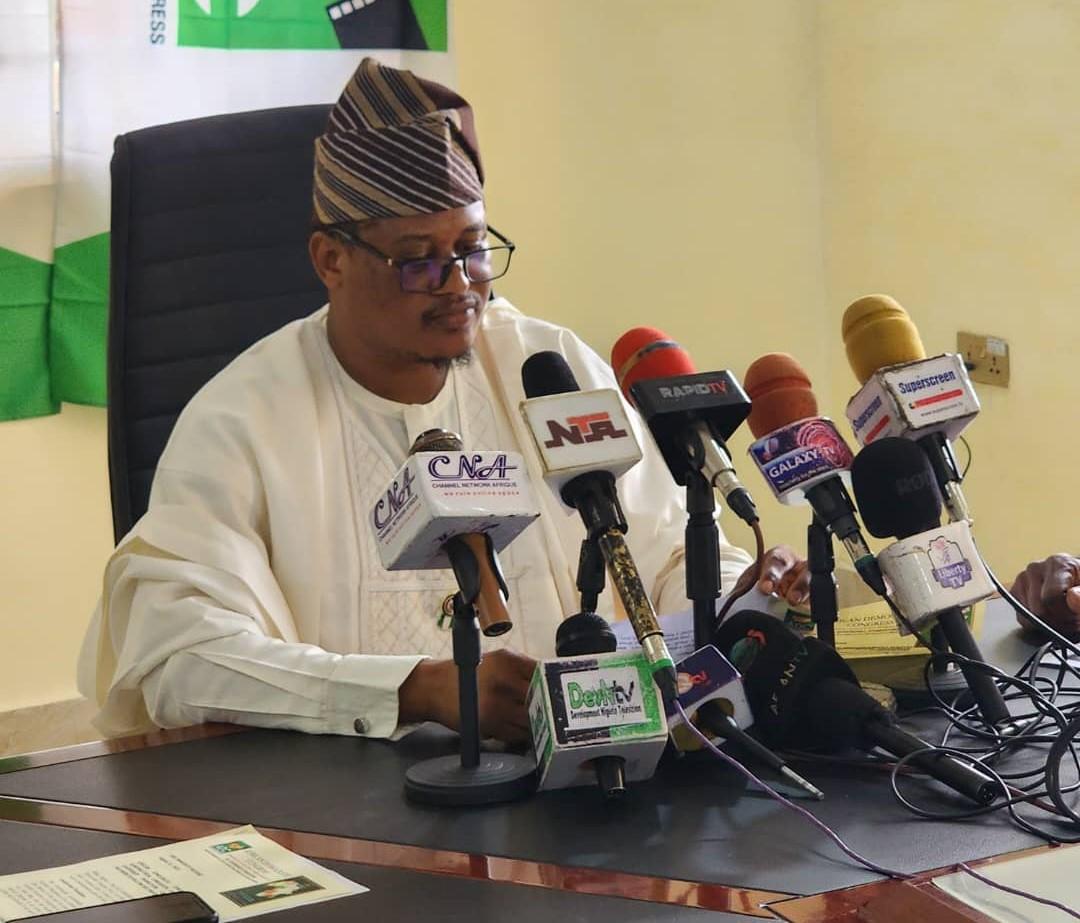
Factional ADC leader Nafiu Bala Gombe says former Vice-President Atiku Abubakar has not personally contacted him throughout the party’s leadership crisis despite both men coming from Nigeria’s North-East. Speaking to BBC Hausa on Saturday, Bala said he regarded Atiku as a father figure but was disappointed that no direct approach had been made. He nevertheless offered to work with Atiku, former Senate President David Mark and their allies, while insisting that they must comply with the ADC constitution.
ABUJA, NIGERIA — Factional African Democratic Congress leader Nafiu Bala Gombe has expressed disappointment that former Vice-President Atiku Abubakar has not personally contacted him during the escalating leadership crisis threatening the opposition party’s preparations for the 2027 general election, despite both men coming from Nigeria’s North-East geopolitical zone. Speaking in an interview with BBC Hausa on Saturday, November 14, Bala said he regards Atiku as a political father figure and remains willing to work with him, former Senate President David Mark and other ADC leaders, but questioned why the former vice-president had never personally reached out while the dispute over the party’s leadership moved from internal disagreements into a potentially consequential court battle.
Bala’s remarks came little more than a week after a Federal High Court in Abuja delivered a judgment challenging the legitimacy of the David Mark-led ADC national leadership and the political decisions taken under it, including the process that produced Atiku as the party’s presidential candidate for the 2027 election. Justice Peter Lifu ruled on November 5 that the process through which the Mark-led executive emerged violated the ADC’s constitution and guidelines, granting substantial reliefs sought by Bala, who had argued that he was entitled to assume the party’s leadership following the departure of former national chairman Ralph Nwosu.
The Mark-led ADC has rejected that judgment and filed an appeal, alongside an application seeking to stay its execution while the Court of Appeal considers the dispute. That means the leadership question is not finally settled. The party has also written to the Independent National Electoral Commission asking it not to take steps that could pre-empt the appeal, while Bala’s faction says it is awaiting a Certified True Copy of the Federal High Court judgment before formally asking INEC to alter its records.
That continuing legal contest is crucial because Atiku is presently listed by INEC as the ADC’s presidential candidate for the January 2027 election, with former Rivers State governor Rotimi Amaechi listed as his running mate on the commission’s final presidential candidate list published before the November 5 judgment. The Federal High Court ruling has introduced fresh uncertainty around that nomination, but the appeal means it would be premature to state that Atiku has definitively lost his place on the ballot. The ultimate legal effect of the judgment will depend on the appellate process and any consequential action taken by INEC in accordance with final court orders.
Against that backdrop, Bala told BBC Hausa that he had expected direct contact from Atiku, particularly because both politicians come from the North-East. Atiku is from Adamawa State, while Bala is associated with Gombe State. Bala said the former vice-president is someone he considers a father politically, making the absence of personal engagement more disappointing as some figures in the rival ADC camp have publicly portrayed him as an obstacle to the opposition coalition.
Bala nevertheless avoided framing the dispute as an irreversible personal rupture. He said his faction was extending an “olive branch” to Atiku, Mark and other leaders and insisted that he did not view the court judgment as an opportunity for revenge. In his account, the dispute is fundamentally about party rules and internal constitutional procedure rather than a desire to destroy the coalition or prevent opposition figures from participating in politics.
“This is not a fight,” Bala said, arguing that his side wants the rival camp to comply with the ADC constitution so the party can reunite and confront the governing All Progressives Congress in the 2027 election. His message combined reconciliation with a clear insistence that he would not simply withdraw the legal position his faction has pursued for more than a year.
Bala maintains that the crisis began when the ADC’s existing leadership structures were displaced as prominent opposition politicians moved into the party and attempted to reorganize it into a broader platform capable of challenging President Bola Tinubu. The influx included Atiku, Mark and other nationally known figures seeking to build a coalition around the ADC ahead of 2027. Mark eventually emerged as national chairman, while former Osun State governor Rauf Aregbesola became a major figure within the party’s new structure.
Bala challenged that transition, arguing that the ADC’s constitution did not permit the leadership to be transferred in the manner used by the coalition. He has said that after Nwosu’s departure, his position as a senior existing official gave him a stronger constitutional claim to lead the party. His opponents have disputed that interpretation and have at different stages described the dispute as an internal party matter or argued that earlier judicial developments validated the Mark-led structure.
The legal battle has consequently produced a complicated series of decisions and administrative responses from INEC. Earlier in 2026, the commission at one point stopped recognizing either faction while court proceedings continued. Subsequent judicial developments led INEC to work with the Mark-led leadership and grant it access to the candidate nomination portal, enabling the faction to submit hundreds of candidates for presidential, National Assembly and other contests.
That recognition allowed the ADC to proceed with its presidential primary in May. Atiku defeated Amaechi and businessman Mohammed Hayatu-Deen in a direct primary process, with party officials announcing more than 1.8 million votes for the former vice-president. Amaechi and Hayatu-Deen disputed aspects of the exercise and alleged irregularities, but the Mark-led party leadership declared Atiku the winner and later presented him with the ADC flag.
Atiku’s emergence transformed the ADC into one of the principal opposition platforms preparing to contest the 2027 presidential election. The former vice-president has run for Nigeria’s presidency several times and finished second in the 2019 and 2023 elections as the Peoples Democratic Party candidate. His movement into the ADC represented a major restructuring of opposition politics and was intended to consolidate political figures seeking an alternative to both the APC and the weakened PDP.
The November 5 Federal High Court ruling has therefore created consequences extending far beyond the question of who occupies the ADC national chairman’s office. Justice Lifu reportedly declared actions taken by the Mark-led executive unlawful and void, a finding that directly affects the internal processes through which presidential and other candidates were selected. Atiku and the party have responded by appealing immediately, arguing that the judgment should not be treated as final while the appellate courts remain seized of the dispute.
Bala, by contrast, says the judgment validates arguments he has made throughout the crisis. Speaking on Saturday, he said “truth is truth” and described the ruling as confirmation that his faction had been correct in insisting on compliance with the party constitution. He said his side was waiting for the Certified True Copy before engaging INEC formally and dismissed suggestions that the commission was intentionally resisting the judgment, noting that electoral officials may not yet have received the formal court documents necessary for action.
The factional chairman also repeated his contention that the Mark group failed to follow basic ADC membership procedures. According to Bala, prospective party members are expected to register at their wards, pay applicable dues and satisfy constitutional conditions before becoming eligible for certain leadership positions. He specifically alleged that Mark received his membership card from a former national chairman in Abuja rather than completing registration through his ward.
Those are Bala’s claims and remain part of the contested dispute. The Mark-led ADC has maintained that its leadership and political processes were lawful and has chosen to challenge the Federal High Court judgment rather than accept Bala’s interpretation. The appeal ensures that higher courts will now have an opportunity to determine whether the lower court correctly interpreted the party’s constitution and whether its orders affecting the leadership and candidate-selection processes should stand.
Bala also rejected allegations that the ruling APC is using him to destabilize the opposition. Those accusations have circulated repeatedly during the leadership battle because his litigation threatens a coalition that was formed specifically to challenge the governing party. Bala said he went to court to defend his own political rights and the ADC constitution, not to assist the APC, and argued that political popularity should never justify ignoring internal rules.
His insistence carries broader implications for party democracy in Nigeria. Political parties frequently face disputes over who has authority to organize primaries, submit candidate lists and appoint national officers. Because Nigeria’s electoral law generally gives parties significant authority over internal administration while also requiring compliance with constitutions and statutory procedures, leadership disputes can quickly become questions with direct consequences for ballot access.
The ADC crisis demonstrates that risk particularly clearly because the dispute has reached a decisive stage only weeks before the January 2027 presidential election. A final judgment invalidating the leadership responsible for candidate nominations could produce profound consequences for the party’s participation, while a successful appeal could restore the Mark-led structure and preserve its candidate selections.
For Atiku, the uncertainty is especially significant. His name remains on INEC’s final list as of the latest publicly available official document, but his candidacy now exists alongside a Federal High Court judgment that the ADC is actively challenging. Atiku has said legal efforts will not prevent him from pursuing his presidential ambition and has portrayed the litigation as part of a broader attempt to weaken opposition competition. The APC has rejected accusations that the government is manipulating the court process and has argued that opposition parties should resolve their own internal legal problems.
Bala’s comments about the absence of direct contact from Atiku introduce a more personal dimension to what has largely been presented as a constitutional and judicial struggle. His suggestion is that political dialogue could have taken place before the conflict became so severe, particularly given their shared regional background and his stated respect for the former vice-president.
At the same time, Bala has made clear that personal contact alone would not cause him to abandon his central demand. He says any reconciliation must involve compliance with the ADC constitution and proper membership procedures. His position therefore combines a willingness to negotiate with a refusal to surrender the legal victory his faction currently claims.
He has also directed aspirants aligned with his faction to continue political activities and campaigns, indicating that his group intends to function as an active party leadership rather than wait passively for the appeal. That creates the possibility of competing political structures operating simultaneously while the judiciary determines which one has lawful authority.
Such parallel structures can create practical difficulties for candidates, donors and party organizers. Aspirants need clarity over which leadership can issue nomination forms, approve campaigns, submit names to INEC and resolve disputes. State chapters may also face pressure to choose sides, potentially fragmenting grassroots structures at the exact moment the party needs organizational discipline ahead of a national election.
The Mark-led faction has argued that the ADC must remain focused on defeating the APC rather than becoming consumed by internal litigation. Its representatives have asked INEC to exercise restraint and recognize that the Federal High Court judgment has been appealed. Bala has responded that electoral urgency cannot be used as a justification for disregarding constitutional rules.
That disagreement exposes a recurring tension in opposition coalition-building. Broad alliances often require established parties to accommodate incoming politicians with national visibility, financial resources and electoral structures. But when new entrants rapidly assume control, older party officials and members may resist being displaced, particularly where they believe formal procedures were ignored.
The ADC’s attempt to become a broad opposition vehicle intensified precisely that tension. Political figures with histories in the PDP, APC and other parties converged on a relatively smaller platform because it offered an existing national structure through which they could contest elections. The resulting coalition increased the ADC’s national profile dramatically but also triggered questions about who legitimately controls the organization.
Bala has said financial influence and large political crowds should not determine who has legal authority inside a party. He specifically rejected suggestions that the strong attendance recorded at some ADC political gatherings in northern states should have persuaded him to withdraw his court action. In his view, political strength must remain subordinate to constitutional procedure.
He also dismissed claims that he had previously resigned his leadership position, saying documents circulated to support that argument were misleading. Those allegations and counterclaims have formed part of the wider dispute and are among the issues that have made the litigation increasingly complex.
The Federal High Court judgment marked an important victory for Bala’s faction, but it is not necessarily the final word. Nigeria’s political litigation frequently proceeds through the Court of Appeal and, where constitutional or electoral questions warrant it, eventually to the Supreme Court. The speed with which those proceedings are handled may become critical because the presidential election is approaching rapidly.
INEC faces its own institutional challenge. The commission must comply with valid court orders while avoiding steps that could conflict with later appellate decisions. It currently lists Atiku as the ADC presidential candidate, reflecting the position before the latest Federal High Court judgment, while the party’s appeal and request for a stay remain pending.
Bala said Saturday that he did not blame INEC for failing to immediately change its portal because the commission may not yet have received the Certified True Copy. That position is notable because some members of his faction had previously demanded changes to the commission’s recognition of the rival leadership.
The court dispute also has implications for Atiku’s running mate, Amaechi, and the hundreds of other ADC candidates selected through processes organized by the Mark-led structure. If the judgment survives appeal in its broadest form, questions could arise about nominations beyond the presidential ticket. If it is overturned, however, the existing candidate structure could remain intact.
The uncertainty makes reconciliation increasingly attractive politically, even if it cannot by itself erase pending legal questions. Bala’s invitation to Atiku and Mark suggests he sees some path toward a negotiated party arrangement, but such an agreement would need to address leadership positions, candidate legitimacy, membership procedures and the legal status of decisions already taken.
There is also the question of time. Opposition parties ordinarily need months to build voter databases, coordinate agents, raise campaign funds and establish coherent national messaging. A leadership fight extending into the final weeks before an election consumes resources and attention that would otherwise be directed toward voters.
Atiku’s camp therefore has strong incentives to resolve or defeat the litigation quickly. Bala’s faction has equally strong incentives to ensure that a judicial victory is not neutralized by political pressure or procedural delay. Their competing interests make the dispute both a legal battle and a negotiation over political leverage.
Bala’s emphasis on being from the same geopolitical zone as Atiku also reflects the importance of regional networks within Nigerian politics. Both men come from the North-East, a region that has produced major national political figures but has never produced an elected president under the Fourth Republic. Atiku’s repeated presidential bids have given him longstanding influence across the zone, while Bala’s Gombe political base provides him with a local constituency from which to challenge the party’s national restructuring.
His description of Atiku as a father figure suggests respect, but it also places responsibility on the former vice-president to engage rather than allow intermediaries to manage the conflict. Whether Atiku chooses to make that contact remains unknown. There had been no verified public response from Atiku specifically addressing Bala’s complaint at the time of this report.
Bala also used his BBC Hausa interview to call on younger Nigerians to remain peaceful and law-abiding as the dispute develops. He urged supporters not to allow the leadership crisis to become a justification for confrontation and argued that opposition politics should proceed through democratic institutions and the courts.
That message is particularly relevant because factional disputes can create tension at party headquarters, conventions and candidate-selection events. Both sides have mobilized supporters publicly at different stages, and rhetoric suggesting that one group is illegitimate can increase the risk of confrontations if organizational control is contested physically rather than legally.
The ADC’s crisis therefore now rests on several parallel tracks: litigation, electoral administration, political negotiation and campaigning. The courts must determine the legal validity of the leadership structure, INEC must decide how to implement binding judgments, rival factions must decide whether reconciliation is possible, and candidates must continue preparing for an election that will not wait for internal disputes to be resolved indefinitely.
For Atiku, the dispute threatens to complicate another presidential campaign at a moment when opposition unity was supposed to be his strategic advantage. For Bala, it represents a test of whether existing party officials can resist being displaced by a coalition of nationally prominent politicians. For the ADC, it is an institutional battle that could determine whether the party enters the 2027 election as a credible unified force or a collection of competing factions.
The political significance extends beyond the individuals involved. Opposition parties often argue that Nigeria’s democratic competition is weakened by the dominance of the governing party, but internal instability can be equally damaging when opposition organizations cannot agree on leadership, candidate selection or adherence to their own constitutions. The ADC’s ability to resolve the crisis will therefore influence perceptions of whether it can present itself as a coherent alternative government.
Bala’s latest remarks offer a possible opening for dialogue but not yet a settlement. He has told Atiku and Mark that his faction is willing to work with them, while simultaneously insisting that the court has vindicated his leadership claim and that new members must follow the ADC constitution. The Mark-led faction, meanwhile, continues to pursue its appeal and has not accepted the lower court’s conclusions.
Until the appellate courts rule or the factions reach a legally sustainable agreement, both sides will continue operating under competing interpretations of who controls the party. INEC’s official candidate list currently keeps Atiku in the race, but that administrative reality sits beside a live judicial dispute with potentially serious consequences.
The immediate question raised by Bala’s BBC Hausa interview is whether direct political engagement can succeed where months of internal argument have failed. His disappointment that Atiku has not called him may sound personal, but it points to a larger issue at the heart of the ADC crisis: whether figures who say they are building a united national opposition can resolve a dispute within their own organization before voters are asked to entrust them with governing the country.
For now, Bala says the door remains open. He considers Atiku a father figure, says he does not regard the Mark faction as an enemy and insists that his legal victory should become the basis for reconciliation rather than retaliation. Whether Atiku and the rival ADC leadership accept that invitation, and whether the courts ultimately sustain Bala’s position, will determine how consequential Saturday’s olive branch becomes for the opposition’s increasingly complicated path toward the 2027 election.