AENA PROFIT RISES 12% AS SPAIN BENEFITS FROM STRONG INTERNATIONAL TRAVEL DEMAND
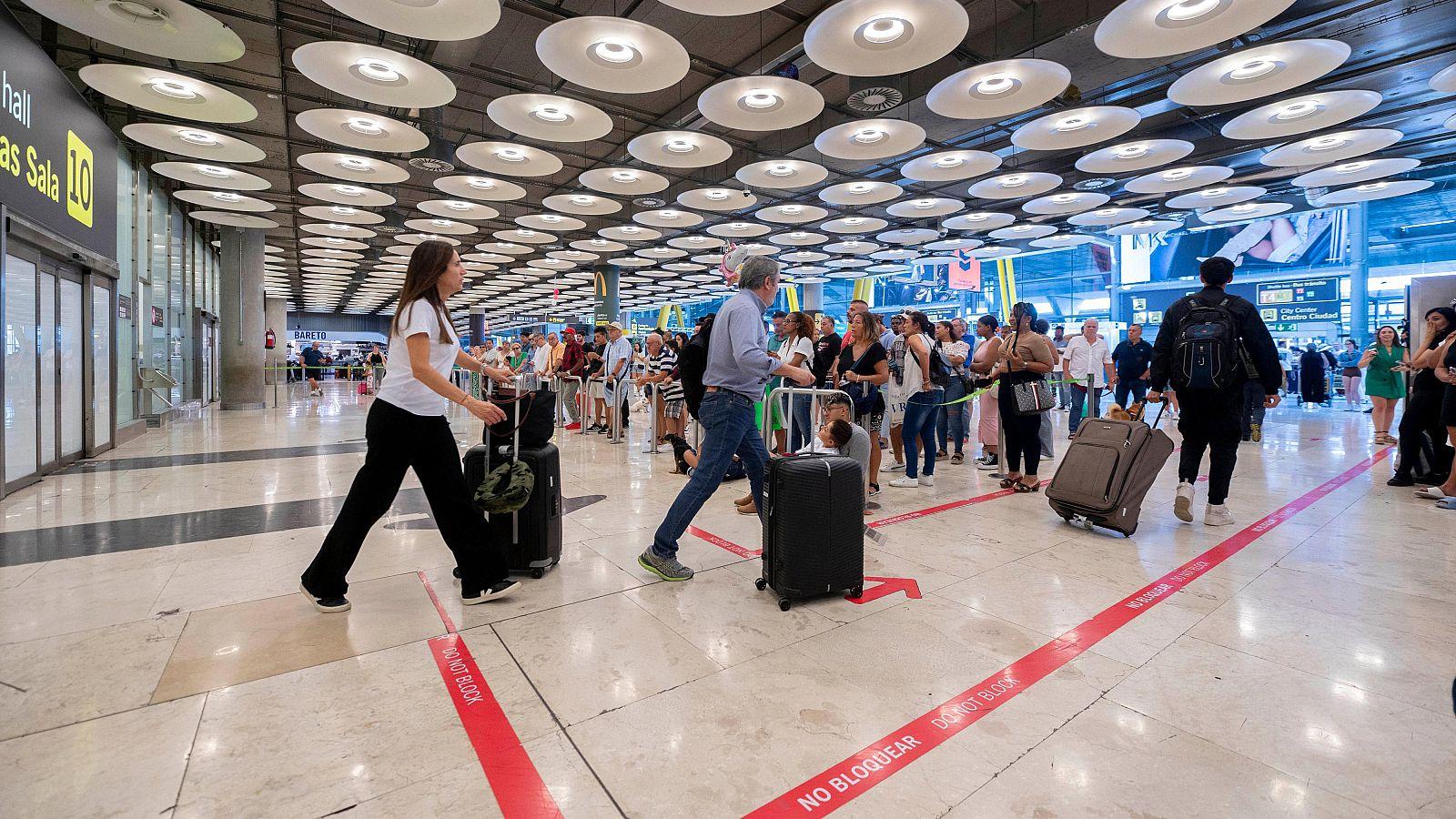
Spanish airport operator Aena has reported net profit of €1.7747 billion for the first nine months of 2026, up 12.4% from a year earlier, while total revenue increased 10.4% to €5.2839 billion. Its Spanish airports handled 257.2 million passengers, representing annual growth of 4.1% and exceeding Aena’s 3% full-year traffic-growth forecast. The company says Spain has also benefited from some international travel demand being redirected toward southern Europe amid instability affecting destinations around the Middle East.
Spanish airport operator Aena has reported a 12.4 percent increase in net profit for the first nine months of 2026 as passenger traffic continued to climb across Spain’s major airports and international travellers increasingly favoured southern European destinations. The company earned €1.7747 billion between January and September, compared with €1.5794 billion during the same period in 2025, while total revenue rose 10.4 percent to €5.2839 billion as higher passenger volumes and increased airline charges supported the business.
Aena’s Spanish airport network handled 257.2 million passengers during the nine-month period, an increase of 4.1 percent from a year earlier. That growth is running ahead of the company’s current full-year forecast of approximately 3 percent passenger growth, suggesting that travel demand has remained stronger than management expected when it revised its outlook upward earlier this year.
The company had originally expected passenger traffic in Spain to grow by approximately 1.3 percent in 2026 but increased that projection to 3 percent in July after stronger arrivals and changes in international travel patterns. Aena said Spain has benefited from some passenger flows shifting toward destinations perceived as safer as conflict and instability in parts of the Middle East affect tourism and aviation demand elsewhere.
Around 60 percent of passengers using Aena’s Spanish airports during the first nine months travelled to or from other European countries, highlighting the importance of international tourism and regional aviation to the company’s financial performance. Spain remains one of the world’s largest tourism markets, and major destinations including Madrid, Barcelona, Mallorca, Málaga, Alicante and the Canary Islands continue to attract significant numbers of European and long-haul visitors.
Aena said its performance was supported both by higher passenger traffic and increased aeronautical charges paid by airlines. The company introduced a 6.31 percent increase in airport tariffs in March, which helped push regulated aviation revenue higher even as airlines continued adding capacity to the Spanish market.
Total revenue reached €5.284 billion during the first nine months, while operating income from regulated airport activities rose approximately 8.8 percent to €2.781 billion. Commercial revenue, which includes retail, duty-free shopping, restaurants, car parks and other services within airports, increased about 7.4 percent to €1.574 billion.
Earnings before interest, taxes, depreciation and amortisation reached approximately €3.08 billion, up 6.8 percent from the same period last year. The EBITDA margin stood at roughly 58.3 percent, demonstrating the strong profitability of Aena’s airport network despite increasing operating expenses and broader cost pressures facing the aviation industry.
The passenger figures also illustrate the scale of Aena’s operations. Across the entire Aena Group, which includes its Spanish airport network as well as airports in Brazil and Britain, passenger traffic reached almost 310 million people between January and September, representing annual growth of approximately 4.1 percent.
Spain alone accounted for more than 257 million passengers during the period. Aena’s 46 airports and two heliports in the country handled more than 2.15 million aircraft movements during the first nine months, an increase of approximately 4.5 percent from 2025, while cargo volumes approached 990,000 tonnes.
Madrid-Barajas, the country’s busiest airport, handled more than 53.3 million passengers between January and September, up approximately 4.7 percent from the previous year. Barcelona-El Prat and other major tourism airports also continued to record strong passenger volumes as airlines expanded services into the Spanish market.
Aena’s performance reflects wider resilience in European air travel despite substantial geopolitical uncertainty. Tourism demand in Spain and other southern European destinations has remained strong as travellers continue prioritising Mediterranean markets for holidays, while disruptions affecting destinations in and around the Middle East have redirected some demand toward countries perceived as less exposed to regional conflict.
Reuters reported that Aena has been benefiting from a diversion of travel demand toward Spain and other southern European destinations since spring. The company has similarly acknowledged that the geopolitical situation contributed to stronger-than-expected passenger growth, while cautioning that the effect may be temporary and that uncertainty remains high.
Earlier this year, Aena specifically pointed to developments around the Strait of Hormuz and the wider Middle East conflict as factors influencing passenger flows. The company said Spain had increasingly been viewed as a safe tourist destination during the period, contributing to an increase in passenger numbers above its previous forecasts.
That benefit does not mean conflict is positive for the broader aviation industry. Airlines face potentially higher fuel costs, longer flight routes, airspace restrictions and operational uncertainty when geopolitical tensions intensify. Aena itself warned earlier this year that increased kerosene prices and disruption from Middle East instability could affect airline economics even as Spanish airports benefit from redirected tourism.
Airlines nevertheless continue planning additional capacity for Spain. The Spanish airline association ALA said carriers intend to offer approximately 145.6 million seats during the upcoming winter season from October through March, around 5.5 percent more than during the previous winter schedule.
The increase suggests airlines remain confident in passenger demand despite broader economic and geopolitical uncertainty. More available seats can support further traffic growth for Aena, although actual passenger numbers will depend on airline load factors and whether travellers fill the additional capacity.
Aena had previously noted some weakening in load factors, meaning the number of passengers was not necessarily increasing as quickly as the number of airline seats offered. That distinction is important because airlines can announce greater capacity without automatically guaranteeing equivalent growth in actual airport traffic.
The company’s nine-month financial results nevertheless show continued momentum. Net profit exceeded €1.77 billion, nearly €200 million higher than the same period in 2025, while passenger volumes and commercial activity remained strong across much of the network.
The results were broadly in line with analyst expectations for profit but weaker than market forecasts for revenue. Analysts surveyed ahead of the announcement had expected revenue of approximately €5.69 billion, compared with the €5.28 billion actually reported.
That revenue shortfall weighed on Aena’s shares despite the strong profit increase and passenger performance. The stock fell approximately 2 percent following publication of the results as investors focused on revenue coming in below consensus expectations.
The market reaction demonstrates that strong headline profit growth does not necessarily translate into a positive share-price response when investors had expected even stronger financial performance. A company can increase revenue and earnings significantly while still disappointing markets if previously priced-in expectations were higher.
Aena’s debt position also increased during the year as the company continued investing in airport infrastructure and expanding internationally. Consolidated net financial debt stood at approximately €5.845 billion at the end of September, compared with €5.509 billion at the end of 2025.
The company remains in the middle of a major investment cycle in Spain. The Spanish government approved Aena’s third Airport Regulation Document, known as DORA III, in September, establishing the regulatory and investment framework governing the country’s airport network between 2027 and 2031.
Under that programme, regulated investment is expected to total approximately €10 billion over five years. The plan covers expansion, terminal upgrades, capacity improvements and other infrastructure projects across Spain’s airport network as passenger numbers continue to rise.
Aena also plans approximately €2.9 billion in additional commercial investment beyond the regulated programme. Those projects are designed to increase revenue from retail, food and beverage outlets, parking facilities, premium passenger services and other non-aeronautical businesses.
DORA III establishes an annual airport-tariff path of approximately 0.33 percent relative to 2026 levels during the 2027–2031 period. The framework attempts to balance Aena’s need to finance large infrastructure projects with airlines’ concerns about airport costs and Spain’s wider objective of maintaining competitive air connectivity.
Airport capacity has become a growing issue because Spain continues setting passenger records. Major facilities including Madrid-Barajas and Barcelona-El Prat face long-term requirements for expansion as tourism, business travel and international connections increase.
The government and Aena are therefore attempting to invest before capacity limitations become a significant constraint on future aviation growth. Airport expansions require years of planning, environmental assessment and construction, meaning decisions made today are intended to prepare the network for traffic levels expected well into the next decade.
Aena has also continued its international expansion strategy. The group operates airports in Brazil and has interests in Britain, including London Luton, Leeds Bradford and Newcastle-related assets through recent acquisitions.
Its international operations diversify the company beyond Spain but also expose it to different regulatory, currency and economic conditions. International growth has become an increasingly important part of Aena’s strategy as the company seeks opportunities outside its dominant domestic airport network.
The company recently completed another transaction connected to Rio de Janeiro’s Galeão International Airport, strengthening its position in the Brazilian aviation market. These investments demonstrate that Aena intends to use cash generated from its mature Spanish network to build a broader international airport portfolio.
Spain will nevertheless remain the core of the business for the foreseeable future. Passenger volumes within the country are significantly larger than those at its foreign operations, and Spanish airports continue generating the majority of Aena’s regulated and commercial earnings.
The strength of Spanish tourism therefore remains closely linked to Aena’s financial performance. International visitors contribute not only through passenger charges but through airport retail, restaurants, car parking, vehicle rental and other commercial services.
Spain’s attraction as a destination has remained remarkably resilient despite inflation, higher travel costs and economic uncertainty in several European markets. Its combination of beaches, major cities, cultural attractions and extensive aviation connectivity continues to draw travellers from Britain, Germany, France, Italy and other European countries.
The displacement of some tourism from Middle Eastern destinations has added another temporary source of demand. However, Aena itself has cautioned against assuming those flows will persist indefinitely because travel patterns could normalise if geopolitical conditions change.
The company therefore continues to base its longer-term investment strategy on structural passenger growth rather than temporary diversion caused by conflict. Population movements, tourism demand, airline network development and Spain’s position as a major European destination remain the more fundamental drivers of airport activity.
The latest results suggest those structural drivers remain strong. Passenger numbers rose 4.1 percent despite Aena expecting slower growth, while airlines are planning to add substantially more seats during the winter season.
At the same time, management faces pressure to ensure that infrastructure, security, baggage handling and passenger services keep pace with growth. Increasing passenger volumes can generate higher revenue but can also strain terminals, runways, security checkpoints and ground transport if capacity expansion does not keep up.
Aena’s planned investment programme is therefore central to sustaining growth without deteriorating passenger experience. Airports must be capable of handling additional travellers efficiently if Spain is to maintain its competitiveness against other major tourism markets.
Environmental concerns will also become increasingly important as airport expansion continues. Aviation remains a significant source of greenhouse-gas emissions, and infrastructure projects in Spain have faced scrutiny over noise, land use and climate impact.
Aena and the Spanish government will have to balance economic arguments for increasing airport capacity with European environmental targets and pressure to reduce aviation emissions. Airlines are simultaneously investing in more efficient aircraft and sustainable aviation fuels, although the industry continues to face major technological challenges in reducing its carbon footprint.
For investors, the immediate focus remains Aena’s ability to translate passenger growth into sustainable earnings while controlling costs. The nine-month results demonstrate continued profitability, but the revenue miss and slower EBITDA growth show that rising traffic does not automatically flow through to profits at the same rate.
Higher operating expenses, airport investments and international expansion can affect margins even when revenue increases. Fuel costs primarily fall on airlines rather than airport operators, but airline financial pressure can eventually influence route decisions and capacity.
Geopolitical uncertainty therefore cuts both ways for Aena. Spain can benefit when travellers redirect holidays away from less stable destinations, but serious regional conflicts can also increase aviation costs and weaken international demand more broadly.
The company’s strong first-nine-month performance places it in a favourable position heading into the final quarter of 2026. Its Spanish airports have already recorded more than 257 million passengers, international demand remains strong and airlines are preparing additional winter capacity.
Whether the final three months maintain that momentum will depend partly on consumer demand, airline schedules, economic conditions across Europe and developments in the Middle East.
For now, the numbers show that Spain’s airport sector remains one of the beneficiaries of resilient European travel demand. Aena’s profit has risen more than 12 percent, revenue has climbed above €5.28 billion and passenger growth is outperforming the operator’s own full-year forecast.
The results reinforce Spain’s position as one of Europe’s most important tourism and aviation markets, while also demonstrating how changing geopolitical conditions can redirect international travel flows. Aena’s challenge will be converting that unusually strong demand into sustainable long-term growth while completing the major investment programme required to keep its airports capable of handling ever larger numbers of passengers.