

AFRICA CDC SAYS DR CONGO EBOLA OUTBREAK REMAINS SERIOUS DESPITE RESPONSE EFFORTS
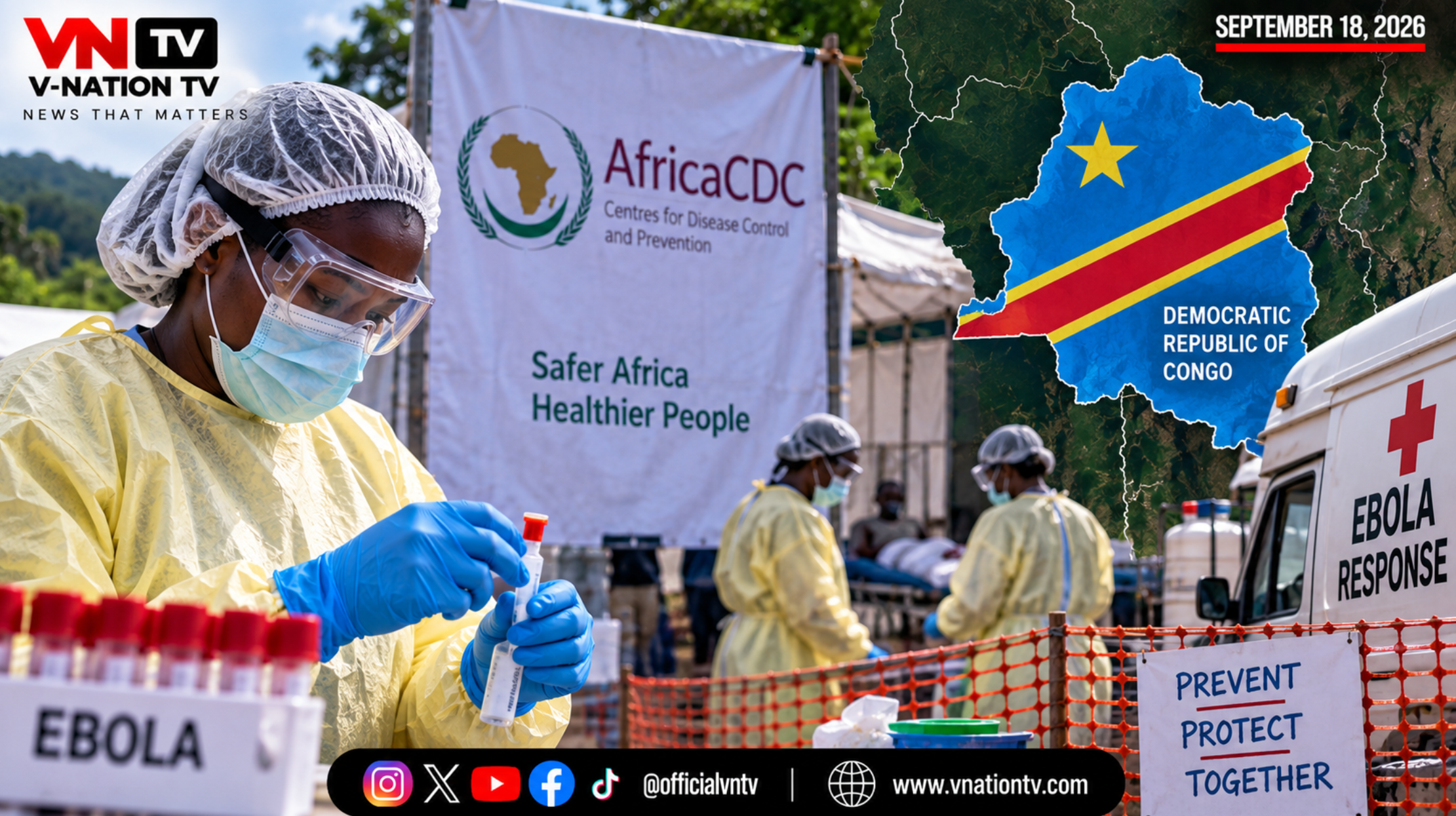
Africa CDC says the Ebola outbreak in the Democratic Republic of the Congo remains a serious public health concern despite progress in some affected areas. More than 7,000 confirmed infections have been reported, while gaps in detection, infection prevention and access to healthcare continue to complicate efforts to stop transmission.
The Ebola outbreak in the Democratic Republic of the Congo remains a serious public health concern despite signs of progress in some affected areas, Africa Centres for Disease Control and Prevention has warned.
Africa CDC said on Thursday that data from the response continued to show important gaps, particularly in infection prevention and control, as authorities work to contain an outbreak that has spread across several provinces.
The warning comes as health authorities stress that delays in identifying infected people, isolating cases and tracing contacts can allow the virus to spread within households, communities and healthcare facilities.
MORE THAN 7000 CASES RECORDED
The outbreak is being driven by Bundibugyo virus, one of the viruses that can cause Ebola disease.
Official data showed that confirmed infections in the DRC had exceeded 7,000 by September 11, with the outbreak spreading into a seventh province.
By September 15, more than 7,200 confirmed cases and about 3,510 deaths had been reported, making the epidemic the second deadliest Ebola outbreak on record after the 2014 to 2016 West Africa epidemic.
Earlier WHO data showed a case fatality ratio of about 48 percent, highlighting the severity of the disease and continuing difficulties in ensuring timely detection and access to appropriate care.
SOME PROGRESS BUT OUTBREAK FAR FROM OVER
There are signs that response measures are having an effect in some areas.
The number of new daily cases has fallen from around 120 at the peak in mid August to roughly 80, while several affected health zones have gone more than three weeks without recording a new case.
Ituri, previously the main centre of the epidemic, has recorded improvements, but the situation in North Kivu remains particularly concerning because of rising infections, insecurity and population movement.
WHO has similarly said progress is being made but warned that the outbreak remains far from over.
RESPONSE GAPS REMAIN
Health authorities remain concerned about weaknesses in surveillance, infection prevention, contact tracing and access to healthcare in some affected communities.
Conflict and displacement in eastern DRC have made the response more difficult by restricting access for health workers and making it harder to identify and monitor people who may have been exposed.
Overcrowding and limited access to water, sanitation and healthcare in some communities have created additional obstacles to controlling transmission.
Rapid identification is particularly important because infected people who remain undetected can expose family members, healthcare workers and others in the community.
VACCINATION EFFORTS CONTINUE
Vaccination of healthcare and frontline workers is underway, although there is currently no approved vaccine specifically proven to protect humans against the Bundibugyo virus driving the outbreak.
WHO has said the Ervebo vaccine, which is licensed against Zaire ebolavirus, is being studied in the current outbreak because its effectiveness against Bundibugyo virus in humans remains uncertain.
More than 3,000 frontline workers had received the vaccine by mid September as researchers continued efforts to determine its effectiveness against the strain responsible for the current epidemic.
RISK OF FURTHER SPREAD REMAINS
The movement of people within the DRC and across international borders remains another major concern.
WHO has previously assessed the risk inside the DRC as very high and warned that neighbouring countries face an elevated risk because of cross border movement.
Health screening and surveillance are operating at official border crossings, airports and ports, but informal crossings can make monitoring more difficult.
Africa CDC and WHO are therefore urging continued surveillance, rapid detection, infection control and coordinated regional action even as some indicators show improvement.
The latest assessment suggests that progress is possible, but significant gaps must still be addressed before authorities can consider the outbreak under control.