AFRICA TELLS RICH NATIONS "WE DIDN'T COME HERE TO BEG" AS COP31 ERASES "FOSSIL FUELS" FROM ITS DRAFT AND RISKS ENDING AS THE WORST CLIMATE SUMMIT YET
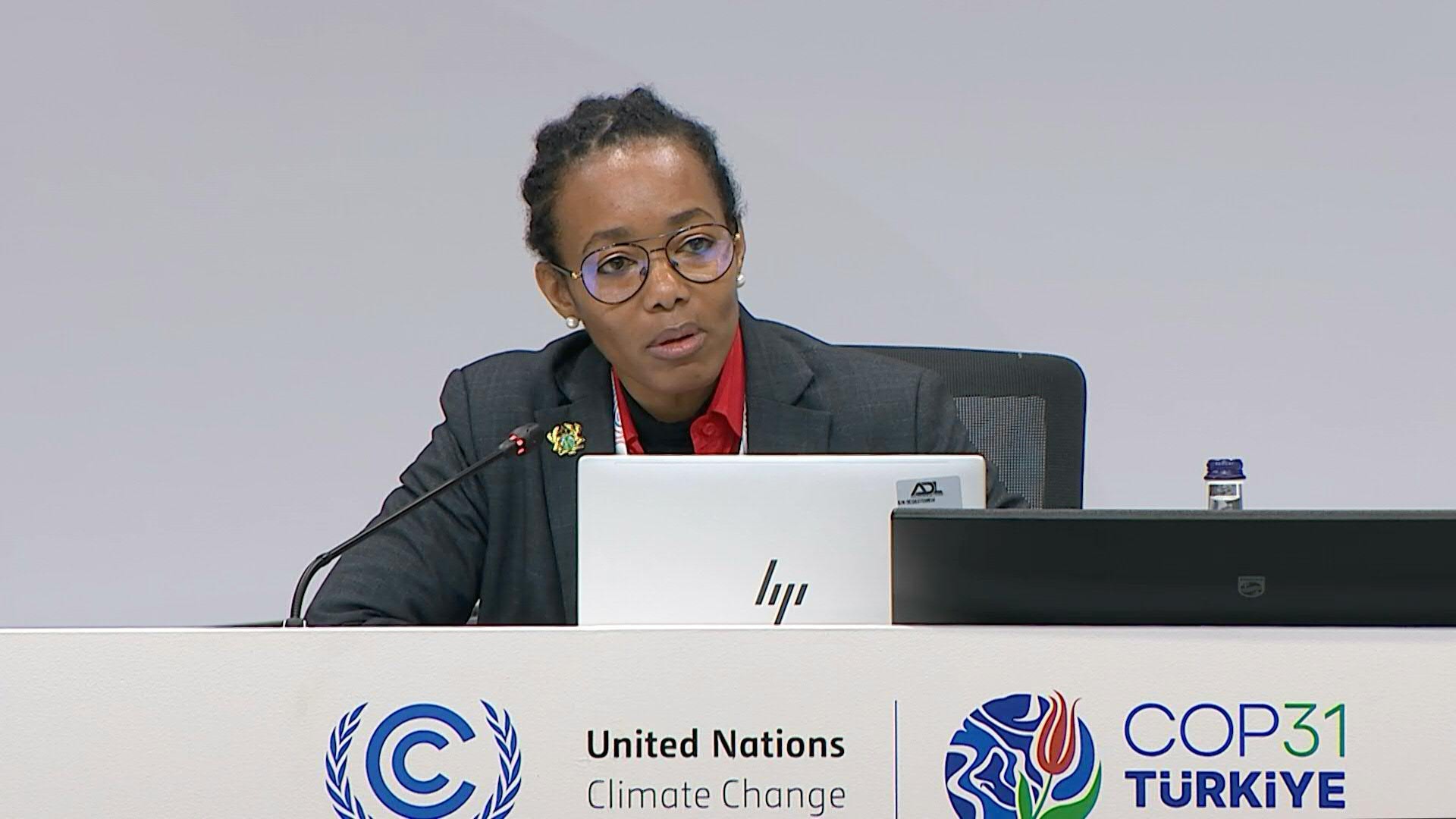
The COP31 climate summit in Antalya, Turkey, reached its scheduled final day on Friday, November 20, with no deal and deep divisions. Africa's negotiators made their anger plain. "We didn't come here to beg," said Zanetor Agyeman-Rawlings, Ghana's environment minister and chair of the African Group of Negotiators. "We came here to claim what is rightfully ours." She accused developed countries of excluding Africa "by the use of technicalities, with the use of inaccessible finance, and with the use of shifting goalposts." She said draft texts on climate finance, the just transition and adaptation still made no sense for African people. The latest draft of the summit's main "cover decision" removed every mention of "fossil fuels." It weakened the landmark "transition away from fossil fuels" language agreed at COP28 and added a reference to carbon capture and storage. Several insiders linked that change to Saudi Arabia, which has led opposition to fossil fuel language. Civil society groups called Antalya "the worst COP ever." Small island states said the expected overshoot of the 1.5C warming limit reflects "profit over people." Panama threatened to block consensus unless eight demands were met. The talks are expected to run into the weekend. For Nigeria, Ghana and the rest of Africa, a weak outcome would mean less money for adaptation, a harder path to clean energy and new trade pressures. It would also bring a transition shaped largely by others.
By Friday afternoon in Antalya, the COP31 conference center had the feel of a shop closing down. Pavilions had been taken apart. Delegates pulled suitcases through emptying corridors. Volunteers who hand out fruit and snacks each morning urged passersby to take extra, just to clear the stock. On paper, it was the last day of the 31st United Nations climate summit. In the negotiating rooms, almost nothing was finished.
Into that atmosphere stepped Africa's chief negotiator with one of the bluntest statements of the two-week summit. "We didn't come here to beg," said Zanetor Agyeman-Rawlings, Ghana's environment minister and chair of the African Group of Negotiators. "We came here to claim what is rightfully ours for our people who are suffering the brunt of anthropogenic activities of developed countries that they are now being asked to pay for in ways that they never asked."
She did not stop at rhetoric. She described a negotiating process in which African countries, she said, were being "excluded by the use of technicalities, with the use of inaccessible finance, and with the use of shifting goalposts and lack of commitment and delivery on promises." The draft texts on three of Africa's core priorities, the climate finance work program, the just transition mechanism and the global goal on adaptation, had "yet to appear in a form that makes sense to the people of Africa," she said.
"Africa is not a continent merely seeking assistance," she added. "We are asking the developed countries to keep promises that they already made."
Those words captured a frustration that has built over three decades of climate diplomacy. They also marked a shift in tone. For years, African delegations at climate summits were often cast, fairly or not, as supplicants waiting for pledges. In Antalya, the continent's lead negotiator framed the matter differently. In her account, the money is not charity. It is a debt owed by the countries that caused the problem.
The timing of her statement mattered. It came as the summit's central agreement appeared to be sliding backward on the most basic question in climate policy: what to do about the fuels that cause global heating.
The latest draft of the cover decision, the overarching agreement that sets the direction for global climate action, was released on Thursday afternoon. It cut the number of areas under discussion from more than 140 in Monday's version to 79. In doing so, it removed every mention of "fossil fuels." The phrase "transition away from fossil fuels," which countries had agreed for the first time at COP28 in Dubai in 2023, was replaced with a weaker pledge of an "irreversible global transition" to lower emissions and climate resilience. The draft also added language on carbon capture and storage, a technology long promoted by the oil and gas industry that has so far delivered only a tiny share of the emissions cuts its backers promised.
Several insiders at the summit described Saudi Arabia as playing an obstructive role. They said the kingdom had demanded both the weakening of fossil fuel language and the inclusion of carbon capture. Saudi Arabia has not publicly confirmed those accounts, and negotiating positions behind closed doors are rarely spelled out in full. But the pattern is consistent with the kingdom's stance at past summits. It has long objected to any language that targets fossil fuels directly and has preferred formulas that focus on emissions rather than the fuels that produce them.
Pelin Zorlu, a senior research fellow on climate and energy at the London think tank Chatham House, described the carbon capture language as "likely proposed by Saudi Arabia." In her view, it was a trade-off to secure the kingdom's support for a new global electrification target. "Without being tied to a transitioning away from fossil fuels, it's not a balanced outcome," she said.
That electrification target is one of the draft's headline items. Critics have nicknamed it the "35 by 35" pledge. Supporters see it as a practical way to drive cleaner energy use. Indigenous advocates attacked it for not being clearly tied to renewable power. Agyeman-Rawlings raised a sharper objection, one that goes to the heart of Africa's position. If the world sets an electrification goal without giving African countries the means to generate electricity, she said, "then what you're doing is creating a mirage."
Asked whether the target should specify clean electricity, she replied with a question of her own. "Well, clean at what cost?" she said. "The reason we're here is not because Africa does not want to go clean, but the means from which Africa should go clean are not being provided, or being made so cumbersome that a lot of African countries cannot access it, and that is not justice."
That answer explains why Africa's anger in Antalya cannot be reduced to a simple story of rich against poor or green against brown. African negotiators are not opposing climate ambition. Many African governments have some of the most ambitious renewable energy plans in the world on paper. Their complaint is that the global system asks them to move fast while giving them neither the money nor the access to finance needed to do it. A pledge to electrify the world means little on a continent where hundreds of millions of people still live without reliable power.
The scale of that gap is stark. Roughly 600 million Africans lack access to electricity, according to widely cited international estimates. That is the large majority of everyone on Earth without power. Nigeria alone accounts for more than 80 million of them. Across much of the continent, clinics run on diesel generators, schools close at sunset and small businesses lose income to constant outages. For African governments, energy is not only a climate issue. It is the foundation of jobs, health, education and industrial growth.
Africa's contribution to the problem, meanwhile, is small. The continent is home to nearly a fifth of the world's population. It accounts for only around 4 percent of global greenhouse gas emissions, and far less of the carbon that has built up in the atmosphere since the industrial era began. Yet it is among the regions hit hardest by climate change. Droughts in the Horn of Africa, floods in Nigeria and the Sahel, cyclones in Mozambique and Malawi, coastal erosion along the Gulf of Guinea and rising heat across the continent have all taken lives and destroyed livelihoods. African governments spend a growing share of their budgets responding to climate disasters they did little to cause.
That imbalance gives force to the language Agyeman-Rawlings chose. Her framing reached further back than the Paris Agreement. "Africa has a legitimate right to develop," she said. "Africa sadly was stripped of her people at some point during the transatlantic slave trade and then stripped further of resources during the colonial era. We do not have a desire to see this repeated with this new transition."
"Africa must take her rightful place and be a part of the transition," she said, "and not merely a resource provider for the transition that others are going through."
Some delegates from rich countries may see that framing as unhelpful in a technical negotiation. Many Africans will see it as a statement of plain fact. The clean energy transition depends heavily on minerals mined in Africa. These include cobalt and copper from the Democratic Republic of Congo, lithium from Zimbabwe and Mali, manganese from South Africa and Gabon, graphite from Mozambique and bauxite from Guinea and Ghana. Electric cars, batteries, wind turbines and power grids in Europe, North America and Asia all rely on them.
The risk African leaders keep raising is that the continent will dig up these minerals and export them raw, as it once exported gold, rubber, cocoa and oil. Most of the value would be added elsewhere, most of the profit would flow abroad, and the mining communities would be left with the pollution. Several African governments have responded by restricting raw mineral exports and pushing for local processing. Agyeman-Rawlings' warning against becoming "merely a resource provider" places that debate squarely inside the climate negotiations. It argues that a just transition is not only about who cuts emissions. It is also about who captures the wealth of the new energy economy.
Her statement also contained a pointed message about which countries she blames. In an apparent reference to the United States, which withdrew from the Paris Agreement under President Donald Trump, she drew a distinction. "There are countries who from the onset decided not to be a part of this agreement. There, they were plain and honest," she said. "What we do not appreciate are those who choose to remain a part of the framework and yet continue to undermine the process and undermining trust and the credibility of what we do."
That criticism appeared aimed at developed countries that remain inside the process but, in Africa's view, block progress on finance. Civil society groups at the summit singled out the European Union as leading a bloc of rich countries obstructing progress on finance, the just transition and adaptation. The EU has long presented itself as a climate leader, and on fossil fuel language it has generally sided with the more ambitious camp. On money, African negotiators and campaigners say, its record looks very different. The EU has not publicly accepted that characterization, and its negotiators typically argue that they are seeking finance arrangements that are workable, accountable and shared more widely. But the accusation reflects a widening rift between Europe and much of the developing world.
Nowhere is that rift clearer than in the fight over the EU's Carbon Border Adjustment Mechanism, known as CBAM. The policy places a carbon charge on certain imports entering the EU, including steel, aluminum, cement, fertilizers, hydrogen and electricity. Its goal is to stop European industry from losing ground to producers in countries with weaker climate rules and to encourage cleaner production abroad. Its full financial phase began in January 2026.
To many developing countries, CBAM looks like a trade barrier in green clothing. They argue that it punishes poorer exporters for emissions they have limited means to cut. In effect, it collects carbon revenue for Europe while offering little support to help others decarbonize. At COP31, Zorlu said, opposition to CBAM has become "a rallying point for a broader coalition of developing countries, alongside India, China and Russia," with the Arab Group led by Saudi Arabia emerging as "a major force pushing back against elements of the agenda." That pushback, she added, "reflects growing frustration with what they see as a western-led agenda imposing climate demands without delivering sufficient finance to support the transition."
For Africa, the CBAM coalition is an uncomfortable alliance. Many African countries share the complaint about trade measures and unfair burdens. Several African economies have real exposure. These include aluminum exports from Mozambique, fertilizer from Egypt and North Africa and steel and iron products from South Africa. Future export ambitions in green hydrogen and processed minerals could also be affected. Yet the coalition's most powerful members do not share Africa's interests on fossil fuels or emissions. China is the world's largest emitter. Saudi Arabia and Russia are among the largest oil and gas producers. The same bloc that opposes CBAM is also, according to insiders, the force pushing fossil fuels out of the summit text.
That is the trap African negotiators face. On finance and trade, their natural allies include major emitters and petrostates. On ambition, their natural allies include the small island states, Latin American progressives and parts of Europe. Holding both positions at once requires careful diplomacy. Agyeman-Rawlings' statement in Antalya tried to do exactly that. It demanded money and fairness from the rich world without endorsing efforts to water down climate action.
The small island states left little doubt about where they stood. In a strongly worded statement, 39 small island and low-lying coastal developing countries, organized as the Alliance of Small Island States, condemned the expected overshoot of the Paris Agreement's 1.5C warming goal. "The overshoot of the 1.5C temperature goal is an unacceptable consequence of the advancement of profit over people," they said, "and we will not acquiesce to further inaction at this COP."
COP31 is the first climate summit to formally acknowledge that the 1.5C goal will be breached. For island nations, that admission is not a statistic. It describes the future of their homes. The group demanded that the final text be grounded in the science of the Intergovernmental Panel on Climate Change, acknowledge the lack of progress on cutting emissions, address fossil fuels and set a clear goal and process for tripling adaptation finance. It also asked for recognition of the International Court of Justice's 2025 advisory opinion on climate change, which found that states have legal obligations to address the climate crisis. "We cannot delude ourselves into thinking meaningful progress is being made if we agree to a weak final text," the group said.
Vanuatu's climate minister, Ralph Regenvanu, whose country led the campaign for that court opinion, voiced the same disappointment. He described the failure to mention fossil fuels while promoting carbon capture as a serious problem. "Some of those technologies increase emissions," he said. "They're not a solution." Yet he also warned against walking away. A summit that collapses without a deal, he said, would "not be a good outcome" for Pacific nations. "We know it's not gonna be as ambitious as we want, and that's just normal," he said. "But it's important we show that this process can continue."
That tension between rejecting a bad deal and protecting the process runs through every bloc of vulnerable countries in Antalya. It is sharpest among civil society groups, which have no vote but considerable moral influence. Climate Action Network International, which represents more than 2,500 campaign organizations, went further than any government. "CAN is unambiguously stating that we are rejecting what is currently on the table in these negotiations today," said its executive director, Tasneem Essop. She urged governments, "particularly global south governments, to reject what is on the table." The current text, she said, "has opened the door to the most harmful and dangerous options of any COP so far."
Mohamed Adow, director of the Nairobi-based think tank Power Shift Africa, put it more simply. "The COP presidents want to tell us this has been a great COP," he said. "Well, I can tell you without any doubt that this has been the worst COP ever."
Indigenous representatives echoed that verdict. The International Indigenous Peoples' Forum on Climate Change said COP31 had "failed across the board." Its advocates demanded the removal of carbon capture language, which they warned would keep fossil fuel production going and delay real emission cuts.
Then there is Panama. The UN climate process works by consensus, which means any single country can, in principle, block an agreement. Large fossil fuel producers have long used that rule to slow progress. On Thursday, Panama turned the tactic in the other direction. It wrote to the COP presidency saying it would formally object to any agreement that failed to satisfy eight demands. These covered biodiversity protection, capping oil production at current levels, requiring major emitters to provide finance and changing the convention's rules to allow majority voting instead of consensus.
Panama's threat may be partly a negotiating lever. Whether it would follow through in the final plenary is uncertain. But its demand on voting rules touches a nerve. Many vulnerable countries have grown tired of a system in which one or two powerful objectors can strip ambition from a text agreed by nearly 200 nations. Changing those rules would itself require consensus, which makes reform extremely difficult. The fact that a country has put the issue formally on the table at a summit's final hours shows how deep the frustration has become.
The structure of this year's summit adds another layer of complexity. Turkey is hosting COP31, while Australia holds the presidency of the negotiations, an unusual shared arrangement agreed after both countries sought to host the 2026 summit. The two presidencies have pushed for a strong cover decision covering climate action, energy investment, science, finance and adaptation. Bridging the gap between rich countries, fossil fuel producers and the most vulnerable nations has proved extremely hard. Few observers expect the talks to end on time. The last COP to finish on schedule, according to the climate analysis site Carbon Brief, was in Italy in 2003. Negotiators are widely expected to keep working through Saturday and possibly Sunday.
Outside the formal process, a different model is gaining ground. On Friday, ministers and envoys from 23 countries held a press conference calling for "transitioning away from fossil fuels" to be restored to the cover decision. They spoke on behalf of what has become known as the TAFF movement, a coalition focused on transitioning away from fossil fuels. It was proposed at last year's COP30 in Belém, Brazil, born out of frustration with the slow pace of the UN process. The group held its first conference in Santa Marta, Colombia, earlier this year. Many observers hailed it as a breakthrough.
The Netherlands climate minister, Stientje van Veldhoven, said 25 countries have now developed or announced national plans to transition away from fossil fuels, compared with none a year earlier. She listed Germany, France, Denmark, the United Kingdom, Spain, Sweden, the Marshall Islands, Tuvalu and Fiji among them. Ireland and Tuvalu have announced they will jointly host the next TAFF conference in the Pacific in 2027. Colombia's environment minister, Irene Vélez Torres, called the movement "the beginning of a new global climate democracy."
The rise of TAFF raises an important question for Africa. If the UN process stalls, a coalition of willing countries could move ahead on its own terms, setting the pace and shape of the fossil fuel transition outside the consensus system. That could speed up action. It could also leave out countries that are not at the table. Few African nations appear among TAFF's most visible members. Several African economies, including Nigeria, Angola, Algeria, Libya, Egypt, Ghana, Senegal and Mozambique, depend heavily on oil and gas revenue or hope to develop new reserves. For them, a fast phase-out designed in Europe and the Pacific could look like another set of rules written by others.
That does not mean Africa opposes the transition. It means African governments want a transition that accounts for their starting point. Many African leaders have argued that natural gas can serve as a bridge fuel while renewable capacity is built, that domestic gas can replace dirtier fuels such as firewood and diesel, and that countries which have contributed little to the crisis should not be the first asked to leave their resources in the ground. Critics counter that new fossil fuel projects risk becoming stranded assets as global demand shifts, and that Africa's vast solar and wind potential offers a cleaner path. Both sides agree on one point. Without affordable finance, neither path is easy.
That brings the debate back to money, the issue that runs through every grievance in Antalya. The history here is long and bruising. In 2009, developed countries promised to mobilize $100 billion a year in climate finance for developing countries by 2020. They missed that target, meeting it only in 2022 by their own accounting, and much of the money came as loans rather than grants. At COP29 in Baku in 2024, countries agreed a new goal of at least $300 billion a year by 2035, along with a broader ambition to scale finance to $1.3 trillion a year from all sources. Developing countries widely criticized the core figure as far too small. Pledges to double adaptation finance have also fallen short of what vulnerable countries say they need.
The quality of finance matters as much as the quantity. African countries face some of the highest borrowing costs in the world. A solar plant in Nigeria or Ghana can cost far more to finance than an identical project in Germany, simply because lenders charge higher interest to compensate for perceived risk. Many climate funds have complex application rules that smaller governments struggle to meet. Projects can take years to approve. That is what Agyeman-Rawlings meant by "inaccessible finance" and "technicalities." Money that exists on paper but cannot be reached in practice does little for a flooded community or a village without power.
The Pacific offers a sharp example of the gap between promise and delivery. Albon Ishoda, a diplomat for the Marshall Islands, pointed to the Pacific Resilience Facility, a regional fund designed to pay for climate damage and preparation. It is still about $300 million short of its $500 million goal. A showcase event at the summit produced just one new pledge, $5 million from an Australian philanthropist. "We have money for wars but not to save communities," Ishoda said.
For Nigeria, the implications of a weak outcome are serious. Africa's most populous country faces a double climate burden. It is highly exposed to climate impacts. These include devastating floods, such as those in 2022 that killed hundreds of people and displaced over a million, along with desertification in the north, coastal erosion and land loss in the Niger Delta, and pressure on farming that feeds tensions between farmers and herders. At the same time, its economy still depends on oil and gas for most of its export earnings and a large share of government revenue. Nigeria has committed to net zero emissions by 2060 and published an Energy Transition Plan built around gas as a transition fuel and massive expansion of renewables. That plan depends heavily on international finance that has been slow to arrive.
A COP outcome that weakens fossil fuel language might seem, at first glance, to favor oil producers like Nigeria. The reality is more complicated. Weak global action means worse climate impacts, and Nigeria is among the countries least able to absorb them. Weak finance commitments mean less money for adaptation, renewables and grid expansion. Trade measures such as CBAM, meanwhile, continue regardless of what the summit text says, and could hit Nigerian exports as the country tries to diversify into fertilizers, processed goods and manufacturing. Nigeria loses on several fronts at once if the summit ends with neither ambition nor money.
Ghana's position is equally exposed, and its role in Antalya more visible than ever. With its environment minister chairing the African Group of Negotiators, Ghana sits at the center of the continent's diplomacy this year. At home, the country faces severe coastal erosion along its eastern shoreline, especially around Keta, where communities have repeatedly lost homes to the sea. Recurrent flooding in Accra, erratic rainfall that affects cocoa farmers and rising heat in the north all show how climate change is already reshaping daily life. Ghana is also an oil producer with ambitions to develop more of its reserves, a major gold producer and a holder of bauxite and lithium deposits that will matter to the clean energy economy. Its energy transition framework targets net zero by 2070.
For Ghana, the outcome in Antalya will shape how much support is available for coastal defense, climate-resilient agriculture, flood control and clean energy. It will also test whether a Ghanaian-led African bloc can turn a strong message into concrete gains. The "we didn't come here to beg" statement drew global attention. The question is whether it produces changes in the final text.
The stakes for the wider continent are clear. A weak outcome on adaptation would leave African countries to pay for climate impacts largely on their own, diverting money from health, education and infrastructure. A weak outcome on finance would keep the cost of clean energy high and slow the effort to bring power to hundreds of millions of people. A weak outcome on the just transition would leave Africa's role in the new energy economy undefined, increasing the risk that it remains a supplier of raw materials. And a weak outcome on fossil fuels would mean more warming, more extreme weather and more damage on a continent already suffering some of the worst effects.
Africa is not without options. The continent has growing leverage. Its critical minerals are essential to the global transition. Its young population and fast-growing cities make it one of the most important future energy markets in the world. Its solar potential is among the highest on Earth. African governments have begun using that leverage, through export restrictions on raw minerals, regional initiatives and efforts such as the World Bank and African Development Bank's Mission 300, which aims to connect 300 million Africans to electricity by 2030. The African Union's growing role on the world stage, including its permanent seat at the G20, gives the continent more voice in global economic decisions. The question is whether African countries can coordinate well enough to turn that leverage into results.
There is also a risk in the language of grievance, however justified. Climate negotiations reward persistence and coalition-building as much as moral clarity. Rich countries facing domestic political pressure over budgets, defense spending and energy prices may resist calls framed in terms of historical debt. African negotiators will need to combine their strong message with practical proposals on how money can flow faster, cheaper and more fairly. Agyeman-Rawlings appeared to recognize this. Alongside her sharpest words, she said Africa was "ready to make the work constructive with the presidency and to all parties and to reach an outcome that is credible, ambitious, yet fair."
As Friday turned to evening in Antalya, delegates were still waiting for a new draft. Whether it will restore fossil fuel language, strengthen finance and adaptation commitments or simply paper over the divisions remains unknown. The final text may yet look different from Thursday's version. Late-night negotiations at climate summits have produced surprises before, in both directions.
What is already clear is that COP31 has exposed the fault lines of global climate politics more sharply than any recent summit. Rich countries are divided over money. Oil producers are pushing back on fossil fuel language. The most vulnerable nations are losing patience with the consensus system. A new coalition is building its own path outside the UN. And Africa, home to the people who contributed least to the crisis and stand to lose the most, has made clear that it will no longer accept the role of grateful recipient.
"We didn't come here to beg." In a summit that may be remembered for what it failed to deliver, those words may outlast the final text. They capture a continent's demand to be treated not as a problem to be managed or a mine to be emptied, but as a full partner in deciding how the world survives the crisis it did not create. Whether the rest of the world is ready to accept that demand will be answered not in Antalya's closing plenary, but in the money, trade rules and energy deals of the years ahead.