AHMED TIBI ELECTED DEPUTY SPEAKER OF ISRAEL’S KNESSET AS ARAB PARTIES GAIN NEW PARLIAMENTARY INFLUENCE
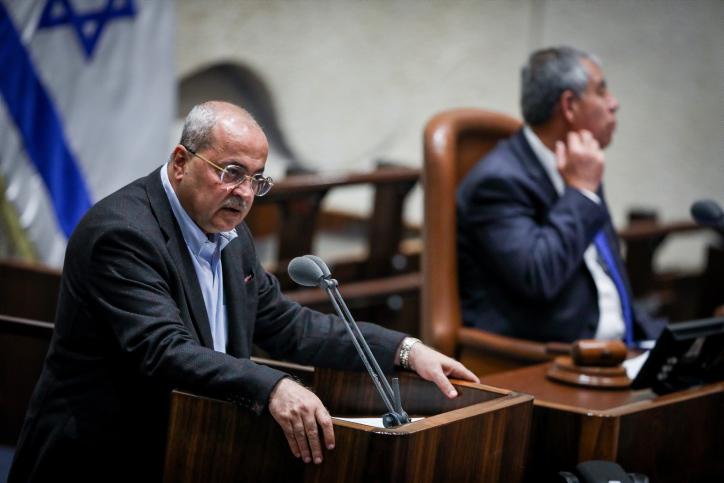
Veteran Arab-Israeli lawmaker Ahmed Tibi has been elected deputy speaker of the 26th Knesset, returning to a parliamentary leadership role he has held previously. The appointment comes as Israel remains locked in negotiations over formation of a new government following the October 27 election.
JERUSALEM — Veteran Palestinian-Israeli lawmaker Ahmed Tibi has been elected deputy speaker of Israel’s Knesset, returning one of the country’s most prominent Arab politicians to a senior parliamentary leadership position at a moment when Arab parties are emerging as potentially decisive players in the struggle over Israel’s next government. Tibi, a physician by training who has served in parliament for more than two decades and leads the Arab Movement for Change, known as Ta’al, enters the role only days after members of the newly elected 26th Knesset were sworn in following Israel’s October 27 general election. His appointment does not represent an unprecedented rise because he has previously served as deputy speaker, but the political environment surrounding his return is markedly different from earlier terms. Arab-majority parties now hold a substantial bloc of seats in a fragmented parliament in which Prime Minister Benjamin Netanyahu’s traditional alliance no longer commands an automatic majority, while former military chief Gadi Eisenkot is attempting to assemble an alternative government with support from parties spanning the political center, right and Arab opposition.
The development also requires an important clarification about Tibi’s current political position. He is not chairman of the Joint List itself, as some initial reports described him. Tibi is chairman of Ta’al and one of the most senior figures within the revived Joint List, while the alliance itself is headed by constitutional-law professor and veteran Arab politician Yousef Jabareen. The Joint List brings together Hadash, Ta’al and Balad and won 11 seats in the October election, giving it renewed institutional importance after years in which divisions among Arab parties weakened their collective parliamentary strength. Tibi occupies the second position within the alliance and has emerged as one of its most experienced parliamentary tacticians, with a long record of involvement in debates over Palestinian citizens’ rights, healthcare, local government funding, education, employment, discrimination and the Israeli-Palestinian conflict. His latest elevation therefore represents both the return of an established figure to a familiar position and a sign that the political weight of Arab lawmakers has increased significantly in the new Knesset.
That increased influence is rooted in the arithmetic produced by the election. The 120-seat Knesset is deeply divided, with Likud remaining the largest single right-wing party but lacking enough support from its traditional allies to guarantee a majority. The Joint List holds 11 seats, while Ra’am controls eight, giving Arab-majority parties a combined 19 seats. In a parliament where 61 votes are required for a majority, those numbers make it much harder for Jewish-led opposition parties to remove Netanyahu or form a durable alternative administration without at least some cooperation from Arab lawmakers. President Isaac Herzog has already given Gadi Eisenkot the first mandate to try to form a government after the former Israel Defense Forces chief secured recommendations from a sufficiently broad group of lawmakers, including the Joint List. That recommendation does not mean the Arab bloc has agreed to join a coalition formally, and deep ideological divisions remain between it and several centrist and right-leaning parties, but it does mean the Joint List has moved from the political margins into the center of government-formation calculations.
Tibi has been clear that his party does not necessarily require cabinet positions in order to exercise influence. He has publicly said the Joint List could support an anti-Netanyahu government from outside the formal coalition if doing so helps remove Netanyahu and his far-right allies from power, invoking the precedent of former Prime Minister Yitzhak Rabin, whose government relied at crucial moments on support from Arab lawmakers without incorporating them fully into the cabinet. That approach reflects both pragmatism and political necessity. Several Jewish-led parties that oppose Netanyahu remain unwilling to sit formally with Arab parties, while Tibi and Jabareen argue that such reluctance cannot erase the simple parliamentary reality that Arab citizens voted in large numbers and their representatives hold seats that count exactly the same as those of other lawmakers. The Joint List’s position is therefore to seek influence through confidence votes, parliamentary leadership, committee assignments and legislative negotiations even if ministers from the alliance do not join the government.
The scale of Arab participation in the October election has strengthened that argument. Joint List figures have said turnout among Arab citizens rose dramatically compared with previous elections, reflecting dissatisfaction with the outgoing government, anger over crime and inequality inside Arab communities, opposition to the Gaza war and resistance to the influence of far-right ministers such as Itamar Ben Gvir and Bezalel Smotrich. Whatever the exact motivations of individual voters, the result was a clear increase in Arab parliamentary representation and a new political environment in which the Joint List and Ra’am together cannot easily be ignored. Tibi’s election as deputy speaker is one of the first tangible institutional consequences of that shift because the role places him directly inside the leadership of parliament rather than leaving Arab representation confined to opposition benches.
The deputy speakership is not merely ceremonial. Israel’s Knesset can have several deputy speakers, generally reflecting arrangements among the parliamentary factions, and they can preside over plenary sessions, enforce procedural rules and take the chair when the speaker is absent or delegates authority. The position therefore gives Tibi regular visibility and responsibility within the legislative process while reinforcing the principle that Arab lawmakers participate formally in the administration of the chamber. His supporters see the appointment as recognition of his long parliamentary experience, while his critics, particularly on the nationalist right, regard it as evidence of growing Arab political influence in institutions they believe should remain firmly under Zionist leadership. That ideological divide has followed Tibi throughout much of his career.
Before entering the Knesset, Tibi served as an adviser to Palestinian leader Yasser Arafat, a background that remains a recurring point of attack from nationalist Israeli politicians. He later entered parliamentary politics in 1999 and developed a reputation as one of the most articulate and confrontational Arab voices in the legislature. He has repeatedly described himself as both Palestinian and an Israeli citizen, arguing that Palestinian national identity does not negate his right to participate fully in Israeli political institutions. His speeches have frequently challenged discrimination against Arab citizens, home demolitions, unequal municipal funding and Israeli policy in the occupied Palestinian territories. At the same time, supporters point to his work on healthcare, education, employment and municipal issues as evidence that his political activity extends well beyond the Israeli-Palestinian conflict.
Those competing perceptions explain why his return to the Knesset leadership is politically sensitive. For many Palestinian citizens of Israel, Tibi’s elevation represents institutional recognition in a political system where Arab parties have historically been excluded from governing coalitions and where Arab voters have often complained that their participation is treated as less legitimate than that of Jewish citizens. For far-right parties, however, cooperation with the Joint List remains deeply controversial. Ben Gvir and other nationalist politicians have repeatedly accused Arab factions of hostility to Zionism and have attacked Jewish opposition parties for relying on them to build parliamentary majorities. Joint List leaders respond that such rhetoric effectively attempts to delegitimize nearly one-fifth of Israel’s population and reduce Arab citizens to voters whose ballots count legally but should not count politically.
That tension was visible during the opening session of the new Knesset, when Joint List leader Yousef Jabareen was interrupted by Ben Gvir during the swearing-in proceedings and questions were raised about his loyalty to the state. Knesset Speaker Amir Ohana intervened to maintain order, illustrating how quickly the new parliament’s ethnic and ideological divisions could surface even during formal ceremonial proceedings. Jabareen and Tibi have responded to such confrontations by arguing that the October election demonstrated Arab citizens’ determination to participate in national politics rather than retreat from it. They say the Joint List intends to use its stronger position not only to challenge occupation policies but also to pursue substantial domestic priorities for Arab communities, including larger municipal budgets, better infrastructure, expanded employment, stronger schools and an effective national programme against organized crime and gun violence.
Crime inside Arab towns has become one of the bloc’s most urgent domestic concerns. Arab political leaders have repeatedly accused Israeli governments and police of failing to confront organized criminal networks, illegal firearms and killings in Arab municipalities with the same urgency applied elsewhere. The issue has become central to coalition discussions because Joint List leaders have indicated that any arrangement under which they provide outside support for a new government would need to include a properly funded national strategy to reduce violent crime, alongside commitments addressing discriminatory planning policies, home demolitions and economic disparities. They have also sought renewed political engagement on the Palestinian question, creating significant friction with centrist and right-wing parties whose security positions differ sharply from those of the Joint List.
Those ideological differences are one reason government formation remains uncertain even though Eisenkot has secured the first mandate from President Herzog. Eisenkot, a former military chief of staff, occupies a political space that is substantially more centrist and security-oriented than the Joint List. His potential governing partners also include parties that strongly oppose formal dependence on Arab factions. The challenge is therefore to build a coalition or parliamentary arrangement capable of surviving confidence votes while managing disagreements over Palestinian statehood, the Gaza conflict, settlements, religion and state, judicial power and national security. Tibi’s proposal of outside support offers one possible solution because it would allow the Joint List to help sustain a government without accepting collective cabinet responsibility for policies it may oppose.
The precedent of Ra’am’s participation in the 2021 coalition remains highly relevant. Led by Mansour Abbas, Ra’am became the first independent Arab party to formally join an Israeli governing coalition, helping establish the diverse alliance that removed Netanyahu from power. Supporters of the arrangement said it demonstrated that Arab political participation could deliver budgets and practical gains for Arab municipalities, while critics on the Israeli right argued that the government was dangerously dependent on an Arab Islamist party. Palestinian nationalist critics, meanwhile, accused Ra’am of joining a government that continued policies they opposed in the occupied territories. The experience showed both the possibilities and political costs of direct Arab participation in government, and the Joint List now appears to be pursuing a more cautious model based on parliamentary support without formal ministerial membership.
Tibi’s deputy speakership also comes ahead of another important battle over control of the Knesset itself. The new parliament has not yet fully settled its leadership structure, and opposition parties are seeking to replace Likud’s Amir Ohana as speaker. The Eisenkot-led bloc has backed Yashar lawmaker Matan Kahana for the post, and Tibi has publicly said the Joint List will support him because the faction wants to participate in what it describes as political change. Control of the speakership matters because the speaker has considerable influence over parliamentary procedure, including scheduling debates and votes, interpreting chamber rules and managing the legislative agenda. An opposition victory in that contest would therefore demonstrate that the anti-Netanyahu majority can cooperate effectively even before a new government is formally formed.
For the Joint List, that parliamentary strategy goes beyond symbolism. A stronger presence in the speaker’s office, committee system and plenary leadership can translate into practical leverage over budgets and legislation. Tibi has also been nominated for work connected to the Finance Committee, an especially important venue for debates over public spending and allocations to local authorities. Arab municipalities have historically argued that they receive inadequate funding for infrastructure, schools, housing, public transportation, policing and economic development, and greater representation in financial committees could give Arab lawmakers more direct influence over how national resources are distributed.
The wider political struggle is therefore not simply about whether Tibi is permitted to preside over Knesset debates. It is about whether the October election has created a durable shift in the status of Arab parties inside Israel’s political system. The new parliamentary arithmetic suggests they possess more leverage than in many recent elections, but leverage is not the same as control. The Joint List still faces significant hostility from nationalist parties, hesitation from centrist Jewish factions and internal debates within Arab politics about how far to cooperate with governments whose security policies they fundamentally oppose.
Tibi’s own political style reflects that tension. He has spent much of his career combining sharp criticism of Israeli policy with a willingness to use the institutions of the state to advance Palestinian citizens’ interests. He can deliver fiery speeches condemning occupation and discrimination while also negotiating budgets, committee positions and procedural agreements with politicians from parties he strongly opposes. That dual role has made him controversial but also unusually durable. Few Arab lawmakers have remained as consistently visible in national Israeli politics for as long as Tibi, and his parliamentary experience makes him an important figure at a moment when procedural knowledge could matter almost as much as ideological positioning.
His return to the deputy speaker’s chair also revives questions about legitimacy that have long shaped Israeli political discourse. Legally, Arab members of the Knesset possess the same voting rights as every other elected lawmaker. A majority of 61 does not change depending on whether some of those votes come from Arab parties. Politically, however, Netanyahu and several right-wing allies have repeatedly argued that governments dependent on anti-Zionist Arab factions lack legitimacy on fundamental security issues. The Joint List rejects that argument as discriminatory and maintains that participation in parliament must include the right to influence who governs.
That debate is likely to intensify if Eisenkot moves closer to forming a government reliant on Arab support. Tibi and Jabareen have said their voters did not participate merely to occupy opposition seats but to change policy and influence national decisions. Netanyahu’s camp is expected to use any dependence on the Joint List as a major argument against an alternative government, particularly on questions involving Gaza, Iran, the West Bank and military policy. The result may be a government-formation process in which Arab lawmakers are simultaneously indispensable to the parliamentary arithmetic and politically controversial to some of the parties that need their votes.
The October election itself remains part of that confrontation. Netanyahu’s allies raised allegations about possible irregularities and foreign involvement connected to Arab voter mobilization, while legal and police authorities have examined claims surrounding those allegations. No authority has invalidated the certified result, and the 26th Knesset has been constituted on the basis of the official vote. Joint List leaders have strongly rejected attempts to cast doubt on Arab participation and have accused their opponents of trying to undermine confidence in the election because Arab turnout changed the parliamentary balance.
That background makes Tibi’s election to a leadership role even more politically resonant. An electorate that had frequently been described as disengaged or fragmented returned enough Arab lawmakers to give them meaningful influence over parliament, and one of their most recognizable figures is now once again sitting in the deputy speaker’s chair. For his supporters, that is evidence that political participation can produce institutional power. For opponents, it is a warning that the balance inside the Knesset has shifted in ways they regard as dangerous.
The significance should still be kept in proportion. Tibi’s election as deputy speaker does not mean the Joint List has joined government, and it does not guarantee that Arab parties will secure their policy demands. Deputy speakers share authority within the Knesset and do not control the chamber on their own. Government negotiations remain unresolved, Eisenkot has not yet formed a cabinet and Netanyahu continues to explore potential alliances and unity arrangements that could change the parliamentary landscape quickly.
What the appointment does establish is that Arab lawmakers are already converting their stronger electoral position into formal institutional representation. That matters because political influence is often built incrementally through committee seats, procedural roles, coalition agreements and confidence votes rather than dramatic changes in government alone. Tibi’s experience makes him particularly well positioned to exploit those opportunities.
For Palestinian citizens of Israel, the next question is whether that influence produces material improvements in daily life. Arab communities continue to face high levels of violent crime, shortages in housing and planning approvals, unequal infrastructure and gaps in public investment. Joint List leaders say stronger parliamentary representation should be measured by whether it delivers budgets, security reform and greater equality rather than simply more prominent titles.
The same test will apply to the faction’s approach to national politics. Supporting Eisenkot from outside government could give the Joint List leverage without forcing it to defend policies it opposes, but such arrangements can be unstable. A government dependent on external support must negotiate repeatedly with the parties keeping it in power, and any major disagreement over budgets, military operations or Palestinian policy could threaten its survival.
That uncertainty means Tibi’s new role should be viewed as the beginning of a larger political process rather than its conclusion. Israel’s new parliament remains unsettled, coalition talks are ongoing and the fight over the Knesset speakership is still ahead. Arab parties have more seats and more leverage, but the extent of their long-term influence will depend on whether they can translate parliamentary numbers into durable agreements.
For Tibi personally, the return to the deputy speakership reinforces his status as one of the most enduring Arab figures in Israeli national politics. More than 25 years after first entering the Knesset, he remains capable of shaping debates over both Palestinian rights and the internal functioning of Israel’s legislature. His political opponents continue to challenge his worldview, while supporters regard his longevity as proof that Arab citizens can compete for institutional power without abandoning their identity or political demands.
At a time when Israel is struggling to form a government, when the relationship between Jewish and Arab citizens remains deeply strained and when parliament is divided over the future of Netanyahu’s political leadership, Tibi’s election carries meaning far beyond the deputy speaker’s chair itself. It reflects a parliament in which Arab votes have become more consequential, where old assumptions about political exclusion are being tested and where the path to a governing majority may now run directly through lawmakers who were once treated as peripheral to the coalition process.
The immediate political focus will now shift to the election of the Knesset speaker and to Eisenkot’s attempt to assemble a government capable of commanding at least 61 votes. Tibi and the Joint List have already indicated that they intend to participate actively in both processes, making clear that they see their stronger electoral position as a mandate for influence rather than symbolic representation.
Whether that influence ultimately reshapes Israeli governance, strengthens Arab municipalities, alters national policy toward Palestinians or simply produces another unstable parliamentary arrangement remains uncertain. What is already clear is that Ahmed Tibi has returned to the Knesset leadership at a moment when Arab lawmakers possess more bargaining power than they have held in years, and the struggle over how that power is used is likely to become one of the defining political battles of Israel’s new parliament.