AKUFO-ADDO TO LEAD 200-MEMBER ECOWAS OBSERVER MISSION FOR NIGERIA’S 2027 GENERAL ELECTIONS
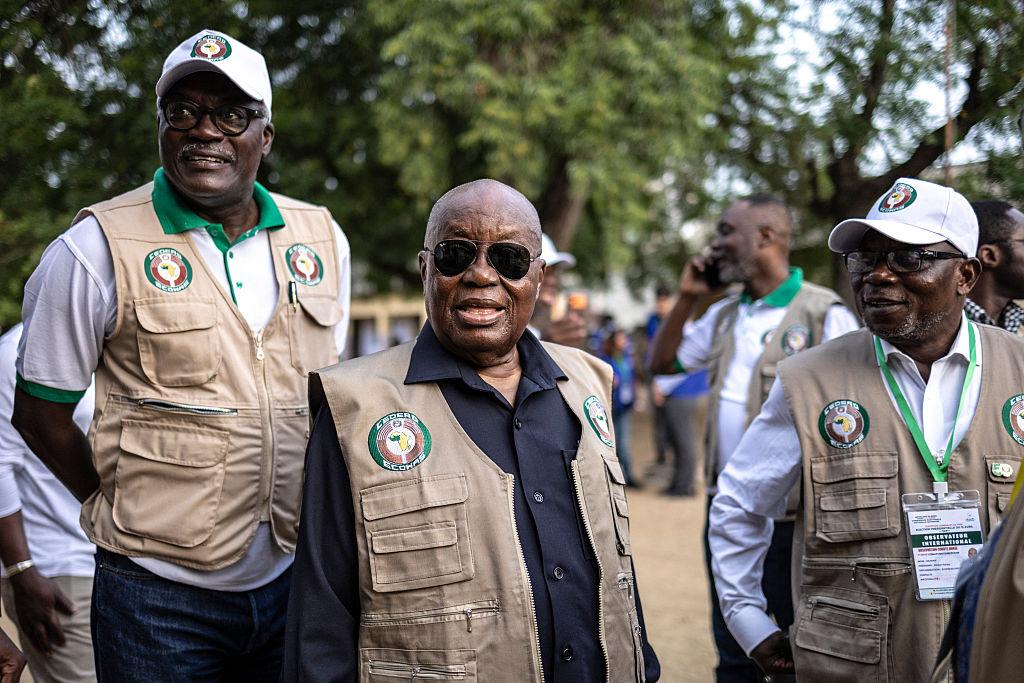
Former Ghanaian President Nana Addo Dankwa Akufo-Addo has been appointed to lead a 200-member ECOWAS Election Observation Mission for Nigeria’s January 16, 2027 presidential and National Assembly elections. The delegation will include representatives from foreign ministries, electoral commissions, ECOWAS institutions, civil society, the media and election experts from across West Africa, and will operate under the bloc’s 2001 Supplementary Protocol on Democracy and Good Governance. Nigeria’s governorship and State House of Assembly elections are scheduled for February 6, while President Bola Tinubu is campaigning for a second term.
Former Ghanaian President Nana Addo Dankwa Akufo-Addo has been appointed by the Economic Community of West African States to lead a 200-member Election Observation Mission to Nigeria ahead of the country’s January 16, 2027 presidential and National Assembly elections. The appointment places the former Ghanaian leader at the head of one of the most important regional monitoring missions for Nigeria’s approaching polls, which will include President Bola Tinubu’s bid for re-election alongside a crowded field of opposition candidates. Akufo-Addo’s office announced the appointment on Thursday, November 12, saying the mission will operate under the framework of the ECOWAS Supplementary Protocol on Democracy and Good Governance adopted in 2001.
The mission will bring together representatives and experts from across West Africa, reflecting ECOWAS’s long-standing practice of deploying multidisciplinary teams to observe elections in member states. According to the statement from Akufo-Addo’s office, the delegation will include officials from ministries of foreign affairs and national electoral commissions, ECOWAS ambassadors accredited in Abuja, members of the ECOWAS Council of the Wise, representatives of the ECOWAS Court of Justice and members of the ECOWAS Parliament. Civil society organisations, media practitioners and independent electoral specialists from across the region will also participate in the mission.
The deployment comes at a politically sensitive period for Nigeria as the country prepares for an election that could determine whether Tinubu secures a second term as president. The January 16 vote will also elect members of the Senate and House of Representatives, while governorship and State House of Assembly elections are scheduled to follow on February 6. The scale of the election means the ECOWAS observers will be monitoring one of the largest democratic exercises in Africa, covering a country of more than 200 million people and an electoral system operating across 36 states and the Federal Capital Territory.
Akufo-Addo’s selection reflects his experience both as a former head of state and as a political figure who has previously been involved in regional democratic and diplomatic processes. He served as President of Ghana from January 2017 until January 2025 and was also a former chairman of the ECOWAS Authority of Heads of State and Government. His appointment gives the mission a high-profile leader with direct experience of electoral politics, executive government and regional diplomacy.
The former Ghanaian president has also previously led ECOWAS election observation missions in other West African countries. His participation in those assignments has placed him in situations involving contested political transitions, electoral administration and post-election confidence-building. That background is likely to be considered valuable as the regional bloc prepares to observe an election that is already attracting intense political competition and legal disputes.
Nigeria’s 2027 election is taking place against the background of lingering concerns over public confidence in the electoral process. The 2023 general election generated significant controversy over result transmission, logistics and the performance of election technology, while opposition parties challenged the presidential outcome through the courts. Although the Supreme Court ultimately affirmed Tinubu’s victory, the experience left the Independent National Electoral Commission under sustained pressure to demonstrate that reforms and operational improvements have been made ahead of the next national vote.
INEC Chairman Professor Joash Amupitan has acknowledged that the commission enters the 2027 election cycle facing a trust deficit. Speaking at Chatham House in London this week, he said the commission would be guided by the Constitution and Electoral Act and identified security, logistics, technology and unresolved court cases as major challenges. Those same areas are likely to form part of the broader environment ECOWAS observers will assess before, during and after voting.
Election observation missions generally do not administer elections or interfere with the decisions of national electoral authorities. Their role is to observe the process, assess whether voting is conducted in line with national laws and regional democratic standards and provide independent findings based on what mission members see across different locations. Observers typically examine campaign conditions, political participation, security arrangements, polling procedures, voter accreditation, counting, collation and the handling of electoral disputes.
The ECOWAS mission will therefore be expected to assess not only what happens on election day but the wider political environment surrounding the vote. That includes whether political parties are able to campaign freely, whether candidates and supporters face intimidation, whether security forces remain neutral and whether the electoral commission operates transparently. The mission may also engage political parties, civil society groups, security agencies and election administrators before issuing preliminary and final reports.
The regional bloc’s Supplementary Protocol on Democracy and Good Governance establishes principles governing constitutional rule, elections and democratic transitions within ECOWAS member states. Election observation is one of the tools the organisation uses to encourage compliance with those principles and to identify weaknesses that could threaten public confidence or political stability.
Nigeria’s importance within ECOWAS makes the mission particularly significant. The country has historically played a leading role in regional diplomacy, peacekeeping and economic integration, and political instability in Nigeria could have consequences far beyond its borders. A credible and peaceful election is therefore not only a domestic priority but also a regional concern.
Akufo-Addo’s appointment also reflects the preference of regional organisations for respected former heads of state to lead major election observation missions. Former presidents can often engage senior political leaders more easily than technical observers and may be called upon to facilitate dialogue where disputes emerge. Their presence can also increase the visibility of the mission and strengthen the political weight of its findings.
The 200-member size of the delegation indicates that ECOWAS intends to maintain a broad presence across Nigeria. Because the country covers a vast geographical area with significant differences in security conditions, infrastructure and political competition, observers will likely be distributed across multiple states rather than concentrated solely in Abuja or major urban centres. That allows the mission to compare experiences from different regions and identify whether problems are isolated or widespread.
Security will be one of the most important issues facing both INEC and international observers. Nigeria continues to confront insurgency, banditry, separatist violence, communal conflict and political attacks in several parts of the country. Election officials and security agencies must therefore ensure that voters can participate without intimidation while also protecting sensitive materials and polling personnel.
The North-East continues to face security concerns associated with insurgent groups, while parts of the North-West and North-Central remain affected by armed banditry and communal violence. The South-East has experienced separatist-related violence and threats surrounding election participation, while politically competitive states across other regions can also face localised clashes between supporters of rival parties. ECOWAS observers will therefore need to assess whether security deployments protect citizens without creating intimidation or partisan advantage.
Logistics will be another major area of attention. Nigeria’s elections require the movement of ballot papers, result sheets, accreditation devices and personnel to thousands of polling units across difficult terrain. Delays in the distribution of materials have affected previous elections, sometimes causing voting to begin hours late and creating complaints of unequal treatment between communities.
INEC has said it intends to improve deployment systems ahead of 2027, but the operational scale remains enormous. Riverine communities, rural areas and locations with poor road infrastructure require specialised transportation arrangements, while election officials must also prepare for possible security disruptions. The observer mission will likely monitor whether polling begins on time and whether voters across different regions have comparable access to the process.
Technology will also be closely watched. The Bimodal Voter Accreditation System and INEC Result Viewing portal became central issues during the 2023 election, particularly after technical problems affected the upload of presidential polling-unit results. The commission has maintained that technology remains important to improving transparency and reducing fraud, but public confidence will depend heavily on whether systems operate more reliably in 2027.
Observers will likely assess whether voter accreditation works consistently and whether polling-unit results are recorded and transmitted in accordance with established procedures. While ECOWAS observers do not independently count every vote nationwide, they can document the performance of election technology at polling locations they visit and compare those observations with official explanations.
Political competition is already intense. Tinubu is campaigning for a second term under the All Progressives Congress, while opposition parties are attempting to consolidate support around rival candidates. INEC’s final candidate list includes former Vice President Atiku Abubakar as the African Democratic Congress presidential candidate, although his candidacy is also the subject of continuing litigation arising from a court judgment affecting the party’s leadership.
Other opposition candidates are also campaigning nationally, creating a contest shaped by economic conditions, insecurity, regional alliances and debates over the performance of the Tinubu administration. The presence of multiple significant candidates increases the importance of transparent electoral administration because closely contested outcomes are more likely to generate legal and political challenges.
Economic conditions are likely to influence the political environment surrounding the vote. Nigerians have experienced high living costs, currency pressures and significant debate over economic reforms introduced during Tinubu’s first term. Opposition candidates are expected to make the economy a central campaign issue, while the ruling party will argue that reforms are creating the foundation for longer-term stability and investment.
Security will also remain politically sensitive because voters in many communities continue to face kidnapping, insurgency and other forms of violence. Candidates will be judged partly on their proposals for addressing those threats, but the immediate concern for election administrators is whether insecurity prevents citizens from voting freely.
Election observation missions normally begin work before polling day through meetings with political actors and institutions. The ECOWAS delegation is therefore expected to engage INEC, political parties, security agencies, civil society groups and media organisations before observers are deployed to polling locations. Those consultations help the mission understand the major concerns being raised by different stakeholders and identify regions or issues requiring additional attention.
On election day, observer teams will typically visit multiple polling units and record whether procedures are followed. They may examine the opening of polling stations, availability of materials, functioning of accreditation equipment, accessibility for voters and the conduct of security personnel. They will also observe counting procedures and may follow results through collation centres.
After the vote, the mission is expected to issue a preliminary statement outlining its initial assessment. A more detailed final report normally follows later and may contain recommendations for improving future elections. Such reports can influence electoral reform because regional organisations often identify recurring weaknesses involving logistics, technology, campaign regulation or dispute resolution.
The independence of observation missions is therefore important. ECOWAS will be expected to assess the process impartially rather than appear to favour Tinubu, opposition candidates or any particular political party. Akufo-Addo’s leadership will attract scrutiny from different political camps precisely because of the importance of Nigeria’s election and the regional relationships involved.
Akufo-Addo maintained close diplomatic relations with Nigerian leaders during his presidency, as would be expected between the governments of Ghana and Nigeria, but the mission’s mandate requires neutrality. His credibility as head of the delegation will therefore depend on the extent to which the mission’s findings are seen as evidence-based and consistent with the observations of other domestic and international monitoring groups.
Ghana and Nigeria have historically maintained close political, economic and cultural ties. Both countries are major members of ECOWAS and have played significant roles in democratic development within West Africa. The appointment of a former Ghanaian president to lead the regional observation effort therefore carries symbolic weight beyond the technical function of monitoring voting.
Ghana itself has experienced highly competitive elections and peaceful transfers of power between major parties. Akufo-Addo lost presidential elections before eventually winning in 2016, serving two terms and transferring power at the end of his constitutional tenure. That experience gives him personal familiarity with both victory and defeat within a competitive democratic system.
ECOWAS has faced growing pressure in recent years to defend democratic governance across West Africa following military coups and political crises in several member states. The organisation’s credibility has been tested by transitions in countries where constitutional rule has been disrupted, making successful democratic elections in major member states increasingly important to the bloc’s wider legitimacy.
Nigeria’s election therefore carries significance for ECOWAS at a time when democratic norms in the region remain under pressure. A peaceful and credible process would reinforce the argument that constitutional transfers of power remain viable across West Africa, while a disputed or violent election could deepen concerns about regional democratic stability.
The observer mission will also operate in an environment where misinformation and social media increasingly influence political perceptions. False claims about voting procedures, candidate disqualification or fabricated results can spread rapidly online, creating confusion before official information is available. Observers and election authorities will therefore need to distinguish verified developments from politically motivated narratives.
Media practitioners included in the ECOWAS delegation may contribute to monitoring the information environment as well as conventional polling procedures. Freedom of the press, access to election information and responsible reporting are all relevant components of a credible electoral process.
Civil society representatives will provide additional expertise because Nigerian and regional organisations have extensive experience monitoring polling units and advocating electoral reform. Domestic observers often possess detailed local knowledge that complements the broader regional perspective of international missions.
Representatives of electoral commissions from other ECOWAS countries will also bring technical experience. They can assess administrative procedures from the perspective of professionals who have organised elections themselves, including the challenges of voter registration, technology, logistics and result management.
The Council of the Wise and other ECOWAS institutions add a diplomatic component to the delegation. If serious disputes arise, experienced regional figures may be able to encourage political dialogue and discourage violence while maintaining the mission’s observer role.
The ECOWAS Court of Justice representatives can provide legal expertise regarding regional democratic standards, while parliamentarians may assess the broader political environment and legislative framework governing the election. The combination of different professional backgrounds is intended to produce a more comprehensive assessment than would be possible from a purely technical election team.
Nigeria’s legal framework will remain the primary basis for the conduct of the election. INEC operates under the Constitution and Electoral Act, and courts have jurisdiction over disputes involving nominations, party leadership and election results. ECOWAS observers can comment on whether procedures appear consistent with regional standards, but they do not override Nigerian law or judicial decisions.
That distinction is particularly important given the number of pre-election lawsuits currently involving INEC and political parties. Professor Amupitan recently disclosed that the commission is facing more than 300 court cases only weeks before the election. Some of those cases could still affect candidate lists or party structures before voting begins.
The Atiku and ADC leadership dispute demonstrates how litigation can create uncertainty close to an election. A Federal High Court judgment nullified the David Mark-led leadership of the ADC, affecting decisions taken under that structure, including the process through which Atiku emerged as the party’s presidential candidate. The ADC has appealed, and INEC says it will comply with whatever final court order emerges.
Such disputes may be monitored by ECOWAS because legal uncertainty can affect the wider political environment even when observers do not intervene in the substance of domestic court cases. The mission can assess whether judicial decisions are implemented transparently and whether political parties are able to pursue legal remedies without intimidation.
Campaign conduct will also be important. Election observers typically examine whether parties have reasonable access to campaign venues, media coverage and public spaces. They may also document inflammatory rhetoric, political violence or misuse of state resources where such concerns are credibly reported.
Vote buying remains another recurring issue in Nigerian elections. Domestic observer groups have repeatedly documented attempts by political actors to distribute cash or other incentives near polling locations. ECOWAS observers may record such incidents where witnessed and include them in their assessment.
Electoral violence can be particularly damaging because even limited attacks can suppress turnout in affected communities. Security agencies therefore face the challenge of protecting voters while remaining politically neutral. Excessive or selective deployment can create its own credibility concerns.
The mission will likely compare experiences across different regions before reaching conclusions. One well-run polling unit does not establish that the entire election was credible, just as an isolated failure does not necessarily invalidate a nationwide process. Large observer teams are intended to gather enough evidence to identify broader patterns.
That is one reason the 200-member size matters. Nigeria’s geographical scale requires extensive deployment if the mission wants to obtain observations beyond major cities. Even 200 observers cannot cover every polling unit, but coordinated sampling across states can provide a meaningful picture of how procedures function.
The mission is expected to work alongside other observer groups, including domestic civil society organisations and potentially missions from the African Union, Commonwealth and other international institutions. Different organisations may publish separate findings based on their own methodologies.
Agreement between major observation groups can strengthen confidence in their conclusions, while significant differences may prompt closer examination of the evidence. The Nigerian public will therefore likely compare the ECOWAS assessment with reports from domestic monitors and other international missions.
Akufo-Addo’s personal role will become most visible during high-level meetings and the presentation of the mission’s findings. He may meet political candidates, election officials and security leaders before polling, while also addressing the media after the vote.
His statements will be closely analysed because preliminary observer reports can influence perceptions during the sensitive period between voting and the completion of final results. Careful language will be necessary to avoid declaring judgments before sufficient evidence has been gathered.
The mission’s purpose is not to determine who should win the election. Its responsibility is to assess whether voters were able to make their choices in an environment broadly consistent with Nigerian law and regional democratic commitments.
That distinction is fundamental as Tinubu seeks a second term and opposition candidates attempt to unseat him. ECOWAS will be expected to observe the process rather than evaluate the political merits of the candidates.
Nigeria’s election timetable has been officially confirmed by INEC. Presidential and National Assembly elections are scheduled for January 16, while governorship and State House of Assembly elections will follow on February 6. Accreditation and voting are expected to take place using INEC’s established procedures, including PVC verification through BVAS.
The electoral commission has already published updated candidate lists and is moving deeper into the operational phase of preparation. Media accreditation, observer accreditation, training and sensitive-material planning are among the major tasks being completed before polling day.
ECOWAS’s appointment of Akufo-Addo therefore comes as the election process shifts from political preparation toward final operational readiness. The mission will now need to organise deployment, brief observers and coordinate with Nigerian authorities while maintaining institutional independence.
The former president’s office has described the appointment as part of ECOWAS’s broader commitment to promoting credible elections and democratic governance. His leadership of the mission places a Ghanaian statesman at the centre of a major regional democratic exercise only two years after leaving office.
The assignment also reinforces Akufo-Addo’s continuing role in regional diplomacy after his presidency. Former African heads of state frequently remain active through election observation, mediation and international advisory work, drawing on relationships and political experience developed while in office.
For Ghana, the appointment carries a measure of diplomatic prestige because one of its former presidents has been selected to lead such a substantial regional mission. It also demonstrates the interconnected nature of democratic institutions across West Africa, where political developments in one country can influence perceptions and stability throughout the region.
For Nigeria, the presence of a large ECOWAS delegation will increase external scrutiny of how the January election is conducted. Election observation cannot prevent every irregularity, but it can provide independent documentation and encourage institutions to follow established procedures.
That scrutiny may be particularly important where political parties disagree over results or administrative decisions. Independent observer reports can help establish what was witnessed on the ground and distinguish verified procedural problems from unsupported allegations.
The mission’s final credibility will therefore depend on the quality of its deployment, the independence of its observers and the evidence supporting its conclusions. A large delegation does not automatically guarantee an effective mission if observers are concentrated too narrowly or if findings appear politically influenced.
Akufo-Addo will be responsible for providing leadership that reinforces impartiality and professionalism. His experience in government and regional politics gives him significant authority, but it also means his words and relationships will be examined closely by Nigerian political actors.
The challenge will be to maintain enough engagement with all sides to understand their concerns without creating the impression that the mission has adopted any party’s narrative. Meetings with the ruling party, opposition parties, INEC and civil society should therefore be balanced and transparent.
Election observation is most effective when it strengthens local democratic institutions rather than replacing them. Nigerians, through their electoral commission, courts and political system, remain responsible for determining the outcome of the election.
ECOWAS can support that process by providing an independent regional assessment and by encouraging parties to resolve disputes through constitutional channels rather than violence. That role is particularly important in a region where disputed elections have sometimes contributed to instability.
The January vote will therefore represent a major test for Nigeria, INEC and ECOWAS simultaneously. Nigeria must demonstrate that citizens can participate freely, INEC must show that it has addressed the weaknesses associated with previous elections and ECOWAS must prove that its observation mechanisms remain credible and impartial.
Akufo-Addo’s leadership places him at the centre of that regional effort. The former Ghanaian president will oversee a mission combining diplomatic experience, electoral expertise, civil society participation and media observation across one of Africa’s largest democratic exercises.
As the campaign enters its final months, the observer mission will be watching a political environment shaped by economic pressures, security concerns, legal disputes and intense competition for the presidency. Those factors will make the election challenging, but they also underline the importance of transparent monitoring.
The ultimate purpose of the ECOWAS mission will be to determine whether Nigerians are able to cast their ballots freely and whether the process reflects the democratic commitments the region has formally adopted. Its findings will not decide the winner, but they could play an important role in shaping public and regional confidence in the process.
For Akufo-Addo, the assignment is another major regional responsibility after leaving office. For ECOWAS, it is an opportunity to reinforce its commitment to constitutional democracy at a time when that commitment has faced repeated tests across West Africa.
For Nigeria, the significance is even greater. The January 16 presidential and National Assembly elections will determine the next phase of national political leadership, and the conduct of the process will influence not only the legitimacy of the eventual winners but also public confidence in the country’s democratic institutions.
Akufo-Addo and the 200-member ECOWAS team will therefore arrive with a mandate that goes far beyond observing ballots being cast. They will be assessing whether one of Africa’s most consequential democracies can conduct a competitive national election in a way that citizens, political parties and regional partners can regard as transparent, peaceful and consistent with the law.