ASEAN LEADERS AND BUSINESS CHIEFS CONVERGE IN MANILA AS ENERGY SECURITY, SUPPLY CHAINS AND MSMEs DOMINATE 2026 AGENDA
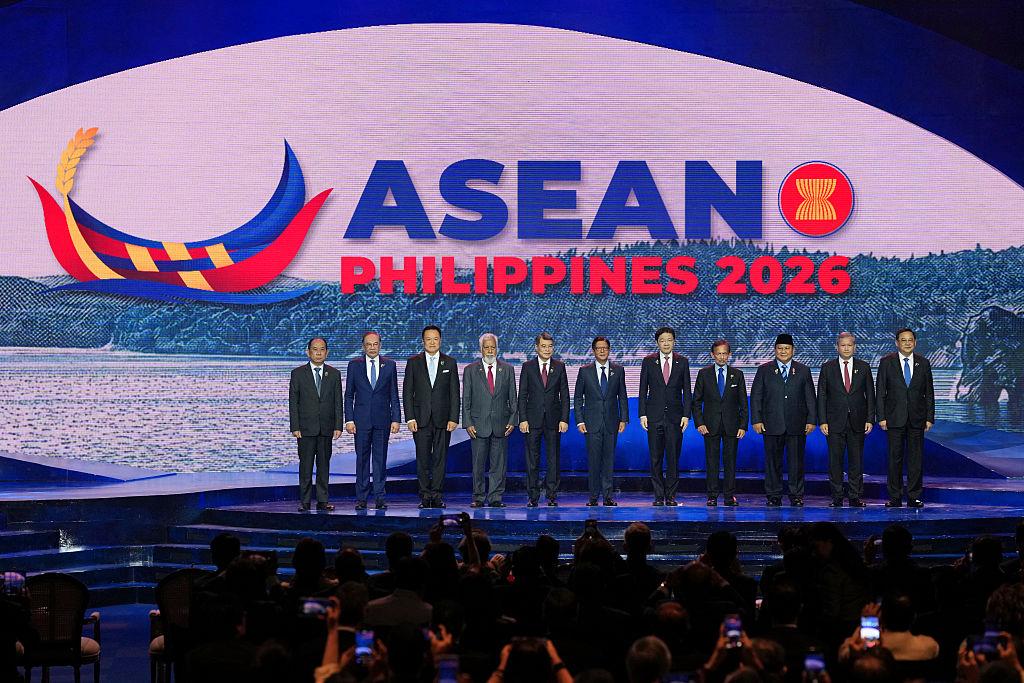
The ASEAN Business and Investment Summit opened in Metro Manila on November 14 as leaders, executives and investors gathered ahead of the 49th ASEAN Summit, which formally opens on November 15. Energy security, resilient supply chains, semiconductors, digital transformation and stronger support for MSMEs are among the main economic priorities, with ASEAN-BAC stressing that smaller businesses must share in the region’s growth. Japan and the Philippines will also co-chair the 4th Asia Zero Emission Community Leaders’ Meeting on November 17, where energy resilience, critical minerals, transition finance and regional decarbonization are expected to dominate discussions.
Southeast Asian leaders, global executives, investors and policymakers are gathering in the Philippines for a crucial series of ASEAN meetings as the region confronts rising energy costs, fragile global supply chains, accelerating technological disruption and growing pressure to ensure that smaller businesses benefit from regional economic growth. The ASEAN Business and Investment Summit opened in Metro Manila on Saturday, November 14, ahead of the formal opening of the 49th ASEAN Summit on November 15, bringing together political leaders and the private sector at a moment when Southeast Asia is trying to protect economic momentum from increasingly severe geopolitical and commercial shocks. Energy security, supply-chain resilience, support for micro, small and medium enterprises, semiconductors, food security, digital transformation and artificial intelligence are among the central economic themes being discussed across the summit programmed.
The Philippines is hosting this year’s ASEAN meetings as chair of the 11-member regional bloc under the theme “Navigating Our Future, Together,” with President Ferdinand Marcos Jr.’s government placing particular emphasis on economic resilience and regional integration. The summit period comes after months of concern over volatile oil markets, disruptions connected to conflict in the Middle East and renewed anxiety over the vulnerability of Southeast Asian economies that rely heavily on imported energy. Those pressures have pushed energy security from a long-term policy debate to one of the most immediate questions facing governments and businesses across the region.
The ASEAN Business and Investment Summit, known as ABIS, opened at Solaire Resort in Paranaque as the flagship private-sector event of the ASEAN Business Advisory Council. Its stated objective is to bring business leaders directly into the regional policy conversation rather than leaving economic strategy entirely to governments. The two-day meeting is structured around the idea that ASEAN must become more competitive, more connected and more inclusive if it is to turn rapid economic growth into broader prosperity for businesses, workers and communities throughout Southeast Asia.
ASEAN Business Advisory Council Philippines Chair Jose Ma. Concepcion III has argued that the region’s success cannot be measured only by the expansion of large corporations or increases in foreign investment. The council is placing particular emphasis on micro, small and medium enterprises, which account for the overwhelming majority of businesses across ASEAN and employ a substantial share of the region’s workforce. Concepcion has said smaller companies should be treated as central participants in the regional economy rather than as secondary beneficiaries of integration, reflecting growing concern that ASEAN’s strongest growth opportunities could otherwise remain concentrated among multinational corporations and major conglomerates.
In the Philippines alone, MSMEs represent more than 99 percent of registered businesses, while across ASEAN more than 70 million small and medium enterprises account for around 85 percent of regional employment and roughly 45 percent of gross domestic product. Those figures explain why policymakers increasingly view small-business development as a strategic economic issue rather than a narrow social programmed. If regional trade, digitalization and infrastructure initiatives fail to reach smaller businesses, a large portion of Southeast Asia’s workforce could remain disconnected from the benefits of deeper ASEAN integration.
Business leaders at the summit are therefore discussing how smaller enterprises can gain better access to finance, digital tools, regional supply chains and export markets. Many MSMEs struggle not because they lack customers or productive capacity but because they face high borrowing costs, limited technology adoption and complex rules when trying to trade across national borders. Regional initiatives that reduce administrative barriers and expand digital payments could therefore have a disproportionately large effect on smaller companies.
Supply-chain resilience is another major priority because ASEAN has become one of the world’s most important manufacturing and logistics regions. Electronics, semiconductors, automotive components, consumer goods and agricultural products move through supply networks connecting Southeast Asia with China, Japan, the United States, Europe and other major markets. Recent geopolitical tensions have encouraged companies to diversify production away from single-country supply chains, creating opportunities for ASEAN but also increasing pressure on the region to improve infrastructure, regulatory consistency and energy reliability.
The Philippines has highlighted semiconductors as one of the sectors where it believes the region can attract substantially more investment. Electronics and semiconductor products are among the country’s largest exports, and ASEAN governments increasingly see advanced manufacturing as essential to moving beyond lower-value production. Business leaders at ABIS are discussing how the region can strengthen its position in global semiconductor and artificial-intelligence supply chains while avoiding excessive dependence on a small number of foreign technology providers.
The development of resilient semiconductor supply chains is closely connected to wider competition between major powers. The United States, China, Japan, South Korea and European governments are all attempting to secure greater control over critical technologies, prompting companies to reconsider where chips, components and advanced computing infrastructure are produced. ASEAN countries hope to benefit from this diversification while maintaining economic relationships with competing global powers rather than becoming exclusively aligned with one side.
Philippine business representatives have also pointed to initiatives such as Pax Silica, a United States-led effort intended to strengthen secure supply chains around artificial intelligence and semiconductors. The Philippines and the United States have discussed establishing an AI industrial hub in New Clark City as part of that wider strategy, potentially strengthening the country’s role in data infrastructure, advanced manufacturing and digital services. Such projects could create new investment opportunities but will also require enormous amounts of reliable electricity, connectivity and skilled labor.
That requirement explains why energy security is one of the most important subjects linking the political and business summits. ASEAN economies are growing rapidly, urbanizing and expanding digital infrastructure at the same time that many remain dependent on imported oil, gas and coal. Any sustained disruption to global energy supplies can therefore quickly increase electricity prices, transport costs and inflation, placing pressure on both households and industry.
The latest Middle East conflict has made those risks particularly urgent. Philippine and other ASEAN officials have warned that higher oil prices and potential shipping disruptions could affect fuel-importing economies across the region. Leaders are expected to discuss proposals for greater regional cooperation on energy reserves and emergency supply arrangements, including plans for a shared ASEAN petroleum stockpiling mechanism that could allow participating countries to support one another during major supply shocks.
Japan has become an important partner in those discussions because it has decades of experience maintaining strategic oil reserves following the energy crises of the 1970s. Japanese officials have offered to share technical knowledge as ASEAN governments explore how a regional stockpile could operate. Japan’s industry ministry has indicated that the ability to withstand energy shocks is important not only for Southeast Asian countries but also for Japan because its own factories and supply chains depend heavily on stable production across ASEAN.
Energy resilience does not mean simply storing more fossil fuels. Governments are also trying to diversify electricity systems through renewable energy, nuclear power, liquefied natural gas, biofuels, regional power grids and greater efficiency. The challenge is to reduce vulnerability to imported fuels while also meeting rising electricity demand and long-term commitments to lower carbon emissions.
This tension is central to the Asia Zero Emission Community, or AZEC, a Japan-led framework that brings together Japan, Australia and nine Southeast Asian countries to cooperate on decarbonization and energy transition. The 4th AZEC Leaders’ Meeting is scheduled for November 17 in Manila and will be co-chaired by Japan and the Philippines as part of the wider summit week. Japanese Industry Minister Ryosei Akazawa has said he intends to use the meeting to advance both economic and energy resilience in Asia, particularly after recent geopolitical events exposed vulnerabilities in regional fuel supplies.
AZEC’s core philosophy differs from approaches that prescribe one identical route to decarbonization for every country. Japan has promoted what it describes as various pathways toward net-zero emissions, recognizing that Southeast Asian economies have different energy resources, levels of industrialization and infrastructure. Under that framework, one country may rely heavily on renewable energy while another uses gas, nuclear power, biofuels or carbon-management technologies during its transition.
Supporters argue that this flexible model is more realistic for developing Asian economies that cannot immediately abandon existing energy systems without risking electricity shortages or higher costs. They say energy security must remain part of climate policy because factories, transport systems and households require reliable power even during the transition to cleaner technologies. Japanese officials describe AZEC’s objective as achieving a “triple breakthrough” combining decarbonization, economic growth and energy security.
Business recommendations submitted ahead of this year’s AZEC summit reinforce that approach. The AZEC Advocacy Group, which includes the ASEAN Business Advisory Council, Japan’s Keidanren business federation and the Economic Research Institute for ASEAN and East Asia, has called for stronger diversification of energy sources, more secure critical-mineral supply chains and expanded transition finance. The group also wants greater development of cross-border carbon markets and specialist skills needed for the energy transition.
Critical minerals have become increasingly important because clean-energy systems depend heavily on materials such as nickel, copper, lithium and rare earths. Southeast Asia possesses significant mineral resources, particularly Indonesia’s large nickel industry, but governments want to capture more value by processing and manufacturing products domestically rather than exporting raw materials. This has created new investment opportunities in batteries and electric vehicles while also generating debates over environmental standards and trade restrictions.
The region’s energy strategy is therefore tied directly to industrial policy. If ASEAN can provide reliable electricity, secure minerals and competitive manufacturing conditions, it could attract more investment in electric vehicles, batteries, semiconductors, data centers and other high-growth industries. If energy costs rise too sharply or supply becomes unreliable, companies may choose competing locations elsewhere in Asia.
That relationship is particularly important as artificial intelligence begins demanding enormous amounts of computing power and electricity. The second day of the ASEAN Business and Investment Summit is focused heavily on AI and digital infrastructure, including discussions on how the region can build data centers, networks and financing systems capable of supporting an expanding digital economy. Microsoft, Google Cloud, IBM, Accenture and major financial institutions are among the organizations represented in the programmed.
ASEAN governments increasingly describe AI as an economic opportunity capable of raising productivity and creating new industries, but they also recognize that infrastructure gaps could widen inequality between countries. Singapore already has advanced digital infrastructure and financial resources, while less-developed members face greater constraints in connectivity, power supply and technical skills. Regional cooperation could therefore determine whether the benefits of AI are broadly distributed or concentrated in a few economies.
Financing will be another major challenge. Building power grids, data centers, renewable-energy plants, ports and transport infrastructure requires hundreds of billions of dollars in long-term investment. Governments alone cannot provide that capital, which is why banks, asset managers and international financial institutions are deeply involved in the ABIS discussions.
The private sector is looking for predictable regulations and investable projects, while governments want companies to commit capital to infrastructure that supports national development goals. Bridging that gap requires financial structures that reduce risks without forcing taxpayers to absorb every potential loss. Public-private partnerships, development-bank guarantees and transition-finance mechanisms are therefore increasingly prominent in ASEAN economic policy.
Food security is another important part of the summit programmed. Rising commodity prices, extreme weather and geopolitical disruption have reminded ASEAN governments that economic resilience includes the ability to maintain reliable food supplies. The ASEAN Business Advisory Council is using the summit to advance a regional food-security framework intended to improve cooperation between governments, farmers and businesses.
Agriculture is particularly important for MSMEs because millions of smaller producers and traders depend on farming and food processing. Policies that improve logistics, financing and market access can therefore support both food security and small-business development. The challenge is ensuring that regional initiatives benefit farmers and local companies rather than only large food corporations.
Climate change adds another layer of difficulty. An approaching El Niño pattern has increased concern about drought, crop production and water availability in parts of Southeast Asia. Governments must therefore plan for energy, food and climate shocks simultaneously, making resilience one of the dominant concepts across the current ASEAN agenda.
ASEAN’s economic integration has traditionally focused on reducing tariffs and expanding trade, but leaders are increasingly discussing resilience because open markets alone cannot protect economies from geopolitical disruption. The pandemic, trade tensions, wars and energy shocks have demonstrated that companies and governments need backup suppliers, strategic reserves and more diversified infrastructure.
That does not mean ASEAN is turning away from globalization. Business leaders continue to argue that the region’s strength comes from being open to investment and connected to global markets. The current strategy is instead focused on making those connections more diversified so that a crisis in one country or shipping route does not halt entire industries.
The region’s geopolitical position makes that strategy particularly important. ASEAN countries maintain substantial economic relationships with both China and the United States while also working closely with Japan, South Korea, India, Australia and Europe. Governments generally resist being forced to choose one major power and instead emphasize what they call ASEAN centrality, positioning the bloc as a platform where competing powers can engage without dominating the region.
This year’s leaders’ meetings will again test that principle. At least 19 world leaders and heads of major international institutions are expected in Manila for the summit and related meetings. Dialogue sessions with China, Japan, South Korea, India, Australia, the United States and other partners will give ASEAN governments opportunities to raise economic and security concerns directly with major powers.
The summit is not limited to business issues. Leaders will also discuss the civil war in Myanmar, tensions in the South China Sea and transboundary haze, all of which have challenged ASEAN unity. However, energy security and economic resilience have taken on greater urgency because they affect every member state regardless of political differences.
Myanmar remains perhaps the most difficult political test. ASEAN’s Five-Point Consensus has failed to produce a decisive breakthrough since the military seized power in 2021, while conflict and displacement continue. Leaders are expected to review the bloc’s approach and discuss whether stronger measures are needed to move the crisis toward dialogue.
The South China Sea remains another major source of tension, particularly between China and ASEAN claimant states including the Philippines and Vietnam. Negotiations toward a regional Code of Conduct have continued for years, with officials indicating that substantial portions of the text have now been discussed. The challenge remains creating rules that are meaningful enough to reduce confrontation while being acceptable to China and the ASEAN states involved.
Economic discussions cannot be separated completely from those security tensions because maritime routes through Southeast Asia carry some of the world’s most important trade and energy flows. Disruption in the South China Sea could affect shipping, fuel supplies and supply chains far beyond the region. Maintaining maritime stability is therefore both a security objective and an economic necessity.
The Philippines has used its chairmanship to argue that ASEAN must remain united even when member states have different strategic interests. President Marcos has repeatedly emphasized regional cooperation and resilience, particularly after energy-market volatility and conflict abroad demonstrated how external crises can affect ordinary consumers in Southeast Asia.
The regional oil-stockpile proposal is one concrete response to those concerns. Reports indicate that ASEAN could begin a joint petroleum-product stockpiling scheme as early as 2027, potentially using storage facilities in Indonesia and Thailand. The objective would be to allow member countries to share supplies during emergencies rather than relying entirely on national reserves and international markets.
Such a system would require agreements governing ownership, release conditions and financing. Countries would need to decide how much fuel to store, who pays for it and under what circumstances reserves can be distributed. Japan’s technical experience could help ASEAN design those rules, but implementation will still require significant political coordination.
Civil society groups have criticized parts of Japan’s AZEC approach, arguing that the initiative risks extending dependence on liquefied natural gas and other fossil fuels under the language of transition. More than 30 organizations issued a statement ahead of the meeting accusing Japan of promoting infrastructure that could create long-term fossil-fuel dependence and stranded assets. Their position represents a significant counterpoint to government and business claims that gas and other transitional fuels are necessary for reliable energy supplies.
Japan and partner governments reject the idea that AZEC is intended simply to prolong fossil-fuel use. They argue that different countries must follow practical transition pathways and that immediate elimination of conventional energy without sufficient alternatives could undermine economic growth and public support for climate action. The debate reflects a wider global disagreement over how quickly developing economies should move away from fossil fuels and who should pay for that transition.
For ASEAN businesses, the practical concern is predictability. Companies making long-term investments need to know whether electricity will remain affordable, whether infrastructure will be reliable and what environmental rules will apply over the life of a project. Sudden policy changes can make investment more difficult even when companies support climate goals in principle.
The current summit week is therefore bringing together several debates that were once treated separately. Energy policy is now part of industrial strategy, supply-chain security is tied to geopolitics, AI development depends on electricity infrastructure and MSME growth depends on access to regional digital and financial systems. ASEAN’s challenge is to turn these overlapping priorities into policies that can actually be implemented across countries at very different stages of development.
The business community is also pushing for faster implementation of existing ASEAN agreements. Regional integration has produced significant tariff reductions, but companies still encounter differences in customs procedures, technical standards and licensing requirements. Reducing those non-tariff barriers could help supply chains move more efficiently and make it easier for smaller companies to participate in cross-border commerce.
Digitalization could help by simplifying customs documentation, payments and business registration. ASEAN has been negotiating a Digital Economy Framework Agreement intended to create more consistent rules for digital trade and data flows. If implemented effectively, that agreement could become one of the world’s largest regional digital-economy frameworks.
The emphasis on AI during ABIS reflects expectations that digital services will become an even larger part of ASEAN’s growth story. The region has hundreds of millions of young consumers, rapidly expanding internet use and major technology hubs in Singapore, Indonesia, Vietnam, Malaysia and the Philippines. Companies see significant opportunities in fintech, e-commerce, cloud computing and AI-enabled services.
At the same time, governments are concerned about cybersecurity, data protection and whether local workers have the skills required for more advanced digital industries. Investment in education and training will therefore be necessary alongside physical infrastructure.
The same principle applies to the energy transition. Building renewable power plants or battery factories is not enough if countries lack engineers, technicians and regulatory expertise. The AZEC business recommendations therefore include specialized talent development as one of the market enablers needed for long-term transformation.
ASEAN’s demographic profile gives it an advantage because the region has a large working-age population, but that advantage can be lost if education systems fail to keep pace with technological change. Business leaders are increasingly calling for stronger partnerships between companies, universities and governments to prepare workers for new industries.
MSMEs face an even greater skills challenge because smaller companies often cannot afford large technology departments or international consultants. Digital platforms, shared training programmed and simpler financial products could help them adopt technology more quickly without requiring large upfront investment.
This is why the inclusion of MSMEs in the summit agenda is more than symbolic. If only major corporations can meet new digital, environmental and trade standards, regional integration could unintentionally widen the gap between large and small businesses. ASEAN policymakers are therefore under pressure to design rules that protect standards without creating compliance costs that exclude smaller firms.
The business summit’s focus on “prosperity for all” is intended to address that concern. ASEAN has been one of the world’s fastest-growing regions, but income levels and economic capacity vary dramatically between member states and within individual countries. Inclusive growth has therefore become a political necessity as well as an economic objective.
The Philippines is using the summit to showcase both national and regional investment opportunities. ASEAN-BAC representatives have argued that the current gathering is unusually important because so many world leaders, investors and business executives are arriving in Manila at the same time. They want the region to present itself as an alternative investment destination at a moment when companies are actively redesigning global supply chains.
The competition for those investments is intense. India, Mexico, Eastern Europe and other regions are also trying to attract companies looking for alternatives to concentrated production in China. ASEAN therefore needs to offer more than low labor costs, particularly as wages rise and automation reduces the importance of inexpensive manufacturing labor.
Reliable infrastructure, political stability, skilled workers, digital connectivity and access to regional markets are becoming more important competitive advantages. The current ASEAN economic agenda reflects that shift, with greater focus on logistics, technology, finance and resilience.
The next several days will show whether leaders can translate those priorities into concrete commitments. The business summit provides recommendations and investment discussions, while the formal leaders’ meetings have the authority to endorse regional policies and direct government agencies to implement them.
The AZEC meeting on November 17 will then extend the energy conversation beyond ASEAN itself by bringing Japan and Australia into the discussion. That forum will be watched closely for commitments on energy finance, oil-stockpiling cooperation, critical minerals and cleaner technologies.
The combination of ASEAN, ABIS and AZEC makes Manila one of the most important economic and diplomatic centers in Asia this week. Leaders are simultaneously discussing how to keep energy affordable, protect supply chains, expand digital industries, support small businesses and reduce emissions while managing geopolitical tensions that increasingly affect all of those priorities.
The region’s challenge is substantial because these goals can sometimes conflict. Cheaper energy may rely on fuels governments are trying to phase down, stronger local manufacturing can lead to trade restrictions and rapid digitalization can disadvantage smaller firms without access to capital or skills. Effective policy will therefore require compromises rather than simple slogans.
What makes the current ASEAN meetings significant is the growing recognition that resilience must be built before the next crisis rather than after it. Energy stockpiles, diversified suppliers, stronger grids, digital infrastructure and financially healthier MSMEs all serve the same underlying objective of making the regional economy less vulnerable to external shocks.
For investors, Southeast Asia remains attractive because of its population, economic growth and strategic position between major global markets. For governments, however, attracting investment is no longer enough. Leaders increasingly want investment that strengthens domestic industries, creates skilled jobs and reduces strategic vulnerabilities.
For small businesses, the test will be whether those ambitions produce tangible changes in financing, regulation and market access. MSMEs may dominate ASEAN’s business population, but their influence in regional policymaking has traditionally been weaker than their economic importance would suggest. The current summit agenda represents an effort to correct that imbalance.
For the energy sector, the test will be whether ASEAN can combine security with decarbonization without creating unsustainable costs. The AZEC framework offers one model, but its use of multiple transition pathways will continue to generate debate between governments, businesses and climate campaigners.
As the ASEAN leaders’ summit formally opens and ABIS continues into its second day, the economic message emerging from Manila is increasingly clear. Southeast Asia wants deeper integration, greater investment and faster technological development, but it also wants to become less exposed to the shocks that have repeatedly disrupted global trade and energy markets over the past several years.
Whether ASEAN can deliver on that ambition will depend on what happens after the leaders and executives leave Manila. Regional declarations and summit announcements only matter if they produce stronger supply chains, more reliable energy, improved access to finance and opportunities that reach businesses beyond the largest corporations.
The 2026 summit week therefore represents more than another annual diplomatic gathering. It is a test of whether one of the world’s most dynamic economic regions can build the institutions, infrastructure and partnerships required to remain competitive in an era defined by geopolitical rivalry, energy uncertainty and rapid technological change.