
ASIAN GAMES OPEN IN JAPAN AMID ACCOMMODATION PROBLEMS AND POLITICAL CONTROVERSY
The 20th Asian Games officially open in Japan with more than 17,000 registered athletes and officials. The buildup has been overshadowed by complaints over hotels, temporary wooden accommodation, a cruise ship and transport problems, while a dispute involving Taiwan has added political controversy ahead of the opening ceremony.
The 20th Asian Games officially open in Japan on Saturday with more than 11,000 athletes competing across 43 sports, but the buildup to one of the world's largest multisport events has been overshadowed by accommodation problems, transport complaints and a political controversy involving Taiwan.
More than 17,000 athletes and officials have registered for the Aichi Nagoya Games, which run from September 19 to October 4.
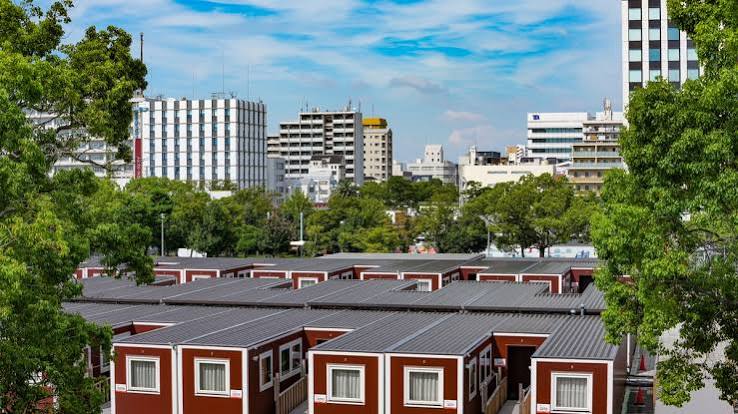
Organisers opted against constructing a traditional athletes village, instead accommodating participants across hotels, temporary wooden container units and a cruise ship docked in Nagoya.
The arrangement was designed partly to control costs and avoid constructing facilities that could become underused after the Games.
However, complaints from several delegations have placed organisers under pressure ahead of Saturday's opening ceremony.
ATHLETES RAISE ACCOMMODATION CONCERNS
Some teams have complained about cramped rooms, unsuitable beds, room allocation problems and other difficulties surrounding the accommodation arrangements.
South Korean basketball officials raised concerns that some beds in the temporary wooden units were too short for players who are more than two metres tall.
Japan's own delegation has also reported room allocation problems, including situations involving athletes, coaches and officials being placed together in ways that created practical difficulties.
India's cricket authorities arranged separate hotel accommodation for the men's team because of concerns surrounding the number of beds allocated by organisers.
The Italian cruise ship Costa Serena is also being used as accommodation and has capacity for thousands of athletes and officials during the Games.
Organisers have defended the overall strategy, arguing that building a large permanent athletes village would have increased costs and risked leaving behind expensive infrastructure with limited long term use.
TRANSPORT PROBLEMS ADD TO PRESSURE
Accommodation has not been the only challenge.
Delegations have reported lengthy registration procedures, late buses and cases in which athletes were transported to incorrect venues.
The Olympic Council of Asia has acknowledged that problems occurred but says organisers have been working to resolve them.
OCA President Sheikh Joaan bin Hamad Al Thani said local authorities had been addressing issues as they emerged and expressed hope that operations would stabilise once the Games were fully underway.
TAIWAN INCIDENT ADDS POLITICAL CONTROVERSY
A separate dispute involving Taiwan has added a political dimension to the buildup.
Taiwan's Sports Minister Lee Yang, a two time Olympic badminton gold medallist, was initially prevented from attending a welcoming and flag raising ceremony on Friday.
Taiwan's delegation temporarily refused to participate in protest.
Lee was later permitted to attend and the ceremony eventually proceeded more than an hour after its scheduled time.
Taiwanese officials described the initial restriction as unreasonable and called for athletes and representatives to receive equal treatment.
The Olympic Council of Asia described the incident as a misunderstanding.
Taiwan competes internationally under the name Chinese Taipei because of the longstanding political dispute surrounding the island's status and China's claim of sovereignty over Taiwan.
OCA PRESIDENT SAYS POLITICS SHOULD STAY OUT OF SPORT
The incident prompted the OCA president to address the role of politics in international sport.
Sheikh Joaan said the focus of the Asian Games should remain on athletes and ensuring equal rights to compete.
OCA officials said welcoming and flag raising ceremonies were intended primarily for Games participants rather than government representatives.
The dispute nevertheless highlighted the political sensitivities that can accompany Taiwan's participation in major international sporting events.
MORE THAN 11,000 ATHLETES COMPETING
Despite the difficult buildup, organisers are preparing for a massive sporting programme.
More than 11,000 athletes from 45 nations and regions are expected to compete for hundreds of medals across 43 sports.
Some competitions, including basketball, football and other events, began before the official opening ceremony because of the size of the schedule.
The programme includes established Olympic sports alongside regional events such as kabaddi and sepak takraw.
Esports returns as a medal sport, while newer events including teqball and virtual taekwondo are also appearing.
OPENING CEREMONY SET FOR NAGOYA
The official opening ceremony is scheduled for Mizuho Park Athletic Stadium in Nagoya.
Japanese film director Yukihiko Tsutsumi is directing the ceremony, which carries the theme Harmonic Heart Beat and is intended to emphasise solidarity across Asia.
Organisers will hope the ceremony shifts attention towards sporting competition following weeks of scrutiny surrounding accommodation, transportation and organisation.
The Games represent another major international sporting event for Japan following the Tokyo Olympics.
But unlike Tokyo, organisers have placed considerable emphasis on controlling infrastructure costs.
The decision not to construct a conventional athletes village has become one of the most closely watched aspects of the Games and could influence how future host cities approach accommodation for large international sporting events.
For now, however, the immediate challenge for organisers is ensuring that logistical problems do not overshadow the competition as thousands of athletes begin their campaigns across Nagoya, Aichi Prefecture and other venues.