ATIKU PLEDGES FUEL AND ELECTRICITY SUBSIDIES, SECURITY OVERHAUL AND KOLMANI OIL PUSH AT BAUCHI RALLY
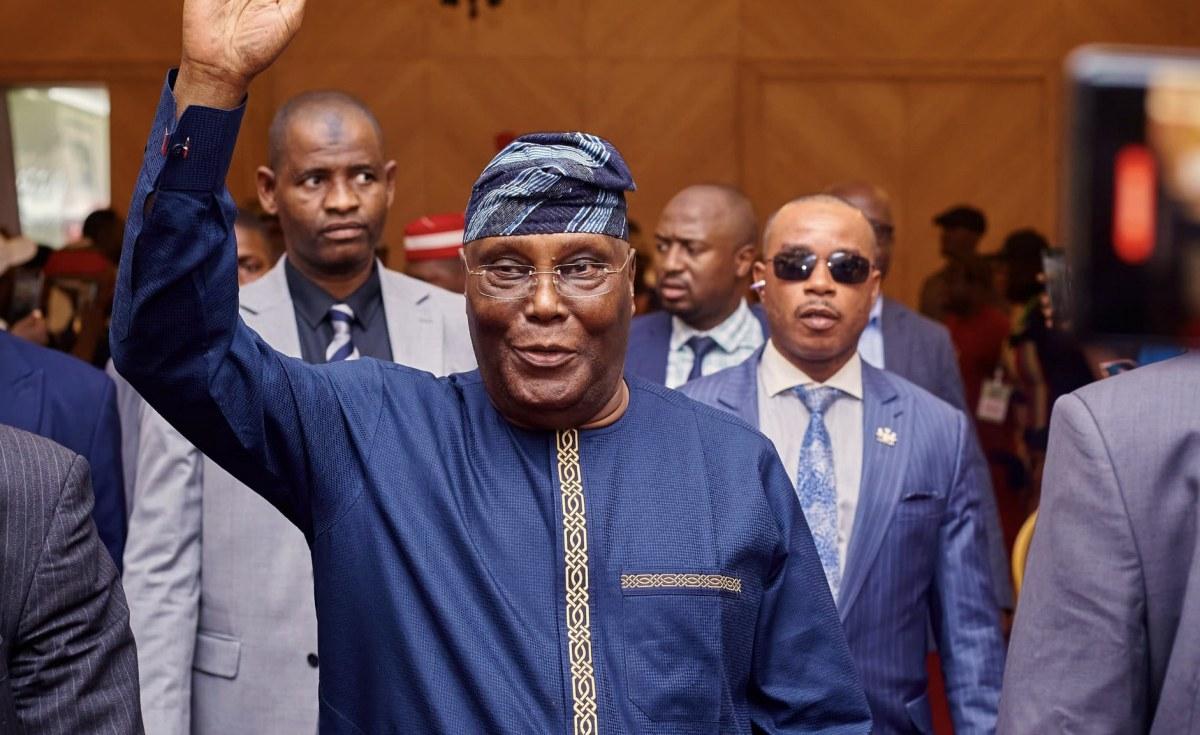
Atiku Abubakar used his November 14 ADC campaign rally at the Sir Abubakar Tafawa Balewa Stadium in Bauchi to promise the restoration of petroleum and electricity subsidies, stronger action against insecurity in the North-East and continued development of the Kolmani oil field. He also urged supporters to vote for ADC candidates across the ballot and remain at polling units until votes were counted and results transmitted.
BAUCHI, NIGERIA — African Democratic Congress presidential candidate Atiku Abubakar has placed cheaper energy, improved security and renewed development of the North-East at the center of his 2027 campaign, promising voters in Bauchi that a government led by him would restore petroleum and electricity subsidies, intensify the fight against insurgency and banditry, and sustain oil exploration at the Kolmani field straddling Bauchi and Gombe states. Addressing supporters at the Sir Abubakar Tafawa Balewa Stadium on Saturday, the former vice-president framed the election as a choice between continuing the economic direction of President Bola Tinubu’s administration and returning to a more interventionist model in which the federal government would again absorb part of the cost of fuel and electricity while investing heavily in regional infrastructure and security.
Atiku told the crowd that Bauchi had consistently supported him during previous presidential contests and said he would not forget that loyalty if elected. He identified three immediate commitments he said would affect ordinary households directly: restoration of the petroleum subsidy, restoration of greater government support for electricity consumers and a renewed security campaign across the North-East and the wider country. He also pledged to push forward petroleum development at Kolmani, arguing that the field could provide an additional source of national revenue while giving the North-East a stronger economic stake in Nigeria’s oil and gas industry.
The promises represent one of Atiku’s clearest attempts so far to draw a sharp economic contrast with the Tinubu administration. Tinubu announced the end of the longstanding petrol subsidy in his inaugural address on May 29, 2023, arguing that the system had become too expensive, encouraged abuse and diverted resources that could be invested in infrastructure, education, healthcare and employment. The government subsequently maintained that a return to the old subsidy regime would undermine fiscal reforms, and as recently as 2026 Nigerian authorities told the International Monetary Fund that they did not intend to reintroduce fuel subsidies.
Atiku is taking the opposite political position. Rather than accepting subsidy removal as an irreversible reform, he is arguing that government intervention in fuel pricing should return as part of a broader effort to reduce the financial burden on households. The details of exactly how a restored subsidy would be structured, how much it would cost, who would receive the benefit and how the government would prevent the fraud and cross-border smuggling historically associated with Nigeria’s subsidy system were not set out in detail during the Bauchi rally, leaving those questions likely to become central to economic debate as the presidential campaign develops.
The distinction matters because Nigeria’s previous petrol-subsidy system consumed enormous public resources while keeping pump prices below their estimated market cost. Critics argued that the arrangement disproportionately benefited wealthier consumers, encouraged smuggling into neighboring countries and created opportunities for fraudulent subsidy claims. Supporters of subsidies, however, maintain that fuel is deeply connected to the cost of transportation, food distribution, electricity generation and virtually every other part of Nigerian economic life, meaning abrupt removal can place severe pressure on households where incomes have not risen at the same pace as prices.
That tension has defined much of Nigeria’s economic debate since 2023. Tinubu’s administration has repeatedly defended subsidy removal as necessary to repair public finances and reduce distortions, while millions of Nigerians have experienced higher transport, food and energy costs. Atiku is attempting to convert that public frustration into a clear campaign commitment by saying directly that he would restore some form of petroleum support if elected, setting up what could become one of the most consequential economic policy differences of the 2027 presidential election.
His promise on electricity is similarly significant but requires more nuance than a simple description of subsidy removal and restoration. Nigeria has not completely eliminated electricity subsidies for all consumers. The Nigerian Electricity Regulatory Commission increased tariffs substantially for Band A customers, who are supposed to receive at least 20 hours of electricity daily, while tariffs for several lower service bands remained subsidized and were frozen under existing government policy. Atiku’s pledge therefore appears to contemplate increasing state support for electricity consumers rather than restoring a system that has disappeared entirely.
The fiscal implications could be substantial. Electricity subsidies have historically cost the federal government hundreds of billions of naira because the tariffs paid by consumers frequently fall below the cost that power companies are allowed to recover. Any major expansion of those subsidies would require Atiku’s government, if elected, to explain how it would finance the difference without increasing debt, reducing infrastructure spending or shifting the burden to other areas of the federal budget.
Atiku’s broader argument is that economic reform cannot be considered successful if ordinary Nigerians cannot afford basic energy. His campaign is presenting affordability as an essential component of economic stability, while Tinubu’s government argues that artificially low prices eventually produce fiscal crises and weak investment. The disagreement captures a fundamental policy question facing Nigeria: whether the state should continue allowing prices to move toward market levels while protecting vulnerable households through targeted support, or return to broader subsidies that reduce prices directly for consumers.
Security formed the second major pillar of Atiku’s Bauchi message. The former vice-president promised to “restore security” in the North-East and across Nigeria, a particularly powerful campaign theme in a region that has endured nearly two decades of violence involving Boko Haram, Islamic State West Africa Province and other armed groups. Although Nigerian forces have regained substantial territory previously controlled by insurgents, the conflict has not ended, and recent months have brought renewed attacks on military positions and communities.
The Nigerian military said earlier in November that attacks by Boko Haram and ISWAP on military positions in the North-East had increased in recent weeks, while ruling out negotiations for a ceasefire and promising continued offensive operations. The insurgency, which began in 2009, has killed tens of thousands of people, displaced millions and profoundly affected Borno, Yobe and Adamawa while creating wider security and economic consequences across the North-East.
The regional crisis also now intersects with broader instability across northern Nigeria. Armed groups involved in kidnapping, banditry and village attacks have expanded across parts of the North-West and North-Central zones, while porous borders and instability in neighboring Sahel countries complicate counterterrorism operations. Nearly 64,000 people fled violence in northern Nigeria into Niger during 2026, according to the United Nations refugee agency, demonstrating that the security challenge remains capable of producing significant displacement despite years of military operations.
Atiku did not provide a detailed military doctrine at the Bauchi rally explaining how his security strategy would differ operationally from the current government’s approach. His promise was political and outcome-focused: he said Nigerians should expect a government under him to prevent violent groups from operating with impunity. A complete campaign security platform would still need to explain his plans for military funding, intelligence coordination, policing, border security, community protection and cooperation with Niger, Chad, Cameroon and other neighboring states.
The emphasis on the North-East also carries personal political significance for Atiku. He is from Adamawa State and has long presented himself as a politician with a deep connection to the region’s economic and security challenges. Bauchi, although geographically farther west than the states most heavily affected by the Boko Haram insurgency, remains a central political and economic state within the six-state North-East geopolitical zone.
Bauchi is also electorally important to Atiku. In the 2023 presidential election, while running on the platform of the Peoples Democratic Party, he won the state with 426,607 votes against Tinubu’s 316,694, giving Atiku a margin of nearly 110,000 votes. That result helps explain why he told supporters on Saturday that Bauchi had been one of his most dependable bases and why his new ADC campaign is investing significant political energy in preserving the relationship.
Atiku’s transition from the PDP to the ADC has changed the political landscape since that election. The former vice-president is now attempting to build a new opposition coalition around the ADC while persuading voters who supported him under another party banner to transfer that loyalty to his new platform. His appeal in Bauchi extended beyond his own presidential ambition, as he urged supporters to vote for ADC candidates across the ballot, from the presidency to legislative and local government contests.
He also urged voters to remain at polling units long enough to ensure that ballots were counted and results transmitted, presenting electoral vigilance as a form of protecting democratic rights. Such language is common during Nigerian campaigns, where disputes over collation, electronic transmission and the credibility of results have repeatedly become major political issues. Atiku challenged the official outcome of the 2023 presidential election through the courts after Tinubu was declared the winner, though his legal challenge ultimately failed.
The Bauchi rally also highlighted an unusual moment of cross-party democratic accommodation. Atiku publicly praised Bauchi Governor Bala Mohammed for allowing the ADC campaign to use the Sir Abubakar Tafawa Balewa Stadium and government facilities despite the two men belonging to different political camps. He said Mohammed had treated his campaign more fairly than some other state governments encountered during the campaign, presenting the access as an example of how elected officials should accommodate political opponents.
The endorsement of democratic access did not amount to a political alliance between the two men, but the gesture was notable in an election cycle already characterized by shifting party loyalties and cross-party relationships. As Nigerian politicians reorganize ahead of 2027, the distinction between institutional cooperation and formal political support will become increasingly important, particularly where governors control access to major venues and security arrangements during opposition rallies.
Atiku’s Kolmani promise carries particularly strong resonance in Bauchi because expectations surrounding the oil field have repeatedly risen and fallen. Located along the Bauchi-Gombe border, the Kolmani project was formally launched in November 2022 by then-President Muhammadu Buhari and was presented as a historic expansion of commercial oil development beyond the Niger Delta. The project envisioned not only crude production but an integrated complex including refining, gas processing, electricity generation and fertilizer production.
Progress, however, proved far slower than the political excitement surrounding the launch suggested. By 2026, commercial crude production had still not developed on the scale originally anticipated, while Bauchi officials said exploration activity had stopped after contractors began demobilizing in 2025. In August, the Revenue Mobilisation Allocation and Fiscal Commission visited the field and called on the federal government to help remobilize work, saying the project remained important for national revenue and development in Bauchi, Gombe and the wider North-East.
The current administration has since signaled renewed interest in Kolmani. In October, Borno Governor Babagana Zulum, speaking as chairman of the North-East Governors’ Forum, publicly praised President Tinubu for what he described as renewed efforts to revive exploration at the field and called for similar attention to oil prospects in Borno. That context means Atiku’s statement that he would continue or revive Kolmani should not be interpreted as evidence that the present government has completely abandoned the project; rather, the competing campaigns are increasingly arguing over who can turn years of promises into sustained commercial activity.
For communities around the field, the distinction between political announcements and actual production is crucial. Since the 2022 launch, expectations have included employment, roads, industrial investment, increased state revenue and development of associated gas resources. Delays have inevitably created frustration, making Kolmani a natural campaign issue in a presidential election where candidates will be judged not simply on whether they support the project but on whether they can explain how it will be financed and completed.
Atiku said sustained Kolmani exploration would provide Nigeria with an additional revenue source, linking the project to his broader economic agenda. That argument reflects long-standing hopes that opening new petroleum provinces outside the Niger Delta could diversify the geographic base of Nigeria’s oil production. At the same time, frontier exploration is expensive and commercially risky, and analysts have questioned how quickly investment in northern basins can produce returns compared with established fields where reserves and infrastructure are better understood.
The former vice-president expanded his North-East development pitch beyond oil by also promising to complete the long-delayed Mambilla Hydroelectric Power Project in Taraba State. The project, envisaged for decades as one of Nigeria’s largest hydroelectric schemes, has repeatedly stalled because of financing difficulties, contractual disputes and litigation. Atiku told supporters that governments had spoken about Mambilla since the era of Prime Minister Abubakar Tafawa Balewa and argued that an ADC administration would finally push the project toward completion.
That promise introduces its own political and historical complexity because the Mambilla project has been entangled in a long-running international arbitration involving Sunrise Power and Transmission Company. Nigeria won a major arbitration decision in September 2026 when a tribunal dismissed Sunrise’s multibillion-dollar claims and awarded legal costs to the federal government. Atiku has denied wrongdoing in relation to historical transactions raised during the dispute, and no tribunal finding established criminal wrongdoing by him.
The larger significance of his Bauchi speech is that Atiku is beginning to assemble a campaign platform built around reversal of some Tinubu-era economic policies while retaining and accelerating selected national development projects. Subsidies represent the clearest reversal, while Kolmani and Mambilla reflect a promise to deliver projects that have passed through several administrations without achieving their full objectives.
That combination allows Atiku to argue simultaneously that the current government has made life too expensive and that Nigeria’s deeper problem is decades of unfinished infrastructure and underdeveloped resources. The challenge for his campaign will be showing that those objectives can coexist financially. Subsidies require substantial government spending, while security operations, Mambilla, oil exploration and other infrastructure projects also demand enormous capital.
The Tinubu administration is likely to challenge the sustainability of that agenda. Its economic reform program has been built largely around removing price distortions, increasing revenue and reducing the fiscal burden of subsidies, even while introducing narrower interventions intended to protect consumers from extreme price volatility. In October, for example, the government announced measures designed to moderate petrol-price fluctuations while explicitly insisting that the mechanism did not represent a restoration of the old subsidy system.
The IMF has also consistently encouraged Nigeria to avoid broad fuel and electricity subsidies and instead direct assistance toward vulnerable households. Its 2026 assessment said the authorities had assured the Fund that fuel subsidies would not be reintroduced, while also noting difficulties tracing exactly how earlier subsidy savings were reflected in public finances. That latter issue provides political ammunition for critics who ask why the removal of subsidies has not produced more visible improvements in public services.
Atiku appears determined to make that question part of the campaign. His allies have increasingly challenged the government to show Nigerians what happened to the money supposedly saved from ending fuel subsidies, while the government argues that higher revenues have supported larger allocations to federal, state and local governments and created room for infrastructure and social programs.
Those competing interpretations will matter because energy prices affect virtually every voter, regardless of party affiliation. Petrol influences transport and food distribution, while electricity tariffs affect households, manufacturers, shops and service businesses. A campaign promise that directly reduces both costs is therefore politically powerful, but voters will also eventually require a credible explanation of how the subsidies would be funded.
The same credibility test applies to security. Every major presidential campaign since the Boko Haram insurgency escalated has promised to defeat terrorism and make communities safer. Successive governments have recorded military victories while failing to eliminate the underlying threat. Atiku will therefore need to distinguish his approach from familiar campaign language if he wants the security promise to become more than another general pledge.
His Bauchi speech nevertheless places the issue squarely before voters at a time when attacks remain an immediate concern. Nigeria’s military appointed new leadership for its North-East operations in September 2026 as part of a broader command reshuffle and has recently insisted that it will sustain military pressure rather than negotiate a ceasefire with Boko Haram or ISWAP. Atiku is entering that debate by arguing that leadership at the presidential level must ultimately be judged by whether armed groups continue to operate freely.
The politics of the North-East could become decisive in the wider presidential contest. The region combines Atiku’s strongest personal base with serious security challenges, widespread poverty, unfinished infrastructure and significant untapped mineral and agricultural resources. His campaign is presenting those conditions as evidence that the region has not received the transformation promised by successive federal governments.
The ruling APC, however, will point to ongoing military operations, federal infrastructure spending and renewed moves around projects such as Kolmani as evidence that the region is not being ignored. The election debate will therefore increasingly concern not only whether development projects exist, but whether they are progressing fast enough and whether voters feel their living conditions are improving.
Atiku’s call for ADC candidates to be supported at every level also shows that his party is trying to convert a presidential coalition into a durable national political structure. Winning a presidential contest without governors, legislators and local officials can leave a government politically vulnerable, making the ADC’s down-ballot performance an important part of its long-term strategy.
Bauchi will provide an early test of whether that strategy can work. Atiku has a history of strong personal support there, but he is now asking those voters to follow him from the PDP into the ADC and to extend that support to candidates who may not have his individual name recognition. Whether they do so will help determine how successfully the new opposition platform can transform high-profile defections into an organized electoral machine.
His public praise for Governor Bala Mohammed also illustrates the complicated political environment in which that effort is taking place. Personal relationships, institutional cooperation and partisan competition are overlapping in ways that may produce unexpected alliances before voting begins. A governor can facilitate an opponent’s rally without endorsing him, just as politicians can cooperate on regional issues while campaigning for rival parties.
The immediate message from Bauchi, however, was deliberately uncomplicated. Atiku told voters that an ADC government would make fuel and electricity more affordable, confront insecurity, complete unfinished regional projects and use Kolmani’s petroleum potential to expand national revenue. He also told supporters that their votes must be protected and counted, signaling that electoral process and economic policy will both feature prominently in his campaign.
Whether those promises are fiscally and operationally achievable will face increasing scrutiny as the election approaches. Restoring petrol subsidies could cost enormous sums depending on crude prices, exchange rates and domestic consumption, while deeper electricity subsidies would add additional government obligations. Mambilla and Kolmani would require substantial capital, and defeating armed groups across a country of more than 200 million people would demand sustained security investment.
Those pressures do not make the proposals impossible, but they mean Atiku will eventually need to move from rally commitments to detailed policy design. Voters will need to know whether his proposed subsidies would be universal or targeted, how their cost would be capped, how abuse would be prevented, what security reforms would accompany additional military spending and what financing structure would bring Mambilla and Kolmani to completion.
For the moment, the Bauchi rally has clarified the political choice Atiku wants to present. He is not campaigning as a candidate who would simply continue the current economic framework with minor adjustments. On two of the most politically sensitive household expenses in Nigeria, petrol and electricity, he is openly promising a different direction.
At the same time, he is tying that economic message to the unfinished development ambitions of his home region. Kolmani represents the possibility of turning the North-East into a petroleum-producing region, Mambilla represents decades of unrealized power-generation potential, and the continuing insurgency represents the human cost of development repeatedly disrupted by insecurity.
Those themes make Bauchi more than another campaign stop. It is a state Atiku won in 2023, a gateway to the region he considers his political home and a place where the promises of oil, power and regional development remain deeply connected to voters’ expectations of the federal government.
The 2027 campaign will determine whether those promises are persuasive enough to preserve his traditional support while expanding the ADC nationally. What is already clear from Atiku’s Bauchi appearance is that subsidies, security and unfinished North-East development projects are becoming central battlegrounds in the contest over Nigeria’s next government, with the former vice-president positioning himself as the candidate prepared to reverse some of Tinubu’s most consequential economic reforms while promising a more aggressive push to deliver the region’s long-delayed economic potential.