ATIKU SAYS PLATEAU MAY FORGIVE TINUBU BUT WILL NOT FORGET HIS ABSENCE DURING KILLINGS
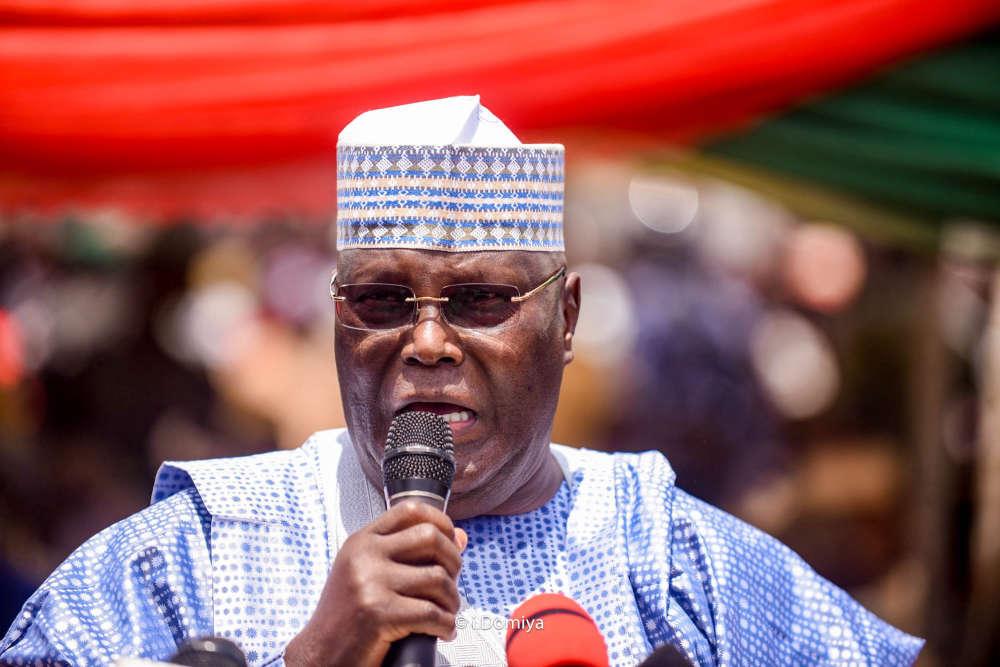
Former Vice President and ADC presidential candidate Atiku Abubakar has criticised President Bola Tinubu over his handling of insecurity in Plateau State, saying residents may forgive the President for failing to visit violence-hit communities directly but will not forget his absence during periods of killings and kidnappings. Atiku’s remarks followed Tinubu’s November 14 APC campaign rally in Jos, where the President acknowledged that his April condolence visit after the March 29 Angwan Rukuba killings had been limited to the airport and asked residents to forgive him for not reaching the affected hinterland. Tinubu also promised to rebuild damaged communities, return displaced residents home, install more than 5,000 surveillance cameras and deploy 1,000 trained forest guards, while Atiku argued that those later commitments could not erase what he described as a lack of presidential presence when families were grieving.
Former Vice President Atiku Abubakar has sharply criticised President Bola Tinubu over his handling of insecurity in Plateau State, arguing that residents may accept the President’s recent appeal for forgiveness but will not forget what he described as Tinubu’s failure to stand physically with communities during some of their darkest moments of killings, kidnappings and displacement. Atiku, the African Democratic Congress presidential candidate, made the remarks in a statement issued on Monday, November 16, through his Director of Strategic Communication, Phrank Shaibu, after Tinubu used an All Progressives Congress campaign rally in Jos to acknowledge that his previous visit to Plateau following deadly violence had been restricted largely to the airport. Atiku said that while an apology could be offered during an election campaign, it could not erase the memory of families who buried relatives, residents who fled their homes or communities that endured months of fear while waiting for a stronger presidential presence and response.
The exchange has quickly become one of the more emotionally charged moments of Nigeria’s early 2027 campaign season because it places the country’s persistent security crisis directly at the centre of an electoral contest already shaped by debates over economic hardship, political accountability and leadership. Tinubu, speaking at the APC’s North-Central presidential campaign rally at the Zaria Road Stadium in Jos on Saturday, November 14, asked residents to forgive him for not travelling into the affected hinterland during his April visit after the March 29 attack in Angwan Rukuba, Jos North Local Government Area. “When I last visited, the other time, I was limited to the airport; forgive me if you didn’t see me in the hinterland,” the President said, while insisting that he had received reports from Plateau Governor Caleb Mutfwang and had seen the devastation and fear on the faces of victims he met. Tinubu also promised to rebuild affected communities, facilitate the return of displaced residents and strengthen security across the state.
Atiku seized on that apology as evidence for a broader political argument: that presidential leadership should be judged not only by later promises or campaign visits but by whether the head of state is visibly present when citizens are under attack. In his statement, the former vice president said Plateau residents needed their President when they were grieving, when communities were under siege and when families required reassurance that the federal government was standing with them. He accused Tinubu of failing to fulfil promises to end the killings and protect residents, and argued that returning during an election season to ask for forgiveness and votes could not erase the earlier absence. Atiku’s central line — that Plateau residents “may forgive” but “will never forget” — was clearly political rhetoric from an opposition presidential candidate and should therefore be understood as his judgment of Tinubu’s record rather than an objective statement about the views of every Plateau resident.
The political force of Atiku’s criticism comes partly from Tinubu’s own acknowledgement that his April visit fell short of reaching affected communities directly. On April 2, following the March 29 killings in Angwan Rukuba, Tinubu travelled to Jos and met victims, state officials and stakeholders, but his engagement was held at the airport. The presidency at the time said the visit was part of a revised travel schedule after Tinubu postponed an Ogun State engagement in order to travel to Plateau, while presidential aides later explained that other official commitments, including engagement with the Chadian president and scheduled travel, affected the President’s movements. Tinubu nevertheless acknowledged at the November rally that residents had not seen him in the affected hinterland and asked for forgiveness on that specific point.
That April visit itself followed one of the most serious security incidents in Jos during 2026. On March 29, gunmen attacked Angwan Rukuba in Jos North Local Government Area, leaving at least 20 people dead and many others injured, according to subsequent reporting. The attack renewed long-running fears in Plateau, where recurring violence involving armed groups, communal conflict, disputes over land and farming, criminal attacks and cycles of reprisal have claimed lives for decades. The causes of Plateau’s insecurity are complex and should not be reduced to a single religious or ethnic explanation, even though individual attacks are frequently described through those lenses by local communities, advocacy organisations and political actors. What is beyond dispute is that repeated violence has displaced residents, destroyed homes and created deep insecurity across a state where successive federal and state governments have struggled to establish a durable peace.
Tinubu’s administration responded to the March attack by announcing a major technology-based security initiative. During his April 2 visit, the President promised that the federal government would deploy more than 5,000 artificial-intelligence-enabled digital surveillance cameras across Plateau to assist security agencies in identifying threats and responding more rapidly to attacks. The presidency said Tinubu also directed senior security officials to intensify efforts in the state and assured residents that the March experience would not be allowed to repeat itself. By the November campaign rally, Tinubu said the promised surveillance cameras had arrived in Nigeria and would soon be installed, while 1,000 forest guards recruited by the federal government were undergoing training to strengthen security in rural communities. Those steps provide an important part of the administration’s response and complicate Atiku’s claim of complete abandonment, even though they do not answer his narrower criticism about the President’s physical absence from affected villages.
The distinction between presence and policy is at the heart of the dispute. Tinubu’s supporters can point to security deployments, surveillance plans, forest guards, reconstruction promises and the April airport meeting as evidence that the federal government did respond to the crisis, while Atiku argues that those measures do not substitute for a President personally standing with victims in the communities that suffered the attacks. Both sides are therefore arguing about different dimensions of leadership: Tinubu is emphasising security measures and future rebuilding, while Atiku is emphasising empathy, visibility and the symbolic importance of presidential presence during national tragedy. The disagreement is likely to resonate well beyond Plateau because Nigerian presidents are frequently judged not only on policy responses to violence but also on whether they physically visit victims after major attacks, disasters or communal crises.
Atiku’s statement deliberately connected the Plateau controversy to the wider 2027 presidential campaign. He accused Tinubu of returning to Jos when he needed votes after failing, in Atiku’s view, to stand adequately with residents when they needed reassurance. He said Plateau citizens should not be treated as campaign props and argued that their grief should not be converted into political messaging. The former vice president also broadened his attack beyond security, accusing Tinubu of presiding over a severe cost-of-living crisis and arguing that economic hardship had weakened the President’s case for another term. Atiku presented the ADC’s “Affordable Life” campaign as his proposed alternative, saying it was designed to reduce pressure on households and restore what he described as relief, dignity and hope. Those claims are campaign arguments and should be evaluated separately from verified economic indicators or security data, but they show how Atiku is attempting to combine insecurity and living-cost pressures into a single case against Tinubu’s re-election.
Tinubu, for his part, used the Jos rally not only to apologise but to defend his administration’s record and ask Plateau voters for another mandate. The State House said the President urged residents to support him and other APC candidates in the 2027 elections, highlighting what he described as the administration’s security commitments and development interventions. He called for peaceful coexistence across ethnic, religious and linguistic lines and argued that Nigeria’s diversity should not become a source of permanent hostility. Tinubu also said the federal government would rebuild violence-hit communities and bring internally displaced residents back home, declaring that the country should be pursuing prosperity rather than repeated crisis and burial.
The President’s remarks also included a direct admission that Plateau had suffered recurring bloodshed for many years. Tinubu said too many lives had been lost since 2001 and acknowledged the destruction of homes and displacement of communities, while offering condolences to bereaved families and survivors. He said all security agencies had been directed to take decisive action and sustain peace in the state, and argued that rural residents should be able to farm, live and move without fear. That acknowledgment matters because Atiku’s criticism is not occurring against a backdrop in which the federal government denies the severity of the crisis; instead, the political dispute centres on whether Tinubu’s response has been adequate, timely and compassionate enough.
Governor Caleb Mutfwang’s role also complicates the opposition-versus-government framing. Although Plateau has suffered repeated attacks during Tinubu’s presidency, Mutfwang has publicly worked with the federal government on security and development issues and appeared at the APC rally, where he spoke positively about Tinubu’s interventions. THISDAY reported that the governor described the country as having been in an extremely difficult condition when Tinubu assumed office but argued that some areas were moving toward recovery. His remarks provided political support for the President at the same gathering where Tinubu apologised for his earlier limited visit. That local endorsement does not invalidate Atiku’s criticism, but it demonstrates that political opinion within Plateau is not represented by one opposition narrative.
The timing of Atiku’s statement is equally important because it was issued from Potiskum, Yobe State, where he had been campaigning under the ADC’s “Affordable Life” banner. Atiku has intensified his national campaign activity as the January 2027 presidential election approaches, and his team has increasingly framed the contest as a referendum on Tinubu’s management of both insecurity and the cost of living. His communications team has been particularly aggressive in drawing contrasts between Tinubu’s rallies and Atiku’s campaign appearances, including attacks on the presidency’s presentation of crowd sizes and accusations that the government is relying too heavily on image-making. The Plateau statement fits within that broader strategy of portraying Tinubu as politically visible when seeking votes but insufficiently present during hardship.
Tinubu’s campaign is pushing the opposite argument, presenting the President as a leader who inherited deep structural problems and has responded with reforms, security investments and infrastructure commitments that require more time to produce results. At the Jos rally, APC figures argued that the North-Central region should continue supporting Tinubu because of what they described as progress in security, roads, education and economic management. Information Minister Mohammed Idris said the turnout reflected growing appreciation of the administration’s achievements, while APC leaders urged voters to support the party across presidential, governorship and legislative contests. Those statements are partisan claims from ruling-party officials and should not be treated as proof of public opinion, but they illustrate the competing narratives that will shape the 2027 campaign.
Security in Plateau is likely to remain one of the most difficult issues for either side to convert into simple campaign messaging because the violence predates the current administration by many years. Plateau has experienced recurring crises involving armed attacks, farmer-herder conflict, land disputes, criminal gangs and retaliatory violence since well before Tinubu took office in May 2023. Successive administrations have deployed troops, created special operations and promised improved intelligence, yet communities have continued to face periodic mass-casualty attacks. Tinubu therefore inherited a deeply entrenched security problem, but as sitting President he also carries responsibility for the federal government’s current response. Atiku’s argument is that leadership should be judged by what happens under the incumbent’s watch; the administration’s counterargument is that it is implementing measures against a long-standing crisis that cannot be eliminated overnight.
The security-camera initiative is a significant example of that debate. A network of more than 5,000 AI-enabled cameras could potentially improve surveillance, early warning and evidence gathering if properly installed, maintained and integrated with police, military and intelligence operations. However, surveillance technology alone cannot resolve disputes over land, local grievances, weak rural policing, illicit weapons, criminal mobility and failures of prosecution. Tinubu’s November statement that the equipment had arrived therefore represents progress on a specific promise, but the effectiveness of the system will ultimately be judged by whether communities experience fewer attacks and whether security agencies can identify and prosecute perpetrators more reliably.
The same applies to the 1,000 forest guards Tinubu said were undergoing training. Forest guards can provide local intelligence and strengthen presence in rural areas where conventional police coverage is often limited, but their success will depend on recruitment standards, training, equipment, command structures and coordination with established security agencies. Similar community-based security initiatives elsewhere in Nigeria have raised both hopes and concerns, particularly around accountability and the danger of poorly supervised armed groups. Tinubu presented the Plateau deployment as part of a broader effort to make villages safer; whether it becomes a durable security improvement will depend on implementation rather than the campaign announcement itself.
For victims and displaced residents, reconstruction may be just as important as security deployment. Tinubu pledged that communities damaged by violence would be rebuilt and that people forced from their homes would be supported in returning. Rebuilding houses, farms, roads, schools and local economies can help stabilise areas after conflict, but returning displaced families before security conditions are genuinely improved can expose them to renewed danger. The President’s promise will therefore be judged not simply by whether buildings are reconstructed but by whether residents believe they can return safely and remain there without repeated displacement.
Atiku’s political challenge is that criticism of presidential absence is easier to communicate than the complexities of restoring security in Plateau. His statement focuses on a powerful symbolic question — where was the President when families were burying their dead? — rather than presenting a detailed operational security alternative in the same statement. The ADC’s broader campaign may eventually be required to explain how an Atiku administration would handle the same combination of communal tension, organised armed groups, rural policing gaps and intelligence failures that have frustrated previous governments. The former vice president’s criticism therefore carries political force, but voters will also be entitled to examine whether his own security proposals differ substantially from those already attempted.
Tinubu faces the inverse challenge. As incumbent, he can point to security directives, camera procurement, forest guards and reconstruction plans, but voters can compare those promises directly with the continued experiences of communities on the ground. Presidential incumbency brings access to state resources and the ability to announce programmes, but it also removes the ability to campaign only on future intentions. If attacks continue despite those interventions, Atiku and other opposition candidates are likely to argue that government promises have failed to translate into safety.
The dispute also raises a broader question about presidential condolence visits in Nigeria. Such visits do not themselves stop violence, and security officials sometimes restrict presidential movement for operational reasons, yet physical presence can carry enormous symbolic value for communities that feel abandoned. Victims frequently interpret a presidential visit as recognition that their suffering matters nationally rather than being treated as a local tragedy. Tinubu’s decision to ask forgiveness suggests the administration itself recognises that the April airport-only engagement created a perception problem, even though the presidency maintains that the visit took place and security commitments followed.
Atiku’s rhetoric is therefore likely to resonate with people who believe political leaders appear only when elections approach, but it is also being deployed in the middle of an active presidential campaign. That context matters. He is not speaking as a neutral observer but as Tinubu’s political opponent seeking the same office, and his statement explicitly links the Plateau issue to the argument that Tinubu should not receive another term. VNTV therefore treats his accusation that Tinubu “abandoned” Plateau as a campaign characterisation rather than an independently established description of the administration’s entire response.
Tinubu’s supporters will similarly be expected to prove more than the existence of plans. The government’s promises to rebuild communities, install surveillance infrastructure and deploy forest guards are verifiable commitments, but their success cannot be assumed simply because they have been announced. Effective security policy will require measurable reductions in killings, kidnappings and displacement, stronger investigations, prosecutions of attackers and confidence among residents that they can live and farm without fear.
The controversy is also unfolding against the broader national cost-of-living debate that Atiku introduced into his response. His statement accused Tinubu of failing Nigerians economically and argued that hardship extends the President’s record of what he characterised as absence during moments of suffering. That is a wider political argument rather than a direct component of the Plateau security issue, but it demonstrates the ADC’s campaign strategy of connecting insecurity with food prices, household pressure, unemployment and declining purchasing power. Tinubu’s team, by contrast, argues that difficult reforms are producing recovery and that voters should give the administration more time.
The 2027 campaign will therefore increasingly turn on competing interpretations of the same period. Tinubu will ask Nigerians to judge reforms by what he says are emerging improvements and investments, while Atiku will ask them to judge the government by the pain experienced before those gains become visible. In Plateau, that abstract national debate has an intensely human dimension because the argument involves people who lost relatives, homes and livelihoods to violence.
The strongest factual point supporting Atiku’s criticism is that Tinubu himself acknowledged not travelling into the affected communities during his April visit and asked residents to forgive him. The strongest factual point supporting the administration’s response is that the President did travel to Jos, met victims and officials, ordered security measures, promised more than 5,000 AI-enabled cameras and later said those cameras had arrived while 1,000 forest guards were being trained. Any fair assessment of the controversy must include both sets of facts.
What cannot be independently established is Atiku’s broader assertion that Tinubu entirely failed to “stand with” Plateau residents, because that is partly a political judgment about what adequate presidential solidarity should look like. Likewise, the APC’s claim that its security interventions have transformed the situation cannot be accepted simply as campaign rhetoric without sustained evidence from attack trends, community conditions and law-enforcement outcomes.
For Plateau residents, the political exchange may ultimately matter less than whether they become safer. Families who have lost loved ones cannot be restored by either an apology or an opposition statement, and displaced communities will judge government action by whether they can return home permanently. The campaign debate may sharpen accountability, but the deeper measure of leadership will be whether repeated attacks are prevented and whether those responsible are arrested and prosecuted.
Tinubu’s apology therefore carries both symbolic and political significance. By admitting that residents did not see him in the hinterland during his April visit, he recognised a grievance that had followed the presidency for months. By making the appeal during an APC campaign rally while asking voters for renewed support, however, he also created an opening for opponents to question why the apology came at that particular moment.
Atiku has moved aggressively into that opening, framing the episode as evidence of a President seeking electoral forgiveness after failing to show sufficient compassion during crisis. His statement is likely to be repeated throughout the campaign because it combines three politically potent themes — insecurity, empathy and accountability — into one argument.
Whether Plateau voters ultimately accept that argument, Tinubu’s explanation or some position between the two cannot be determined from campaign statements alone. The rally turnout, endorsements by political leaders and reactions on social media are not substitutes for actual electoral results or representative polling.
What is clear is that the killings in Plateau have moved from being solely a security crisis into becoming a central question in the presidential campaign. Tinubu is asking voters to judge his administration by measures now being implemented and promises of reconstruction, while Atiku is asking them to remember what happened before those measures reached the communities.
The political dispute may intensify as both campaigns travel through the North-Central region, where insecurity, displacement, agriculture and rural development are likely to remain major electoral issues. Plateau in particular will be watched because its security challenges combine local grievances with national questions about federal policing, intelligence and the protection of vulnerable communities.
For the Presidency, the immediate task is demonstrating that the commitments made in Jos are implemented quickly enough to produce visible results. The installation of surveillance cameras, deployment of forest guards and rebuilding of destroyed communities will provide concrete benchmarks against which Tinubu’s promises can be assessed.
For Atiku and the ADC, the challenge will be to move beyond criticism and demonstrate what their own security programme would do differently if they take power. Campaign accountability is strongest when voters can compare not only records but competing plans.
The confrontation between the two men therefore represents more than another exchange of political accusations. It captures a deeper argument about the meaning of leadership during national tragedy: whether citizens judge a President primarily by security outcomes, physical presence, emotional solidarity, policy interventions or some combination of all four.
Tinubu’s own request for forgiveness acknowledges that physical presence matters. Atiku’s response insists that it matters most when suffering is at its peak rather than when votes are being requested. The administration answers that it has been acting through security deployments and reconstruction measures even when the President was not physically inside affected villages.
Those competing claims will remain part of the political debate, but the final judgment belongs to Plateau residents and other Nigerian voters themselves.
For now, the verified record shows that Tinubu visited Plateau after the March 29 killings but met victims and stakeholders at the airport rather than travelling into the affected community, later acknowledged that limitation and asked for forgiveness at his November 14 campaign rally. Atiku responded two days later by arguing that residents may forgive the President but would not forget his absence during the crisis, while the Tinubu administration continues to point to security cameras, forest guards, reconstruction promises and renewed security directives as evidence of its response.