BLOODSHED IN TARABA AS DEATH TOLL FROM BINNARI VILLAGE ATTACK REMAINS DISPUTED
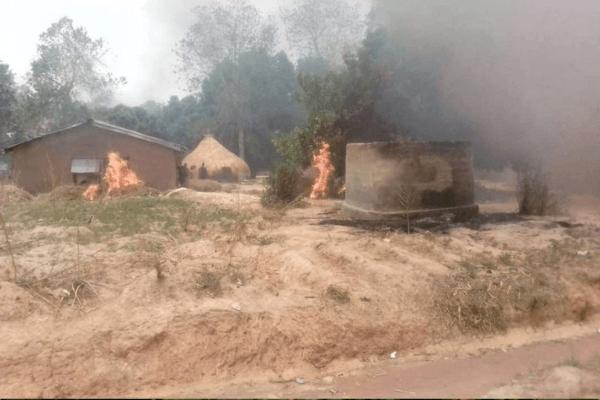
A deadly attack on Binnari community in Karim-Lamido Local Government Area of Taraba State has left dozens of people dead, homes and shops burned and residents displaced. Police initially confirmed 10 bodies recovered after the October 23 assault, while the Taraba State Government later reported 25 deaths, Amnesty International said at least 40 people were killed and community accounts have since put the figure at around 50. Gunmen reportedly arrived on motorcycles, opened fire, looted shops, stole food, cash and motorcycles and burned property. Security reinforcements have been deployed, while the state government has begun distributing emergency relief.
Residents of Binnari community in Karim-Lamido Local Government Area of Taraba State are counting heavy human and economic losses after gunmen stormed the village shortly after Friday prayers, opened fire on residents, looted food supplies and other valuables, and set homes, shops and motorcycles ablaze in one of the deadliest attacks reported in the area this year. The exact death toll remained disputed on Sunday as police, the state government, Amnesty International and local community sources reported sharply different numbers, reflecting the confusion that followed the assault and the continued recovery of bodies from surrounding areas.
The Taraba State Police Command initially confirmed that 10 bodies bearing gunshot wounds had been recovered after security personnel reached the community on Friday, October 23. Police spokesman ASP Victor Mshelizah said the victims were handed over to their families for burial in accordance with Islamic rites and that joint security reinforcements involving police tactical units, the Police Mobile Force, conventional officers, the Nigerian Army and other agencies had been deployed to prevent further attacks and restore order. That figure represented the official police count at the time of the first recovery operation rather than a final assessment of the total number killed.
As searches continued, substantially higher estimates emerged. The Taraba State Government later put the death toll at 25, while Amnesty International Nigeria said at least 40 people had been killed after additional bodies were recovered. By Sunday, community representatives were reporting an even higher figure of about 50 deaths, saying search teams had found more victims in surrounding bushes, a river and other locations where residents had fled during the attack. The conflicting figures could not immediately be independently reconciled, making it important to distinguish between confirmed police recoveries, government estimates, Amnesty’s assessment and community accounts rather than treating any single number as definitively established.
Residents and community leaders said the attackers arrived in large numbers on motorcycles and entered Binnari around 3 p.m., shortly after Jumu’ah prayers. Witness accounts suggest the gunmen spread through the community firing indiscriminately, forcing families to flee with little time to gather belongings or assist elderly relatives and children. Some local accounts said the attackers came on roughly 50 motorcycles with about two men on each, although that detail has not been independently verified by police.
The assailants reportedly moved beyond the killings to systematic looting. Community leaders said shops were broken into and foodstuffs, cash and other provisions were carried away, while motorcycles abandoned by residents fleeing the violence were also taken. Homes and commercial structures were reportedly set ablaze, leaving survivors facing not only bereavement but the destruction of property and food supplies at a time when many households depend heavily on local farming and small-scale trading.
Amnesty International said the scale of destruction was extensive and that families were still searching for missing relatives after the initial attack. The rights organization reported that houses, shops, motorcycles and food supplies had been burned and said some bodies recovered from the affected area were badly burned. Amnesty called for an impartial investigation, protection for vulnerable communities and justice for victims, while criticizing what it described as the repeated exposure of rural communities in parts of northern Nigeria to armed groups operating with impunity.
The rights group’s estimate of at least 40 deaths came after the police had publicly confirmed 10, underscoring how casualty figures in remote attacks can rise as search teams move beyond the immediate scene. In Binnari, some victims were reportedly discovered in nearby bush areas after the gunmen withdrew, while later community accounts claimed that additional bodies, including those of children, were found near a river. Those accounts have heightened fears that the final toll may still change as families attempt to account for relatives who remain missing.
Channels Television reported on Sunday that community figures had risen to about 50 after residents said 27 additional bodies were found in surrounding bushes and another 13 in a river and nearby locations. According to those community accounts, some people may have drowned while fleeing and others may have been struck by bullets during the assault. Those details remain based on local reporting rather than a consolidated official forensic count, but they demonstrate the scale of the search effort continuing in the aftermath.
The Taraba State Government’s count of 25 places the official state assessment between the police’s initial tally and the higher figures reported by Amnesty and residents. Governor Agbu Kefas condemned the attack and directed security agencies to intensify operations in Karim-Lamido, restore calm and identify those responsible. The governor also ordered an emergency humanitarian response for affected families, many of whom fled Binnari for neighboring communities after the violence.
The Taraba State Emergency Management Agency subsequently deployed food, mattresses, blankets and other emergency supplies to the community and displaced households. The intervention was led by the agency’s Executive Secretary, Dr. Audu Echuseh, alongside lawmakers, local government officials, traditional leaders and community representatives. State officials said the distribution was an initial response while assessment teams continued documenting the extent of destroyed homes, displacement and other humanitarian needs.
The attack has left Binnari facing a multilayered crisis. Families are mourning the dead while others are still searching for missing relatives, and many residents have lost homes, food stores, cash, motorcycles and other assets that supported their daily livelihoods. For households already vulnerable to insecurity and economic pressure, the destruction of food stocks may create longer-term humanitarian problems even after emergency relief arrives.
Local accounts have alleged that the attackers crossed into Taraba from neighboring Plateau State, but police have not publicly confirmed the origin of the assailants and no group has claimed responsibility. That claim therefore remains an allegation made by residents rather than an established finding. Security agencies have described the attackers as unknown gunmen or suspected bandits and said investigations are continuing.
The lack of a confirmed identity for the perpetrators is significant because Taraba sits within a region affected by several overlapping forms of violence. Nigeria’s northern and central zones have experienced attacks by criminal gangs commonly described as bandits, localized communal conflicts, kidnapping networks and, in other areas, jihadist insurgencies. Authorities will need to determine whether the Binnari raid was primarily a robbery-driven bandit attack, part of a broader cross-border pattern of rural violence or connected to another local dispute.
Police said preliminary information suggested the attackers were interested in foodstuffs and valuables, an observation consistent with witness reports that shops were raided and supplies stolen. That does not explain the scale of the killings, however, and residents have demanded a deeper investigation into why heavily armed men were able to attack the community, kill civilians, loot property and leave before security forces could completely prevent the bloodshed.
Some witnesses alleged that distress calls were made during the attack but that security personnel arrived too late to stop the killings. Those claims have not been fully addressed by authorities, although police say reinforcements responded and joint teams have since been deployed. Community leaders are now calling for more permanent security arrangements rather than temporary deployments that occur only after an attack has already taken place.
The issue of access has also emerged in the aftermath. Community stakeholders have complained about poor road links into parts of Karim-Lamido, arguing that difficult access can delay security response and emergency assistance. In rural attacks, even relatively short delays can become decisive when gunmen arrive on motorcycles, move quickly through a settlement and withdraw before conventional security units reach the area.
Residents say Binnari has experienced insecurity before, and some community figures now describe the latest raid as part of a pattern rather than an isolated incident. Their concern is that if the attackers believe the community remains vulnerable, survivors who return after fleeing may face renewed danger. That fear is one reason Amnesty International and local leaders are emphasizing sustained protection rather than short-term patrols alone.
The violence has also renewed criticism of the wider security situation in rural Nigeria. Communities across the northwest, north-central belt and parts of the northeast have repeatedly faced attacks by armed groups who raid villages, kidnap residents for ransom, steal livestock or food and retreat into difficult terrain. Security forces have recorded successes against some networks, but the scale of the country and the remoteness of many affected settlements continue to strain available police and military resources.
Taraba is not generally associated with violence on the same scale as some northwestern states, but its geography and borders with several states make some rural communities vulnerable to armed movement across local boundaries. Karim-Lamido borders areas linked to Plateau, Bauchi, Gombe, Adamawa and Nasarawa, increasing the importance of cooperation between neighboring state commands where armed groups move from one jurisdiction to another.
The Binnari killings have therefore raised renewed calls for joint intelligence operations across state boundaries. Residents argue that responding after gunmen enter a village is not enough and that authorities need early-warning systems capable of detecting large groups of armed men traveling on motorcycles before they reach populated areas. That could require closer coordination among police, military forces, local vigilante groups, traditional authorities and neighboring state security structures.
Governor Kefas has said the attackers must be identified and brought to justice regardless of their status or affiliation. His administration has also emphasized support for families displaced by the assault, while the state’s peace and conflict-management structures face renewed pressure to address underlying tensions and prevent retaliatory violence.
The humanitarian dimension is likely to remain serious even after security conditions stabilize. Residents who fled may be reluctant to return immediately, particularly if homes were burned or if they believe the attackers remain in nearby areas. Families that lost food stocks may require assistance beyond the first emergency distribution, and children displaced by the violence may face disruptions to schooling and basic services.
TSEMA officials have acknowledged that the relief delivered so far represents only an initial intervention and that further assessment will determine additional needs. The state will have to establish how many households were displaced, how many homes and businesses were destroyed and whether affected families require longer-term shelter, food support or reconstruction assistance.
The discrepancy in death figures also highlights a broader challenge in reporting attacks in remote communities. Police numbers often reflect bodies physically recovered and verified at a particular moment, while humanitarian organizations and residents may count additional victims discovered later or individuals who died away from the initial scene. This can create apparently contradictory figures even when each source is describing a different stage of the recovery operation.
For that reason, VNTV is not presenting the community figure of 50 as a final confirmed total. The most accurate account as of Sunday is that police initially recovered 10 bodies, the Taraba State Government later reported 25 deaths, Amnesty International said at least 40 people had been killed and community sources have since reported around 50. The final number will require reconciliation by authorities after searches, burials and identification procedures are completed.
The identities of many of those killed have not been publicly released, and some reports indicate that women, children and elderly residents were among the casualties. Responsible reporting should therefore avoid publishing graphic images or identifying vulnerable survivors without consent, particularly while families are still searching for missing relatives.
The attack has already triggered political debate, with opposition figures criticizing the government’s handling of insecurity while supporters of the Kefas administration have warned against turning the tragedy into partisan campaigning. The immediate priority, however, remains the safety of residents and the identification of those responsible rather than political competition over blame.
No arrests linked to the attack had been publicly announced at the time of reporting. Joint security teams remain deployed in the area, and authorities say investigations are continuing. Whether those operations result in arrests will be closely watched by residents who say repeated promises of security will have little meaning if the perpetrators are not identified.
Community leaders have also called for better support for local hunters and vigilante structures that often provide early warning in remote settlements. Some have argued for improved equipment and coordination with formal security forces, although any expansion of local armed groups would require careful oversight to prevent abuse, mistaken identity or escalation of communal tensions.
The destruction of provisions is particularly significant because local accounts suggest the raid targeted food as well as people. Gunmen reportedly emptied shops and took supplies before burning what they could not remove. Such attacks can create food insecurity well beyond the immediate day of violence because households may lose stored grain, goods intended for sale and the cash required to replace them.
The economic consequences could therefore extend for months. Small traders who lost shops and motorcycles may have no immediate means of restarting businesses, while families displaced from farms could miss important agricultural activities. Emergency aid can help stabilize the situation, but full recovery will depend on whether security improves enough for residents to return and rebuild.
Binnari’s experience illustrates the wider cost of rural insecurity in Nigeria. Every attack that forces farmers and traders to flee does more than produce a casualty count; it can weaken local food production, commerce, schooling and public confidence in state authority. Repeated attacks can also create cycles of displacement in which people gradually abandon communities because they no longer believe authorities can protect them.
For Taraba State, preventing that outcome will require sustained security presence after the media attention surrounding the attack subsides. Residents need assurance that returning home will not expose them to another raid, while security agencies will need intelligence capable of tracking the attackers and preventing them from regrouping nearby.
Amnesty International’s intervention has added international human-rights scrutiny to the case. The organization has called for an impartial investigation, justice for victims and stronger measures to protect rural communities. Its criticism reflects a broader concern that repeated attacks across parts of Nigeria often result in mass casualties without corresponding arrests or prosecutions.
The government will therefore be judged not only by the emergency relief already delivered but by whether the perpetrators are eventually identified and prosecuted. Relief can address immediate hunger and shelter needs, but it cannot replace accountability or provide a lasting sense of security.
The coming days will also determine whether the casualty figure rises again. Search teams and families are still reconciling missing persons, while community reports suggest some bodies were found away from the main village. Authorities will need to produce a consolidated count if public confidence is to be maintained and misinformation avoided.
For now, Binnari remains a community in mourning. Homes and shops have been burned, provisions stolen, families displaced and an uncertain number of residents killed in an attack whose perpetrators have not yet been identified. The different death tolls reported by police, the state government, Amnesty International and residents do not diminish the central reality that the village suffered a major civilian massacre and that survivors now require both immediate humanitarian support and credible long-term protection.
The immediate response has moved from rescue and body recovery to relief distribution and security reinforcement, but the larger questions remain unresolved. Authorities must determine who organized the raid, where the attackers came from, why Binnari was targeted and how a large armed group was able to inflict such extensive damage before being stopped. Until those questions are answered and the perpetrators are brought to justice, the community’s grief will remain accompanied by the fear that the same violence could happen again.