BRAZIL ELECTION CONTROVERSY DEEPENS AS META FACES QUESTIONS OVER ALLEGED BIAS AGAINST PRESIDENT LULA
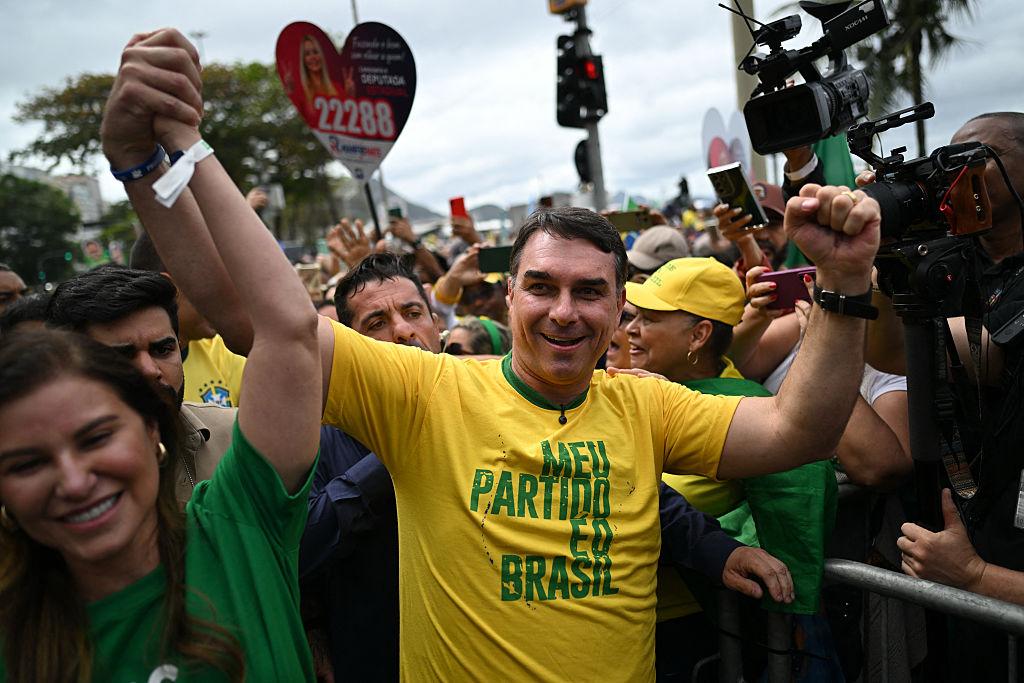
Meta is facing escalating scrutiny in Brazil after President Luiz Inácio Lula da Silva’s campaign alleged that technical restrictions on Instagram, Facebook and WhatsApp disadvantaged his re-election effort while some Meta systems improperly recommended content connected to rival Flávio Bolsonaro. Internal communications reported by Folha showed Meta employees discussing restrictions affecting Lula and inappropriate recommendations involving Bolsonaro, although Meta denies deliberate political bias and says the incidents had separate technical explanations. Brazil’s Superior Electoral Court has now required equal treatment of both campaigns, while Meta says it has implemented 17 measures including rapid human review of automated advertising restrictions ahead of the October 25 runoff.
Meta is facing escalating scrutiny in Brazil over allegations that technical restrictions on Facebook, Instagram and WhatsApp disadvantaged President Luiz Inácio Lula da Silva’s re-election campaign while some of the company’s systems improperly recommended content connected to his presidential rival, Senator Flávio Bolsonaro. The controversy has moved beyond complaints exchanged between political campaigns and the technology company, with Brazil’s Superior Electoral Court now directly supervising Meta’s response only days before the October 25 presidential runoff. Meta strongly denies deliberately favouring either candidate and says a series of separate technical failures, automated enforcement decisions and election-law compliance measures have been incorrectly combined into a wider accusation of political interference that is not supported by evidence.
The latest development came after Meta told the Superior Electoral Court, known as the TSE, that it had implemented measures designed to ensure Lula and Bolsonaro receive equal treatment across its platforms. In a nine-page submission reviewed by Reuters, the company listed 17 initiatives it said were adopted in response to the court’s instructions and provided a technical declaration asserting that content associated with both presidential campaigns is being treated equally and without discrimination. The filing was required after an electoral court justice gave Meta 24 hours to demonstrate that it had introduced safeguards capable of maintaining equal conditions for the two candidates during the final days of campaigning.
Among the most significant measures disclosed by Meta is a new system of prior human review for the advertising accounts belonging to both presidential campaigns. The company also said any automated restriction imposed on either campaign’s advertising account will be reviewed by a person within two hours, a temporary safeguard that is expected to remain in operation until the conclusion of Sunday’s runoff. The intervention addresses one of the central concerns surrounding the controversy, which is that automated systems capable of blocking advertisements or restricting accounts can produce consequences during an election long before a normal appeal process has time to correct an error.
The dispute originated with Lula’s campaign, which complained that his digital operation had repeatedly faced restrictions and technical problems during the election while systems operated by Meta appeared in some instances to give greater visibility to Flávio Bolsonaro. The allegations gained significant attention after Brazilian newspaper Folha de S.Paulo reported that internal communications from Meta employees showed workers discussing restrictions that had affected Lula’s Instagram operation and acknowledging that Bolsonaro’s profile and WhatsApp channel had been recommended by systems that were not supposed to provide algorithmic recommendations for presidential candidates under Brazilian electoral rules.
According to the internal communications reported by Folha and subsequently covered by Reuters, Lula’s official campaign account was unable for almost 24 hours on October 9 to boost existing posts from its Instagram feed. The campaign could still create other forms of advertising and advertisements already running were not stopped, but it could not use the feed-post boosting method that its team considered particularly important to its online campaign. Meta employees reportedly treated the problem as technically serious and discussed the urgency of resolving it because it affected a sitting president in the middle of a national election campaign.
Lula’s campaign estimated that the restriction may have prevented approximately 1.3 million people from seeing advertisements it otherwise expected to distribute, although that figure represents the campaign’s assessment rather than an independently verified measurement of lost reach. Meta has disputed attempts to interpret the episode as evidence of political targeting and says the problem resulted from a wider technical malfunction in its advertising system rather than a decision aimed at Lula. The company said thousands of advertisers in multiple countries were affected by the underlying technical problem and that direct advertisement uploads remained available even while the feature involving existing Instagram feed posts was disrupted.
Separate internal discussions reportedly concerned the way candidate accounts were appearing in search and recommendation systems. Folha reported that Meta employees acknowledged that Flávio Bolsonaro’s profile was being recommended in Instagram searches even though candidate accounts were not supposed to receive that form of algorithmic recommendation under the rules being applied during the Brazilian election. At the same time, Lula’s account reportedly failed in some instances to appear correctly even when users searched directly for his name, prompting further questions about whether the combined effect of multiple technical problems produced unequal conditions even if the company did not intend to favour a particular candidate.
Another incident involved WhatsApp, where searches associated with a pro-Lula channel reportedly returned a Bolsonaro-supporting channel among the results. Brazilian electoral rules have placed unusually strong restrictions on algorithmic promotion during the election, meaning candidate profiles and channels are generally expected to be discovered through deliberate searches rather than being recommended automatically to users. Meta said technical problems affecting search and recommendation were corrected and denied that they reflected ideological decision-making by employees or systems designed to promote Bolsonaro.
The company has repeatedly emphasised the difference between an unintended technical consequence and deliberate political bias. In a detailed public response issued on October 16 and updated later, Meta said it does not take sides in Brazilian elections and described claims that it intentionally supported one candidate as false and unfounded. It said its systems are not designed to rank or distribute political material according to ideology and argued that incidents cited by Lula’s campaign had separate explanations involving fraud prevention, global software failures, technical limitations and compliance with Brazilian election law.
One of those incidents occurred on September 23, when Lula’s advertising account was mistakenly disabled for slightly more than an hour. Meta said an advertisement was wrongly identified as potentially impersonating a federal social programme during an anti-fraud review. The company said the stricter fraud controls had been developed under an agreement with Brazilian authorities to combat scams involving government programmes and acknowledged that legitimate advertising could sometimes be affected as a consequence of those stronger detection mechanisms. Meta says the problem was quickly corrected and was not politically motivated.
Meta also addressed an October 7 problem involving Reels view counts, saying it was a global technical incident affecting creators in more than 100 countries rather than an effort to reduce Lula’s visibility. According to the company, view totals were frozen, incorrect or displayed as zero for about five hours even though the underlying content continued to be distributed. Meta said Bolsonaro’s campaign also contacted the company regarding the same problem and argued that Lula’s official Instagram account actually performed above its recent baseline during the period, which the company cited as evidence that distribution itself had not been suppressed.
A separate controversy emerged around Meta AI after users discovered apparently inconsistent responses when asking the system to generate election-related images. Tests reported by Brazilian fact-checkers indicated that certain prompts using Flávio Bolsonaro’s first name and election number could produce campaign-style imagery while comparable requests involving Lula were blocked. Meta said the discrepancy resulted from a technical gap in safeguards designed to comply with Brazilian election rules rather than political favouritism, explaining that its system recognised some complete candidate names but did not always identify combinations involving common first names and electoral numbers.
The company said the same underlying loophole could also be triggered with a prompt using the name Luiz and Lula’s election number and argued that simply blocking ordinary names such as Flávio or Luiz would interfere with unrelated non-political requests. Meta says it closed the loophole on the same day it was identified. The episode nevertheless became politically significant because it added another example to a growing list of incidents being presented by Lula’s campaign as evidence that Meta’s automated systems had produced asymmetrical results during a closely contested election.
The Superior Electoral Court responded by ordering Meta to maintain equal treatment between the two candidates rather than accepting either campaign’s interpretation as established fact. Justice Marco Aurélio Bellizze required the company to demonstrate that its systems would not unjustifiably reduce the reach of political content associated with either candidate and that artificial intelligence tools would operate according to equivalent standards. The court’s approach is significant because it focuses primarily on preventing unequal effects in the final phase of the election rather than making an immediate finding that Meta deliberately manipulated the campaign.
Meta’s own public statement highlighted that distinction. The company quoted the electoral proceedings as saying that the court had not at that stage concluded that Meta manipulated distribution in favour of or against a candidate and that available technical material did not establish deliberate partisan privilege. Meta has relied heavily on that point in rejecting descriptions of the controversy as proven election interference, arguing that acknowledged technical mistakes should not automatically be transformed into accusations that the company intentionally tried to determine the outcome of the vote.
The TSE nevertheless demanded additional safeguards because the potential consequences of automated errors are particularly serious during the final days of a national election. Even a temporary restriction can matter when campaigns are spending heavily to reach undecided voters and have only a limited number of hours to respond to new political developments. A mistake that takes several days to appeal under ordinary platform procedures could therefore cause damage that cannot practically be reversed before voting begins.
The court held a meeting on October 20 involving Meta representatives and members of both presidential campaigns after the company submitted its compliance information. The meeting was led by Justice Bellizze and focused on how Meta intended to meet the requirement for equivalent treatment in political content distribution and electoral advertising. The TSE said Meta had been ordered to explain its safeguards within 24 hours, reflecting the urgency created by the approaching runoff and the importance Brazilian electoral authorities place on what they call parity of arms between competing candidates.
Meta’s introduction of rapid human review is one of the clearest consequences of the court’s intervention. Automated moderation systems operate at a scale that would be impossible to manage entirely through human decision-making, but election-related mistakes can require faster escalation than ordinary content disputes. By promising review within two hours when automated systems restrict the campaigns’ advertising accounts, Meta is effectively acknowledging that the normal automation-first model requires additional safeguards when the consequences involve presidential candidates during the final days before a vote.
The company’s independent Oversight Board has now added another layer of pressure. In a statement issued on October 20, the Board said it was concerned by recurring enforcement failures affecting election integrity on Meta’s platforms and specifically referred to technical restrictions involving a presidential candidate in Brazil. The Board warned that election-period moderation can fail in two opposite ways, through excessive enforcement that suppresses legitimate political expression and insufficient enforcement that allows harmful or prohibited activity to spread.
The Oversight Board did not conclude that Meta intentionally favoured Bolsonaro or targeted Lula. Instead, it argued that repeated mistakes demonstrate the need for more transparent and consistent enforcement during elections and stronger protection for political speech. The distinction is important because the Board’s criticism concerns the reliability and accountability of Meta’s systems rather than establishing a partisan motive behind individual errors.
The controversy highlights the unusual power technology companies can exercise during modern election campaigns. Facebook, Instagram and WhatsApp are deeply embedded in Brazilian political communication, allowing candidates to reach millions of voters directly without passing through television stations, newspapers or other traditional media institutions. When the systems controlling advertising, recommendation and account visibility malfunction, the consequences can therefore extend far beyond ordinary customer-service problems and become questions about electoral fairness.
Brazil has responded to that challenge with some of the world’s most active regulation of political activity on social platforms. The TSE has developed rules governing political advertising, artificial intelligence, recommendation systems and misleading content, while technology companies are required to respond rapidly to judicial orders during election periods. Supporters of the approach argue that Brazil’s experience with online disinformation and political mobilisation makes strict oversight necessary, while technology companies have warned that complex and rapidly changing legal obligations can also increase the possibility of accidental over-enforcement.
Meta itself has made that argument in defending its recent record. The company says approximately 70 per cent of enforcement measures involving Lula-related accounts registered with Brazilian electoral authorities resulted from compliance with valid judicial orders. It argues that other actions, including restrictions on AI-generated content during legally defined periods and the exclusion of candidates from recommendation systems, were implemented because of election rules rather than ideological choices by Meta.
The current dispute therefore involves two separate questions that can easily become confused. The first is whether Lula’s campaign experienced technical restrictions and whether Bolsonaro’s digital presence received recommendations it should not have received. Meta and its own reported internal communications acknowledge that technical problems occurred, although the company disputes how those incidents are characterised. The second question is whether those errors were deliberately designed to favour Bolsonaro or harm Lula, and no court has publicly established such intentional political interference.
That distinction will remain important throughout the final days of the campaign. Lula’s political team is entitled to challenge technical restrictions it believes created unequal conditions, while Meta is entitled to present evidence showing that failures were global, accidental or also affected Bolsonaro. The responsibility of the TSE is to assess those competing claims according to technical evidence and electoral law rather than assuming that every error proves a political motive.
Flávio Bolsonaro’s campaign has disputed claims that it received intentional preferential treatment. His campaign told Brazilian media that it follows Meta’s rules and the TSE’s requirements and said it did not experience problems that disrupted the operation of its advertising account in the way being alleged by Lula’s campaign. Meta, however, has pointed to incidents that affected Bolsonaro as evidence that its technical failures were not exclusively directed toward the left-wing incumbent.
The political sensitivity of the controversy is heightened by the fact that Brazil is heading into a presidential runoff on October 25. Lula, of the Workers’ Party, and Bolsonaro, of the Liberal Party, are competing in a highly polarised national contest, making any allegation that a major communications platform gave one campaign greater digital reach particularly consequential. The TSE’s intervention is aimed at ensuring the remaining campaign period proceeds without unjustified technical advantages rather than determining which candidate should benefit politically from the controversy.
Brazil’s electoral authorities have separately acted against content produced by both political camps during the campaign. The TSE has ordered material removed when it concluded that publications improperly associated candidates with criminal organisations or other prohibited claims, while it has also intervened over artificial intelligence content and technical failures in television campaign broadcasts. Those actions underline that the court is dealing with a much broader challenge involving digital campaigning, misinformation, AI and election advertising rather than focusing solely on Meta’s treatment of one candidate.
On October 15, the TSE met with Meta representatives to discuss misinformation, the preservation of WhatsApp channel data and the need for equal campaigning conditions. The court said electoral authorities wanted to maintain parity between candidates so voters could make choices freely, reinforcing the principle that technology companies should not inadvertently create structural advantages through recommendation or enforcement systems.
Meta has also been implementing a separate TSE order concerning who is permitted to purchase election-related advertisements. Under the new system, the company is restricting electoral advertising to authorised candidates, parties, federations and coalitions. Meta warned before implementation that building such a system within only a few days was technically complex and could generate mistakes, including the accidental blocking of legitimate advertisements from authorised political actors.
That warning has become part of Meta’s wider defence because the company argues that Brazil’s detailed digital election requirements necessarily involve complicated technical adjustments. From Meta’s perspective, stricter controls can reduce prohibited political advertising but also increase the probability that legitimate campaigning will occasionally be blocked by automated detection. The company says its responsibility is to correct those failures quickly and apply equivalent standards rather than pretend that technical systems can operate without errors.
For Lula’s campaign, however, the concern is not simply whether each individual problem can be explained technically but whether the cumulative effect created an unfair disadvantage. A series of unrelated errors can still have unequal political consequences even if none was deliberately programmed to favour one side. That is one reason the electoral court has concentrated on the practical question of equal treatment rather than requiring Lula’s campaign to prove deliberate ideological manipulation before protective measures are introduced.
This distinction between intent and effect is becoming increasingly important in debates over algorithmic accountability. Automated systems can produce unequal outcomes without engineers deliberately writing code to discriminate between political candidates. Search ranking, fraud detection, advertising approvals and recommendation systems involve multiple automated models operating simultaneously, meaning a combination of seemingly minor technical choices can sometimes create major real-world differences.
Election regulators therefore face a difficult problem. Requiring proof of intentional bias before acting could allow damaging technical disparities to continue through an election, while assuming every disparity represents manipulation could unfairly accuse technology companies of political interference. Brazil’s current response attempts to occupy the middle ground by imposing safeguards and demanding transparency while the underlying allegations continue to be examined.
The Oversight Board’s intervention reflects similar concerns. Its criticism that Meta suffers recurring enforcement failures suggests the company needs stronger institutional procedures for election periods, but the Board has stopped short of endorsing claims that Meta deliberately attempted to influence the Brazilian presidential contest. Instead, it is calling for more transparency, consistent enforcement and mechanisms capable of preventing both unjustified suppression and insufficient moderation.
Civil society organisations in Brazil have also demanded greater transparency from Meta, with demonstrators gathering outside the company’s São Paulo offices to protest the alleged restrictions. Photographs from October 19 showed demonstrators holding signs accusing the company of interfering in Brazilian democracy and demanding greater digital sovereignty. Those protests reflect public concern about the power of international technology companies, although the allegations displayed by protesters remain political claims rather than established judicial findings.
The dispute is also attracting attention outside Brazil. Civil society organisations have reportedly called for scrutiny in the United States over Meta’s conduct during the Brazilian election, arguing that an American technology company controlling major digital communication platforms should provide greater transparency about technical failures affecting a foreign democratic process. Meta rejects the premise that it interfered and maintains that available evidence shows technical incidents rather than political manipulation.
The controversy has implications well beyond Brazil because Meta operates Facebook, Instagram and WhatsApp across hundreds of elections and political systems. Problems identified in one country can become examples for regulators elsewhere considering whether technology companies should be required to provide election-specific human review, algorithmic transparency or faster appeals. Meta’s response in Brazil may therefore influence how governments approach platform accountability during future elections.
The scale of the company makes the issue particularly significant. Automated systems are necessary for moderating and distributing content from billions of users, but political campaigns operate within extremely short timelines where a temporary error can have disproportionate consequences. An advertising restriction lasting 24 hours during an ordinary commercial campaign may be inconvenient, while the same restriction days before a presidential vote can become a constitutional and electoral-law issue.
This explains why the court’s two-hour human-review requirement matters beyond the immediate Brazilian dispute. It creates a practical model in which automation can continue operating but decisions affecting major political campaigns receive rapid human oversight. Whether such a system could be applied more broadly or permanently remains unclear, but its implementation during the Brazilian runoff may be closely watched.
Meta is also trying to protect its own institutional credibility. Allegations of political bias have followed technology companies from multiple ideological directions for years, with conservatives in some countries accusing platforms of suppressing right-wing speech while progressive organisations accuse them of failing to control harmful or extremist material. Maintaining public confidence therefore requires the company to demonstrate not merely that it intends to be neutral but that its technical systems produce sufficiently consistent results.
The Brazilian controversy illustrates how difficult that can be. Meta has evidence showing some problems affected users globally and says Bolsonaro’s campaign also encountered technical restrictions, but internal communications reported by Folha show employees themselves recognised that specific incidents were disadvantaging Lula at particular moments. Both facts can be true simultaneously, which is why a simplified claim that either everything was political interference or nothing meaningful happened would fail to capture the complexity of the case.
There is also an important distinction between organic content and paid advertising. Meta says the latest electoral-court measures concerning authorised campaign advertising do not prevent ordinary users from discussing politics or candidates and do not generally block organic campaign posts. The most significant restrictions at issue involve paid promotion, account enforcement, search behaviour and recommendation systems rather than a complete removal of Lula’s campaign from Meta platforms.
That difference matters because Lula remained capable of communicating with followers throughout the disputed periods, even when particular advertising functions were unavailable. At the same time, paid promotion is strategically important because it allows campaigns to reach people who do not already follow their accounts, meaning a temporary loss of advertising functionality can still affect campaign reach even when the underlying profile remains online.
Meta says this is exactly why it has introduced additional safeguards for both candidates rather than only Lula. Human review of both advertising accounts and the two-hour examination of automated restrictions are intended to reduce the possibility that emergency protections themselves create another imbalance. The company is presenting that symmetry as evidence that it is responding to the court institutionally rather than politically.
The TSE’s final assessment of Meta’s compliance may determine whether further orders are necessary before Sunday’s vote. The court could continue requiring additional technical information, impose new safeguards or conclude that the measures already adopted are sufficient. What it has not done so far is issue a final finding that Meta intentionally manipulated the election in favour of Flávio Bolsonaro.
That point remains central to responsible coverage. Internal communications and confirmed technical problems justify serious scrutiny of the company’s systems, but an allegation of deliberate election manipulation requires stronger evidence than proof that an algorithm malfunctioned or an advertising account was incorrectly restricted. Meta’s critics are questioning whether the pattern of errors produced unfair effects, while Meta argues the incidents are being assembled into a misleading political narrative.
For voters, the controversy raises a more fundamental question about how much invisible technology influences what they see during elections. Recommendation engines, advertising auctions, search results and automated moderation can determine which messages appear most prominently without users knowing why. Election law traditionally focused on television, radio, campaign finance and printed advertising, but platforms such as Meta have created a new infrastructure in which private technical decisions can influence political communication on a national scale.
Brazil’s response suggests electoral authorities increasingly believe that infrastructure must be subject to real-time oversight. Waiting until months after an election to determine that a campaign was improperly restricted would offer little practical remedy once the result had already been certified. The TSE is therefore attempting to prevent potential inequality while voting is still ahead rather than relying entirely on retrospective litigation.
Meta’s response similarly demonstrates that major technology companies now expect intensified regulatory supervision during politically sensitive periods. The company has established election operations, compliance teams and special advertising controls in Brazil while maintaining that regulators should recognise the technical complexity involved. The tension between those positions is unlikely to disappear after the runoff because governments around the world are continuing to demand greater accountability from large platforms.
For Lula and Bolsonaro, the immediate concern is much narrower. Both campaigns need confidence that their content, advertisements and account functions will be treated according to the same standards through the final hours before voting. Meta has now formally told the court that its systems will do so and that rapid human review will remain available if automated restrictions occur.
For the TSE, the challenge is to ensure equal treatment without effectively becoming the day-to-day manager of a private technology platform. Its current approach relies on specific obligations, technical declarations and meetings with the company and campaigns rather than direct control over Meta’s algorithms. Whether that level of oversight is sufficient will depend partly on whether additional incidents emerge before the vote.
The Oversight Board’s criticism also means Meta will face questions after the election regardless of the result. The Board has described recurring election-related enforcement failures as a broader governance problem and wants the company to demonstrate that political speech can be protected while electoral integrity rules are applied consistently. That debate will continue even if the immediate dispute over Lula and Bolsonaro is resolved.
The significance of the Brazilian case therefore extends beyond accusations exchanged during an intensely contested presidential race. It has become a live test of how election authorities, technology companies, independent oversight bodies and political campaigns respond when automated systems appear to produce unequal outcomes without clear evidence of deliberate partisan intent.
What is currently established is that Meta experienced multiple technical and enforcement problems during Brazil’s 2026 presidential campaign, that internal communications reported by Folha showed employees discussing restrictions affecting Lula and inappropriate recommendations involving Bolsonaro, and that Meta itself acknowledges several errors while strongly rejecting accusations of deliberate political favouritism. Brazil’s Superior Electoral Court has ordered safeguards to guarantee equal treatment and has required the company to demonstrate compliance, while Meta says it has introduced 17 measures including rapid human review of automated advertising restrictions.
What has not been established is that Meta intentionally designed its systems to help Flávio Bolsonaro defeat Lula. The electoral court has not made that finding, Meta denies it, and the evidence currently available publicly supports continued investigation and oversight rather than a definitive conclusion about political motive. That distinction is particularly important as Brazil approaches its October 25 runoff, when unproven claims about election manipulation could themselves influence public confidence in the vote.
The final days before the election will therefore test whether Meta’s new safeguards work as promised. The company has told the TSE that both campaigns are now receiving equal and non-discriminatory treatment, while automated advertising restrictions will receive human review within two hours. Lula’s campaign continues to argue that earlier failures created an unfair disadvantage, Bolsonaro’s campaign disputes allegations of preferential treatment, and Brazil’s electoral authorities are maintaining direct scrutiny of the platform as voting approaches.
The controversy has placed Meta at the centre of a wider argument over the role of algorithms in democracy. Even if investigators ultimately find no intentional political interference, the Brazilian experience has already demonstrated how technical errors inside a private platform can become matters of national electoral significance. For Meta, restoring confidence will require more than denying political bias; it will require showing that its systems can apply complex election rules consistently, correct mistakes quickly and provide enough transparency for candidates, regulators and voters to understand when something goes wrong.