
BRAZILIANS VOTE IN TIGHT PRESIDENTIAL ELECTION AS LULA AND FLÁVIO BOLSONARO BATTLE FOR RUNOFF
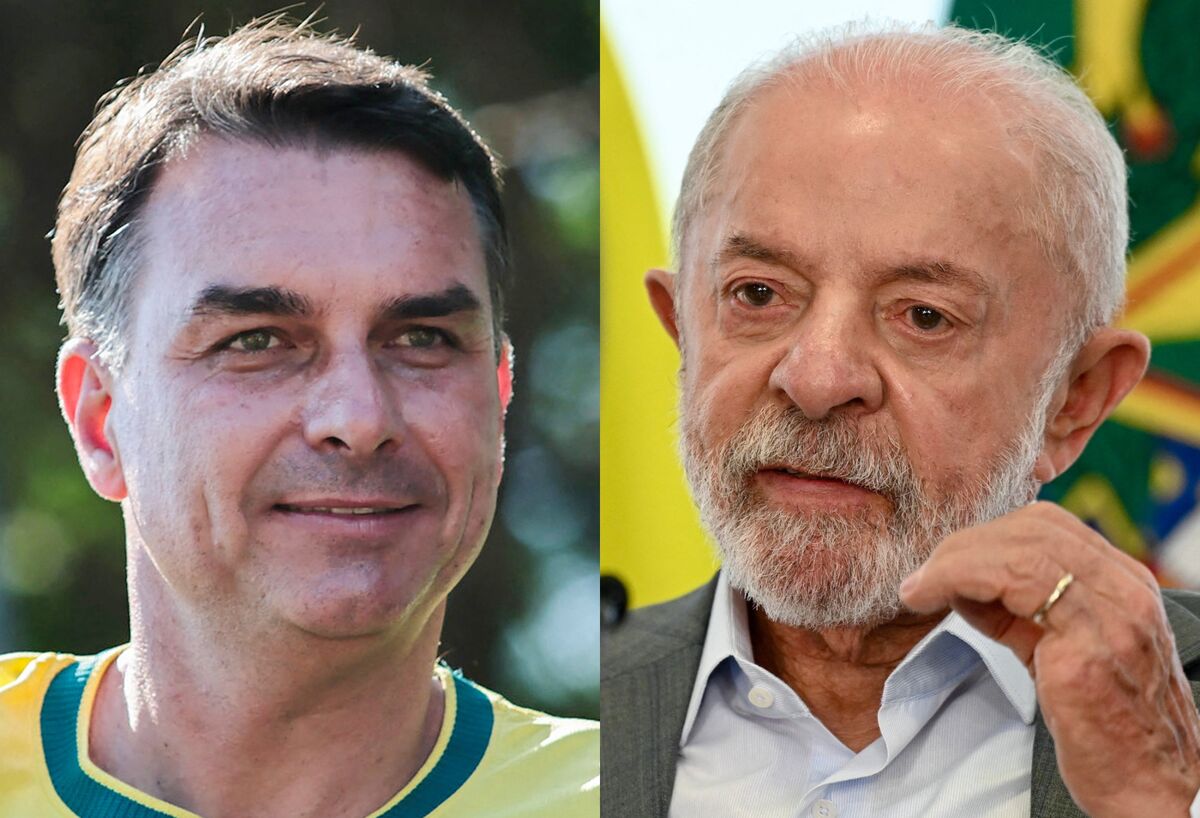
Millions of Brazilians are voting in a closely contested presidential election dominated by incumbent President Luiz Inácio Lula da Silva and Senator Flávio Bolsonaro. Thirteen candidates are competing in the first round, but Lula and Bolsonaro have emerged as the two leading contenders. If no candidate receives more than 50 percent of valid votes, the top two candidates will face each other in a runoff election on October 25. Voters are also electing all 513 members of Brazil’s lower house and two thirds of the Senate, making Sunday’s vote critical to the country’s future political balance. The campaign has been shaped by concerns over corruption, living costs, crime, public debt and Brazil’s increasingly difficult relationship with the United States.Millions of Brazilians are voting in a closely contested presidential election dominated by incumbent President Luiz Inácio Lula da Silva and Senator Flávio Bolsonaro. Thirteen candidates are competing in the first round, but Lula and Bolsonaro have emerged as the two leading contenders. If no candidate receives more than 50 percent of valid votes, the top two candidates will face each other in a runoff election on October 25. Voters are also electing all 513 members of Brazil’s lower house and two thirds of the Senate, making Sunday’s vote critical to the country’s future political balance. The campaign has been shaped by concerns over corruption, living costs, crime, public debt and Brazil’s increasingly difficult relationship with the United States.
Brazilians are voting in a closely fought presidential election that could determine both the country’s political direction and the balance of power in Congress.
The first round pits 13 presidential candidates against one another, although the contest has been dominated by President Luiz Inácio Lula da Silva and Senator Flávio Bolsonaro.
Lula, 80, is seeking a fourth nonconsecutive presidential term.
Bolsonaro, 45, is the son of former President Jair Bolsonaro and is campaigning to return his father’s conservative political movement to the presidency.
VOTERS QUEUE ACROSS BRAZIL
Long lines were reported at polling stations on Sunday as millions of Brazilians participated in the first round.
Both Lula and Flávio Bolsonaro have cast their ballots.
Lula voted in São Bernardo do Campo in São Paulo state.
Flávio Bolsonaro voted in Rio de Janeiro.
The candidates used their final appearances to encourage supporters to turn out in large numbers.
RUNOFF LIKELY IF NO CANDIDATE PASSES 50 PERCENT
Brazilian electoral law requires a presidential candidate to receive more than 50 percent of valid votes to win in the first round.
If no candidate crosses that threshold, the two leading candidates will advance to a second round on October 25.
Polling before election day generally showed Lula leading the first round but without enough support to guarantee an outright victory.
Surveys also suggested that a possible Lula and Bolsonaro runoff could be highly competitive.
Polls are measurements of voter opinion rather than predictions of the final result.
LULA SEEKS FOURTH TERM
Lula returned to the presidency in 2023 after defeating Jair Bolsonaro in the 2022 election.
He previously served as president between 2003 and 2010.
A victory in 2026 would give him an unprecedented fourth nonconsecutive term.
Lula has campaigned on his government’s social programs, falling unemployment and reductions in inequality.
His supporters argue that his administration has protected lower income Brazilians and strengthened welfare programs.
COST OF LIVING REMAINS A CHALLENGE FOR LULA
Despite those gains, many voters remain concerned about the cost of living.
High household debt, inflation pressures and economic uncertainty have remained central campaign issues.
Brazil’s government has also lowered economic growth forecasts.
Public debt has risen above 82 percent of gross domestic product, creating concern about how the next administration will manage government finances.
FLÁVIO BOLSONARO BUILDS CAMPAIGN AROUND FATHER’S POLITICAL MOVEMENT
Flávio Bolsonaro has positioned himself as the political successor to his father.
He has appealed to conservative voters on issues including crime, economic policy and Brazil’s international alliances.
He has also promised closer relations with the United States and Israel.
His candidacy has attracted many supporters who previously backed Jair Bolsonaro.
FORMER PRESIDENT JAIR BOLSONARO REMAINS CENTRAL TO CAMPAIGN
Jair Bolsonaro remains a major influence on the election despite being imprisoned.
The former president was convicted over an attempted coup connected to efforts to overturn the result of the 2022 presidential election.
He is serving a sentence of more than 27 years.
Flávio Bolsonaro has promised to pursue an amnesty for his father if elected.
That promise has become one of the most politically significant issues surrounding his candidacy.
FLÁVIO BOLSONARO ALSO FACES INVESTIGATION
The younger Bolsonaro has faced scrutiny during the campaign.
Federal police have investigated alleged money laundering links connected to the Banco Master scandal.
Flávio Bolsonaro has denied wrongdoing.
The investigation has become part of a broader corruption controversy involving politicians and senior figures in Brazil.
No conviction against him has resulted from that investigation.
CORRUPTION DOMINATES CAMPAIGN
The collapse of Banco Master and allegations involving figures across Brazil’s political establishment have intensified public concern about corruption.
The scandal has affected politicians, business figures and members of the judiciary.
Both leading campaigns have used corruption allegations against political opponents.
The issue has contributed to voter distrust and weakened substantive debate over policy.
CRIME REMAINS MAJOR VOTER CONCERN
Street crime and organized criminal groups have also featured prominently in the election.
Flávio Bolsonaro has promised a tougher approach to security.
Lula has defended federal initiatives while arguing that long term reductions in crime also require investment in education, employment and social development.
Brazil continues to face serious challenges involving organized crime and gang violence.
RELATIONS WITH UNITED STATES BECOME ELECTION ISSUE
Brazil’s relationship with the United States has become unusually prominent during the campaign.
Relations between Lula’s government and Washington have deteriorated.
U.S. President Donald Trump imposed a 50 percent tariff on Brazilian goods in 2025 and publicly criticized the prosecution of Jair Bolsonaro.
Lula accused Washington of interfering in Brazil’s domestic affairs.
FLÁVIO BOLSONARO FAVORS CLOSER U.S. TIES
Flávio Bolsonaro has taken a different approach.
He has called for closer political and economic relations with the United States.
Trump has not formally endorsed a candidate, but he has hosted Flávio Bolsonaro at the White House and spoken positively about him.
That relationship has added another international dimension to Brazil’s election.
CRITICAL MINERALS ALSO PART OF U.S. BRAZIL RELATIONSHIP
Brazil holds major reserves of minerals considered strategically important for technology, energy and defense industries.
The United States has sought greater access to critical minerals in several countries as it tries to reduce dependence on China.
Brazil’s policies toward those resources could therefore become increasingly important after the election.
VOTERS ALSO CHOOSING CONGRESS
The election is not limited to the presidency.
Brazilians are voting for all 513 members of the Chamber of Deputies.
They are also electing two thirds of the Senate.
The outcome could determine how easily the next president can pass legislation.
CONGRESS HAS BECOME INCREASINGLY POWERFUL
Brazil’s Congress has gained significant political influence in recent years.
Presidents often require broad coalitions to pass legislation.
That means even a presidential victory does not guarantee control over the political agenda.
The composition of the next Congress could therefore be as important as the presidential result.
ECONOMY FACES DIFFICULT OUTLOOK
The winner will inherit significant economic challenges.
Brazil continues to face high borrowing costs, public debt pressures and relatively modest growth forecasts.
The next administration will also have to balance social spending with pressure to control government finances.
Economic policy is likely to become one of the first major tests after the election.
LULA AND BOLSONARO OFFER DIFFERENT POLITICAL DIRECTIONS
Lula represents Brazil’s established left wing Workers’ Party tradition.
His campaign emphasizes social welfare, reducing inequality and a more independent foreign policy.
Flávio Bolsonaro represents the conservative movement associated with his father.
His campaign emphasizes security, conservative social positions and closer relations with Washington.
ELECTION REMAINS HIGHLY POLARIZED
Brazilian politics remains deeply divided.
Supporters of Lula and Bolsonaro often hold sharply different views about the economy, crime, democratic institutions and the country’s relationship with foreign powers.
That polarization has shaped the campaign and may continue even after the final result.
INTERNATIONAL OBSERVERS MONITOR VOTING
International observers are monitoring polling stations.
Brazil uses electronic voting machines across the country.
The electoral system has been repeatedly tested and defended by Brazil’s electoral authorities.
Election security has received particular attention following political disputes surrounding the 2022 vote.
WHEN RESULTS ARE EXPECTED
Brazil’s electronic voting system typically allows results to be counted quickly after polls close.
Preliminary national figures are expected later Sunday.
The key question will be whether any candidate can exceed 50 percent of valid votes.
If nobody does, attention will immediately shift to the October 25 runoff.
WHAT IS CONFIRMED
Voting is underway across Brazil.
Thirteen presidential candidates are participating.
Lula and Flávio Bolsonaro are the two leading contenders.
A candidate must receive more than 50 percent of valid votes to avoid a runoff.
If required, the second round will be held on October 25.
Voters are also choosing all 513 members of the lower house and two thirds of the Senate.
WHAT POLLS CAN AND CANNOT TELL US
Pre election polls showed Lula generally ahead in the first round.
They also showed a potentially close second round against Flávio Bolsonaro.
Those surveys do not determine the election result.
Only officially counted ballots will establish which candidates advance and who ultimately becomes president.
WHAT HAPPENS NEXT
Votes will be counted after polling closes.
If a candidate receives more than half of all valid presidential votes, that person will be elected in the first round.
Otherwise, the two leading candidates will campaign for another three weeks before the October 25 runoff.
Brazil’s electoral authorities will announce official results as counting progresses.