
BURKINA FASO'S CHILDREN WILL BE TAUGHT TO CALL EUROPEAN COLONIZERS "INVADERS," NOT "EXPLORERS"
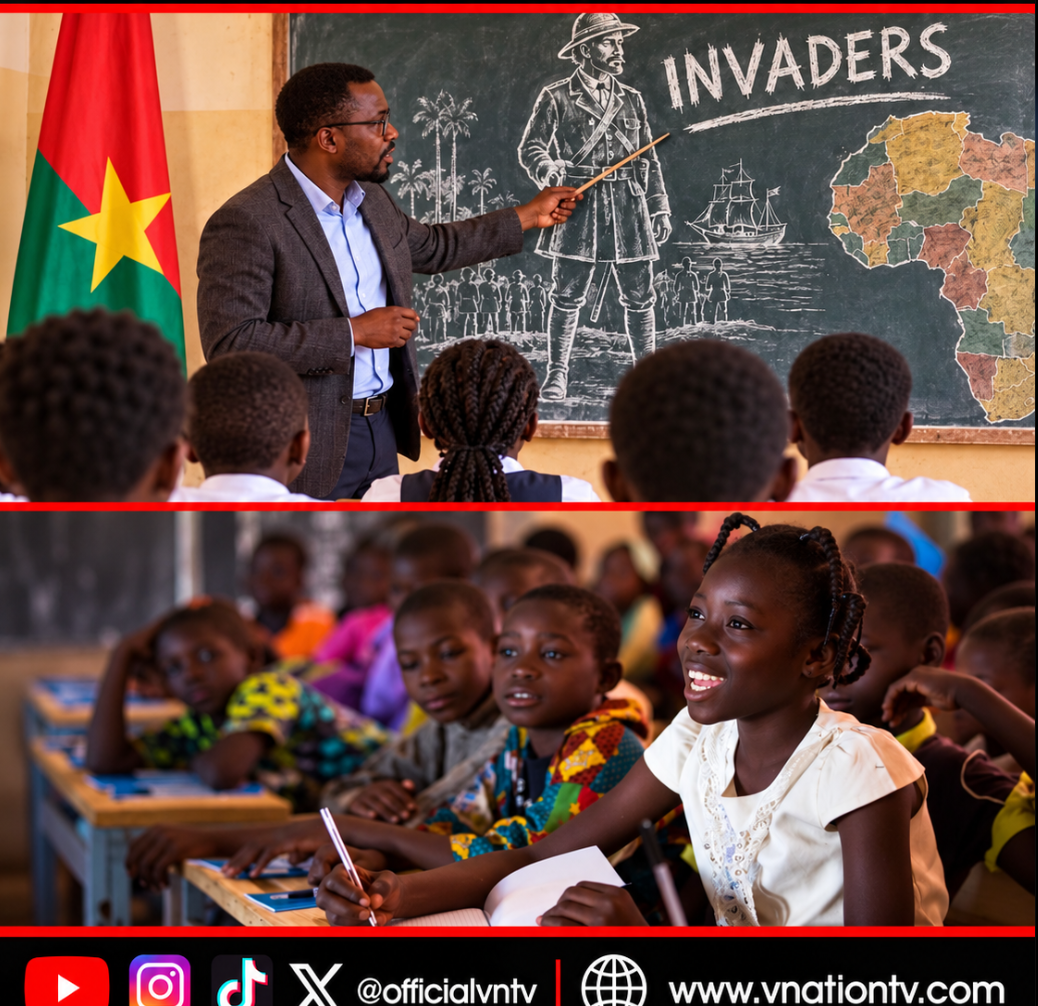
Burkina Faso is moving to change how colonial history is taught in its schools, with revised lessons expected to describe European colonial actors as “invaders” rather than “explorers” or “conquerors.” The government says the curriculum review is intended to place African resistance, local history, national identity and Burkina Faso’s own historical experience at the center of classroom teaching. Secondary Education Minister Moumouni Zoungrana announced the review of history, geography and civic education materials as part of wider reforms aimed at making the education system more reflective of the country’s social, cultural and historical realities. The changes are expected to be introduced progressively as new teaching materials and curricula are developed.
Burkina Faso is moving to rewrite how colonial history is taught in its schools, with revised educational materials expected to describe European colonial actors as “invaders” rather than “explorers” or “conquerors.”
The move forms part of a wider curriculum reform aimed at giving greater prominence to African resistance, local history, national identity and the experiences of Burkinabè communities before and during colonial rule.
Secondary Education Minister Moumouni Zoungrana announced the review of history, geography and civic education materials as authorities prepare changes to the country’s school curriculum.
GOVERNMENT WANTS HISTORY TOLD FROM A BURKINABÈ PERSPECTIVE
Officials say the reforms are intended to correct what they consider a colonial framing of African history.
For decades, many school materials across former European colonies described European figures primarily as explorers, discoverers or conquerors.
Burkina Faso’s new approach seeks to examine those same events from the perspective of African societies that experienced foreign conquest, political domination and loss of sovereignty.
Under that approach, European military and colonial expansion would be presented more directly as invasion.
AFRICAN RESISTANCE TO RECEIVE GREATER ATTENTION
The revised curriculum is also expected to devote more attention to African resistance movements.
That includes the actions of local rulers, communities and fighters who opposed European expansion.
Government officials argue that those stories have historically received less emphasis than the activities of European colonial figures.
The reform aims to give students a broader understanding of how colonial rule was contested and how African societies responded.
CHANGE GOES BEYOND WORDING
The reform is not limited to replacing one term with another.
Authorities say it is part of a broader effort to rethink how history, geography and civic education are taught.
The government wants students to learn more about precolonial African societies, local political systems, cultural traditions and the historical development of Burkina Faso itself.
The objective is to make the curriculum more closely connected to the country’s own experience.
BURKINA FASO HAS ALREADY BEGUN WIDER EDUCATION REFORMS
The colonial history review fits into a larger transformation of Burkina Faso’s education system.
The government has confirmed curriculum reforms designed to make schools more closely reflect national realities and cultural identity.
Authorities have introduced greater emphasis on national languages, civic education, patriotism, practical skills and indigenous knowledge.
The government has also expanded efforts to teach students more about the history and culture of their own regions.
NATIONAL LANGUAGES ARE GAINING A BIGGER ROLE
Burkina Faso has been expanding the use of national languages in education.
Hundreds of classes are already participating in bilingual teaching programs.
The government has said national languages should play a larger role alongside French.
Officials argue that students learn more effectively when education is connected to languages and cultural references they already understand.
INDIGENOUS KNOWLEDGE IS ALSO BEING ADDED
Another part of the reforms involves greater recognition of indigenous knowledge.
Schools are being encouraged to teach students about local traditions, cultural practices and community knowledge.
The government says this can help children better understand their own society rather than seeing education only through imported examples.
COLONIAL HISTORY REMAINS A MAJOR DEBATE ACROSS AFRICA
The way colonial history is taught has become an increasingly important issue across Africa.
Many historians argue that older school systems often emphasized European exploration and administration while giving less attention to African political systems, resistance and the violence of conquest.
Others warn that history education should remain based on evidence and avoid replacing one simplified narrative with another.
That debate is likely to continue as more African countries reconsider colonial era curricula.
BURKINA FASO'S POLICY REFLECTS BROADER SHIFT IN NATIONAL IDENTITY
The curriculum reform also reflects a wider political shift in Burkina Faso.
The government has placed greater emphasis on national sovereignty, cultural independence and reducing reliance on former colonial structures.
Education has become one of the areas where that approach is being applied most visibly.
Officials say schools should help students understand their own history and develop a stronger sense of national identity.
FRANCE'S COLONIAL ROLE FORMS PART OF THE BACKGROUND
Burkina Faso, formerly known as Upper Volta, was part of France’s colonial empire in West Africa.
French colonial rule formally began in the late nineteenth century and continued until independence in 1960.
The colonial period brought major political, economic and social changes.
It also involved military conquest, forced labor, taxation and resistance from African communities.
Those experiences are central to the new curriculum debate.
WORDS CAN SHAPE HOW HISTORY IS UNDERSTOOD
The choice between terms such as explorer, conqueror and invader is not merely linguistic.
Each word carries a different historical perspective.
Explorer emphasizes discovery.
Conqueror emphasizes military victory.
Invader emphasizes the experience of people whose territory was entered and taken by an outside power.
Burkina Faso’s reform is intended to place greater weight on that local perspective.
GOVERNMENT SAYS REFORMS ARE ABOUT HISTORICAL OWNERSHIP
Officials say the broader goal is to allow students to understand national history through a framework developed inside Burkina Faso.
That includes teaching the country’s history before colonization rather than beginning the national story with European arrival.
Authorities also want students to understand how colonial rule affected local institutions, economies and societies.
CURRICULUM CHANGES WILL BE INTRODUCED IN STAGES
The revised materials are expected to be introduced progressively.
Authorities are reviewing existing textbooks and teaching content before new materials are fully distributed.
Teachers may also require new guidance and training as the curriculum changes.
That means implementation is likely to take place over several school years rather than all at once.
EDUCATION REFORM IS PART OF A WIDER STATE PROJECT
Burkina Faso’s government has described education as a central part of its national transformation agenda.
The state has expanded patriotic and civic education while also reviewing teaching materials at primary, secondary and university levels.
Higher education authorities have also begun revising curricula to better reflect national needs and realities.
The aim is to make education more closely connected to economic, cultural and social development.
CRITICS MAY QUESTION POLITICIZATION
As with any major rewriting of national history curricula, questions may arise over political influence.
History education can become controversial when governments determine which narratives receive greater emphasis.
Academic independence, source quality and historical evidence will therefore remain important.
The long term credibility of the reforms will depend on whether the new materials present well supported history rather than simply replacing one political narrative with another.
SUPPORTERS SEE IT AS DECOLONIZING EDUCATION
Supporters of the reform argue that African students should not be taught colonial history primarily through European terminology.
They say language inherited from colonial education systems can minimize the experiences of African communities.
From that perspective, the use of the term invader reflects the reality that colonial rule was imposed through foreign military and political power.
WHY THE REFORM MATTERS
Education shapes how future generations understand national identity.
Changing how colonial history is taught can influence how students view sovereignty, resistance, independence and their place in the wider African story.
For Burkina Faso, the reform represents an effort to move away from inherited colonial frameworks and toward a curriculum built around the country’s own historical perspective.
WHAT IS CONFIRMED
Burkina Faso is reviewing history, geography and civic education curricula.
Officials have said European colonial actors previously described as explorers or conquerors will instead be presented as invaders.
The reforms are also intended to give greater attention to African resistance and national history.
The government has separately confirmed wider education reforms focused on local culture, national identity and indigenous knowledge.
WHAT HAPPENS NEXT
Authorities are expected to continue revising textbooks and teaching materials before introducing the changes more widely.
Teachers will also need updated materials and guidance.
The reforms will ultimately be judged by how effectively they help students understand both the realities of colonial rule and the broader history of Burkina Faso before, during and after European conquest.