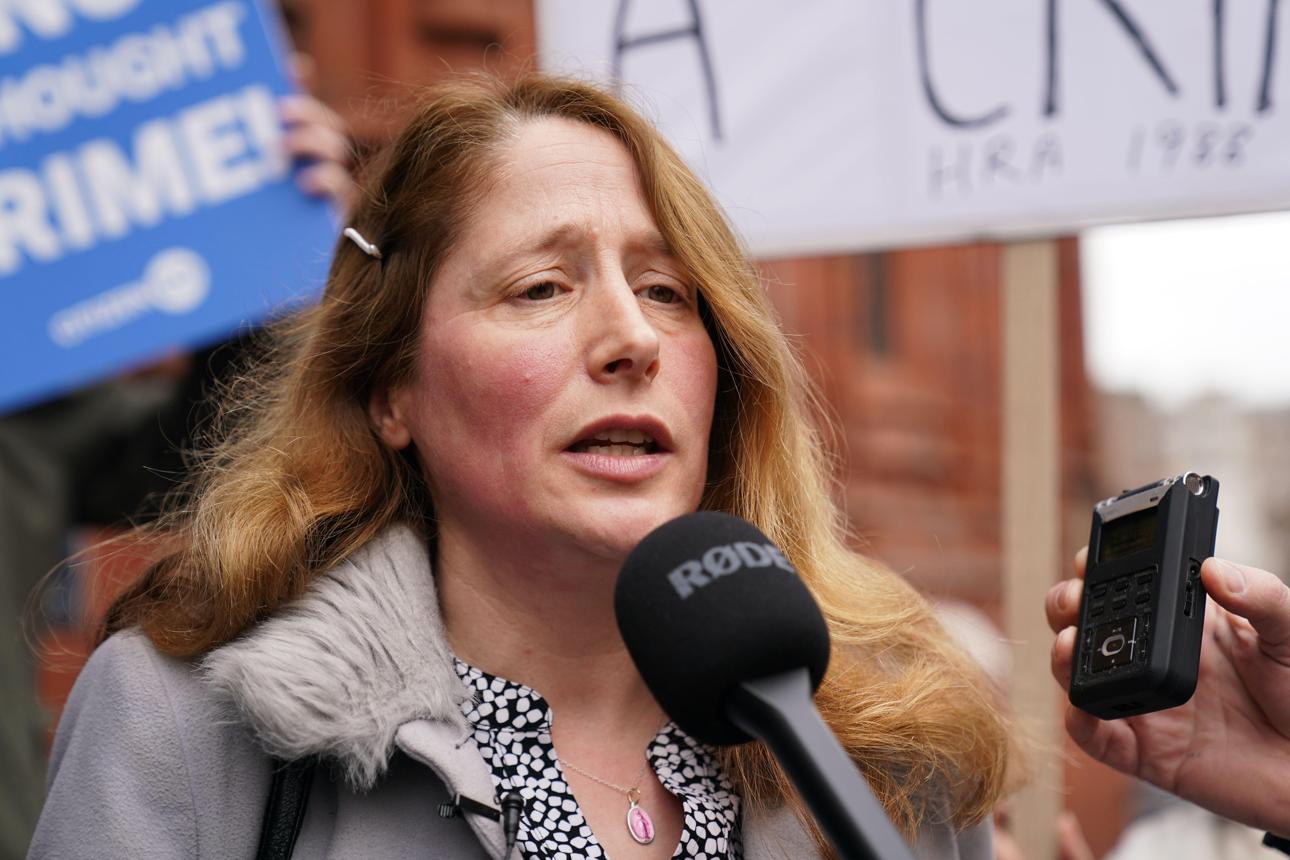
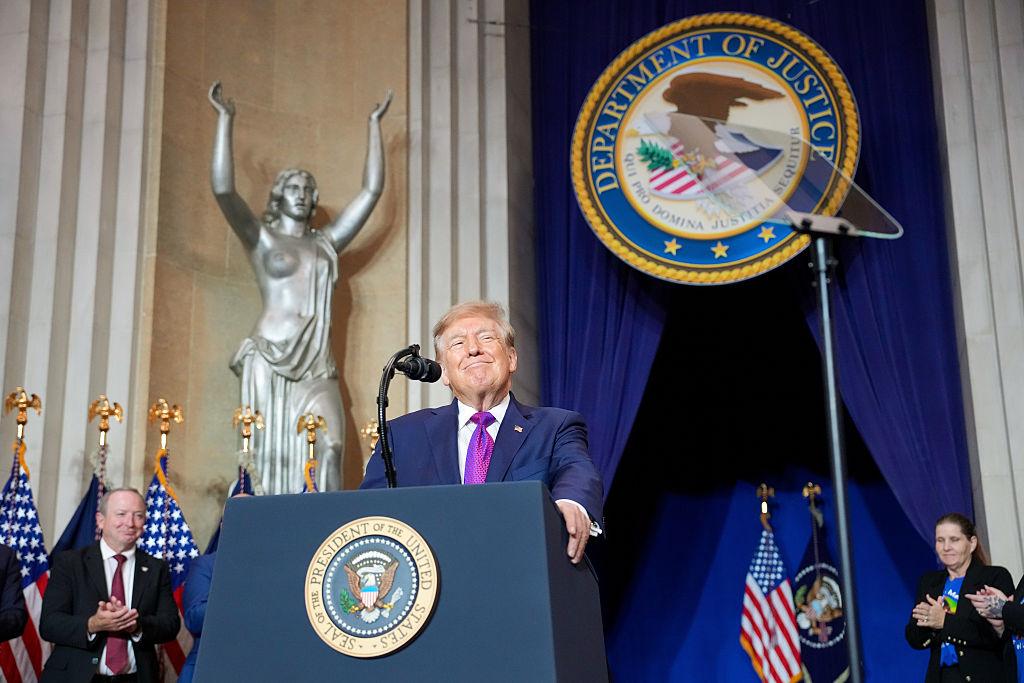
CANADA’S SUPREME COURT SET TO DELIVER LANDMARK RULING ON QUEBEC’S RELIGIOUS SYMBOLS BAN AS CHARTER RIGHTS FACE HISTORIC LEGAL TEST
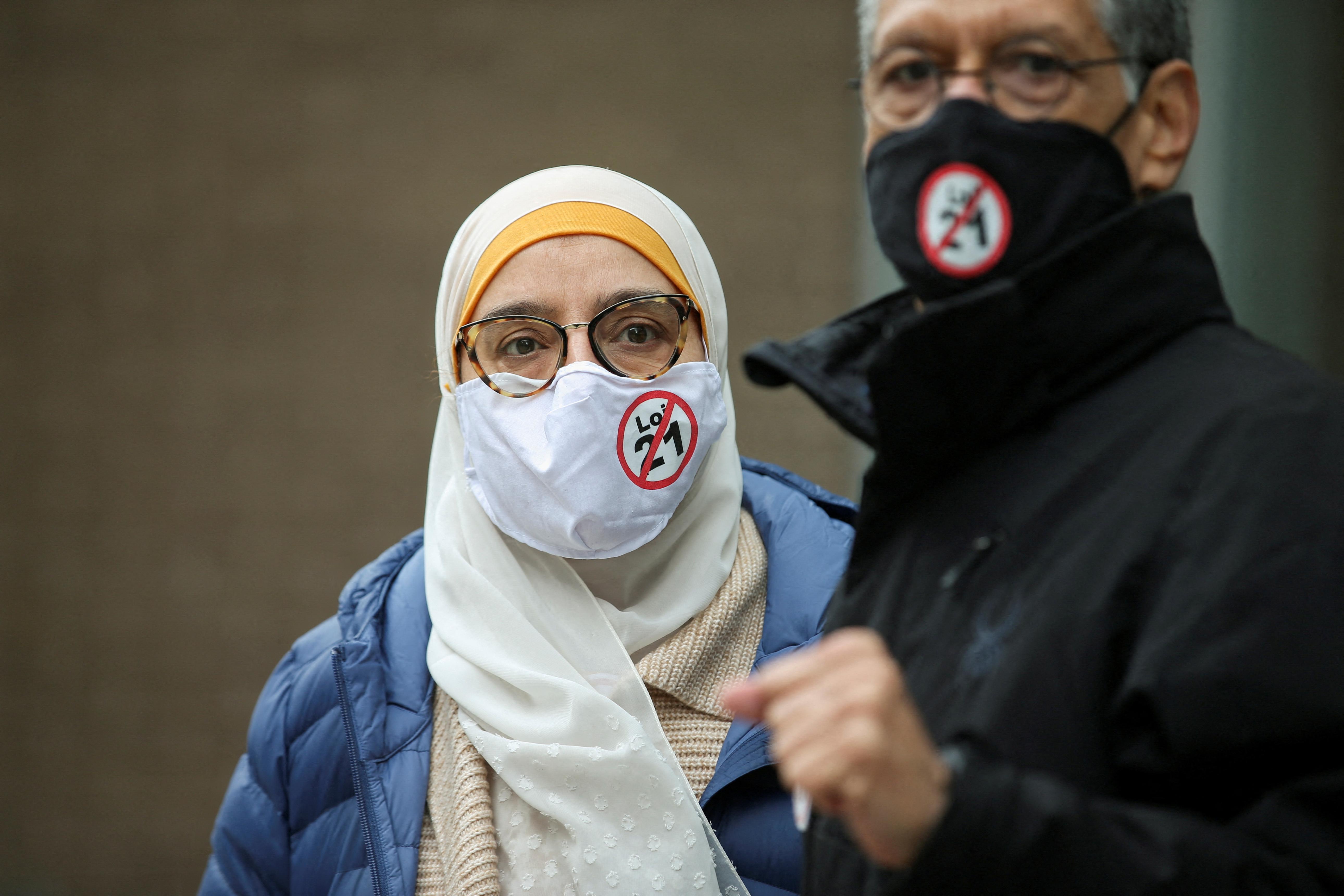
Canada's Supreme Court is scheduled to deliver a landmark judgment on Quebec's controversial Bill 21 on November 27, 2026, determining the constitutional validity of legislation prohibiting certain public sector employees from wearing religious symbols, including Muslim hijabs, Sikh turbans and Jewish kippahs. The case extends beyond religious freedom to examine the limits of Section 33 of the Canadian Charter of Rights and Freedoms, commonly known as the notwithstanding clause, which allows governments to override specified constitutional protections. Following four days of hearings in March involving a record 51 interveners, the judgment could establish important legal principles concerning gender equality, minority-language education, legislative authority and judicial oversight. Its implications are expected to extend across Canada, particularly in provinces that have invoked the notwithstanding clause to protect controversial legislation.
Canada's Supreme Court is set to deliver one of the country's most consequential constitutional judgments in recent years on Friday, November 27, 2026, when it rules on Quebec's controversial secularism legislation, commonly known as Bill 21. The law prohibits certain public sector employees, including teachers, police officers and government lawyers, from wearing religious symbols while performing their official duties, affecting individuals who wear Muslim hijabs, Sikh turbans, Jewish kippahs and other religious garments or accessories. Beyond determining the constitutionality of Quebec's restrictions, the judgment could establish important legal boundaries governing the ability of provincial legislatures to override fundamental rights protected by the Canadian Charter of Rights and Freedoms. The decision is being closely watched by religious communities, civil liberties organizations, provincial governments and constitutional lawyers across Canada.
The country's highest court is scheduled to release its judgment at 9:45 a.m. Eastern Time, following an extensive constitutional challenge that has progressed through several levels of the Canadian judicial system since the legislation was adopted in June 2019. The Supreme Court heard arguments over four days between March 23 and 26, 2026, receiving submissions from an unprecedented 51 interveners, including six attorneys general. The exceptional level of participation reflected the significance of the questions before the court, particularly whether elected governments possess virtually unrestricted authority to invoke constitutional provisions that temporarily override certain individual rights.
At the center of the controversy is Quebec's interpretation of state secularism, known in French as laïcité, which emphasizes the institutional separation of religious organizations from government authority. The legislation was introduced under the Coalition Avenir Québec administration of former Premier François Legault, whose government maintained that individuals exercising certain forms of public authority should perform their responsibilities without displaying religious affiliations. Supporters regard the restrictions as an expression of Quebec's distinct cultural and political history, while opponents argue that the law excludes qualified individuals from public employment because of their religious convictions.
The legislation, formally titled the Act Respecting the Laicity of the State, identifies religious neutrality, institutional separation between government and religion, equality among citizens and freedom of conscience as fundamental principles. However, its implementation has produced substantial disagreements concerning whether genuine government neutrality requires individual public employees to conceal visible expressions of their faith. The constitutional challenge has consequently developed into a broader examination of the distinction between the religious neutrality of public institutions and the religious freedoms of individuals employed within those institutions.
Bill 21 does not establish a universal prohibition against wearing religious clothing throughout Quebec. Individuals remain generally free to wear religious garments in their private lives and public spaces, subject to other applicable laws. The original legislation instead targets specified occupational categories, including public school teachers, police officers and certain legal and government officials. The distinction is important because the controversy concerns access to particular employment opportunities and the conditions under which individuals may exercise public responsibilities, rather than a complete prohibition against religious expression throughout the province.
The legislation includes transitional protections for certain employees who occupied affected positions before its introduction. Those protections are subject to employment-related conditions, meaning that changing positions or institutions can affect an individual's eligibility for the exemption. Consequently, employees who were initially permitted to retain religious garments may encounter restrictions when seeking professional advancement or moving to another workplace. Newly qualified individuals entering affected professions generally do not benefit from the same historical employment protections.
For Muslim women who consider wearing the hijab an essential expression of their religious beliefs, the law has created particularly difficult professional decisions. A woman who completes teacher training in Quebec may satisfy every academic and professional requirement for public school employment but remain unable to undertake a covered teaching position while wearing a hijab. Similar restrictions can affect Sikh men who wear turbans, Jewish individuals who wear kippahs and Christians whose religious expression involves visible symbols. Although the legislation applies across religious affiliations, opponents argue that its practical consequences are more severe for individuals whose beliefs require visible religious observance.
One of the most prominent examples of the legislation's consequences emerged in December 2021, when elementary school teacher Fatemeh Anvari was removed from her classroom teaching position in Chelsea, Quebec, because she wore a hijab. Her reassignment generated considerable attention across Canada, with parents, community members and religious freedom advocates questioning why an individual's religious clothing should prevent them from teaching children. The episode became a defining illustration of the personal consequences associated with the legislation and intensified national discussions about religious accommodation within public institutions.
The Quebec government has consistently defended its authority to establish secularism requirements within areas falling under provincial jurisdiction. Its position is that visible religious symbols worn by certain public officials can affect the appearance of institutional neutrality, even where those individuals perform their responsibilities professionally and without discrimination. Supporters maintain that Quebec's historical experience with religious influence over public institutions justifies a distinct approach to the relationship between government and religion.
Quebec's historical relationship with organized religion provides important context for understanding those arguments. For much of the province's history, the Roman Catholic Church exercised considerable influence over education, healthcare and social institutions. The Quiet Revolution of the 1960s brought extensive political and social changes, including the transfer of many responsibilities previously administered by religious institutions to the provincial government. That transformation contributed to the development of a strong secular tradition that continues to influence contemporary debates about Quebec's cultural identity and institutional organization.
However, critics maintain that the historical objective of reducing institutional religious authority should not be confused with restricting the individual religious practices of public employees. They argue that a teacher wearing a hijab or a police officer wearing a turban does not necessarily represent an official endorsement of Islam or Sikhism by the provincial government. From that perspective, the state's neutrality should be assessed through the fairness of its policies and the professional conduct of its employees rather than their personal appearance. The disagreement therefore concerns competing interpretations of how a secular government should operate within a religiously diverse society.
The legal controversy extends substantially beyond those competing interpretations because Quebec invoked Section 33 of the Canadian Charter of Rights and Freedoms when introducing Bill 21. Commonly referred to as the notwithstanding clause, Section 33 permits Canada's federal Parliament and provincial legislatures to declare that particular laws will operate despite certain Charter protections. Those protections include fundamental freedoms under Section 2, legal rights under Sections 7 through 14 and equality rights under Section 15. The constitutional mechanism was incorporated into Canada's constitutional framework in 1982 as part of negotiations concerning the balance between legislative authority and judicial oversight.
A declaration under Section 33 generally remains effective for a maximum of five years, after which it expires unless the relevant legislature renews it. Quebec renewed Bill 21's notwithstanding clause in 2024, maintaining the protection of its principal restrictions against certain constitutional challenges. The possibility of repeated renewals has become an important component of the Supreme Court proceedings because it raises questions about whether a mechanism designed to permit temporary departures from Charter protections can be used to maintain such restrictions indefinitely.
The notwithstanding clause does not permit governments to override every constitutional protection. Democratic rights, mobility rights and minority-language education rights fall outside the provisions expressly identified in Section 33. Consequently, individuals challenging legislation protected by the notwithstanding clause can still pursue constitutional arguments involving rights that the mechanism does not cover. That distinction has become central to the litigation surrounding Bill 21, with challengers relying on several constitutional provisions in addition to the Charter's guarantees of religious freedom and equality.
The English Montreal School Board has emerged as one of the principal parties challenging the legislation before Canada's highest court. The school board maintains that Bill 21 interferes with the constitutional rights of Quebec's English-speaking minority to manage and control its educational institutions. Its arguments are based partly on Section 23 of the Canadian Charter, which protects minority official-language education under specified conditions. The notwithstanding clause cannot be invoked directly against Section 23, making the school board's challenge a potentially important avenue for determining whether some applications of Bill 21 are constitutionally permissible.
The school board argues that its authority over educational institutions includes decisions concerning recruitment, community representation and the cultural environment within its schools. From its perspective, preventing qualified teachers from working because they wear religious symbols interferes with the ability of English-language institutions to reflect the diversity of their communities. Quebec maintains that the employment restrictions do not infringe constitutionally protected minority-language education rights merely because they affect hiring decisions. The Supreme Court must determine how broadly those educational rights extend and whether they encompass the institutional decisions affected by Bill 21.
The legal dispute previously produced a partial victory for the legislation's opponents in April 2021, when Quebec's Superior Court upheld most of Bill 21 but determined that certain restrictions could not apply to institutions protected by minority-language education rights. The court also found constitutional difficulties with requirements affecting members of Quebec's National Assembly, whose democratic rights are protected by Section 3 of the Charter. Those findings demonstrated that the notwithstanding clause does not automatically prevent judicial scrutiny of every aspect of a law.
In February 2024, the Quebec Court of Appeal reversed the exemption concerning English-language schools, concluding that the challenged employment restrictions did not violate Section 23. The appellate court maintained that the legislation concerned employment practices rather than the language of instruction or educational program content. That judgment restored the application of the disputed provisions to English-language schools and provided the basis for the subsequent appeals to the Supreme Court. The final determination could have consequences for the management authority of official-language minority educational institutions throughout Canada.
Another major constitutional argument concerns Section 28 of the Canadian Charter, which provides that Charter rights and freedoms are guaranteed equally to male and female persons. Opponents of Bill 21 argue that the legislation has particularly serious consequences for Muslim women because wearing the hijab can prevent them from entering certain public professions. They contend that Section 28 provides a constitutional basis for examining gender-related consequences that should not be dismissed solely because the province invoked the notwithstanding clause.
The Supreme Court has been asked to determine whether Section 28 establishes an independent constitutional guarantee capable of supporting such a challenge. The answer could significantly influence how courts address legislation that disproportionately affects women or men while being protected by a Section 33 declaration. However, the precise relationship between the two constitutional provisions remains disputed, and the eventual judgment may establish legal principles extending well beyond religious clothing or public employment.
The federal government's participation has further expanded the significance of the case. During the March hearings, lawyers representing the federal government argued that courts should retain the ability to examine whether legislation protected by the notwithstanding clause infringes Charter rights. Under that approach, a court could potentially issue a declaration identifying a constitutional rights violation without necessarily preventing the legislation from continuing to operate. Such declarations could provide citizens and legislators with authoritative information about the consequences of government policies while preserving the temporary legal effect of Section 33.
The distinction between declaring that legislation violates a constitutional right and invalidating the legislation is particularly important. A judicial declaration could establish that a government has restricted religious freedom or equality without automatically removing the restriction while a valid notwithstanding clause remains in effect. Proponents maintain that such findings would strengthen democratic accountability by informing the public about the rights implications of legislative decisions. Opponents argue that permitting those declarations could undermine the purpose of Section 33 by allowing courts to influence matters that the Constitution deliberately assigns to elected legislatures.
The Canadian Constitution Foundation, which participated in the proceedings as an intervener, has defended the traditional understanding of the notwithstanding clause as an important component of Canada's constitutional balance. Its arguments emphasize the authority of elected legislatures to make decisions within the boundaries expressly established by the Constitution. Civil liberties organizations challenging Bill 21 have adopted a different position, emphasizing the importance of judicial protection for vulnerable minorities whose fundamental freedoms may be restricted by decisions supported by legislative majorities.
These competing arguments reflect a longstanding constitutional debate over the appropriate distribution of authority between democratic institutions and the judiciary. Legislatures possess electoral mandates to establish public policies, while courts are responsible for interpreting constitutional requirements and determining the legal limits of government action. The notwithstanding clause creates an unusual interaction between those responsibilities by permitting governments to maintain certain laws despite Charter protections. The Supreme Court's judgment could clarify whether existing interpretations of that arrangement remain sufficient or require additional legal safeguards.
The ruling is expected to attract considerable attention from provincial governments outside Quebec because Section 33 has been invoked in several other jurisdictions. Ontario, Saskatchewan and Alberta have used the mechanism in connection with controversial legislation involving matters such as labor relations, education and policies affecting transgender individuals. Those laws concern different substantive issues from Quebec's religious symbols restrictions, but they raise related questions about legislative authority and constitutional rights. A judgment redefining the scope of Section 33 could therefore influence future legal challenges involving policies unrelated to religious expression.
The involvement of other provincial governments also demonstrates that the litigation cannot be understood solely as a disagreement between Quebec and religious minority communities. Provincial authorities have interests in preserving their legislative powers, while the federal government possesses responsibilities concerning the broader constitutional framework. The Supreme Court's decision could influence how governments assess the legal consequences of invoking the notwithstanding clause before introducing legislation or renewing existing declarations. It could also determine the extent to which courts may examine the underlying rights implications of such decisions.
The political circumstances surrounding the judgment have become more complicated following changes in Quebec's leadership. Premier Paul St-Pierre Plamondon, leader of the Parti Québécois, has pledged to defend the province's secularism framework and has criticized federal involvement in the legal challenge. His position reflects the continued importance of secularism within Quebec's broader discussions about provincial identity, political autonomy and its relationship with the Canadian federation. Nevertheless, the judicial outcome and any subsequent political response remain separate matters, and the precise implications cannot be established until the court publishes its reasons.
Quebec has also expanded elements of its secularism framework since Bill 21 was originally adopted. Additional measures introduced in 2025 and 2026 have extended aspects of religious neutrality requirements within educational settings and related public institutions. Those developments have increased the importance of determining how the Supreme Court's interpretation of the original legislation may influence subsequent laws. However, Friday's ruling concerns the specific constitutional questions before the court and will not necessarily resolve every legal issue arising from later legislative changes.
The education sector remains particularly important because of its role in determining professional opportunities and shaping the experiences of children from diverse backgrounds. Critics of Bill 21 argue that excluding teachers because of visible religious practices deprives schools of qualified professionals and limits opportunities for students to encounter educators reflecting the diversity of Canadian society. Supporters respond that classrooms should provide environments in which public authority is exercised without visible religious affiliation. The disagreement has prompted broader discussions about whether neutrality in education should be achieved through uniform appearance or through professional standards governing conduct.
The employment consequences may also influence decisions concerning where individuals choose to pursue professional training and establish their careers. Teachers, lawyers and other professionals affected by the restrictions can consider employment opportunities elsewhere in Canada, where comparable provincial prohibitions may not exist. However, relocation can impose substantial financial, linguistic and personal costs, particularly for individuals with established families and community relationships in Quebec. The existence of opportunities outside the province does not eliminate the constitutional questions concerning employment restrictions within it.
For immigrants considering settlement in Canada, the case illustrates the importance of understanding differences between federal immigration rights and provincial laws governing employment. Obtaining Canadian permanent residence or citizenship does not necessarily exempt an individual from occupational requirements established by a provincial government. Individuals seeking careers in public institutions may consequently encounter different regulatory environments depending on the province in which they choose to live. Friday's judgment could provide greater clarity concerning some of those differences, although its direct effect will depend on the precise constitutional findings.
Religious communities have followed the litigation closely because of its implications for the relationship between citizenship, employment and religious identity. Organizations representing Muslims, Sikhs, Jews and other faith communities have participated in public discussions and legal challenges surrounding the legislation. Their concerns frequently focus on whether individuals should be required to choose between professional ambitions and religious practices that they regard as essential. The legal arguments also raise broader questions about whether formally uniform policies can produce unequal consequences when citizens observe different religious traditions.
At the same time, supporters of Quebec's approach maintain that the legislation establishes common expectations for individuals performing specified public functions rather than targeting a particular faith. They emphasize that religious symbols associated with different traditions fall within the restrictions and argue that a secular state possesses legitimate interests in regulating the appearance of certain public officials. Opponents contest the practical equality of those requirements, maintaining that restrictions on visible religious practices impose substantially different burdens depending on the nature of an individual's beliefs. The court's role is to examine the constitutional validity of the legislation rather than determine which religious practices citizens should adopt.
Several possible outcomes remain open ahead of Friday's judgment. The Supreme Court could uphold the principal restrictions and confirm the established interpretation of the notwithstanding clause, leaving Bill 21 largely intact. Alternatively, it could recognize new limitations on the use of Section 33, permit judicial declarations concerning rights violations or determine that particular aspects of the legislation infringe constitutional protections that cannot be overridden. The court could also distinguish among the different constitutional arguments, producing an outcome that preserves some provisions while invalidating or restricting the application of others.
Any judgment affecting the employment restrictions would require careful examination of the remedies ordered by the court. A declaration that particular provisions are unconstitutional could have immediate consequences or be accompanied by a temporary suspension allowing legislators to consider their response. The precise treatment of existing employees, future applicants and institutions governed by the law would depend on the wording of the decision and any subsequent government measures. It would therefore be premature to conclude that every affected public employee will immediately be permitted to wear religious symbols once the ruling is released.
The Supreme Court's decision will also be important for determining whether governments can invoke the notwithstanding clause before a court has examined the constitutionality of their legislation. Quebec included the clause in Bill 21 from the outset, preventing ordinary constitutional challenges based on several fundamental rights. Critics argue that such preemptive use limits meaningful judicial scrutiny and reduces public understanding of the rights affected by government decisions. Defenders maintain that the constitutional text permits legislatures to act without first obtaining a court ruling, consistent with the political compromise underlying Section 33.
Public attention will consequently focus not only on whether Quebec's religious symbols ban survives but also on the reasoning through which the judges reach their conclusions. The court's interpretation of legislative authority, judicial declarations, gender equality and minority-language education could influence constitutional litigation for many years. Even if the immediate restrictions remain substantially unchanged, new principles concerning the notwithstanding clause could affect the manner in which governments introduce, defend and renew controversial legislation across Canada.
For the individuals directly affected by Bill 21, however, the significance of Friday's judgment is more immediate than the broader institutional debate. Teachers and other professionals have spent years confronting uncertainty about their employment opportunities, while religious organizations have continued campaigning over the consequences of the restrictions. The decision could determine whether some of those individuals are permitted to enter professions from which their religious observance currently excludes them. It may also establish whether existing legal challenges provide an effective mechanism for addressing the consequences of government policies protected by the notwithstanding clause.
More than seven years after Quebec adopted Bill 21, Canada's highest court is preparing to address constitutional questions that reach deeply into the country's understanding of religious freedom, equality and democratic authority. The case has brought into direct confrontation Quebec's determination to preserve its distinct secular identity, the concerns of religious minorities seeking equal access to public employment and the competing institutional responsibilities of governments and courts. Whatever the eventual outcome, the judgment will provide an authoritative interpretation of constitutional provisions that have become increasingly important in Canadian political life. Until the ruling is released, however, the existing legal framework remains in place, and the precise future of Quebec's religious symbols restrictions remains unresolved.