CANARY ISLANDS RECORD HIGHEST-EVER DAILY MIGRANT ARRIVALS AS 1,580 PEOPLE REACH SPAIN IN 15 BOATS
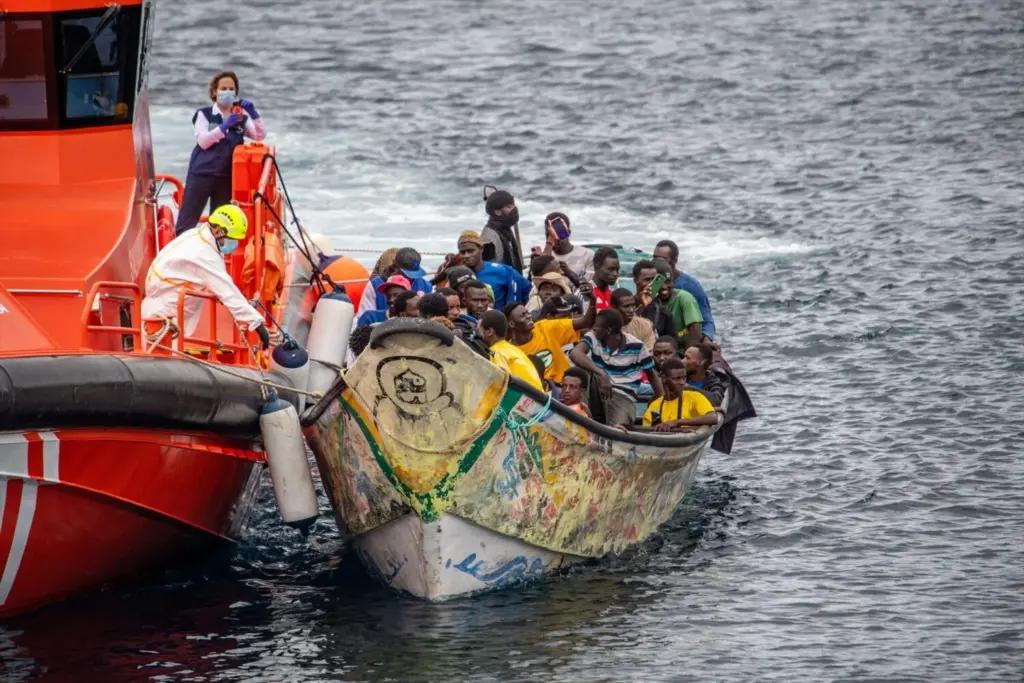
Spain’s Canary Islands recorded their highest-ever number of migrant arrivals in a single day on Saturday, November 14, with 1,580 people reaching the archipelago aboard 15 boats, surpassing the previous record of 1,461 set in November 2020. El Hierro received 1,327 of Saturday’s arrivals and remained the main center of the surge as another 1,261 people arrived there on Sunday, contributing to a weekend total of 3,684 migrants across the islands. The unprecedented influx has forced Spanish authorities to accelerate transfers from El Hierro, expand emergency funding and reinforce maritime and healthcare services, while the Canary Islands government is demanding stronger national and European support as departures from Senegal, Gambia and other West African countries continue. EFE Noticias
EL HIERRO, SPAIN — Spain’s Canary Islands have recorded the highest number of migrant arrivals in a single day in the history of the Atlantic route, with 1,580 people reaching the archipelago aboard 15 boats on Saturday as an extraordinary surge from West Africa placed reception centres, emergency teams and maritime rescue services under growing pressure. The final tally surpassed the previous daily record of 1,461 people rescued on November 7, 2020, during the migration emergency that overwhelmed the port of Arguineguín on Gran Canaria. Saturday’s record was concentrated overwhelmingly on El Hierro, the smallest and least populated of the major Canary Islands, where 13 boats carrying 1,327 people were brought ashore, while another boat carrying 203 people was taken to Gran Canaria and a separate vessel with 50 people reached Tenerife. The figures were initially reported lower while rescues were still underway, but the arrival of a final boat carrying 92 people shortly after 11 p.m. pushed the confirmed total to 1,580 and established a new record for the 32-year-old migration route.
The record day did not end the surge. On Sunday, additional boats continued reaching El Hierro, including several large wooden cayucos carrying hundreds of people who had spent days crossing the Atlantic after departing Senegal, Gambia and other parts of West Africa. By the end of the weekend, 3,684 people had reached the Canary Islands between Friday and Sunday, making it one of the most intense periods ever recorded on the route. El País reported that Sunday alone brought another 1,261 people to El Hierro, while rescue vessels continued operating through the day as additional boats were spotted offshore. The speed of the arrivals has forced Spanish authorities to move hundreds of people quickly from El Hierro to larger islands and the Spanish mainland because local reception facilities cannot sustain numbers approaching the island’s own population for long periods.
The images coming from La Restinga, the small fishing port that has become the main arrival point on El Hierro, illustrate the human and logistical scale of the situation. Rescue vessels have repeatedly entered the harbor alongside heavily crowded wooden boats carrying men, women and children after journeys lasting between four and seven days. Medical teams, Red Cross workers, Guardia Civil officers and emergency personnel have been receiving passengers at the pier, conducting basic health checks and identifying people requiring additional assistance. Among Saturday’s arrivals were at least 120 women and 173 minors according to provisional counts, including babies, pregnant women and very young children who had completed the dangerous Atlantic crossing alongside hundreds of other passengers in vessels designed originally for fishing rather than long-distance ocean travel.
One of the largest boats rescued on Saturday carried 240 people, while another group of 214 passengers had to be divided between La Restinga and La Estaca because of the scale of the operation. A separate boat carrying 171 people had travelled for five days from Mboro in Senegal and included a six-month-old baby, while the final boat arriving at El Hierro shortly after 11 p.m. carried 92 people, including 12 women, six minors, a woman four months pregnant and an 18-month-old child. Other passengers originated from Senegal, Gambia, Guinea-Bissau, Guinea, Mali and Togo, reflecting the increasingly diverse population attempting the Atlantic journey even though Senegal has become the dominant departure point during the latest surge. Rescue officials said some passengers had spent nearly a week at sea before reaching the islands.
The pressure is particularly intense on El Hierro because the island has a permanent population of only about 12,000 people and limited emergency, medical and accommodation infrastructure. Spain’s Territorial Policy Minister Ángel Víctor Torres said approximately 17,000 migrants had reached El Hierro so far this year, with around 1,600 still being accommodated on the island during the latest surge. Local authorities planned to transfer roughly 900 people away from El Hierro on Sunday, with further transfers scheduled for Monday, in an effort to free space inside the island’s temporary reception centre, sports facilities and Red Cross shelters. El Hierro council president Alpidio Armas has warned repeatedly that the island cannot absorb sustained arrivals at this scale without faster redistribution and stronger support from Spain’s central government.
The Spanish government has already declared a migration emergency in the Canary Islands and approved additional resources intended to strengthen the response. Authorities have committed more than €15 million to expand reception capacity and facilitate transfers to other islands and the mainland, while separate funding is being used to reinforce healthcare services operated with the Spanish Red Cross and strengthen maritime rescue capacity. The government has also deployed additional rescue resources as the number of boats increased, with multiple Salvamento Marítimo vessels and Guardia Civil patrol boats operating simultaneously during the record weekend. Canary Islands President Fernando Clavijo has welcomed additional assistance but says the pace of arrivals requires a much stronger and faster response from Madrid.
Clavijo has called for greater involvement by Spain’s Interior Ministry, Territorial Policy Ministry and Inclusion Ministry and has repeatedly argued that El Hierro should not be expected to manage a migration emergency of national and European dimensions largely through local resources. His government has also pressed Madrid to accelerate discussions with Senegal and other countries of origin, increase maritime and border cooperation and make greater use of European migration mechanisms, including support from Frontex and solidarity arrangements under the European Union’s Migration and Asylum Pact. The Canary Islands government argues that the islands’ location, roughly 100 kilometres from the African coast at their closest point but much farther from major departure areas in Senegal and Gambia, makes them a European external border rather than simply a regional Spanish migration issue.
The latest surge represents a dramatic reversal from conditions earlier in 2026. During the first six months of the year, arrivals on the Canary route had fallen sharply, with roughly 3,700 people recorded during that period and overall traffic significantly below the previous year. The trend changed rapidly in the autumn, however, with October alone recording more than 6,000 arrivals and November producing an even greater concentration of boats heading toward El Hierro. Spanish officials and migration researchers say a combination of calmer seasonal sea conditions, deteriorating economic circumstances in Senegal and Gambia, reduced coastal surveillance in some departure areas and continuing pressure on fishing communities has helped drive the renewed movement.
Senegal has emerged as the principal point of departure. Many of the wooden cayucos reaching El Hierro originate from places including Dakar, Saint-Louis, Kayar, Mboro and other coastal communities where fishing has historically provided employment for thousands of families. Economic difficulties, declining catches, competition from industrial fishing fleets, restrictions affecting access to fishing grounds and wider political and financial pressures have contributed to frustration among young people searching for work. Senegal is also facing severe public-debt problems and political disputes that have complicated economic recovery, while migration networks have continued to operate despite government efforts to prevent dangerous sea crossings.
The Canary Islands route is regarded as one of the most dangerous migration corridors in the world because boats departing West Africa must travel hundreds or sometimes more than 1,000 kilometres through open Atlantic waters before reaching Spanish territory. Journeys can last several days or even weeks depending on the departure point, weather conditions, fuel availability and navigation. Many of the vessels are overloaded wooden fishing boats with limited safety equipment, and passengers face dehydration, exposure, engine failure, overcrowding and the possibility of being carried away from the islands by Atlantic currents. Fatalities are difficult to measure accurately because boats can disappear without authorities ever knowing how many people were aboard, meaning official death figures almost certainly fail to capture the full human cost of the route.
The dangers were reinforced earlier in November when at least 35 people were reported dead and others missing after a migrant boat sank near Senegal. Such incidents are part of a recurring pattern in which successful arrivals in the Canary Islands are accompanied by an unknown number of deaths at sea. Maritime rescue organizations and humanitarian groups have repeatedly warned that the increase in departures will inevitably produce more fatalities unless authorities improve prevention, search-and-rescue coordination and safe migration alternatives. At the same time, European governments face political pressure to reduce irregular migration, making the balance between deterrence, rescue obligations and humanitarian protection one of the most contentious issues in contemporary European migration policy.
Spain’s immediate challenge is managing the people who survive the journey. Newly arrived migrants are normally taken first to emergency reception facilities where authorities identify them, provide medical examinations and begin immigration procedures. Adults may later be transferred to reception centres elsewhere in the Canary Islands or on the Spanish mainland, while unaccompanied minors fall under the responsibility of regional authorities and require separate accommodation, guardianship and social services. The sharp rise in minors arriving during major surges has repeatedly created tension between the Canary Islands government and Madrid over how responsibility for caring for children should be distributed across Spain.
Healthcare capacity is another major concern on El Hierro. Even when most arrivals do not require hospitalization, hundreds or thousands of people reaching the island within a short period create immediate demand for medical screening, treatment of dehydration, injuries, infections and other conditions associated with long sea journeys. Local officials have called for additional health professionals and resources because the island’s ordinary medical services were never designed to manage repeated mass arrivals alongside the healthcare requirements of permanent residents. The Spanish government has said additional medical and emergency resources are being deployed, but local authorities insist that reinforcement must become permanent enough to respond to the increasingly unpredictable nature of the Atlantic route.
Infrastructure at La Restinga has also been placed under unusual strain. The harbor was built around fishing and local maritime activity, not as a permanent reception point for thousands of people arriving every week. Numerous abandoned cayucos have accumulated around the port after passengers disembark, and local officials have reported problems removing vessels quickly enough because of limited equipment, including difficulties linked to crane capacity. The physical congestion of boats is a visible reminder that migration pressure extends beyond accommodation and emergency medicine into waste management, port operations, transport and ordinary municipal services.
Spain is attempting to respond by moving migrants rapidly away from El Hierro after initial processing. These transfers are crucial because leaving large numbers of people on such a small island would overwhelm accommodation almost immediately. Around 1,600 people were being housed on El Hierro during the latest weekend, prompting plans to move hundreds to Tenerife, Gran Canaria and the mainland. Local authorities say the redistribution system has improved compared with previous migration emergencies, but record arrivals can quickly consume the capacity created by transfers and force emergency accommodation to be reopened.
The political implications extend well beyond the Canary Islands. Migration remains one of the most divisive issues in Spanish and European politics, with governments facing competing demands to protect borders, rescue people in distress, process asylum claims and ensure humanitarian treatment while addressing public concern over irregular arrivals. Spain’s geographical position makes it one of the principal entry points into the European Union, alongside Italy, Greece and routes through the Balkans, and shifts in enforcement along one corridor can rapidly redirect migration toward another. The Canary route itself has expanded and contracted repeatedly depending on policing, political conditions and economic pressures in West Africa and North Africa.
Spanish authorities have therefore focused increasingly on cooperation with countries of origin and transit. Agreements with Senegal, Mauritania, Morocco and other governments are intended to improve coastal patrols, disrupt smuggling networks and reduce departures before boats reach the open Atlantic. Critics of this strategy argue that enforcement alone cannot eliminate migration driven by unemployment, political instability and economic insecurity, while supporters contend that preventing unsafe departures is essential because rescue operations cannot guarantee that every vessel will be found. The latest surge is likely to intensify pressure on Madrid and Brussels to reassess how effectively these partnerships are working.
The record arrivals also demonstrate how quickly migration patterns can change. Spain entered much of 2026 with Canary Islands traffic below previous-year levels, creating the impression that stronger cooperation with West African governments had reduced departures. By October and November, that picture had changed dramatically, with thousands of people reaching El Hierro within weeks and more than 100 boats arriving during the latest period of intense traffic. The reversal shows why annual statistics alone can obscure sudden humanitarian pressure on individual islands and reception systems.
Saturday’s record should also be understood carefully. The 1,580 figure refers to people who were rescued or brought ashore in the Canary Islands during a single day, not necessarily the number who departed Africa during that same period. Boats had left from different locations over several days, and favorable Atlantic conditions resulted in many reaching Spanish waters within the same narrow window. The concentration of arrivals therefore reflects both increased departures and the seasonal conditions that allowed vessels already at sea to complete their journeys.
For El Hierro, however, the distinction offers little practical relief. Whether boats left on the same day or over the previous week, they arrived at the island almost simultaneously and required immediate assistance. Local emergency workers, police, maritime crews, healthcare professionals and volunteers were therefore forced to manage several major operations within hours while preparing for additional boats already known to be approaching the coast.
The weekend demonstrated the scale of that challenge in unmistakable terms. Spain’s rescue services mobilized vessels including the Diphda, Acrux, Navia, Alpheratz, Mizar and Urania, alongside Guardia Civil patrol boats Río Tajo and Río Guadiato. Operations continued from before dawn until late at night, with rescue crews repeatedly returning to sea after bringing one group safely to port. The final Saturday arrival at 11:07 p.m. was the vessel that pushed the daily count from an already historic level to the confirmed record of 1,580.
Sunday then brought another wave rather than a pause, reinforcing the concern that the record was not simply an isolated statistical event but part of a sustained migration surge. Footage and photographs from La Restinga showed crowded boats entering the harbor as rescue workers helped passengers, including women and young children, onto the quay. The continued arrivals forced authorities to accelerate transfers away from El Hierro while maintaining rescue operations at sea, producing an extraordinary cycle in which people were being moved off the island almost as quickly as new groups were arriving.
The immediate question for Spanish authorities is whether the present surge will continue through the remaining weeks of autumn. Atlantic migration often increases during periods when winds and sea conditions become more favorable, but departures are also shaped by political developments and enforcement in West Africa. If boats continue leaving Senegal and Gambia at the current rate, El Hierro and the wider Canary Islands could face additional record days before conditions change.
Longer term, the crisis poses a broader European question about how irregular migration across dangerous maritime routes can be managed without allowing small border communities to carry a disproportionate burden. The Canary Islands government is demanding greater national and European solidarity, while Spain is seeking stronger cooperation with West African governments and faster redistribution of arrivals. Humanitarian organizations continue to emphasize that migration policy must also account for the lives lost at sea and the circumstances driving people to board overcrowded boats in the first place.
For residents of El Hierro, those geopolitical arguments have become an immediate local reality. An island with roughly 12,000 residents has received tens of thousands of migrants over the course of the year, and approximately 17,000 arrivals have already been recorded there in 2026. Emergency teams continue to provide assistance, but local leaders are warning that extraordinary arrivals require extraordinary support if public services are to remain functional for migrants and residents alike.
The record of November 14 therefore represents more than a new numerical milestone on the Canary migration route. It demonstrates how quickly a relatively small European island can become the focal point of a much larger movement of people driven by economic pressure, political instability, changing enforcement and the enduring attraction of Europe as a destination. Spain has succeeded in rescuing and receiving thousands of people during an exceptionally demanding weekend, but the continuing boats arriving at El Hierro show that the emergency is not over.
What happens next will depend on whether Madrid can accelerate transfers, strengthen emergency and healthcare resources, improve cooperation with West African governments and secure greater European assistance while maintaining rescue capacity in the Atlantic. The boats arriving at La Restinga are carrying individual people with different reasons for making the journey, but together they have created one of the most intense migration episodes the Canary Islands have ever experienced. With the daily record now broken and thousands arriving within a single weekend, Spain’s challenge is no longer simply responding to individual boats at sea; it is managing a rapidly expanding humanitarian and political pressure point on Europe’s southwestern frontier.