CANED AND JAILED FOR A TIKTOK VIDEO? KANO SENDS 19 YEAR OLD ZAINAB ABUBAKAR TO PRISON FOR INSULTING THE HISBAH CHIEF AS NIGERIA ASKS WHO IS ALLOWED TO CRITICIZE RELIGIOUS POLICE
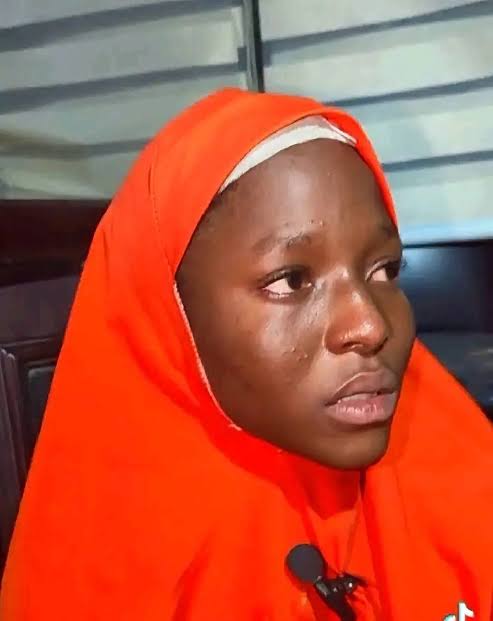
An Islamic Sharia court sitting at the Hisbah Board headquarters in Sharada, Kano, has sentenced 19 year old TikTok user Zainab Abubakar to five months in prison and 10 strokes of the cane, with no option of a fine. She pleaded guilty to insulting the Kano State Hisbah Board and its Commander General, Malam Aminu Ibrahim Daurawa, under Section 312 of the Penal Code. Two other defendants, Ahmad Usman, 25, known as Ortega, and Muhammad Aliyu, 20, denied charges of conspiracy and insulting the board, and they will stay in custody for two weeks while the court considers their bail request. The case has reopened a heated national debate over free speech, religious authority and the risks young Nigerians face when they speak their minds online.
A teenage girl posts on TikTok. Weeks later, she stands before a judge, admits what she said and walks out facing five months behind bars and 10 strokes of the cane. For many young Nigerians scrolling through their phones, that sequence sounds unreal. In Kano, it has just happened.
Zainab Abubakar, 19, was sentenced by an Islamic Sharia court for insulting the Kano State Hisbah Board and its Commander General, Malam Aminu Ibrahim Daurawa. The court sat at the Hisbah Board headquarters in Sharada, Kano. Zainab pleaded guilty, and the court imposed the prison term and the caning with no option of a fine.
Her case is now one of the most talked about stories on Nigerian social media. Supporters of the ruling say it upholds respect for religious institutions in a state where Sharia law is part of the legal system. Critics say it punishes a young woman far too harshly for words, and that it sends a chilling message to an entire generation that lives much of its life online.
What Happened in Court
Zainab was arraigned alongside two young men, Ahmad Usman, 25, popularly known as Ortega, and Muhammad Aliyu, 20. All three appeared before Magistrate Bashir Abdullahi Ibrahim over alleged online attacks against the Hisbah Board and its head.
The charge against Zainab was filed under Section 312 of the Penal Code. When the charge was read, she admitted to the allegations. The court then handed down five months of imprisonment and 10 strokes of the cane. No fine was offered as an alternative, which means she cannot pay her way out of the jail term.
The two men took a different path. They denied the allegations against them, which include conspiracy and insulting the Hisbah Board and its Commander General. Their lawyer applied for bail, but the court ordered that they remain in custody for two weeks while it considers the application. The prosecution was told to make its witnesses available so the trial can continue.
That leaves an unusual picture. One defendant has already been sentenced. Two others, accused over the same broad set of events, are still presumed innocent and are waiting in custody to learn whether they will be released on bail.
Who Are the Hisbah?
To understand why this case matters so much, you need to understand the Hisbah.
The Kano State Hisbah Board is an Islamic religious enforcement agency created by state law in the early 2000s, after Kano and several other northern states expanded Sharia law to cover criminal matters in 1999 and 2000. Its officers, often called the religious police, enforce rules drawn from Islamic morality. Over the years, they have raided venues accused of immoral gatherings, seized and destroyed bottles of alcohol, policed dress codes, broken up mixed gatherings and arrested people accused of indecent conduct.
Many Muslims in Kano support the board. They see it as a guardian of community values in a deeply religious society. Others, including some Muslims, accuse it of overreach, of targeting the poor and the young, and of acting with little outside oversight.
Malam Aminu Ibrahim Daurawa is one of the most recognizable faces in northern Nigeria. A popular Islamic cleric and preacher, he leads the board as Commander General and has a large following both in mosques and online. He has also been at the center of controversy before. In 2024, he briefly resigned after public remarks by Kano State Governor Abba Kabir Yusuf about criticism of the agency's methods, before returning to the role. That episode showed just how sensitive the debate over Hisbah's conduct has become, even within the state government.
The Law Behind the Sentence
Kano operates a dual legal system. Like other northern states, it applies the Penal Code, which governs much of criminal law in the north, alongside Sharia law, which applies to Muslims who come before Sharia courts. Sharia courts can impose punishments that include caning, a penalty rarely seen in other parts of the country.
Zainab's charge under Section 312 of the Penal Code placed her case within this system. Her guilty plea removed the need for a full trial, and the court moved straight to sentencing.
Supporters of the ruling argue that the process was lawful. She was charged under an existing law. She appeared before a court. She admitted the allegations. In their view, the sentence simply reflects the law of the state.
Critics raise different questions. They ask whether a 19 year old fully understood the consequences of pleading guilty, and whether she had meaningful legal advice when she did so. They ask why a fine was not offered. And they point to an issue of appearance that is hard to ignore. The court sat at the headquarters of the Hisbah Board, the same body she was convicted of insulting. Even if the proceedings followed every rule, many observers say justice should not only be done but be seen to be done, and that hearing a case on the complainant's own premises makes that harder.
Free Speech Versus Religious Authority
At the heart of this story is a clash between two powerful ideas.
The Nigerian Constitution protects freedom of expression. Section 39 guarantees every person the right to hold opinions and to receive and share ideas and information. The same Constitution also allows laws that are reasonably justifiable in a democratic society, including those meant to protect the rights and reputation of others. Section 34 protects every person from torture and from inhuman or degrading treatment, and rights groups have long argued that caning falls into that category.
On the other side stands the right of states with large Muslim populations to apply Sharia law to Muslims who choose or are subject to it. For many people in Kano, respect for religious leaders and institutions is not a small matter. Publicly mocking a cleric or a religious body can be seen as an attack on the faith itself and on the community that holds it.
The tension is real, and it is not unique to Kano. Across the world, societies argue over where criticism ends and insult begins. What makes this case so striking is the gap between the act and the punishment. A social media post, however offensive some may find it, has led to prison and physical punishment for a teenager.
Many legal scholars draw a clear line between criticizing a public institution and attacking a private person. Hisbah is a state agency funded by public money and given power over the lives of citizens. In most democracies, public bodies are expected to tolerate sharp, even rude criticism, because that criticism is part of how citizens hold power to account. When an agency can bring people to court for insulting it, critics warn, the door opens to silencing legitimate complaints along with genuine abuse.
Northern Nigeria's Growing Social Media Collision
Zainab's case did not appear out of nowhere. Over the past few years, northern Nigeria has seen a steady rise in clashes between young content creators and religious authorities.
TikTok, Instagram and Facebook have exploded in popularity across the region. Young people in Kano, Kaduna, Katsina and beyond now record skits, dance videos, commentary and personal stories that reach audiences far beyond their neighborhoods. For many, social media is a source of income, fame and a voice they never had before.
That visibility has brought friction. In 2024, Hisbah arrested Kano TikToker Murja Ibrahim Kunya, sparking fierce debate about whether religious police should regulate online content. Other creators have been summoned, warned or detained over videos considered indecent or disrespectful. Some have been forced to publicly apologize. Musicians and writers in the region have faced even more serious charges in the past, including blasphemy cases that drew international attention.
Each case adds to a sense among many young people that the rules online are unclear and the stakes are high. A video that one viewer finds funny, another finds offensive. A post meant as criticism can be read as an insult. And once a complaint reaches a religious authority with enforcement power, events can move quickly.
At the same time, many older residents and religious leaders feel that social media has brought behavior into their communities that clashes with local values. They see institutions like Hisbah as a necessary line of defense. That generational and cultural divide is now playing out in courtrooms.
A Chilling Message for Young Nigerians Online
For young Nigerians, the most immediate impact of this case may be fear.
Nigeria is one of the youngest countries in the world. Millions of its citizens are under 30, and they are some of the most active social media users in Africa. Online platforms played a major role in the 2020 EndSARS protests against police brutality, showing how digital spaces can drive national conversations and demands for accountability.
When a 19 year old is jailed and caned for comments about a public body, many young people will draw a simple lesson. Criticizing those in power can cost you your freedom. Some will delete posts. Some will stop commenting on religion, politics or authority altogether. Others will move to anonymous accounts. Rights advocates call this the chilling effect, and they argue it harms society as a whole, because people who fear punishment stop reporting abuses, sharing concerns and asking hard questions.
The concern goes beyond Sharia law. Nigerian authorities across the country have used various laws, including the Cybercrimes Act, to arrest journalists, activists and ordinary citizens over online posts. Courts and lawmakers have pushed back in some cases, and the cybercrimes law was amended in 2024 after years of criticism over how it was used against critics. Zainab's case adds a religious dimension to an already tense national debate about online speech.
There is also a gender angle that many observers are watching closely. Young women who build public profiles online in conservative communities often face extra scrutiny over their dress, their behavior and their words. Women's rights advocates worry that cases like this one discourage girls and young women from taking part in public life online at all.
What Supporters of the Ruling Say
It would be unfair to present only one side of this debate. Many people in Kano and across northern Nigeria support the court's decision.
They argue that online abuse is a real problem and that public figures, including religious leaders, should not have to endure insults simply because they hold office. They point out that Zainab admitted the allegations, so the facts of the case are not in dispute. They also stress that Sharia law reflects the values of the majority in Kano, and that outsiders should respect the legal choices of the state.
For these supporters, the sentence is a reminder that freedom online comes with responsibility. In their view, young people must learn that what they post has consequences, just as it would if they said the same words face to face.
What Could Happen Next
Zainab's guilty plea and sentence do not necessarily mark the end of her case. Convictions from Sharia courts in Kano can be appealed to higher courts within the Sharia system, and legal questions about constitutional rights can ultimately travel further. Whether she or her family will pursue an appeal is not yet known.
Rights groups and lawyers are likely to watch closely for when and how the caning is carried out, and whether any challenge is filed before then.
For Ahmad Usman and Muhammad Aliyu, the next two weeks are critical. The court will decide whether to grant them bail, and the prosecution must bring its witnesses forward. Because they have denied the charges, their trial will test the evidence in a way Zainab's case never did. What the prosecution presents, and how the defense responds, could shed more light on what exactly was posted and why it led to criminal charges.
A Test Case for a Changing North
This case is about more than one TikTok user. It sits at the crossroads of faith, law, technology and youth in one of Nigeria's most influential states.
Kano is a center of Islamic learning, commerce and culture in West Africa. It is also home to millions of young people with smartphones, ambitions and opinions. How the state balances respect for religion with the right to speak freely will shape the lives of that generation.
Some will see Zainab Abubakar as a young woman who crossed a line and accepted the consequences. Others will see her as a symbol of how fragile free expression remains for ordinary citizens who challenge those in authority. Both views will continue to collide online, in mosques, in classrooms and in courtrooms.
What is clear is that the conversation is far from over. And the next young person who opens their camera to say something about power in northern Nigeria will be thinking about what happened to her.