CAPE VERDE VOTES AS JOANA ROSA MAKES HISTORY IN PRESIDENTIAL CHALLENGE TO JOSÉ MARIA NEVES
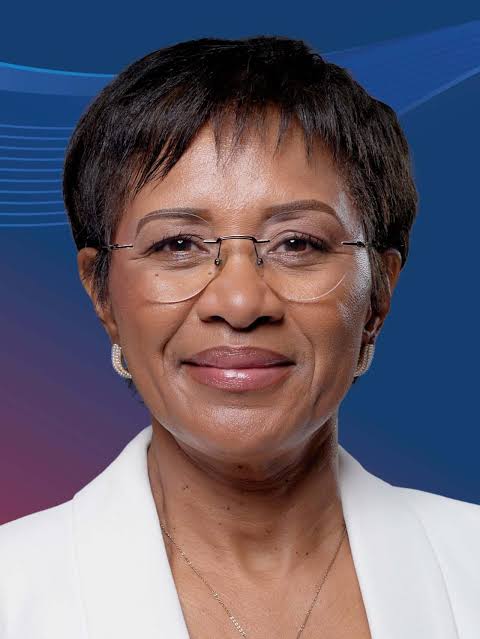
Cape Verdeans are voting today in a six-candidate presidential election, with incumbent José Maria Neves seeking a second term and former Justice Minister Joana Rosa making history as the first female presidential candidate since independence in 1975. Rosa is backed by the opposition MpD, while Neves is supported by the PAICV, which won May’s parliamentary election. Reuters
PRAIA, CAPE VERDE — Voters across Cape Verde and its large overseas diaspora are casting ballots in a presidential election that could reshape the political balance of one of West Africa’s most stable democracies, as incumbent President José Maria Neves seeks a second five-year term against five challengers led by former Justice Minister Joana Rosa, the first woman ever to run for the presidency since the Atlantic island nation gained independence from Portugal in 1975. Polling opened at 8 a.m. on Sunday and is scheduled to continue until 6 p.m., with the National Electoral Commission registering 419,448 voters across the country and abroad in an election dominated by concerns over youth emigration, employment, the cost of living, public services and the question of whether the presidency should remain aligned with the political party that currently controls parliament and the government.
Rosa’s candidacy has given the election historic significance beyond the immediate contest for power. The 61-year-old lawyer and former justice minister is backed by the opposition Movement for Democracy, known as the MpD, and has built much of her campaign around the argument that Cape Verde needs a stronger institutional counterweight to the African Party for the Independence of Cape Verde, the PAICV, which supports Neves and returned to parliamentary power in May. Rosa has also framed her candidacy as an opportunity to demonstrate that no national office should be viewed as inaccessible to women, while insisting that voters should judge her on political experience, competence and her program rather than gender alone.
Neves, 66, brings decades of political experience into the race. He served as prime minister from 2001 to 2016 before winning the presidency in 2021 with just over half of the vote. His current campaign emphasizes continuity, cross-party cooperation and social and economic policies aimed at improving housing, healthcare, education, wages and employment opportunities, particularly for young people who increasingly consider leaving the archipelago in search of work abroad.
The president’s political position changed significantly earlier this year when the PAICV won 37 of the 72 seats in Cape Verde’s May legislative election, ending a decade in which the MpD had dominated government. That parliamentary result allowed former Praia mayor Francisco Carvalho to become prime minister and created an unusual election-year dynamic in which the presidency and government are currently aligned behind the same political family after years in which Cape Verde’s institutions often reflected a more divided balance of power.
Rosa has made that concentration of power a central argument for her candidacy. Her campaign says an MpD-backed president could provide an additional constitutional check on a PAICV-controlled parliament and government, while Neves’ supporters argue that political alignment can make cooperation between national institutions easier and allow the country to pursue social and economic priorities with greater consistency.
Cape Verde’s constitution gives the president less direct executive authority than the prime minister but considerably more than a purely ceremonial head of state. The president can veto legislation, act as an institutional mediator during political disputes and exercise constitutional powers that become especially significant during periods of parliamentary instability. The prime minister, however, remains responsible for most day-to-day executive government, meaning Sunday’s vote will not determine who directly controls economic or social ministries.
That structure is one reason the question of political balance has become so important. A Rosa victory would place the presidency and government under rival political camps, while a Neves victory would preserve the current alignment. Neither outcome automatically determines legislative policy, but the relationship between the two offices can shape political negotiations and the handling of disputes.
Six candidates have been formally admitted to the ballot by Cape Verde’s Constitutional Court and National Electoral Commission. They are Antero Lúcio Lopes Francês Tavares, Casimiro Jesus Lopes de Pina, José Maria Pereira Neves, Gilson João dos Santos Alves, Joana Gomes Rosa Amado and Loisito Tavares de Sousa. The final candidate list followed a series of Constitutional Court rulings in September, including an appeal that resulted in Loisito de Sousa’s candidacy being restored after it was initially rejected on technical grounds.
The scale of the electorate illustrates the importance of Cape Verde’s diaspora. Of the 419,448 registered voters, 343,065 are registered inside the country, representing 81.8 percent of the total, while 76,383 are registered abroad, accounting for 18.2 percent. Voting is taking place at 1,302 polling stations, including 1,059 inside Cape Verde and 243 serving voters across Africa, Europe, the Americas and parts of Asia.
The diaspora vote is particularly significant because Cape Verde has more citizens or people of Cape Verdean heritage living outside the country than within its islands. Large communities are concentrated in Portugal, the United States and several European countries, while smaller communities exist across West Africa, Angola and other parts of the world. Remittances from those communities remain an important source of household income and foreign exchange.
Emigration has therefore emerged as one of the defining themes of the campaign. Young Cape Verdeans frequently leave in search of higher salaries, university opportunities and more predictable career paths, producing a demographic challenge for a country with a resident population of roughly half a million. Families often benefit financially from relatives abroad, but prolonged youth migration can also deprive the domestic economy of skilled workers and reduce the number of working-age people available to support future growth.
Neves has promised to organize a national youth summit if returned for a second term, arguing that government, the private sector and civil society need a more coordinated strategy for job creation and youth participation. He has also promoted broader cross-party dialogue on development priorities and has spoken about improving housing, healthcare and education while raising wages and living standards.
Rosa has placed the issue of emigration even more directly at the center of her campaign. She has said Cape Verde needs an economic environment in which young people can build their futures at home rather than view departure as the only reliable route to professional success. Her campaign has emphasized investment, entrepreneurship and a government more closely connected to the everyday concerns of families.
That message has resonated because Cape Verde’s strong democratic reputation has not eliminated economic frustration. The country has made substantial progress since independence and was officially classified by the World Bank as an upper-middle-income economy in 2026, but geographic isolation, dependence on tourism and imported goods, inter-island transportation costs and limited domestic employment continue to create vulnerabilities.
Tourism is one of Cape Verde’s most important sources of revenue and foreign exchange. Islands such as Sal and Boa Vista attract European visitors throughout the year, while São Vicente, Santiago and other islands have developed cultural and business tourism. The sector has driven growth but also exposes the economy to external shocks, as demonstrated during the COVID-19 pandemic when international travel collapsed and Cape Verde suffered one of the sharpest economic contractions in Africa.
Economic recovery has been strong since then, but many households say the benefits are uneven. Fuel prices, food costs, housing and transportation remain persistent concerns, particularly because many consumer goods have to be imported and distributed across an archipelago whose islands are separated by significant stretches of ocean.
Inter-island mobility has consequently become another campaign issue. Cape Verde’s geography complicates both economic development and public-service provision because residents often depend on flights or ferries to reach other islands for work, healthcare, education and government services. Delays, high fares and limited transport options can affect ordinary life in ways rarely experienced in continental countries.
The presidency does not directly control those services, but candidates have used the office as a platform to articulate broader national priorities. Neves has emphasized institutional continuity and social dialogue, while Rosa has presented herself as a candidate who would use the presidency to press the government more forcefully on citizen concerns.
Her campaign slogan, “Listen to Cabo Verde,” reflects that approach. Rosa has argued that the presidency should remain close to ordinary people and should not simply echo the priorities of whichever party controls parliament. She has also spoken about women’s political representation and the symbolic importance of young girls seeing a woman compete credibly for the highest office.
Cape Verde has elected women to parliament and appointed women to senior cabinet positions, including the justice portfolio Rosa previously held, but the country has never had a female president or prime minister. Her candidacy therefore marks a major milestone even if voters ultimately choose another candidate.
Political scientist Roselma Évora of the University of Cabo Verde told international media that gender representation matters in a society where traditional expectations remain influential, but she also cautioned that party loyalty and perceptions of everyday economic performance may ultimately weigh more heavily on voters than symbolic history.
The election is taking place within a democratic system that has earned Cape Verde an unusually strong reputation in a region repeatedly shaken by coups, contested elections and constitutional crises. Since the introduction of multiparty democracy in 1990, power has transferred peacefully between the PAICV and MpD, and election results have generally been accepted without the large-scale violence or institutional breakdown seen elsewhere in West Africa.
That record has turned Cape Verde into a frequent reference point in discussions about democratic governance on the continent. Political competition can be intense, but the country’s electoral disputes have typically remained within courts and institutions rather than spilling into widespread violence.
Sunday’s vote continues that tradition. There were no major reports of election-related violence as polling began, and the National Electoral Commission has urged candidates, political parties, media organizations and supporters to respect electoral law and maintain a peaceful democratic process.
The size of the election operation is notable for a country with a small resident population. The 1,302 polling stations include locations on each of the inhabited islands as well as voting facilities across Portugal, the United States, Senegal, Angola, Nigeria, the United Kingdom, France, Germany, Brazil and several other countries where registered Cape Verdean citizens reside.
Praia, the capital and largest city, has the country’s biggest concentration of voters. The municipality has 91,496 registered voters and 228 polling stations, while the wider Santiago Sul region, which includes Praia, São Domingos and Ribeira Grande de Santiago, contains more than 107,000 voters.
Santiago therefore carries substantial electoral weight, but Cape Verde’s island-based political culture makes regional performance important. São Vicente, Santo Antão, Fogo, Sal, Boa Vista and other islands each have distinct economic concerns and political traditions, meaning presidential candidates must appeal across communities whose priorities can differ substantially.
The diaspora further complicates those calculations because voters abroad may experience Cape Verde primarily through family ties, remittances and periodic visits rather than daily exposure to domestic public services. Their priorities can therefore differ from those of residents dealing directly with local employment and transport challenges.
Neves has invested significant campaign effort in diaspora outreach, reflecting both the numerical importance of overseas voters and his long-standing political profile among communities abroad. Rosa has similarly argued that Cape Verde needs stronger policies encouraging investment from the diaspora and creating opportunities for people who want to return.
The election also follows a parliamentary contest only six months earlier, giving voters a second opportunity in 2026 to reshape national institutions. The PAICV’s May victory represented a significant political reversal after a decade of MpD-led government and returned the party that led Cape Verde to independence to control of the cabinet.
That history adds another layer to Neves’ candidacy. The PAICV traces its origins to the liberation movement associated with Amílcar Cabral and the struggle against Portuguese colonial rule, while the MpD emerged as the principal force advocating multiparty democratic competition at the end of the one-party era.
Both parties have governed Cape Verde for extended periods, and their rivalry has shaped the country’s politics for more than three decades. The presence of four additional presidential candidates, however, means voters are not limited to the two dominant political traditions.
Gilson Alves, a surgeon, has campaigned on a more confrontational law-and-order platform, including proposals concerning corruption, security and controversial changes to criminal policy. Antero Tavares, Casimiro de Pina and Loisito de Sousa have also presented alternative agendas, broadening the ballot and increasing the possibility that no candidate will cross the 50-percent threshold in the first round.
Under Cape Verde’s electoral law, a candidate must receive an absolute majority of valid votes to win the presidency. If no one achieves more than 50 percent, the top two candidates advance to a second round scheduled for November 29.
That rule makes the performance of smaller candidates potentially significant even if they do not reach the runoff. Votes distributed among four additional contenders can prevent either of the two major-party-backed candidates from securing a first-round majority and force a second contest.
Officials expect provisional results within the next two or three days, although local counting may begin shortly after polls close. Cape Verde’s relatively small electorate and established election infrastructure generally allow results to become clear more quickly than in many larger countries.
The National Electoral Commission will oversee tabulation, while party representatives and observers monitor the process. The African Union has also deployed an electoral mission and has held consultations with Cape Verdean authorities, the election commission, communications regulators and civil-society groups.
International interest in the vote reflects Cape Verde’s wider diplomatic importance despite its small size. The country maintains strong ties with the European Union, Portugal, the United States and West African institutions and has built a reputation for political stability, maritime cooperation and relatively strong governance.
Its location more than 600 kilometers off Senegal gives the archipelago strategic importance in Atlantic shipping, aviation and maritime security. Cape Verde has cooperated with international partners on narcotics interdiction, fisheries protection and monitoring of transatlantic routes.
The country also benefits from a global cultural profile significantly larger than its population might suggest, driven by music, migration and international sport. Cape Verdean communities abroad have maintained strong links with the islands, reinforcing the unusual political significance of diaspora participation.
In 2026, the country’s global visibility increased further through the performance of its national football team on the international stage, strengthening national pride even as domestic debates remained focused on employment and migration.
Those debates reveal a central paradox facing whichever candidate becomes president. Cape Verde’s diaspora is one of its greatest economic and cultural assets, but the continued departure of young people also reflects a perception that opportunities at home remain too limited.
The next president will have limited direct control over the economy but can use the office to shape national debate, influence legislation through veto powers and encourage cooperation between government, parliament, municipalities and civil society.
Neves has portrayed his experience as an advantage in that role. Having served 15 years as prime minister before becoming president, he understands both sides of Cape Verde’s semi-presidential system and has emphasized mediation rather than confrontation.
Rosa has turned that same institutional experience into an argument for change, saying the country benefits when its presidency provides independent oversight rather than political alignment. Her campaign has positioned the office as a guardian of constitutional balance and a platform for citizens whose concerns may not be fully reflected by the government.
The outcome will therefore shape more than the identity of the next head of state. It will determine whether Cape Verde enters the next five years with the PAICV holding both the presidency and government or returns to a divided institutional arrangement in which the opposition controls the presidency.
Neither configuration is unusual in Cape Verde. The country has previously experienced periods of political cohabitation in which presidents and governments came from different political traditions without creating institutional breakdown.
That history may reduce fears that a Rosa victory would lead automatically to gridlock. At the same time, supporters of Neves argue that political alignment can facilitate cooperation on national priorities at a moment when economic and demographic challenges require coordinated action.
Voters are therefore making a choice that combines personality, party alignment and institutional design. For some, emigration and job creation are the dominant concerns. For others, the question is whether power should be balanced between competing political forces.
For women and girls, Rosa’s presence on the ballot adds another dimension. Regardless of the result, Cape Verde has crossed a threshold it had not reached during its first 51 years of independence: a woman is now competing directly for the presidency.
The symbolic significance is especially strong in a country where women carry a large share of household economic responsibility but remain underrepresented in the highest levels of political leadership. Rosa has said her candidacy demonstrates that competence rather than gender should determine access to public office.
That argument has not prevented gender from becoming part of the campaign narrative. Supporters celebrate the possibility of electing the country’s first woman president, while Rosa has repeatedly attempted to ensure that her candidacy is not reduced to symbolism alone.
Neves’ campaign, meanwhile, has focused on his record and proposals rather than making gender a central issue. That has helped keep the contest largely focused on policy and institutional direction rather than personal identity.
As voting continues, there are no official results and no responsible basis for declaring how the electorate will ultimately divide. The final decision rests with more than 419,000 registered voters spread across Cape Verde’s islands and overseas communities, and the country’s majority requirement means even a strong first-place showing may not settle the contest immediately.
What is already clear is that the election represents another significant democratic moment for a country whose political stability often receives less international attention than the crises affecting larger West African states. Cape Verde is conducting a competitive presidential election with six candidates, a substantial diaspora vote and the possibility of a historic first female head of state, all within institutions that have repeatedly managed peaceful transfers of power.
The next stage will come after polls close at 6 p.m., when ballots begin to be counted and provisional results emerge. If one candidate crosses 50 percent, Cape Verde will have elected its president for the next five years in a single round. If no one reaches that threshold, voters will return on November 29 for a runoff between the two leading candidates.
Until then, the defining images of Sunday are those of voters quietly entering polling stations across Praia, Mindelo, the other islands and diaspora communities around the world to decide whether José Maria Neves should receive another term or whether one of his challengers, including the first woman ever to seek the office, should take Cape Verde’s presidency in a new direction.