
CEDI UNDER FRESH PRESSURE AS DOLLAR DEPRECIATION WIDENS TO 9.5%
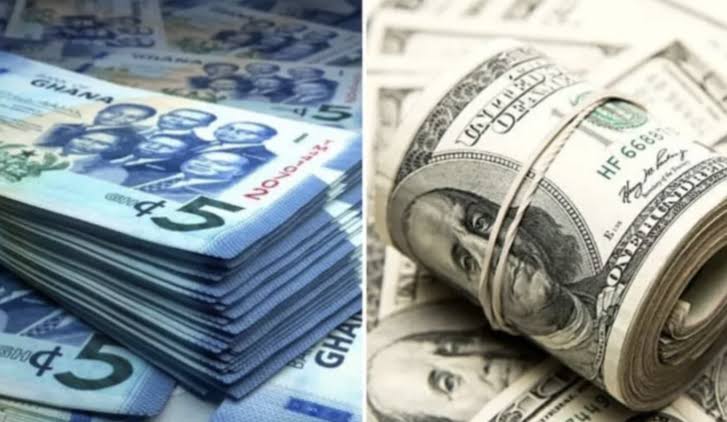
The Ghana cedi has come under renewed pressure against major international currencies, with its year to date depreciation against the U.S. dollar widening to 9.5% in September after improving to 7.1% in August.
The Ghana cedi has come under renewed pressure against the U.S. dollar, reversing some of the recovery recorded in August as increased demand for foreign exchange and broader global pressures weigh on the local currency.
Latest Bank of Ghana data show the cedi's year to date depreciation against the dollar widened to 9.5% in September, with the interbank exchange rate reaching about GH¢11.55 to $1 in the central bank's September economic data.
That compares with GH¢10.45 to the dollar at the end of December 2025.
The renewed weakness follows an improvement in August, when the cedi's year to date depreciation against the dollar narrowed to about 7.1%.
The currency had strengthened to around GH¢10.95 to the dollar earlier in August before renewed foreign exchange pressure pushed it lower.
The weakness has not been limited to the dollar.
Bank of Ghana data show that the cedi has depreciated by 9% against the British pound and 7.3% against the euro so far this year.
The latest movement marks another reversal for a currency that recorded substantial gains in 2025.
The cedi ended last year at approximately GH¢10.45 to the dollar after beginning 2025 at about GH¢15.30, according to Bank of Ghana data.
However, those gains have been gradually eroded in 2026 as demand for foreign currency has intensified.
The renewed pressure is particularly notable because it comes despite improvements in some of Ghana's external sector indicators.
Ghana's merchandise exports reached $22.44 billion during the first eight months of 2026, compared with $17.94 billion over the same period last year, with gold providing the largest contribution.
The country's trade surplus also widened to approximately $8.86 billion over the period, up from $6.69 billion a year earlier.
But strong export earnings do not automatically translate into an equivalent supply of foreign currency on the domestic market.
Export proceeds may remain with commercial banks or private businesses and can also be used to meet external obligations, including debt payments, services and profit repatriation.
At the same time, demand for foreign currency from businesses, the energy sector and other market participants can put additional pressure on the exchange rate.
Bank of Ghana Governor Dr Johnson Asiama has also pointed to a stronger U.S. dollar and tighter global financial conditions as factors weighing on emerging market currencies, including the cedi.
Higher international energy prices present another potential source of pressure because Ghana remains dependent on imported petroleum products, increasing the country's demand for foreign currency when global oil prices rise.
The Bank of Ghana is also monitoring domestic fiscal developments and external debt service obligations for their potential impact on liquidity and the exchange rate.
Despite the renewed depreciation, Ghana's external accounts have continued to record significant inflows.
Gross international reserves stood at about $11.07 billion at the end of August, equivalent to approximately 4.2 months of import cover, while the country's current account recorded a surplus of $5.11 billion as of June.
The latest currency movements therefore present a mixed picture for Ghana's economy.
Strong gold exports, a sizeable trade surplus and improved external balances have provided support, but persistent demand for foreign currency and changing global financial conditions continue to expose the cedi to renewed volatility.
The Bank of Ghana operates a flexible exchange rate regime and intervenes in the foreign exchange market to address excessive volatility rather than maintain the cedi at a fixed level.
The central bank's daily interbank figures also show that exchange rates can move beyond the levels captured in its monthly economic data.
On September 23, the Bank of Ghana reported a weighted median interbank rate of approximately GH¢11.595 to the dollar.
For businesses and consumers, further depreciation could increase the local currency cost of imported goods, fuel, machinery and other products priced in foreign currencies.
Attention will now turn to whether stronger export receipts and foreign exchange inflows can offset rising demand for dollars and stabilise the cedi during the final months of 2026.