CHINA’S MILITARY PRESSURE LOOMS OVER TAIWAN’S LOCAL ELECTIONS AS VOTERS PREPARE TO HEAD TO THE POLLS
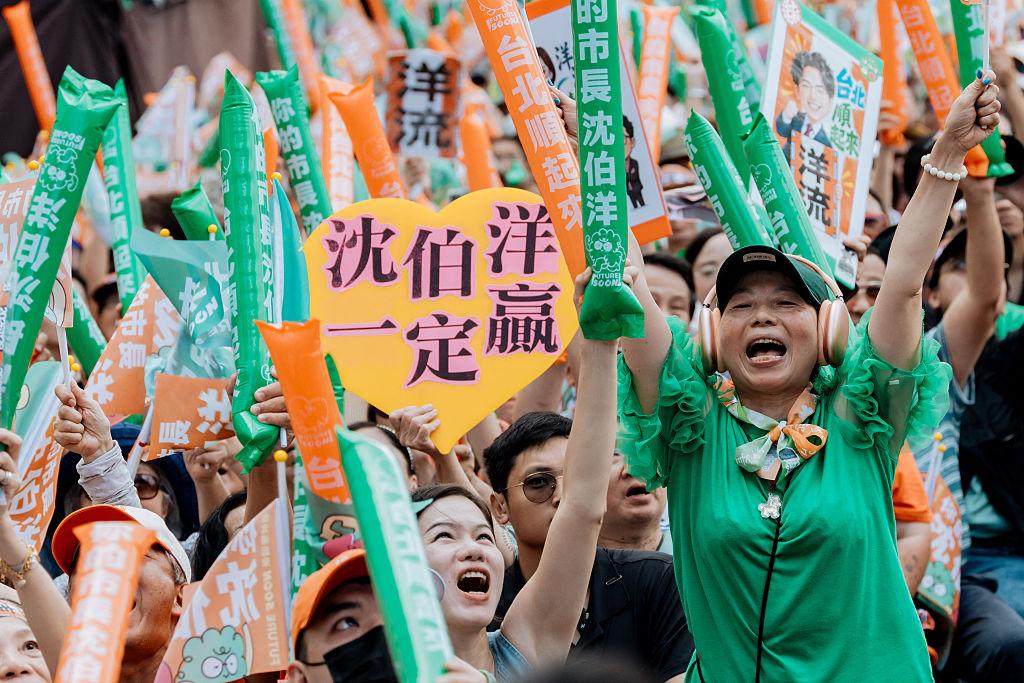
Taiwan entered its final day of campaigning on November 27, 2026, ahead of local elections across 22 cities and counties, as Chinese military activity intensified concerns over cross-strait security. Taiwan’s Ministry of National Defense reported detecting 30 Chinese military aircraft, with 26 crossing the Taiwan Strait’s median line, while authorities continued investigating suspected foreign electoral interference and disinformation. The closely watched Taipei mayoral contest between incumbent Chiang Wan-an of the Kuomintang and Democratic Progressive Party candidate Puma Shen has attracted additional attention following Beijing’s criticism of Shen. Although campaigning has largely focused on municipal issues, the elections carry wider political significance ahead of Taiwan’s 2028 presidential and parliamentary elections.
Taiwan entered its final day of campaigning on Friday, November 27, 2026, ahead of closely watched local elections taking place against a backdrop of mounting military pressure from China and growing concerns about foreign interference in the island’s democratic institutions. Candidates representing the ruling Democratic Progressive Party (DPP), the opposition Kuomintang (KMT) and smaller political parties intensified their efforts to mobilize voters across Taiwan’s 22 cities and counties, while the Ministry of National Defense reported renewed Chinese military activity around the island.
The elections, scheduled for Saturday, November 28, will determine the leadership of municipal and county governments responsible for administering public services, infrastructure development, housing policies and emergency preparedness. Although the results will not directly determine Taiwan’s foreign or defense policies, the vote carries considerable national significance because it will provide an indication of the political environment ahead of presidential and parliamentary elections scheduled for early 2028.
Taiwan’s Ministry of National Defense reported detecting 30 Chinese military aircraft operating around the island on Friday, with 26 crossing the median line of the Taiwan Strait. Chinese naval vessels also participated in what Taiwanese authorities described as a coordinated military patrol, reinforcing concerns about Beijing’s continuing efforts to increase pressure on the self-governed island during an important period in its democratic calendar.
The military activity occurred as candidates made their final appeals to voters, highlighting the contrast between Taiwan’s competitive electoral process and the unresolved geopolitical dispute that continues to shape its relationship with mainland China. Beijing regards Taiwan as part of Chinese territory and has maintained that reunification remains a fundamental national objective, while Taiwan’s government rejects Beijing’s sovereignty claims and maintains that the island’s future must be determined by its people.
Despite the prominence of cross-strait tensions in international coverage of the elections, domestic campaigning has remained substantially focused on local issues. Candidates have presented proposals addressing transportation, environmental protection, urban development, housing affordability and the administration of municipal services. The distinction reflects the responsibilities of the offices being contested, although China’s military activities and its criticism of certain candidates have introduced broader security considerations into the political environment.
The contest attracting considerable attention is the mayoral election in Taipei, where incumbent Mayor Chiang Wan-an of the Kuomintang is seeking another term against Puma Shen, a Democratic Progressive Party lawmaker whose academic and political work has focused extensively on Chinese influence operations, information security and civilian preparedness. The election in Taiwan’s capital has attracted attention beyond its municipal boundaries because of Beijing’s increasingly public criticism of Shen and the historical significance of the Taipei mayoralty in Taiwanese national politics.
Chinese authorities have accused Shen of involvement in activities they characterize as separatism, placing him under investigation through mainland law enforcement institutions. The allegations have been rejected by Taiwan’s political authorities, which do not recognize Beijing’s jurisdiction over the island or its elected representatives. Shen’s candidacy has consequently become an example of how disputes over Taiwan’s political status can intersect with elections that are formally concerned with local governance.
Shen previously pursued an academic career before entering national politics, developing expertise in disinformation, information warfare and the ways external actors can attempt to influence democratic societies. He also helped establish Kuma Academy, a civilian organization providing education and training in disaster preparedness, emergency response and community resilience.
His involvement in civilian preparedness initiatives has become particularly relevant as Taiwan continues expanding its capacity to respond to natural disasters and potential security emergencies. Beijing, however, has expressed hostility toward organizations and individuals it associates with Taiwanese separatism, creating an increasingly contentious environment around some of Shen’s activities.
Chiang Wan-an, meanwhile, has concentrated his campaign on his administration’s record and the continuation of municipal development programs. The incumbent mayor has emphasized projects undertaken during his first term, presenting his reelection campaign as an opportunity to complete existing initiatives and maintain continuity in Taipei’s administration.
The contrasting backgrounds of the two candidates illustrate the different considerations facing voters in the capital. Shen’s experience in information security and civilian preparedness has brought national security issues into discussions surrounding local governance, while Chiang has sought to maintain attention on municipal administration and the practical responsibilities of the mayor’s office.
The Democratic Progressive Party has not controlled the Taipei mayoralty for nearly three decades, giving the contest additional historical significance. The capital has traditionally occupied an influential position in Taiwan’s political system, and several politicians who have served as its mayor subsequently pursued national leadership positions.
Friday’s campaigning saw candidates and their supporters participating in public events, neighborhood outreach and other activities intended to encourage electoral participation. Both Chiang and Shen toured parts of Taipei as they sought to communicate their final messages before campaigning restrictions came into effect ahead of Saturday’s vote.
Shen’s campaign planned an online closing event involving Democratic Progressive Party figures after reconsidering arrangements for a large physical gathering because of concerns about traffic congestion. Chiang’s campaign, by contrast, planned an outdoor rally bringing together Kuomintang supporters as part of its final mobilization efforts.
Beyond Taipei, elections in New Taipei, Taichung and other major municipalities are also important to the political organization of Taiwan’s principal parties. Local governments control substantial administrative responsibilities and provide political parties with opportunities to demonstrate their governing capabilities, develop relationships with communities and establish organizational networks ahead of national elections.
The Democratic Progressive Party has sought to improve its position following substantial losses in the previous local elections in 2022. During that vote, the Kuomintang secured control of 14 cities and counties, while the Democratic Progressive Party won five. The remaining jurisdictions went to independent candidates or representatives of other political organizations.
Those results demonstrated that voter preferences in municipal elections can differ substantially from national political choices. Local contests frequently reflect assessments of individual candidates, administrative performance and community concerns rather than solely reflecting opinions about presidential leadership or international relations.
The outcome of the 2022 elections also illustrated how a political party can experience significant setbacks at the local level without necessarily losing its ability to compete successfully in subsequent national elections. The Democratic Progressive Party retained the presidency in 2024 when Lai Ching-te succeeded Tsai Ing-wen, despite the party’s comparatively weaker performance in the preceding municipal elections.
Taiwan’s political environment has remained divided since Lai assumed office in May 2024. Although the Democratic Progressive Party retained control of the presidency, the legislative election produced a fragmented parliament in which the Kuomintang became the largest individual party without securing an outright majority. The Taiwan People’s Party obtained a smaller but influential representation, contributing to disagreements over legislation, government spending and institutional authority.
The resulting political divisions have complicated discussions surrounding Taiwan’s defense budget, relations with the United States and economic engagement with mainland China. However, those national disagreements should not be treated as a complete explanation of the choices voters will make in local elections, where the responsibilities of candidates are substantially different.
President Lai Ching-te has consistently maintained that Taiwan must preserve its democratic institutions and retain control over decisions concerning its political future. His administration has supported stronger defense capabilities, expanded civilian preparedness and closer relationships with international partners as part of its response to mounting pressure from Beijing.
Chinese authorities have repeatedly criticized Lai, characterizing him as a separatist and rejecting his administration’s position concerning Taiwan’s sovereignty. Formal political communication between Beijing and Taiwan’s central government remains limited, contributing to uncertainty over how disagreements might be managed during periods of heightened military activity.
The Kuomintang has traditionally supported maintaining stronger channels of communication with mainland China, arguing that dialogue and economic engagement can contribute to stability across the Taiwan Strait. Party representatives have nevertheless emphasized the importance of Taiwan’s security and existing democratic institutions, rejecting the suggestion that their preference for dialogue necessarily amounts to support for Beijing’s proposed political arrangements.
In April 2026, Kuomintang Chairwoman Cheng Li-wun traveled to mainland China and met Chinese President Xi Jinping. The meeting demonstrated the continuing availability of communication channels between Beijing and Taiwan’s principal opposition party, even as relations between the Chinese government and the administration of President Lai remained strained.
Supporters of greater cross-strait engagement argue that sustained dialogue can reduce misunderstandings, protect commercial relationships and lower the possibility of military confrontation. Advocates of stronger deterrence, meanwhile, argue that Taiwan must reinforce its defense capabilities and reduce vulnerabilities that Beijing could exploit through economic or military pressure.
These positions form part of Taiwan’s continuing democratic debate, although the practical policy proposals advanced by political parties are more complex than a simple division between confrontation and accommodation. Taiwanese political leaders must consider economic relationships, national security requirements, public opinion and the consequences of decisions that could affect regional stability.
Taiwan’s relationship with mainland China has remained unresolved since 1949, when the government of the Republic of China relocated to the island following the victory of Mao Zedong’s Communist forces in the Chinese Civil War. The People’s Republic of China subsequently established control over the mainland, while Taiwan developed separate political, economic and administrative institutions.
Over the following decades, Taiwan underwent substantial economic development and a gradual political transition from authoritarian rule to competitive multiparty democracy. The lifting of martial law in 1987 and the introduction of direct presidential elections in 1996 represented important milestones in that transformation, establishing institutions through which Taiwanese citizens could determine their political leadership.
Beijing continues to maintain that Taiwan is part of China and has not renounced the possibility of using military force to achieve its reunification objective. Taiwan operates its own elected government, armed forces, judicial institutions, currency and administrative systems, while its international diplomatic status remains the subject of significant political disagreement.
The People’s Republic of China’s increasingly extensive military activities around Taiwan have become a major component of that disagreement. Taiwanese authorities regularly report the presence of Chinese military aircraft and naval vessels near the island, with periods of intensified activity generating concerns about the possibility of miscalculation or an unexpected escalation.
Friday’s reported aircraft movements added to concerns already generated by Chinese military activity earlier in November. Although the Ministry of National Defense did not establish that the latest patrol was specifically intended to influence the election, its occurrence on the final day of campaigning drew additional international attention to the security environment in which Taiwanese citizens exercise their democratic rights.
Military activity is only one aspect of the pressure Taiwanese authorities say they face. Government agencies have also raised concerns about suspected foreign interference, cyber intrusions and the circulation of misleading information intended to influence public debate or undermine confidence in democratic institutions.
On November 18, Taiwan’s Criminal Investigation Bureau disclosed that authorities were examining 30 cases of suspected foreign interference connected to the local elections. Investigators were also reviewing more than 250 reports involving potentially misleading election-related information. These investigations have raised concerns about the extent to which external actors may attempt to influence political discussions before voters cast their ballots.
The existence of an investigation does not establish that every reported incident involved Chinese authorities or that all disputed information was deliberately fabricated. Investigators must distinguish coordinated interference from ordinary political disagreement, inaccurate reporting and misinformation circulated without a demonstrable connection to foreign governments.
That distinction is particularly important during competitive elections, when allegations concerning political interference can themselves become subjects of partisan disagreement. Maintaining public confidence requires authorities to establish the facts through transparent investigations while protecting legitimate political expression and avoiding unsupported accusations.
Taiwan’s National Security Bureau has previously reported exceptionally high levels of attempted cyber intrusions targeting government institutions and critical infrastructure. The bureau estimated that approximately 2.6 million intrusion attempts occurred daily in 2025, illustrating the scale of digital security challenges facing public institutions.
Such figures describe attempted activity rather than necessarily successful breaches, but they reinforce concerns about the capacity of government agencies to protect sensitive information and maintain essential services. Digital security has consequently become an important consideration extending beyond national defense institutions to municipal governments, healthcare providers and other organizations responsible for public administration.
Election-related disinformation can take several forms, including fabricated claims about candidates, misleading representations of government policies and inaccurate information concerning voting procedures. Authorities seeking to address these problems must balance the need to protect electoral integrity against the democratic requirement that citizens remain free to criticize governments, political parties and candidates.
The rapid circulation of information through social media platforms has added further complexity to those responsibilities. Content can reach substantial audiences before journalists, election officials or independent researchers have an opportunity to establish its accuracy. Artificial intelligence-generated material has also increased concerns about manipulated images, fabricated recordings and misleading representations of public statements.
Taiwan’s experience confronting information manipulation has attracted international attention because democratic governments elsewhere face comparable challenges. The effectiveness of its response will depend partly on cooperation between public institutions, technology companies, news organizations and civil society groups capable of identifying misleading information without restricting legitimate public debate.
Another issue connecting the local elections to Taiwan’s broader security environment is the responsibility municipal governments hold for emergency preparedness. In the event of a major natural disaster or a serious disruption arising from regional conflict, local authorities would play an important role in maintaining public services and coordinating assistance to affected communities.
Mayors and county administrators oversee institutions involved in healthcare, emergency response, transportation and community welfare. Although national defense policy remains the responsibility of the central government, the ability of local institutions to continue operating during emergencies can influence the wider effectiveness of national preparedness programs.
Taiwan has expanded civilian resilience initiatives in recent years, reflecting concerns about the possible consequences of disruptions to communications, electricity supplies, commercial transportation and access to essential goods. These programs frequently involve cooperation between government agencies, emergency services and community organizations.
Analysts at the Council on Foreign Relations have argued that the officials elected during Saturday’s vote will help determine how effectively national preparedness objectives are translated into practical local arrangements. Their assessment emphasizes that maintaining essential civilian services is an important component of Taiwan’s broader resilience during periods of heightened regional insecurity.
The relationship between civilian preparedness and military security has nevertheless generated political debate. Different parties have expressed varying views about the extent to which potential conflict scenarios should be incorporated into municipal planning, while considerations surrounding natural disasters and ordinary public safety remain important regardless of political affiliation.
Taiwan is particularly exposed to earthquakes, typhoons and other natural hazards, making emergency preparedness an established responsibility of local governments. Investments in resilient communications, healthcare services and disaster response can therefore provide benefits extending beyond concerns about possible military confrontation.
Internationally, the elections are being monitored closely because of Taiwan’s importance to the global economy and its strategic position within East Asia. The island occupies a central role in semiconductor manufacturing, producing advanced electronic components used throughout the technology, automotive, telecommunications and industrial sectors.
Taiwan Semiconductor Manufacturing Company, commonly known as TSMC, has become one of the world’s most important semiconductor manufacturers. Its production capabilities support numerous international technology companies, making stability across the Taiwan Strait a significant consideration for governments and businesses far beyond the immediate region.
The global shortage of semiconductors during the COVID-19 pandemic demonstrated how disruptions in advanced manufacturing networks can affect automobile production, consumer electronics and industrial activity. A serious interruption to Taiwan’s semiconductor industry could consequently have substantial consequences for international supply chains.
Governments including the United States, Japan and several European countries have encouraged investment in domestic semiconductor production to reduce dependence on geographically concentrated manufacturing networks. However, Taiwan remains deeply integrated into the global technology industry, and replacing its established production capabilities would require substantial investment, expertise and time.
The United States continues to maintain unofficial relations with Taiwan under a policy framework that includes the Taiwan Relations Act. Washington recognizes the government of the People’s Republic of China diplomatically while maintaining extensive commercial, cultural and security relationships with Taiwan.
American administrations have supported Taiwan’s ability to defend itself, although Washington has not provided an unconditional public guarantee that it would intervene militarily under every possible scenario. That approach has historically formed part of efforts to discourage unilateral actions that could alter the situation across the Taiwan Strait through force.
Japan and other regional governments also have significant interests in the preservation of stability around Taiwan. Commercial shipping routes passing through nearby waters support substantial volumes of international trade, while military confrontation could generate consequences for regional transportation, energy supplies and diplomatic relationships.
For African economies, the implications of a serious cross-strait confrontation would primarily emerge through international commerce. Countries including Ghana and Nigeria rely on imported electronic equipment, telecommunications infrastructure, vehicles and industrial machinery containing components produced through international manufacturing networks.
Disruption to those networks could increase the cost of imported goods, delay equipment deliveries and complicate technology infrastructure projects. Changes in maritime insurance, international shipping costs and commercial confidence could generate further economic consequences, even for countries geographically distant from East Asia.
African governments also maintain extensive commercial and diplomatic relationships with Beijing, meaning that developments surrounding Taiwan can introduce sensitive considerations into their wider international engagements. Most African countries recognize the People’s Republic of China diplomatically, while Eswatini maintains formal diplomatic relations with Taiwan.
Despite those broader implications, Saturday’s elections remain fundamentally a decision about local political leadership. Voters will be selecting officials whose daily responsibilities involve the administration of cities, counties and communities rather than directly determining Taiwan’s future diplomatic status or military strategy.
Polling stations are scheduled to open at 8 a.m. local time on Saturday and close at 4 p.m., with results expected to emerge during the evening. The elections will provide a clearer picture of the distribution of local political authority and establish the administrative landscape in which Taiwan’s major parties will operate ahead of the next national elections.
For the Democratic Progressive Party and the Kuomintang, the results will offer information about their organizational strength, the performance of individual candidates and the issues that influenced voters across different regions. However, interpreting the outcome as a definitive national judgment on relations with China would overlook the importance of local circumstances and the distinct responsibilities of the offices being contested.
Beijing’s response following the elections will also attract international attention, particularly given its criticism of individual Taiwanese candidates and its continuing military activities around the island. Whether the Chinese government chooses to intensify pressure, maintain its existing approach or pursue further political communication will depend on decisions that extend beyond the immediate municipal results.
Taiwan’s newly elected local leaders will inherit responsibilities that include addressing ordinary community concerns while operating within an increasingly complicated regional security environment. Their ability to deliver reliable public services, maintain confidence in government institutions and prepare communities for emergencies will remain important regardless of the political affiliations of successful candidates.
As voters prepare to cast their ballots, the elections illustrate the intersection between democratic competition and geopolitical uncertainty. While Beijing’s military activities and allegations of foreign interference have generated international concern, Taiwanese citizens are also making decisions about housing, transportation, employment, environmental protection and the quality of local administration.
The significance of the elections will ultimately extend beyond the number of municipalities secured by individual political parties. The results will shape Taiwan’s local governance for the coming years, influence preparations for the 2028 national elections and provide further insight into how its democratic institutions operate amid continuing external pressure. With cross-strait tensions unresolved and regional governments closely monitoring developments, the immediate focus remains on the conduct of Saturday’s vote and the ability of Taiwan’s electoral institutions to deliver a credible outcome reflecting the choices made by its citizens.