COCOBOD INTRODUCES DIGITAL TRACKING SYSTEM TO STOP DIVERSION OF FREE FERTILISER MEANT FOR COCOA FARMERS
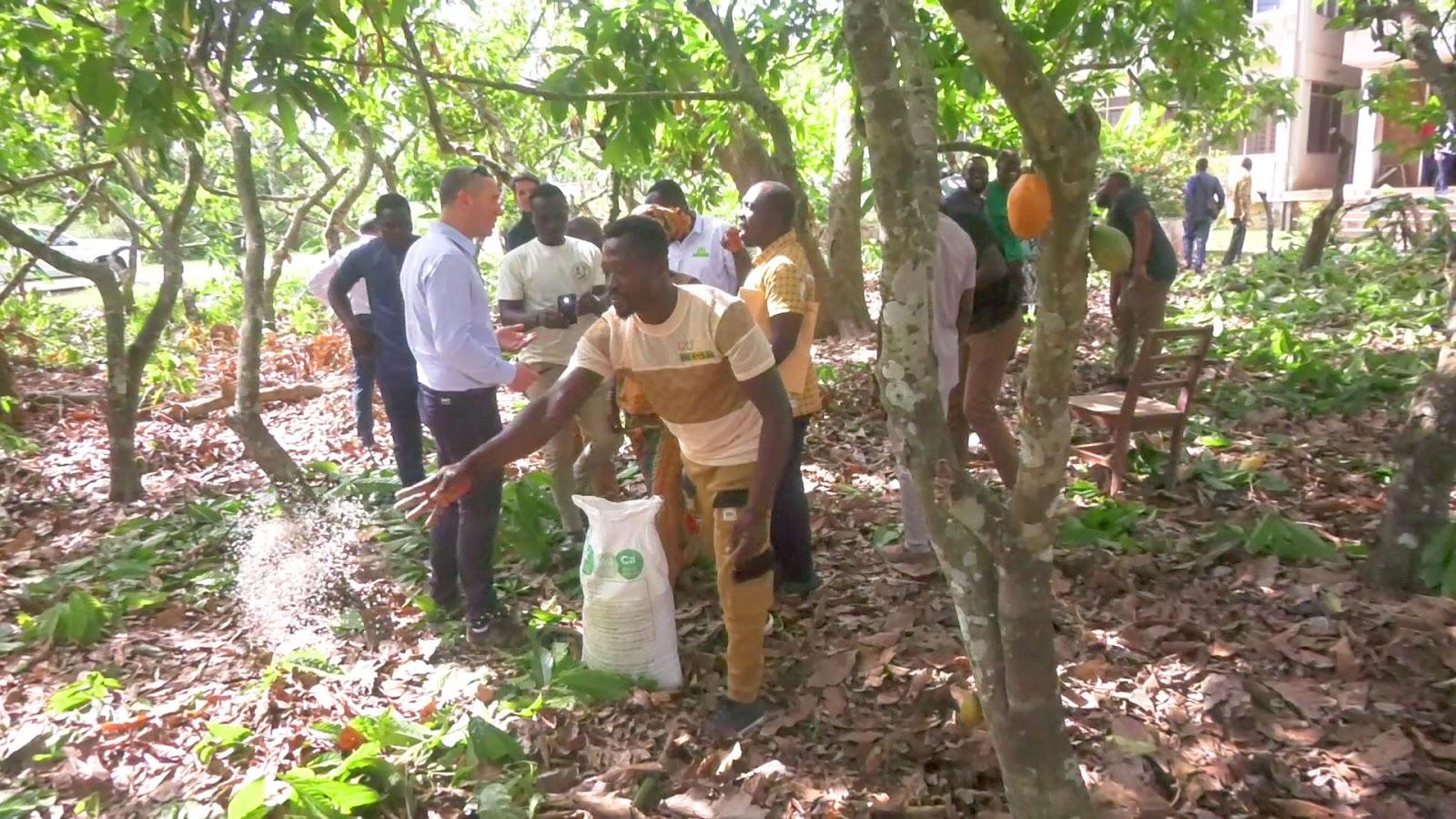
COCOBOD has introduced a digital tracking system to monitor free fertiliser and agro-input distribution from warehouses to cocoa farmers, aiming to prevent diversion, smuggling and unfair allocation. The programme includes more than 3.5 million bags of granular fertiliser, alongside other farm inputs.
SEFWI WIAWSO, November 7, 2026 The Ghana Cocoa Board (COCOBOD) has introduced an enhanced digital tracking system to monitor the distribution of fertiliser and other agricultural inputs from warehouses to beneficiary farms, in a move aimed at preventing diversion, smuggling, favouritism and the manipulation of allocations under the government’s relaunched Free Fertiliser and Agro-Input Programme.
The new system will digitally monitor the movement of farm inputs throughout the distribution chain, creating records that allow officials to reconcile the quantities dispatched from warehouses with those received at district and community distribution points and ultimately issued to individual farmers. COCOBOD says the arrangement is intended to close loopholes that have previously allowed agricultural inputs meant for cocoa farmers to be diverted into open markets, smuggled across national borders or allocated to people who were not entitled to receive them.
The announcement was made during the relaunch of the Free Fertiliser Distribution Programme in Sefwi Wiawso in the Western North Region. COCOBOD Chief Executive Officer, Dr. Randy Abbey, explained that the digital platform would make it possible to trace individual consignments and identify discrepancies in the distribution process. He warned that officers, buyers and other individuals found diverting, hoarding, reselling or smuggling the inputs would face legal consequences.
According to Abbey, every bag or litre of agricultural input issued under the programme will be linked to the identity of the farmer who receives it. The system is designed to allow officials at district, regional and national levels to compare the quantities dispatched with those received and distributed, making it easier to identify missing supplies and investigate irregularities. He said the tracking process would leave a digital trail whenever a consignment failed to reach its intended destination.
The new arrangement will also rely on COCOBOD’s Digital Cocoa Management System, which requires beneficiaries to have their farms registered and mapped before receiving the inputs. Farmers will be required to verify their identities at collection points using their farmer identification cards, Ghana Cards or biometric information. COCOBOD says these checks are intended to prevent individuals from collecting supplies in the names of other farmers and reduce the possibility of fictitious beneficiaries appearing on distribution lists.
Under the system, the quantity of fertiliser and other inputs allocated to each farmer will be calculated automatically using information about the size and condition of the registered farm. This is intended to limit the discretion of distribution officers, who will not be able to arbitrarily increase or reduce a farmer’s allocation. The board says the process should make distribution more transparent and ensure that eligible producers receive the quantities assigned to their farms.
The introduction of the platform comes against the background of longstanding concerns about the distribution of agricultural inputs in Ghana’s cocoa sector. Previous support programmes have faced allegations and complaints involving diversion, unfair allocation, favouritism and the resale of supplies intended for farmers. COCOBOD management says some inputs that were supposed to reach genuine producers instead found their way into commercial markets and across borders, while smallholder farmers in some communities were left without the support they needed.
Abbey said the new monitoring arrangements were designed to address those weaknesses and reduce the influence of personal connections in the allocation process. The board also wants the programme to reach smallholder farmers, women, young producers and elderly farmers who may be particularly disadvantaged when distribution depends on informal relationships or the discretion of local officials.
The relaunch also marks a policy shift from the previous 50 per cent fertiliser subsidy to the provision of free fertiliser and other agricultural inputs to eligible cocoa farmers. The government and COCOBOD have presented the change as part of a broader effort to remove the cost of essential farm supplies as a barrier to productivity, support farmers and improve the country’s cocoa output.
More than 3.5 million bags of granular fertiliser have reportedly been procured for nationwide distribution under the programme, with approximately 1.2 million bags already delivered to farmers. The package also includes 1.8 million litres of liquid fertiliser, 2.3 million litres of insecticide and 1.5 million kilograms of fungicide. COCOBOD has further reported the supply of approximately 27,000 new pneumatic and motorised spraying machines during the year, bringing the total number available to about 67,000.
The programme is also supported by approximately 5.7 million litres of premixed fuel intended to assist farmers with the mechanical application of liquid fertiliser and insecticides. The combination of fertiliser, chemicals, spraying equipment and fuel is intended to support farm maintenance, improve crop protection and address some of the production constraints affecting cocoa-growing communities.
Board Chairman Dr. Samuel Ofosu-Ampofo, who also addressed the relaunch, reaffirmed the government’s commitment to interventions aimed at improving cocoa production and farmers’ incomes. He pointed to a combination of structural challenges confronting the industry, including declining productivity, ageing and unproductive farms, rising production costs, labour shortages, soil fertility problems, capsid pest attacks, swollen shoot virus disease and the increasing effects of climate variability.
Ofosu-Ampofo said improving national cocoa production would require sustained investment in farms and support for the people who cultivate them. He also stressed the importance of addressing soil fertility, pest and disease management, access to improved planting materials and effective agricultural extension services. His remarks placed the fertiliser programme within a wider effort to address the conditions affecting cocoa production rather than treating the distribution of inputs as an isolated intervention.
For farmers to benefit from the new system, however, registration and farm mapping will be essential. COCOBOD has urged producers whose farms have not yet been captured on the Digital Cocoa Management System to contact agricultural extension officers to complete the required processes. Extension officers have also been directed to ensure that cocoa farmers and their farms in their respective districts are properly registered and mapped so that eligible producers are not excluded.
The effectiveness of the initiative will ultimately depend on whether the digital records accurately reflect the movement of supplies and whether the system is consistently enforced at every stage of distribution. Digital monitoring can make discrepancies easier to identify, but the board will still need reliable farm records, accurate beneficiary information, functioning verification procedures and timely investigations when missing supplies or irregular allocations are detected.
The programme also raises questions about how COCOBOD will communicate cases of suspected diversion, what penalties will be pursued against offenders and how farmers can report problems when their registered allocations are not delivered. The board has warned that individuals involved in the illegal handling of the inputs will face the law, but the impact of the new arrangements will be measured by the consistency of enforcement and the proportion of intended beneficiaries who actually receive their supplies.
With millions of bags of fertiliser and substantial quantities of other agricultural inputs involved, the distribution exercise represents a major logistical undertaking for the cocoa sector. COCOBOD’s new digital tracking platform is intended to strengthen oversight of that process, while the transition to free fertiliser is expected to reduce the direct cost of essential inputs for eligible farmers. Whether the combined measures translate into higher productivity, improved farmer incomes and a more accountable distribution system will become clearer as the programme progresses across cocoa-growing communities.