COLOMBIA DRONE ATTACK KILLS THREE SOLDIERS AS PRESIDENT VOWS ‘NO PLACE TO HIDE’ FOR ATTACKERS
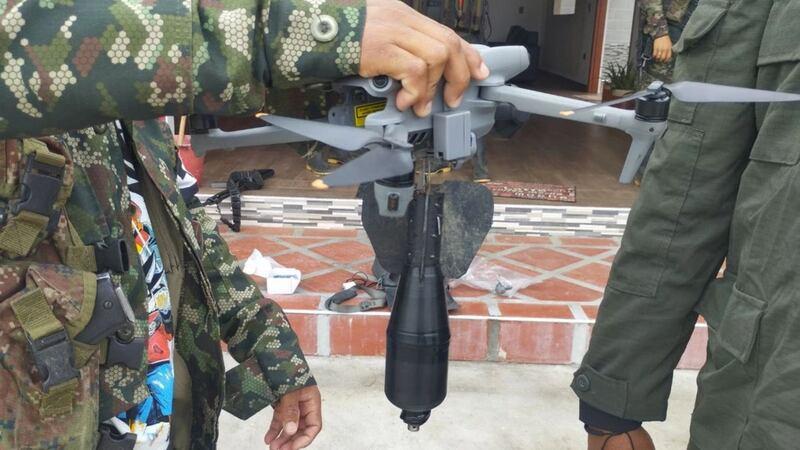
Three Colombian soldiers have been killed after drones carrying explosive devices struck a military base in Santa Rosa del Sur, Bolívar. The Army later said 16 soldiers were seriously wounded and another 31 personnel were affected. Authorities have not publicly identified the attackers, although the surrounding San Lucas mountain region is contested by several armed organisations. President Abelardo De La Espriella has ordered intensified operations and warned those responsible that they will have “nowhere to hide.”
A devastating drone attack on a Colombian military installation has killed three soldiers, seriously wounded at least 16 others and affected dozens more personnel in one of the latest signs that armed groups are increasingly using commercially available unmanned aircraft to strike security forces from a distance. The attack hit the military canton in Santa Rosa del Sur, a municipality in the southern part of Bolívar department, on Saturday, November 7, when drones modified to carry explosive devices flew over the installation and dropped or detonated their payloads inside the base. Colombia’s Army initially reported three deaths and eight serious injuries, but subsequent military updates increased the number of seriously wounded soldiers to 16 and said another 31 members of the unit had been affected by the attack.
The military installation houses personnel from Jungle Infantry Battalion No. 48 and sits in a strategically important part of northern Colombia close to the San Lucas mountain range, an area where armed organisations have competed for years over territory, illegal mining revenues, trafficking routes and control of rural communities. Colombian authorities have not yet formally attributed Saturday’s attack to any specific organisation, and no armed group had publicly claimed responsibility in the immediate aftermath. The surrounding territory, however, has long seen activity by the National Liberation Army, known as the ELN, the Clan del Golfo and smaller armed factions formed by former members of the Revolutionary Armed Forces of Colombia who rejected or broke away from the 2016 peace process.
President Abelardo De La Espriella condemned the attack and ordered Colombia’s armed forces to intensify operations aimed at identifying, pursuing and capturing those responsible. In a statement released by the Presidency, De La Espriella described the strike as an attack against soldiers serving the country and vowed that those behind it would not be allowed to disappear into the remote terrain surrounding Santa Rosa del Sur. He said the government would use the legitimate force of the state to pursue the attackers and dismantle the criminal structures responsible for violence against Colombia’s military and civilian population.
The president’s warning was unusually forceful. De La Espriella said those responsible would have no place to hide and insisted that attacks against Colombian troops would strengthen rather than weaken his administration’s determination to regain control of territories where armed organisations remain influential. His comments reflect the harder security approach adopted since he took office in August, including intensified military operations, air strikes and joint security deployments against groups the administration describes as narcoterrorist organisations.
The first official account from Colombia’s First Army Division said drones fitted with explosive devices were used directly against the Santa Rosa military facilities. Initial reports placed the number of seriously wounded personnel at eight, but the Army later said 16 members of the military had suffered serious injuries requiring treatment at different medical centres. Another 31 personnel were described as affected by the attack, although authorities did not immediately provide detailed information about the severity or nature of their conditions.
The strike occurred around midday, when military personnel were inside the base. Local reporting indicated that explosives hit an area used by troops around lunchtime, producing several powerful blasts that sent smoke rising over the installation and forced soldiers to take cover behind defensive positions. Videos circulated on social media showed smoke above the base and military personnel seeking protection, although authorities have cautioned against relying on unverified material circulating online while investigators reconstruct the attack.
The three deaths have added to a growing list of military and civilian casualties from explosive attacks across Colombia in recent months. The government has been confronting a renewed wave of violence involving drones, improvised explosives, remotely detonated bombs and makeshift projectiles as armed groups adapt technologies once largely associated with conventional warfare to Colombia’s long-running internal conflict.
Explosive drones have become particularly concerning because they allow attackers to strike military positions without approaching heavily defended installations on the ground. Commercial aircraft that can be purchased relatively cheaply can be modified to transport grenades, mortars or improvised explosive devices, creating a weapon capable of bypassing traditional perimeter security. Armed groups can operate such systems from kilometres away and rapidly relocate after an attack, complicating the military’s ability to identify launch points and immediately capture those responsible.
Colombia’s security forces have already encountered this threat in several regions. Earlier operations and attacks involving explosive drones have been reported in Norte de Santander, Cauca, Valle del Cauca and other areas where armed groups maintain strong rural networks. Government forces have also recovered drones, explosive devices and specialised equipment during raids against illegal organisations, showing that the technology is becoming an increasingly established component of Colombia’s conflict rather than an isolated innovation.
The danger is especially serious in rural military bases where defensive infrastructure may originally have been designed primarily to stop ground assaults, small-arms fire or mortar attacks. Drones can approach from above, hover or change direction and release explosives into compounds that would otherwise be difficult for attackers to penetrate. Counter-drone systems capable of detecting, jamming or physically destroying hostile aircraft are therefore becoming increasingly important for Colombian forces.
The Santa Rosa del Sur attack also occurred during a period of heightened violence elsewhere in the country. In recent days, Colombian authorities have reported attacks against police and military units in Tolima, Huila, Cauca and other departments, including bombings and improvised projectile attacks that have killed both members of the security forces and civilians.
A recent attack on a military position in Tolima involved improvised projectiles fashioned from gas cylinders and resulted in civilian casualties, including a two-month-old baby. Police facilities in Cúcuta and other conflict-affected areas have also faced remotely activated explosive attacks. These incidents have reinforced government warnings that illegal armed groups are increasingly attempting to use terrorism and unconventional weapons to challenge security forces and intimidate communities.
Data cited by conflict-monitoring organisation ACLED has similarly pointed to a rise in explosive attacks involving Colombian state forces and illegal armed organisations compared with previous periods. The pattern illustrates how the country’s security challenges have changed since the historic peace agreement with the FARC a decade ago.
The 2016 peace accord resulted in the demobilisation of more than 14,000 FARC members and formally ended decades of conflict with what had been Colombia’s largest guerrilla organisation. However, armed factions that rejected the agreement or later returned to violence moved into territory previously controlled by the FARC, while other organisations such as the ELN and Clan del Golfo expanded operations in areas where control had become contested.
Competition for cocaine production zones, illegal gold mines, extortion income and strategic transportation corridors has since driven violence across several rural regions. In some communities, more than one armed organisation competes for control, forcing residents into dangerous situations where territorial disputes can quickly produce displacement, killings or attacks on state forces.
Southern Bolívar is one of those contested regions. The mountainous terrain and extensive gold deposits around the Serranía de San Lucas have made the area economically valuable to illegal armed organisations. Mining operations can generate large revenues through extortion, direct exploitation or taxes imposed on legal and illegal miners, while remote mountain routes allow armed groups to move personnel and supplies with limited state oversight.
Colombia’s Ombudsman warned immediately after Saturday’s violence that the events in Santa Rosa del Sur were not isolated. The institution said it had documented deterioration in the humanitarian situation across southern Bolívar, where the ELN, Clan del Golfo and dissident structures associated with alias Calarcá have competed for territorial control, mining income and strategic corridors.
The Ombudsman said the drone attack occurred while local authorities were holding a security meeting at the municipal government building following the killing of three people the previous day. That timing reinforces the sense that Santa Rosa del Sur was already experiencing a serious security deterioration before the military installation itself was attacked.
For local residents, that combination of armed competition and attacks on state institutions creates a particularly dangerous environment. Military offensives can bring armed actors into closer confrontation, while criminal groups may retaliate against civilians suspected of cooperating with security forces. Communities can become trapped between competing organisations and government units, creating displacement and restrictions on movement even when they are not directly involved in the conflict.
The De La Espriella administration has responded by adopting a markedly more confrontational security policy than the previous government. Since taking office in August, the president has cancelled or suspended peace engagement with some armed organisations, authorised additional military strikes and promised to restore state authority through sustained pressure on groups involved in trafficking, extortion and attacks on security forces.
The president has argued that previous ceasefires gave illegal organisations opportunities to consolidate territory, increase revenue and strengthen military capabilities. His government says renewed offensive operations are intended to reverse those gains and make it increasingly difficult for armed groups to operate openly in rural communities.
Critics of a predominantly military strategy have cautioned that Colombia’s security problems cannot be resolved exclusively through force. The country’s decades-long conflict has repeatedly demonstrated the importance of rural development, land reform, justice, state services and economic alternatives in communities where illegal organisations thrive partly because government institutions are weak or absent.
The drone attack demonstrates the difficult balance facing the administration. The government wants to project military strength and deter armed organisations, but intensified confrontations can also prompt groups to adopt new weapons and tactics designed to offset the state’s conventional advantages.
Commercial drone technology is one example. Colombia’s armed forces possess aircraft, artillery, surveillance systems and specialised units that illegal organisations cannot easily match. But an inexpensive unmanned aircraft carrying an improvised explosive device can create disproportionate damage and force military bases to invest heavily in countermeasures.
The development mirrors patterns seen in conflicts elsewhere in the world, where drones have rapidly changed the relationship between expensive military hardware and relatively cheap precision attack systems. Lessons from Ukraine and other conflicts have demonstrated that even small unmanned aircraft can become effective reconnaissance or attack platforms when paired with explosives and real-time communications.
Colombian armed organisations appear to have studied those developments and adapted them to local conditions. Some groups have reportedly experimented with thermal cameras, remote detonation systems and modified commercial aircraft capable of targeting moving soldiers or specific positions.
The technology also creates a psychological effect. Troops who once focused primarily on threats approaching by road, forest or river must now monitor the air above their positions. A small drone may initially appear similar to an ordinary civilian device, giving defenders limited time to determine whether it represents surveillance or an imminent explosive attack.
Counter-drone defence can therefore become expensive and technically complex. Military forces can use electronic jamming to disrupt communications between operators and drones, radar systems to identify small aircraft or kinetic weapons to shoot them down. Each approach has limitations, especially in rugged terrain where false detections and communication interference can complicate operations.
The Santa Rosa attack will almost certainly increase pressure on Colombia’s Defence Ministry to accelerate deployment of anti-drone technology at military bases across conflict-affected regions. The government has already discussed strengthening security around strategic infrastructure and military facilities following previous drone attacks.
Investigators will now attempt to determine where Saturday’s drones were launched, what type of aircraft were used and whether explosive components can be linked to known armed structures. Forensic examination of recovered fragments may identify manufacturing patterns, triggering systems or materials previously associated with particular organisations.
Electronic intelligence could also be important. If communications between drone operators and aircraft were transmitted through detectable frequencies, military specialists may be able to reconstruct aspects of the operation. Surveillance from nearby cameras, witnesses and intelligence networks could further help identify who was present in the surrounding area before the attack.
President De La Espriella has ordered security forces to pursue those responsible, but the geography of southern Bolívar presents major challenges. Dense forests, mountains and dispersed settlements provide armed organisations with numerous locations from which to operate and retreat, making persistent intelligence operations essential.
A large military deployment can temporarily dominate roads and population centres, but locating small drone teams operating from hidden positions is considerably more difficult. Such teams may require only a few people, portable equipment and short periods of exposure before withdrawing.
The government’s response will therefore likely combine conventional military pressure with intelligence collection against the organisations active in the region. Security forces may target camps, weapons caches, financing networks and individuals suspected of possessing drone capabilities rather than focusing solely on the immediate launch site.
Authorities have been careful not to publicly assign responsibility before completing that work. Although multiple armed groups operate around Santa Rosa del Sur, simply identifying organisations active in the region does not prove which one carried out Saturday’s attack.
That distinction is important because Colombia’s conflict landscape is fragmented. Armed organisations can share territory, cooperate temporarily, fight one another or imitate tactics used by rivals. Premature attribution could therefore misdirect security operations or falsely implicate a group without sufficient evidence.
President De La Espriella’s statement avoided publicly naming a perpetrator and instead referred generally to those responsible for the attack. His administration has promised arrests and continued operations once intelligence identifies the network behind the strike.
The deaths of the three soldiers will also bring renewed attention to the human cost borne by Colombia’s armed forces. The men were stationed in an area where military personnel face threats not only from conventional firearms but from mines, improvised explosives and increasingly sophisticated unmanned systems.
The Army has said support is being provided to the families of the dead and to wounded personnel receiving treatment. The identities of all casualties were not immediately included in the initial public reporting, and authorities may release additional details after relatives have been notified.
The increasing number of seriously wounded personnel is itself significant. Early official information listed eight serious injuries, but the later Army update doubled that figure to 16 and identified another 31 members of the unit as affected. The change illustrates why casualty figures during developing security incidents should be treated as provisional until medical and military assessments are complete.
For that reason, the latest confirmed figure is three soldiers killed, 16 seriously wounded and 31 additional personnel affected. Earlier reports citing only eight wounded reflected the first official assessment rather than an error in reporting.
The government’s immediate challenge is now both operational and political. Security forces must locate the attackers and protect other installations from copycat strikes, while the president must demonstrate that his tougher strategy is capable of reducing rather than merely escalating violence.
De La Espriella has made security one of the defining themes of his presidency, repeatedly promising to target armed organisations, their leadership and the illicit economies financing them. Saturday’s attack represents a direct challenge to that agenda because it shows that illegal groups remain capable of striking state forces inside fortified military installations.
How the government responds will be watched closely not only by Colombians but by armed organisations themselves. A successful investigation resulting in arrests or disruption of a drone network could strengthen deterrence, while an inability to identify the perpetrators may encourage further attacks using similar technology.
For communities in southern Bolívar, however, the immediate priority is preventing military retaliation and armed-group competition from creating an even larger humanitarian crisis. The Ombudsman’s warning indicates that violence in the region was already escalating before the military base was hit.
The attack therefore cannot be viewed only as an isolated strike against soldiers. It sits within a broader struggle over territory, illegal mining and armed power in the San Lucas mountains, where civilians have repeatedly endured the consequences of confrontations between state forces and illegal organisations.
Colombia’s experience since the 2016 peace agreement shows that demobilising one major armed movement does not automatically eliminate the economic incentives and territorial conditions that sustain conflict. Where drug production, illegal mining and extortion remain profitable, new organisations can emerge or older ones can expand into abandoned territory.
The use of drones adds a new technological dimension to that longstanding problem. Armed groups that once relied on ambushes and homemade bombs now possess the ability to attack from the air, forcing Colombia’s military to adapt quickly to a threat evolving faster than traditional security infrastructure.
Saturday’s attack in Santa Rosa del Sur is therefore significant not only because three soldiers were killed but because it demonstrates how Colombia’s internal conflict is changing. The weapons may be newer, but the underlying struggle over territory, illegal economies and state authority remains deeply familiar.
For President De La Espriella, the response has been unequivocal. He has ordered his forces to pursue those responsible and warned that they will have nowhere to hide.
Whether Colombia’s security forces can turn that promise into arrests and prevent the next explosive drone from reaching another military base will now become one of the first major tests of the administration’s increasingly aggressive security strategy.