COPA PASSENGER JET AND UPS CARGO PLANE COLLIDE ON TAXIWAY AT MIAMI AIRPORT
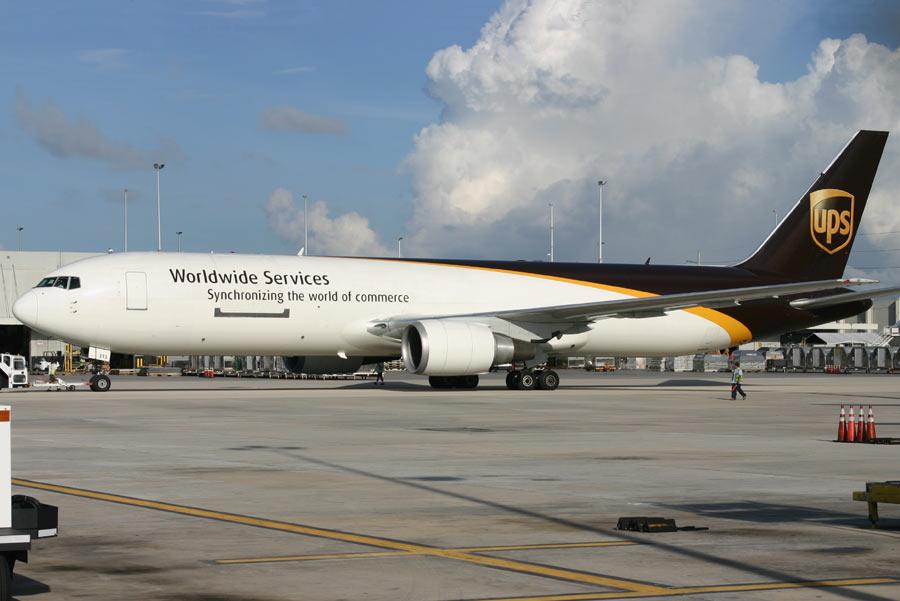
A Copa Airlines Boeing 737-800 and UPS Boeing 767 cargo aircraft collided while taxiing at Miami International Airport at about 9 p.m. on Saturday, November 14. The FAA says the Copa aircraft’s wingtip struck the nose of the UPS plane after controllers had instructed the UPS crew to give way to the passenger jet. The FAA has opened an investigation and has not assigned fault.
MIAMI, UNITED STATES — A Copa Airlines passenger jet carrying 172 people and a UPS cargo aircraft collided while taxiing at Miami International Airport on Saturday night, leaving two passengers with minor injuries and triggering a Federal Aviation Administration investigation into how two large commercial aircraft came into contact at one of the busiest international aviation hubs in the United States. Preliminary information released by the FAA indicates that the wingtip of the Copa Airlines Boeing 737 struck the nose of the UPS Boeing 767 at about 9 p.m. local time as the passenger aircraft was taxiing toward its gate after arriving from Panama City and the cargo jet was preparing to depart for Bogotá, Colombia.
The FAA said air traffic controllers had instructed the UPS crew to give way to the approaching Copa flight before the aircraft made contact, an important detail investigators will examine as they reconstruct the movements and communications immediately before the collision. The agency has not concluded that the UPS crew caused the incident, however, and the controller instruction should not be treated as a determination of responsibility while investigators review cockpit communications, ground-control recordings, aircraft positions, taxiway markings and the actions of both flight crews.
Copa Airlines identified the passenger aircraft as Flight 427, a Boeing 737-800 that had arrived from Panama City shortly before 9 p.m. and was moving toward the terminal when the collision occurred at the intersection of two taxiways. The airline said 166 passengers and six crew members were aboard the aircraft, bringing the number of occupants to 172, while airport paramedics evaluated two passengers for what officials described as apparent minor injuries. Neither passenger required transportation to a hospital, and Copa said all other passengers and crew members were in good condition after the aircraft came to a stop.
UPS confirmed that one of its cargo aircraft had been involved in the ground incident and said the crew was safe. The company said it would cooperate with authorities investigating what happened, while the FAA identified the freighter as a Boeing 767 that had been taxiing for a planned departure to Bogotá. The exact number of UPS crew members aboard was not immediately disclosed in the official statements reviewed by VNTV, and authorities had not announced any injuries among the cargo crew.
Miami-Dade Fire Rescue said the collision occurred at approximately 9:15 p.m. at the intersection of two taxiways, while airport officials said aircraft were subsequently redirected along alternative taxi routes so normal operations could continue. Despite the size of the two aircraft involved, the incident did not force the airport to shut down, and officials reported no significant disruption to overall airport operations as emergency personnel responded and the damaged aircraft remained on the ground for inspection.
Photographs and video circulating from the scene showed visible damage to the front section of the UPS aircraft, while reports from local media described debris on the taxiway following the impact. The full extent of structural damage to either aircraft had not been publicly detailed by Boeing, UPS, Copa or the FAA as of Sunday, and any assessment of whether either jet requires major repairs will depend on engineering inspections that go beyond visible external damage.
The incident appears to have happened at relatively low taxiing speed, which likely limited the severity of the consequences compared with a collision during takeoff or landing. Even so, contact between two large commercial aircraft on the ground is treated seriously because wingtip and fuselage impacts can damage structural components, navigation equipment, cockpit systems or control surfaces that may not be immediately visible from outside the aircraft.
Investigators are expected to pay particular attention to the taxi clearances issued by air traffic control. The FAA’s preliminary statement says controllers told the UPS crew to give way to the Copa aircraft, meaning the agency will likely examine where the cargo jet was supposed to stop, how far it continued into the intersection and whether the Copa crew had sufficient time or visibility to avoid the contact once the aircraft converged.
Separate reports citing air traffic control audio said the UPS crew acknowledged after the collision that the aircraft had moved farther than intended and that the Copa jet’s wing had clipped the freighter. That radio traffic may become useful evidence, but investigators will examine it alongside surveillance video, airport surface-radar data and recorded controller instructions rather than relying on a single statement made immediately after an unexpected incident.
Copa’s own preliminary description initially said a cargo aircraft had come into contact with the left wingtip of its Boeing 737. The FAA’s wording described the same physical event from the opposite perspective, saying the Copa wingtip struck the UPS aircraft’s nose. Those descriptions are not necessarily contradictory because both refer to the same point of contact, but neither establishes which crew was ultimately responsible for creating the conflict.
That determination could depend on relatively small distances. Taxiing aircraft operate according to carefully defined clearances, hold-short instructions and right-of-way directions because large jets require considerable space to turn and because pilots have limited visibility of their wingtips and areas immediately around the aircraft. A few meters of additional movement beyond a designated stopping point can therefore create a collision risk even when both aircraft are traveling slowly.
The Boeing 737-800 involved is one of the most widely operated passenger aircraft in international aviation, while the Boeing 767 has long been used extensively for both passenger and cargo service. UPS operates a substantial 767 freighter fleet as part of its global express logistics network, using the aircraft on domestic and international routes connecting major cargo hubs across North America, Latin America, Europe and Asia.
Miami is particularly important to cargo operators because of its role as a gateway between the United States, Latin America and the Caribbean. The airport handles enormous volumes of freight alongside passenger traffic and supports complex movements involving wide-body cargo jets, narrow-body passenger aircraft, regional flights and international services throughout the day and night.
That operational density places considerable pressure on ground controllers and flight crews, particularly around taxiway intersections where aircraft moving between runways, ramps and terminal areas can cross one another’s paths. Modern airports use detailed surface markings, lighting, controller instructions and surveillance systems to maintain separation, but runway and taxiway incursions remain an important aviation-safety concern in the United States and internationally.
Saturday’s collision occurred at an especially difficult time for the American aviation system. Airlines across the country were still recovering from a nationwide FAA ground stop imposed on Friday after serious communications problems affected multiple air traffic control centers, disrupting thousands of flights and leaving aircraft and crews out of position across the United States.
The Friday disruption lasted more than four hours before the FAA restored departures, but airlines continued canceling and delaying large numbers of flights throughout Saturday as they attempted to rebuild their schedules. More than 6,000 U.S. flights were canceled on Saturday, according to flight-tracking data cited by major news organizations, while thousands more experienced delays and additional cancellations were already accumulating for Sunday.
Federal officials said the nationwide disruption was linked to a telecommunications problem during work on air traffic control infrastructure rather than a cyberattack. Transportation officials said a contractor’s work involving the transition from older copper communications infrastructure to newer fiber systems contributed to network overloads affecting multiple air route traffic control centers, prompting the nationwide ground stop as a safety precaution.
There is currently no evidence establishing that the Miami taxiway collision was caused by or directly connected to those nationwide system problems. The FAA’s preliminary statement on the Saturday incident does not link the two events, and the collision happened after the national ground stop had been lifted. It would therefore be premature to suggest that telecommunications failures or residual traffic disruption caused the aircraft to collide.
The timing nevertheless adds to wider scrutiny of U.S. aviation operations because the Miami incident came only a day after one of the most disruptive nationwide air traffic control failures in years. It also occurred two months after a separate Boeing 767 cargo aircraft overran a runway at Miami International Airport in September in a fatal accident that killed people on the ground, although that crash involved a different operator and circumstances unrelated to Saturday’s taxiway collision.
The September accident involved a 21 Air cargo Boeing 767 operating for Amazon Prime Air that overran a runway while landing, crossed airport boundaries and struck vehicles, killing five people and injuring several others. The National Transportation Safety Board has been investigating that crash, including the aircraft’s landing performance, attempted go-around and braking systems. Saturday’s UPS-Copa incident is fundamentally different because both aircraft remained on the ground at taxi speed and no fatalities occurred.
The proximity of the two events may nevertheless increase public attention on Miami International Airport’s ground and runway safety procedures. Aviation investigators generally resist drawing conclusions from unrelated incidents at the same airport because each event has its own operational circumstances, but repeated high-profile occurrences can prompt broader examination of airport layouts, taxiway geometry, controller workload and procedural safeguards.
For Copa Airlines, the immediate priority was caring for passengers and removing the damaged aircraft from active service while technical teams assess it. Passengers aboard Flight 427 had already completed the airborne portion of their journey from Panama when the collision occurred, meaning the incident happened during what would ordinarily have been the final few minutes of taxiing before disembarkation.
Passenger accounts cited by media described a sudden impact and confusion inside the cabin before crew members instructed everyone to remain seated. Such instructions are standard after an unexpected aircraft movement because passengers attempting to stand or retrieve luggage can suffer additional injuries before crews establish that it is safe to evacuate or disembark normally.
The fact that only two minor injuries were reported is significant given the size of the aircraft and the number of people aboard. A 737 carrying 172 passengers and crew could have presented a considerably more serious emergency if the collision had damaged fuel systems, caused a fire or occurred at significantly greater speed.
No fire was reported, and Miami-Dade emergency personnel were able to evaluate the injured passengers at the scene without transporting them to hospital. There were also no reports of hazardous cargo release or fuel leakage from the UPS freighter in the immediate aftermath.
The FAA’s investigation will likely begin with a detailed reconstruction of the taxi clearances. Investigators will examine what instructions were issued to each aircraft, whether they were correctly read back by pilots, what position the controllers believed each jet occupied and whether airport surface surveillance accurately displayed their locations.
Cockpit voice recorders and flight data recorders may also contain useful information, although their treatment in a relatively minor ground incident depends on investigative requirements and whether the NTSB becomes formally involved. As of the latest official information reviewed by VNTV, the FAA had publicly confirmed its investigation, while the NTSB had not announced that it was taking the lead.
Aircraft damage assessments will also matter because the physical impact can help establish angles, relative movement and speed. Damage to the UPS nose and Copa wingtip may allow engineers to determine how far each aircraft had entered the intersection at the moment of contact.
The FAA could ultimately classify the event within its broader surface-safety framework once investigators determine whether a clearance deviation or taxiway incursion occurred. At present, however, authorities are describing it simply as an aircraft ground collision and have not publicly assigned a formal causal classification.
Ground collisions rarely attract the same public attention as airborne accidents, but they remain significant because the consequences can become severe very quickly. Large commercial aircraft may weigh tens or hundreds of tonnes even while taxiing, and fuel tanks are often located inside wings, meaning wingtip contact can become hazardous if impact forces penetrate deeper structural areas.
Airports therefore maintain strict separation rules even when aircraft are moving at walking or driving speeds. Pilots rely heavily on controllers because cockpit sightlines make it difficult to judge exact wingtip clearance around other aircraft, service vehicles and infrastructure, particularly at night.
Saturday’s incident occurred after dark, another factor investigators may examine alongside lighting and surface markings. Night taxiing is routine and airports such as Miami are designed for round-the-clock operations, but visibility conditions can affect how crews perceive distances and intersections.
The investigation will also examine whether fatigue, schedule disruption or workload played any role, although there is currently no evidence that any of those factors contributed. Because the U.S. aviation system was recovering from Friday’s nationwide disruption, crews and controllers were working amid an unusually complicated operational environment, but establishing causation would require specific evidence rather than assumptions based on timing.
UPS and Copa have both pledged cooperation. That cooperation can include providing crew records, maintenance documents, aircraft technical information and operational procedures to regulators, as well as making pilots available for interviews if requested.
Boeing could also become involved if inspectors require technical assistance assessing the damaged 737 or 767, although manufacturer participation in an investigation does not imply any suggestion that an aircraft design defect caused the collision.
The incident will likely receive additional scrutiny because surface safety has become an important focus for American regulators after a number of close calls and runway incursions at major airports in recent years. The FAA has expanded technology and procedural initiatives designed to warn controllers and pilots when aircraft enter occupied runways or approach potential conflicts.
Taxiways present a different but related challenge because most aircraft spend significant portions of each flight moving through complex airport ground networks before departure and after landing. Even when runway separation is maintained perfectly, incorrect taxi positioning can put aircraft into conflict with each other.
Miami’s continued operation after Saturday’s accident prevented another major wave of disruption at a moment when the national aviation system was already under pressure. Airport authorities said aircraft were simply routed around the affected taxiways while emergency and investigative personnel handled the scene.
That operational flexibility is possible at large airports with multiple taxi routes, although closing even a small portion of the airfield can still increase taxi times and controller workload depending on traffic volume.
Passengers traveling through Miami on Sunday were therefore dealing with two overlapping but distinct aviation stories: continuing delays caused by the previous nationwide FAA outage and the investigation into Saturday night’s ground collision. Officials have stressed that the airport itself remained operational after the Copa-UPS incident.
For regulators, the question now is less about the immediate consequences, which were relatively limited, and more about how two aircraft that were operating under active ground control ended up occupying positions close enough to make contact.
The FAA’s statement that controllers had instructed the UPS crew to give way will inevitably become a central focus of public discussion, but aviation investigations deliberately avoid reaching conclusions before all available evidence is reviewed. A controller instruction alone does not establish whether it was heard correctly, read back correctly, executed correctly or affected by another operational factor.
The Copa crew’s actions will similarly be examined. Investigators will determine what clearance they had, whether they saw the UPS aircraft before contact and whether there was any practical opportunity to stop or alter course after the conflict developed.
That process may eventually produce recommendations affecting pilot procedures, airport markings or air traffic control operations, or it may conclude that the event resulted from an isolated human error requiring no broader systemic changes.
For the 172 people aboard Copa Flight 427, the most important fact is that an unsettling incident ended without serious injury. For UPS, Copa and Miami International Airport, however, the event now moves into the slower and more technical phase in which investigators attempt to establish exactly how the aircraft converged and what safeguards could prevent a similar collision.
The FAA has made clear that its information remains preliminary and subject to change. Until investigators complete that work, the verified account is limited but significant: a Copa Airlines Boeing 737 arriving from Panama City and a UPS Boeing 767 preparing to depart for Bogotá collided at a Miami taxiway intersection on Saturday night, two passengers suffered minor injuries, both flight crews remained safe, airport operations continued, and federal authorities are now examining why the separation between the two aircraft failed.