COURT CONVICTS EX SOLDIER RUTH OGUNLEYE OVER DEFAMATORY TIKTOK VIDEOS AGAINST NDA COMMANDANT
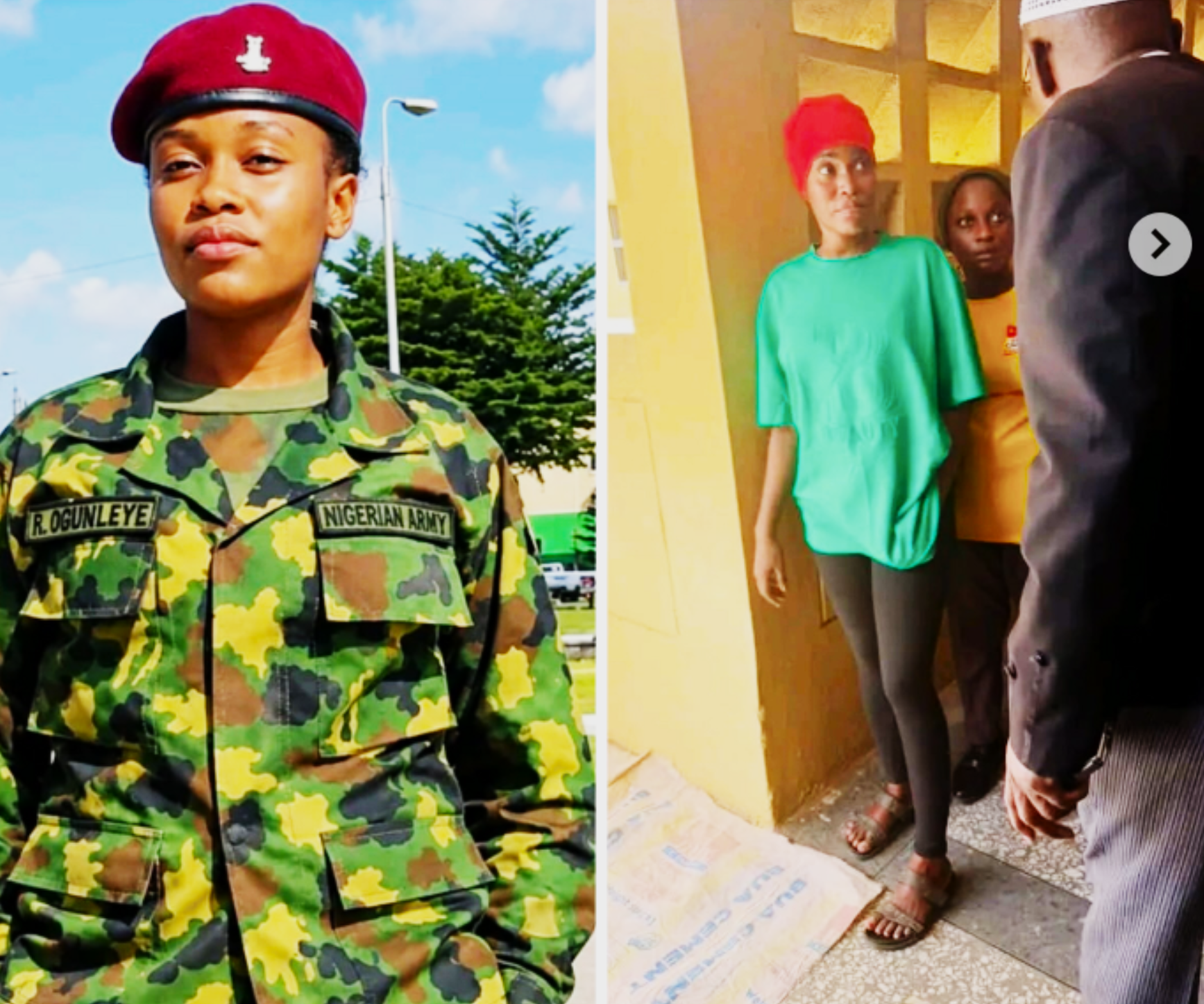
The Federal High Court in Kaduna has convicted former Nigerian Army soldier Ruth Ogunleye over defamatory TikTok publications concerning Nigerian Defence Academy Commandant Major General Oluyemi Thomas Olatoye. Justice Rilwanu Aikawa imposed one year imprisonment on each of two counts, with the terms running concurrently and suspended for three years under a plea bargain. Ogunleye was also fined ₦500,000, ordered to publish an apology in two national newspapers, delete the disputed posts and avoid further contact or publication concerning Olatoye.
The Federal High Court in Kaduna has convicted former Nigerian Army soldier Ruth Ogunleye over defamatory TikTok publications directed at the Commandant of the Nigerian Defence Academy, Major General Oluyemi Thomas Olatoye, bringing a closely watched social media case to a conclusion through a plea bargain that includes a suspended prison sentence, a ₦500,000 fine and sweeping restrictions on future contact or publication involving the senior military officer. Justice Rilwanu Aikawa convicted Ogunleye after she pleaded guilty to two of the five charges brought against her, with the prosecution agreeing to withdraw the remaining three counts under the negotiated settlement. The court imposed one year imprisonment on each of the two counts, with the terms to run concurrently, and suspended the custodial sentence for three years while also ordering her to pay ₦250,000 on each count.
The charges arose from videos Ogunleye published on TikTok in August 2026 in which prosecutors said she made false and damaging claims against Olatoye. Court reports indicate that one of the videos was captioned with a statement accusing the NDA commandant of being responsible for her death, while another referred to material she claimed to have on him. Prosecutors alleged that the videos were knowingly transmitted with the intention of causing annoyance, insult, hatred, injury and damage to Olatoye’s reputation. The counts were brought under provisions of Nigeria’s Cybercrimes Act as amended in 2024, and Ogunleye’s guilty plea formed the basis of the plea bargain ultimately approved by the court.
The conditions attached to the judgment go beyond the suspended custodial term. Ogunleye was ordered to publish a public apology in two national newspapers within 14 days and to delete the videos and other related posts from her social media accounts within 48 hours of her release from custody. She was also barred from contacting Olatoye directly or indirectly and from making further statements, publications or communications about him through social media, text messages, spoken comments or any other platform. The agreement states that those restrictions extend to publications made personally or through another person and that her undertaking not to contact or publish material concerning the commandant will continue beyond the three year suspension period.
Mohammed Sani Katu, a Senior Advocate of Nigeria who represented the nominal complainant, said the suspended sentence did not erase the custodial punishment but gave Ogunleye an opportunity to comply with the terms of the agreement and avoid being returned to prison. He said any violation of the conditions during the three year suspension period could result in her being brought back before the court, where she could be ordered to serve the suspended term once the court is satisfied that a breach has occurred. The arrangement therefore places Ogunleye under continuing legal obligations even though she will not immediately begin serving the custodial sentence imposed by the judge.
The conviction adds a new chapter to a much wider controversy surrounding Ogunleye, whose name became nationally known in 2024 after she publicly accused senior Nigerian Army officers of sexual harassment, intimidation and maltreatment. In January of that year, she used her TikTok account to accuse Colonel I.B. Abdulkareem, Colonel G.S. Ogor and Brigadier General I.B. Solebo of conduct she said had made her life unbearable while she was serving in the Army. Her most serious allegation was directed at Abdulkareem, whom she accused of making unwanted sexual advances and later retaliating against her after she rejected him.
Ogunleye also alleged at the time that she had been denied opportunities, removed from her accommodation and subjected to treatment she believed was intended to silence her. She claimed that her complaints had not been handled properly by senior military authorities and later questioned the credibility of the process used to investigate them. Those allegations attracted substantial attention on social media and prompted public calls for the Nigerian Army to conduct an independent and transparent investigation into what she had described.
The Nigerian Army later announced that it had investigated the allegations and found no evidence to substantiate Ogunleye’s claim that Abdulkareem sexually harassed her. In September 2024, the Army said the matter had been referred to the Nigerian Army Corps of Military Police and that its review of the available evidence and testimony did not establish the offense she alleged. Army spokesman Major General Onyema Nwachukwu said at the time that the investigation exonerated Abdulkareem and that the military considered the findings definitive based on the information available to investigators.
The Army also said Ogunleye had been recommended for discharge on medical grounds before the controversy became public and that she was eventually discharged from service in June 2024 after medical assessments concluded that she was no longer fit to continue serving. Military authorities said they had delayed the discharge in order to provide treatment and had decided not to pursue disciplinary proceedings against her because of concerns about her health. The Army also said she received terminal allowances and other benefits after leaving service. Ogunleye later challenged that account and demanded that the military release the complete investigation findings so that the public could see how its conclusions had been reached.
The earlier dispute also drew attention because Ogunleye said senior officers had failed to protect her after she complained about Abdulkareem’s conduct. Among the figures later connected in public discussion to her grievances was General Christopher Gwabin Musa, who was serving as Chief of Defence Staff during the period of the controversy and is now Nigeria’s Minister of Defence. Musa was sworn in as defence minister in December 2025 and remains in that position.
Ogunleye’s October 2024 efforts to reopen the controversy focused heavily on her belief that the investigation had not fully addressed her allegations. She appealed for further review and argued that the conclusions announced by the Army did not reflect what she believed had occurred. She also expressed concern about the reputational damage caused by the public dispute and the way the case had affected how she was perceived after leaving military service. Those claims remained contested by the Army, which continued to maintain that its investigation had not substantiated the sexual harassment allegations.
The case decided in Kaduna in November 2026, however, involved different publications and a different senior military officer. The charges that produced Ogunleye’s conviction related specifically to TikTok posts concerning Major General Olatoye, who serves as commandant of the Nigerian Defence Academy. Olatoye assumed command of the academy as its 34th commandant and is responsible for an institution that trains officer cadets for Nigeria’s armed forces. The prosecution’s case focused on Ogunleye’s August 2026 publications concerning him rather than on the earlier allegations she had made against Abdulkareem and other officers.
That distinction is important because the guilty plea in the Kaduna proceedings should not automatically be treated as a judicial finding on every allegation Ogunleye has made during her disputes with the Nigerian Army. Her conviction relates to the two specific counts she admitted under the plea bargain involving publications about Olatoye. Her earlier sexual harassment claims against Abdulkareem were investigated separately by the Army, which said it found no evidence to support them, but those allegations were not the subject of the two counts on which she was convicted in the current case.
The judgment nevertheless represents a significant legal consequence for Ogunleye’s continued use of TikTok to make allegations against senior military figures. Social media had been central both to the way she first brought her complaints against the Army into the public domain and to the later publications that resulted in the Kaduna prosecution. The case therefore sits at the intersection of reputation, online speech and Nigeria’s cybercrime laws, which have increasingly been used in disputes involving statements distributed through social media platforms.
Nigeria’s Cybercrimes Act has generated extensive debate over the years because provisions dealing with online communications have been used in cases involving alleged harassment, false statements and reputational harm. Supporters of such prosecutions argue that social media should not provide immunity for people who knowingly publish damaging falsehoods about others. Critics have raised concerns about the possibility of overly broad enforcement and the need to preserve legitimate criticism, whistleblowing and freedom of expression. In Ogunleye’s case, however, the current judgment followed a negotiated plea in which she admitted guilt to two charges rather than a full trial in which the prosecution was required to prove every disputed allegation after contested evidence.
The plea bargain also allowed both sides to avoid a longer trial and produced a judgment focused heavily on preventing further publications involving Olatoye. The restrictions imposed by the court show that the complainant and prosecution were seeking more than a financial penalty or immediate custodial punishment. The agreement was structured to remove the existing material, prevent further communication concerning the NDA commandant and create consequences if Ogunleye resumes the conduct during the suspension period.
For Ogunleye, compliance with those conditions will now determine whether the prison term remains suspended. Her lawyer has warned that any violation could result in her returning to court and being ordered to serve the custodial sentence. That means future social media activity connected to Olatoye could carry consequences far more serious than another warning or civil dispute, particularly because the court has already recorded a conviction and approved the plea bargain.
The judgment also leaves her earlier dispute with the Nigerian Army as a separate and unresolved public controversy in the sense that Ogunleye continues to challenge the Army’s account of what happened, while the military maintains that its investigation cleared Abdulkareem of the sexual harassment allegations. Nothing in the Kaduna judgment changes the fact that the Army rejected those claims after its own investigation, and nothing in the current conviction should be described as a fresh judicial determination of that earlier matter unless a court separately rules on it.
The immediate legal position is much clearer. Ogunleye has now been convicted on two counts relating to defamatory TikTok publications concerning Olatoye, has been ordered to pay a total fine of ₦500,000, must publish a public apology in two national newspapers and must remove the disputed material from her online accounts. The custodial sentence remains suspended for three years, subject to her compliance with the conditions approved by the Federal High Court.
The case is likely to remain closely watched because it combines the history of a former soldier who built a large public controversy around allegations against military superiors with a later criminal case over what she published online about another senior officer. It also illustrates the legal risks that can follow when allegations made on social media move beyond internal complaints and become public accusations capable of causing reputational damage.
For the Nigerian military, the conviction may be presented as vindication of its insistence that officers should be protected from defamatory claims. For rights advocates and other observers, the broader questions surrounding online speech, military accountability and access to transparent grievance procedures are unlikely to disappear simply because this particular prosecution has ended through a plea bargain. The court has settled the two counts before it, but the wider history surrounding Ogunleye remains a reminder of how quickly disputes inside powerful institutions can become national controversies once they move onto social media.