
CRISTIANO RONALDO PAYS TRIBUTE TO LIONEL MESSI AFTER EMOTIONAL ARGENTINA FAREWELL
Cristiano Ronaldo has paid tribute to Lionel Messi following the Argentine captain’s final international appearance, telling his longtime rival that he has his respect for everything he achieved with Argentina. Messi ended his 21-year national-team career with a goal and two assists in Argentina’s 3-0 victory over Benin at the Monumental in Buenos Aires, finishing with 208 appearances and 126 goals.
Cristiano Ronaldo has publicly paid tribute to Lionel Messi following the Argentine captain’s final appearance for his country, offering a message of respect to the player whose career was intertwined with his own for more than 15 years and adding another emotional moment to a farewell that brought one of international football’s defining eras to a close.
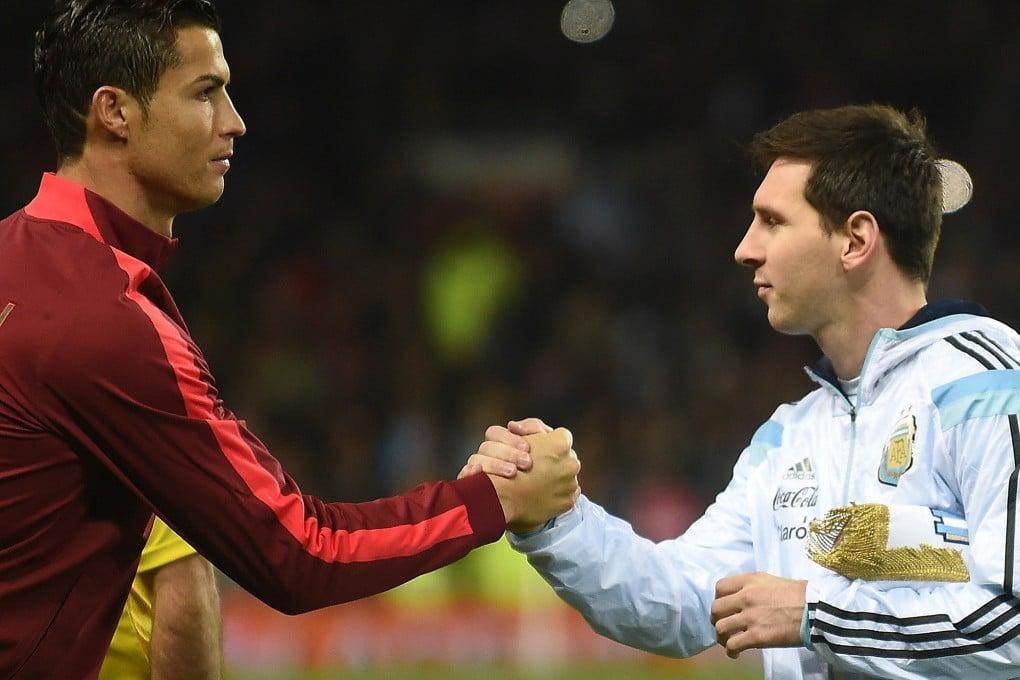
Ronaldo responded Wednesday to Messi’s Instagram message marking the end of his Argentina career, writing that the 39-year-old had spent many years representing his country and created a story that would endure. The Portuguese captain told Messi he had his “respect” for what he achieved with Argentina and ended the message with an embrace, a brief but significant public acknowledgment between two players whose sustained rivalry shaped modern football.
The tribute came less than a day after Messi completed his 21-year international career with a goal and two assists in Argentina’s 3-0 friendly victory over Benin at the Estadio Monumental in Buenos Aires. More than 85,000 supporters filled the stadium for a night designed almost entirely around saying goodbye to the national team’s record appearance-maker and record goalscorer, whose relationship with Argentina evolved from years of pressure and disappointment into one of the most celebrated international careers in the sport.
Messi scored Argentina’s third goal from the penalty spot and created the other two, ensuring that his final appearance ended with the kind of decisive performance that had defined the later years of his international career. The match was his 208th appearance for Argentina and took his international scoring record to 126 goals, extending both national records before he walked away from the team he first represented at senior level in 2005.
The farewell became far more than an ordinary international friendly. Argentina’s players, supporters and football authorities treated the evening as a national tribute to a captain who eventually delivered the trophies that had eluded him during the most difficult period of his career. Fireworks, banners, video tributes and a packed Monumental surrounded a match whose result was secondary to the significance of Messi wearing the blue-and-white shirt for the final time.
Messi was visibly emotional before, during and after the game. He described the occasion as one of the most painful moments of his career and later acknowledged how difficult it was to leave the pitch knowing there would be no future international match waiting for him. His retirement closes a journey that included the 2022 World Cup title, Copa América victories in 2021 and 2024, Olympic gold in 2008 and appearances in multiple World Cup finals.
The transformation of Messi’s Argentina story is central to understanding why his farewell carried such weight. For much of his career, his extraordinary success with Barcelona existed alongside repeated questions about why he had not reproduced the same trophy haul with his national team. Defeats in the 2014 World Cup final and successive Copa América finals intensified the pressure, and Messi briefly announced his international retirement following Argentina’s loss to Chile in the 2016 Copa América Centenario final.
He returned and eventually changed the entire narrative surrounding his international career. Argentina defeated Brazil at the Maracanã to win the 2021 Copa América, giving Messi his first senior international title. A year later, he captained the country to the 2022 World Cup in Qatar, scoring throughout the tournament and twice in the final against France before Argentina prevailed on penalties. The victory ended a 36-year wait for another World Cup and elevated Messi alongside Diego Maradona in Argentina’s football mythology.
Argentina added another Copa América title in 2024, reinforcing a late-career run in which Messi and a generation led by coach Lionel Scaloni converted years of near misses into sustained international success. His final years with the national team consequently looked very different from the period when criticism of his performances and emotional connection to Argentina followed almost every major tournament.
Ronaldo witnessed nearly all of that journey from the opposite side of football’s most famous individual rivalry. The Portuguese forward and Messi spent the peak years of their careers competing for Real Madrid and Barcelona respectively, turning Spain’s El Clásico into a global event and dividing supporters over which player should be considered the best of their generation.
Their rivalry was driven by extraordinary numbers rather than a personal feud. Between them, Messi and Ronaldo won 13 Ballon d’Or awards, dominated domestic scoring records, collected Champions League titles and pushed each other through an era in which scoring 40 or 50 goals in a season became almost routine for the two biggest stars in the game.
Messi won eight Ballon d’Or awards and Ronaldo five, while Ronaldo established himself as the leading scorer in men’s international football. Messi accumulated a record collection of individual honors of his own while ultimately securing the World Cup that had long represented the largest missing piece in his career.
Their club rivalry reached its most intense period after Ronaldo joined Real Madrid in 2009. For the next nine years, almost every major Spanish title race, Champions League discussion and individual award became connected to one or both players. Barcelona and Madrid were already historic rivals, but the simultaneous presence of Messi and Ronaldo gave the rivalry an additional individual dimension that was exported to audiences far beyond Spain.
The competition inevitably produced years of debate about their personalities, statistics and achievements, often fueled more aggressively by supporters than by the players themselves. Both repeatedly rejected the idea that they personally hated one another, even as each made comments over the years reflecting the competitive tension that existed between them.
Ronaldo has previously spoken about the unusual relationship created by spending so much of his career being compared with Messi. They shared award ceremonies, commercial stages and major matches, while their names became almost impossible to discuss independently during the peak of their careers. Messi has similarly described the rivalry as something that benefited both players and football generally.
Wednesday’s message therefore carried greater symbolic weight than an ordinary retirement tribute from one star to another. Ronaldo was acknowledging the end of the international career of the player against whom his own legacy has been measured more frequently than anyone else’s.
The two players followed different international paths. Messi’s relationship with Argentina became defined by the long search for a senior trophy before ending with a World Cup and successive continental success. Ronaldo’s Portugal career produced the country’s first major senior international trophy when it won Euro 2016, followed by further success in the UEFA Nations League.
Their different national-team achievements became another component of the comparison between them, just as their club careers did. Yet the deeper similarity was longevity. Both remained internationally relevant far beyond the age at which most elite forwards begin withdrawing from national-team football, maintaining enormous commercial and sporting influence into their late thirties and early forties.
Messi’s farewell made that longevity particularly visible. His senior Argentina debut came in August 2005, meaning supporters who were children when he first appeared for the national team are now adults watching their own children experience his final game. Several generations of Argentine players arrived, played alongside him and retired while Messi remained part of the team.
The road between those two moments was rarely uncomplicated. Messi was initially treated differently in Argentina than at Barcelona, where his rise into the world’s best player seemed almost effortless from the outside. His quiet personality, years spent developing in Spain and repeated international defeats created a sometimes difficult relationship with sections of the Argentine public.
The 2021 Copa América altered that relationship substantially. Winning the tournament in Brazil appeared to remove years of accumulated pressure, and the World Cup triumph in Qatar transformed Messi from a player repeatedly asked to justify his place beside Maradona into the captain of another world championship team.
Tuesday’s farewell reflected that changed relationship. There was no debate about whether Messi had delivered enough for Argentina. The evening was instead organized around gratitude for what he had done and recognition that a national team built around him for two decades would now have to begin functioning without him.
That transition will be a major challenge for Scaloni. Argentina has already introduced younger players and established a system capable of functioning without Messi for individual matches, but replacing his creative influence, leadership and psychological importance is a different matter. His departure removes not only the team’s record scorer but the player around whom opponents have planned defensively for most of the past 20 years.
The farewell of veteran defender Nicolás Otamendi on the same night added to the sense of a generational shift. Several players who formed the core of Argentina’s championship-winning side are approaching the end of their international careers, making the coming period as much about succession as celebration.
Messi will continue playing club football with Inter Miami, meaning Tuesday was not a retirement from the sport altogether. His decision specifically ends his Argentina career after more than two decades, separating the emotional finality of the national-team farewell from questions about when he will eventually stop playing professionally.
That distinction also helps explain the reaction. International football carries a different emotional weight because a player cannot transfer to another national team or recreate the same relationship elsewhere. Once Messi removed the Argentina shirt for the last time, one of the longest continuous relationships in modern international football was finished.
His Wednesday message emphasized that reality. Messi said he already missed wearing Argentina’s colors and described the decision to retire as one he believed was correct despite the sadness surrounding it. He thanked his family, teammates, coaches and supporters while reflecting on the difficult periods as well as the successful ones.
Ronaldo’s response appeared among the most closely watched reactions because of their shared history. His words were not lengthy, but they were direct and notably focused on Messi’s achievements with Argentina rather than reopening the argument over their individual careers.
The response was also consistent with the respect both players have shown one another at significant moments despite decades of external rivalry. Their competition produced sharp sporting tension and endless comparisons, but there has never been evidence of the kind of personal hostility frequently projected onto them by rival fan bases.
Both men have acknowledged that the other helped define the era in which they played. Their simultaneous dominance elevated individual standards and made almost every major award part of a continuing comparison. Years later, even as their careers moved away from Barcelona and Real Madrid, the debate followed them to Paris, Miami, Turin, Manchester and Saudi Arabia.
That debate will not end because Messi has retired from international football. Their records will continue to be compared, and arguments about the greatest player in history will remain largely subjective because supporters place different weight on World Cups, Champions League titles, domestic leagues, goals, assists, longevity and individual awards.
What has changed is that one major part of the rivalry is now permanently complete. Messi will never add another Argentina appearance or international goal. His national-team record is final at 208 matches and 126 goals, alongside a World Cup, two Copa América titles and an Olympic gold medal.
Ronaldo’s tribute recognizes that finality without attempting to settle the larger comparison. It instead places Messi’s Argentina career in historical terms, acknowledging a story built over more than two decades and a body of achievements that will remain part of international football long after both players have retired.
The farewell also reinforces how much football’s landscape is changing. For almost two decades, Messi and Ronaldo were permanent reference points around which the sport organized its biggest individual conversations. Younger stars have already inherited the leading roles at European clubs and international tournaments, but the two veterans remained symbolic links to an era that began in the mid-2000s.
Messi’s departure from Argentina closes one of the clearest chapters of that era. Ronaldo’s message, coming from the player most closely associated with him throughout it, added an unusual sense of completion to a farewell already filled with tributes from teammates, former players and supporters.
Argentina must now move into its first permanent post-Messi period since 2005, while Messi continues the final phase of his club career in the United States. Ronaldo, meanwhile, remains one of the few players whose own longevity allows him to understand the scale of leaving behind a national-team career measured in decades rather than seasons.
Their rivalry will continue to be analyzed through trophies, statistics and individual awards, but Wednesday’s exchange offered a different conclusion to one part of their shared history. Ronaldo did not attempt to diminish Messi’s farewell or redirect it toward their old competition; he publicly acknowledged what his longtime rival achieved for Argentina and the permanence of the story he leaves behind.
For Messi, the immediate chapter has already closed. His 208th Argentina appearance ended with a goal, two assists and victory before more than 85,000 supporters at the Monumental, bringing a 21-year international career to its planned conclusion. For Argentina, attention now shifts toward building a national team without the player who defined much of its modern history, while for football more broadly, Ronaldo’s message serves as another reminder that the era dominated by their parallel careers is gradually reaching its end.