CRISTIANO RONALDO’S MOTHER SAYS SHE WAS GLAD PORTUGAL LOST 4–1 TO DENMARK, ACCUSES TEAM OF DISRESPECT
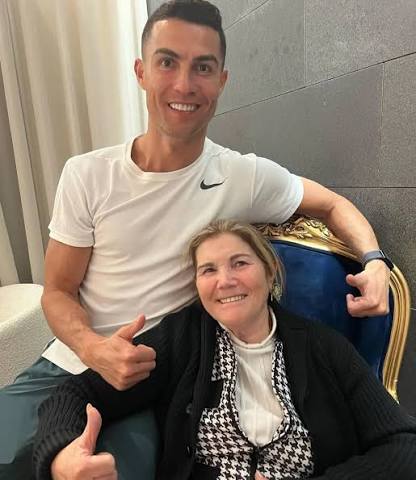
Cristiano Ronaldo’s mother, Dolores Aveiro, has said she was glad Portugal lost 4–1 to Denmark on November 14, describing the defeat as deserved and accusing the national team of failing to respect her son before his recent international retirement. Aveiro said Ronaldo had been deceived, criticised his former teammates for what she described as a lack of respect and rejected Portugal’s tribute to him in Braga because it took place in his absence. Portugal coach Jorge Jesus declined to escalate the dispute, saying he respected Aveiro and understood a mother defending her son, while maintaining his own position over the decisions that preceded Ronaldo’s departure. Portugal’s defeat to Denmark was its heaviest home loss in an official competitive match and has intensified scrutiny of the team’s transition into the post-Ronaldo era.
Cristiano Ronaldo’s mother, Dolores Aveiro, has launched an extraordinary public attack on Portugal’s national team following its humiliating 4–1 home defeat to Denmark, saying she was pleased to see the side lose because she believes her son was deceived, disrespected and pushed out after more than two decades of service to his country. Speaking in Lisbon during the presentation of a day centre bearing her name at Sporting CP’s José Alvalade Stadium, Aveiro said the defeat was deserved and made clear that her reaction was tied directly to the way Ronaldo’s final weeks with the national team unfolded. Her comments have reopened a deeply emotional debate in Portugal over the circumstances surrounding Ronaldo’s international retirement, his fractured relationship with head coach Jorge Jesus, the response of his former teammates and whether the Portuguese Football Federation properly honored the most prolific player in the country’s history.
Portugal’s defeat to Denmark on Saturday, November 14, was already one of the most damaging results the national team had suffered in recent years before Aveiro’s intervention transformed it into something even larger. Denmark dismantled Portugal 4–1 at the Estádio Municipal de Braga in a UEFA Nations League Group A4 match, inflicting what Reuters described as Portugal’s heaviest home defeat in an official competitive fixture. The result immediately raised questions about the team’s direction in the post-Ronaldo era, particularly because it was Portugal’s first match since the 41-year-old announced on November 5 that he would no longer represent his country. Instead of serving as a symbolic beginning to life after the former captain, the evening became a painful reminder of his absence as Denmark repeatedly exposed Portugal defensively and silenced the home crowd.
Aveiro did not attempt to hide her satisfaction. Speaking to Portuguese media, she said Ronaldo had been left sad by the way his departure was handled and accused people within the national-team setup of deceiving him. She then turned directly to the Denmark defeat, saying the result was deserved and that she was glad Portugal had lost. Her language was striking because Ronaldo spent more than two decades as the public face of the national team, becoming Portugal’s record appearance-maker and record goalscorer while helping deliver the country’s first major international trophy at Euro 2016 and later winning the UEFA Nations League. For his mother to openly celebrate a Portuguese defeat therefore reflected the depth of the family’s anger over what they believe was an unacceptable ending to one of the most important international careers in football history.
Aveiro’s criticism went beyond the Portuguese federation and coaching staff. When asked whether Ronaldo had been treated with respect by his former teammates, she said he had not, declaring that none of them had shown him the respect and affection she believed he deserved. She also said that Ronaldo himself felt the same way, suggesting that the breakdown was not simply a disagreement between one player and one coach but a much wider feeling of alienation within the national team. That allegation is especially significant because Ronaldo had shared the Portugal dressing room with several generations of players and had captained many of the current squad members through major tournaments, including European Championships, World Cups and Nations League campaigns.
The accusation of disrespect has become one of the most sensitive elements of the controversy because Ronaldo’s position in Portuguese football has long extended beyond his statistics. He became the symbol of a generation, carrying the national team through multiple qualification campaigns and tournaments while setting international scoring records that placed him at the centre of Portugal’s football identity. According to current reporting, he retired with 234 international appearances and 146 goals, figures that make his departure not simply the retirement of a veteran player but the end of an era that began when he made his Portugal debut in 2003. The circumstances surrounding that exit therefore matter enormously to supporters who watched much of the modern history of Portuguese football unfold with Ronaldo as captain.
The dispute appears to have intensified during Portugal’s October international window, when Ronaldo’s relationship with Jorge Jesus deteriorated following disagreements over his role in the team. Reports say Ronaldo left the Portugal camp after becoming unhappy with the coach’s decisions and later announced his retirement from international football on November 5. Some accounts have said the disagreement centred on expectations about Ronaldo’s playing time and whether Jesus had previously indicated that he would feature more prominently. Jesus, for his part, has rejected suggestions that he betrayed the player and has defended his coaching decisions as being based on what he believed was best for the national team. The exact details of private conversations between the two men remain disputed, and neither the federation nor Ronaldo has publicly released a full record of what was said behind closed doors.
That uncertainty has allowed competing narratives to dominate the discussion. Ronaldo’s supporters see the episode as an example of a legendary player being pushed aside without the respect his achievements warranted, while those defending the coaching staff argue that no footballer, regardless of his history, can be guaranteed a permanent starting role. The debate is particularly complicated because Ronaldo remained an active club player at the time of his retirement and had continued scoring regularly, meaning his departure was not caused simply by physical inability to continue. Instead, it appears to have been shaped heavily by questions of status, trust, communication and the balance between honoring a historic captain and building a team around a new generation.
The Denmark match was supposed to help Portugal turn the page, but the result instead magnified every unresolved question. Denmark played with greater intensity and efficiency, punishing defensive mistakes and taking control of a match in which Portugal struggled to impose itself. Rasmus Højlund was among the Danish players to score as the visitors repeatedly found space against the Portuguese defense, while the home side failed to produce the authority supporters had expected. The 4–1 scoreline was not merely another defeat in the Nations League; it was historic in its severity and immediately became attached to the wider story of Ronaldo’s absence.
The symbolism of the night was impossible to ignore because Portugal had deliberately turned the match into a tribute to Ronaldo before kickoff. Players wore shirts bearing the number 7, children accompanying the team also displayed the number, and supporters participated in a seventh-minute tribute referencing the shirt Ronaldo made iconic during his international career. A large message thanking the former captain was displayed inside the stadium, while chants and celebrations associated with Ronaldo echoed around the ground. Yet for Aveiro, the tribute failed precisely because her son was not there to receive it. She argued that a true tribute should have been carried out in Ronaldo’s presence, saying the family did not appreciate seeing the country honor him after he had already walked away.
Aveiro contrasted Portugal’s ceremony with the tribute she said Sporting CP intends to give Ronaldo, making clear that she believes his boyhood club values him in a way the national-team structure did not. Sporting holds a special place in Ronaldo’s story because it was the club where he emerged as a professional before moving to Manchester United and becoming one of the most celebrated players in world football. Aveiro said Sporting would be the place where Ronaldo receives what she considers a proper tribute, adding another layer to the growing divide between the family and the Portuguese federation.
The national-team tribute also became more painful as the Denmark match deteriorated. Supporters reportedly began chanting Ronaldo’s name after Denmark scored its fourth goal, creating an atmosphere in which a ceremonial goodbye appeared to transform into an implicit comparison between the struggling team on the field and the captain who was no longer there. That does not prove Portugal would have avoided defeat had Ronaldo played, but it demonstrated how quickly his absence became part of the interpretation of the result. The timing could hardly have been worse for Jesus, who is trying to establish authority over a team entering a new phase without the most dominant personality in its modern history.
Jesus initially sounded frustrated when journalists asked him to respond to Aveiro’s comments, questioning whether he was now expected to answer Ronaldo’s mother as well. However, he quickly adopted a more conciliatory tone, saying he had great respect for her and understood why a mother would defend her child. He described Aveiro as someone who had suffered greatly while raising her family and declined to escalate the confrontation into a personal dispute. His response was significant because a hostile answer could have deepened an already emotional controversy and shifted attention even further away from Portugal’s upcoming football responsibilities.
Jesus has nevertheless remained firm about his own position in the Ronaldo dispute. He has indicated that he does not believe he acted improperly and has defended his right as coach to make selection decisions based on the interests of the team. That places him in an extremely difficult position because Ronaldo’s stature means almost every tactical decision involving the forward carried political and emotional weight far beyond the football field. A coach attempting to reduce the role of an ageing but still productive superstar must balance performance considerations against dressing-room influence, supporter expectations and the player’s historical importance. In Ronaldo’s case, that challenge was magnified by the fact that he had been Portugal’s captain and defining public figure for more than two decades.
The current debate should therefore not be reduced simply to whether Portugal is better or worse without Ronaldo. One match, even a disastrous 4–1 defeat, cannot establish that conclusion. National teams frequently experience difficult performances during transitions, and Portugal still possesses a squad filled with elite players competing at major European clubs. At the same time, Ronaldo’s departure removed a leader whose influence extended into the psychological identity of the team, and replacing that kind of presence can take time even when the tactical system is moving in another direction.
The next challenge for Portugal is immediate. The team must face Wales in its final Nations League group match, with the outcome affecting the final standings in Group A4. Current reports indicate that Portugal have already secured progression to the quarter-finals, but a draw against Wales would guarantee top spot, while another defeat could leave Denmark with an opportunity to finish above them depending on other results. Jesus will also have to manage the match without several important players, including Bernardo Silva, Rúben Dias and João Palhinha, adding further pressure following the Denmark humiliation.
That makes the public controversy around Ronaldo particularly inconvenient for Portugal’s current squad. Instead of focusing entirely on the Wales match and correcting the defensive problems exposed by Denmark, players are being asked to respond to accusations from the mother of their former captain that they failed to respect him. The emotional weight of that claim could create uncomfortable questions inside a dressing room that includes several players who spent years alongside Ronaldo and publicly celebrated major achievements with him. Whether any of those players decide to respond directly could determine whether the controversy begins to settle or expands further.
The Portuguese Football Federation also faces a difficult reputational challenge. Its tribute in Braga was clearly intended to recognize Ronaldo’s historic contribution to the national team, yet Aveiro’s rejection of the gesture has turned the ceremony into part of the dispute itself. A tribute designed to provide closure has instead been portrayed by Ronaldo’s family as inadequate because he was absent. That criticism raises a broader question about whether the federation attempted to honour Ronaldo after relations had already deteriorated beyond repair rather than reaching an agreed farewell before his retirement became public.
Ronaldo’s international achievements make that question particularly sensitive. He helped Portugal win Euro 2016, the country’s first major senior international trophy, and later played a central role as Portugal won the inaugural UEFA Nations League in 2019. Across more than two decades, he became the player around whom multiple generations of the national team were built, surviving managerial changes and tactical reinventions while maintaining extraordinary scoring numbers. His departure was always going to be a national event; the fact that it happened amid disagreement rather than celebration has ensured that the debate will continue long after his final appearance.
For Aveiro, however, the issue appears less complicated. Her comments reflected the perspective of a mother who believes her son gave everything to his country and was not shown equivalent loyalty when his role became contested. She did not attempt to disguise that personal perspective, and Jesus’ response acknowledged exactly that reality. Her satisfaction at Portugal’s defeat should therefore be understood as part of her anger over Ronaldo’s treatment rather than as a neutral football assessment of the national team.
That does not mean her accusations against Ronaldo’s teammates have been independently established. Aveiro’s assertion that they failed to respect him represents her interpretation of the relationship inside the squad, and there has been no public evidence showing that the entire team deliberately isolated or mistreated Ronaldo. Several Portugal players have previously spoken positively about him, and the collective tribute staged in Braga demonstrates that the federation and squad were at least publicly attempting to acknowledge his importance. The gap between that public respect and the family’s perception of what happened privately remains at the centre of the controversy.
The disagreement is also a reminder of the difficulty iconic athletes face at the end of international careers. Players who define teams for years rarely transition quietly into reduced roles because their sporting identities become intertwined with national identity. Coaches eventually have to make decisions about playing time and succession, while players who have spent their careers as automatic starters can struggle to accept a diminished role. When communication breaks down, what could have been an orderly transition can become a confrontation involving pride, loyalty and conflicting ideas about respect.
Portugal is now experiencing that transition in public. Every result will inevitably be compared with the Ronaldo era for some time, especially after such a severe defeat in the first match following his retirement. A victory over Wales would help Jesus shift attention back toward the team’s future, while further poor performances would intensify questions about leadership, tactical direction and whether the transition was handled correctly.
Ronaldo himself has so far allowed much of the public reaction to come from others rather than launching an extended personal campaign against the national team. That restraint has left Aveiro’s statements carrying additional weight because she is expressing sentiments she says her son shares. Whether Ronaldo eventually gives a detailed account of his departure could become one of the most important developments in the story, particularly if he addresses directly what was promised, what changed and why he decided the relationship with the national team could no longer continue.
The relationship between Ronaldo and Jesus is likely to remain under scrutiny because both are major figures in Portuguese football and because their disagreement appears to have accelerated the retirement decision. Jesus has repeatedly sought to frame his actions as normal coaching decisions, while Ronaldo’s camp appears to view the episode as a breach of trust. Until either side provides a full chronology supported by direct evidence, the precise sequence of commitments and disagreements will remain contested.
What is beyond dispute is the scale of the transition Portugal is now undergoing. For more than 20 years, Ronaldo’s presence gave the national team continuity through changing coaches, formations and generations. Young players entered a squad in which he was already captain and global superstar, while supporters came to expect him to remain central to every major tournament. His sudden absence forces Portugal to establish not only a different attacking structure but also a different leadership hierarchy.
The Denmark result exposed how difficult that process can be. Defensive errors, a lack of control and the emotional atmosphere surrounding Ronaldo’s tribute combined to produce a night that will be remembered for reasons Portugal would have preferred to avoid. The fact that Denmark’s victory became historic only strengthened Aveiro’s argument in the eyes of supporters who believe Ronaldo was discarded too quickly, even though a single result cannot determine whether Portugal’s long-term transition will succeed.
For Denmark, the match was a major statement and a deserved victory on the night. Their performance demonstrated organization, aggression and clinical finishing, and reducing the result simply to Ronaldo’s absence would overlook what the Danish team accomplished. Portugal’s problems were real, but Denmark created and exploited them effectively, making the 4–1 scoreline a reflection of the difference between the teams’ performances rather than merely a symbolic referendum on one retired player.
Aveiro’s comments have nevertheless ensured that the football itself is no longer the only story. Her criticism has brought questions of respect, loyalty and legacy back to the centre of Portuguese football, challenging both the federation and the current players to explain how a relationship with the greatest scorer in the country’s history deteriorated so dramatically.
The response from Jesus has so far been deliberately restrained. By saying that a mother will naturally defend her child, he acknowledged Aveiro’s emotional position without accepting her accusations as fact. That approach may help prevent the dispute from escalating into a prolonged public exchange, but it does nothing to resolve the deeper questions that produced the controversy.
Portugal’s next performances will inevitably influence how the episode is remembered. If the team stabilizes, wins consistently and develops a new identity, the Denmark defeat may eventually be viewed as a painful but temporary stage of transition. If results continue to deteriorate, Ronaldo’s absence and the circumstances of his retirement will become an increasingly powerful reference point for critics of Jesus and the federation.
For Ronaldo, meanwhile, his international record is already secure regardless of how the dispute ends. His 23-year Portugal career produced numbers and achievements that place him among the most significant international footballers ever, and the circumstances of his departure cannot erase the goals, appearances and trophies that came before it. The unresolved issue is whether Portugal will eventually find a way to give him the farewell that both sides can accept.
Aveiro has already made clear that, in her view, the Braga tribute did not accomplish that. Her insistence that the proper ceremony should happen at Sporting rather than with the national team speaks to how deeply the family feels the relationship with Portugal has been damaged.
The strongest indication of that damage may be her reaction to the Denmark result itself. For the mother of the player most closely associated with modern Portuguese football to publicly say she was happy to see Portugal lose would have been almost unimaginable only months earlier. It shows that the dispute has moved beyond ordinary disagreements about selection and entered the territory of personal grievance and perceived betrayal.
Portugal now has to navigate that emotional aftermath while continuing its Nations League campaign. Jesus has to rebuild confidence after a historic defeat, establish a leadership structure without Ronaldo and keep a talented squad focused despite the controversy surrounding its former captain.
The federation, meanwhile, faces the longer-term challenge of repairing its relationship with one of the most important players ever to wear the national shirt. Whether that happens privately, through Sporting or during a future national-team ceremony remains unclear.
For now, Dolores Aveiro has ensured that the argument surrounding Ronaldo’s departure will not disappear quietly. Her message was uncompromising: she believes her son was deceived, believes he was not respected by the people around him and believes Portugal’s defeat to Denmark was deserved.
The response from Jesus has been calmer, but the unresolved issues remain. Portugal’s 4–1 defeat was real, the tribute to Ronaldo was real, and so too is the anger from a family that believes the greatest chapter in the country’s football history ended without the respect it deserved.
As Portugal prepares for its next match, the national team is therefore dealing with two challenges at once: recovering from one of the worst competitive home defeats in its history and proving that the transition away from Cristiano Ronaldo can succeed despite the bitter circumstances surrounding his exit.
The coming weeks may determine whether the controversy begins to fade or becomes the defining story of Portugal’s new era. For the moment, however, the first major result after Ronaldo’s retirement has done little to quiet those who believe his departure was badly handled, and the most forceful voice making that case is now his mother.