DANONE UPGRADES SOUTHEAST ASIA R&I LAB IN THAILAND TO ACCELERATE NUTRITION INNOVATION
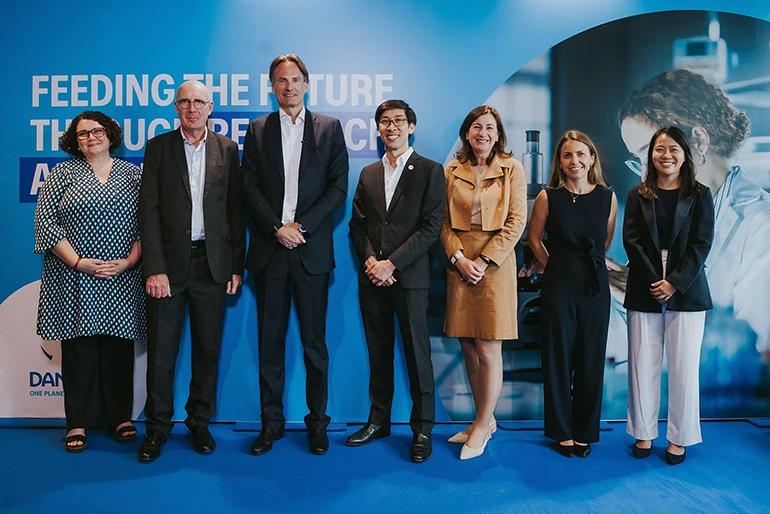
Danone has upgraded the Consumer Experience Space at its Southeast Asia Research & Innovation Application Lab in Thailand, increasing simultaneous consumer-evaluation capacity by 40 percent and strengthening the company’s ability to combine sensory research, nutrition science, product development, packaging testing and climate simulation for regional markets. The facility supports work on health priorities including iron-deficiency anemia, stunting, immunity and brain development and connects with Danone’s wider Asian innovation network, including its Singapore Digital Lab and newly opened Shanghai R&I Center, as the company seeks to develop more locally relevant nutrition products for consumers across Southeast Asia.
BANGKOK, THAILAND — Global food and nutrition company Danone has expanded the capabilities of its Southeast Asia Research & Innovation Application Lab in Thailand, increasing the facility’s consumer-evaluation capacity by 40 percent as the company seeks to develop nutrition products more closely aligned with the health needs, eating habits and sensory preferences of consumers across the region. The upgrade focuses on the laboratory’s Consumer Experience Space, where Danone teams assess how people respond to products across taste, aroma, texture, format and everyday consumption occasions, while combining those insights with nutritional science, product formulation, packaging development and industrial testing. The company says the expanded facility is designed to shorten the distance between global scientific expertise and local consumer needs, allowing researchers to test more concepts simultaneously and refine nutrition products before they move into large-scale manufacturing and distribution across Southeast Asian markets.
The upgraded facility forms part of Danone’s wider regional Research & Innovation network rather than functioning as an isolated laboratory. Danone says the Southeast Asia Application Lab connects local teams directly with the company’s global R&I system, which includes scientists and specialists working across nutrition, health, microbiome science, product technology, digital health and packaging. That structure is intended to allow research developed in global centers to be adapted to Southeast Asian conditions while also allowing insights from the region to influence Danone’s wider international innovation agenda. The company’s strategy reflects a broader shift within multinational food groups toward localized product development, particularly in markets where nutritional priorities, climate conditions, consumer habits and regulatory expectations can differ substantially from those in Europe or North America.
The most immediate change is the 40 percent increase in simultaneous consumer-evaluation capacity. Danone says the expanded Consumer Experience Space allows researchers to test more products and gather more detailed feedback from consumers at the same time, which can help reduce bias and provide a clearer understanding of what people actually prefer. Those evaluations can include differences in flavor intensity, aroma, texture, preparation method, packaging format and how a product is consumed at different stages of life. Such testing is particularly important in nutrition categories where scientific formulation alone does not guarantee consumer acceptance. A product may meet nutritional requirements but still fail commercially if consumers dislike its taste, mouthfeel or preparation process, making sensory research an important part of turning laboratory science into products people are willing to use consistently.
Danone’s Southeast Asia Research & Innovation Director, Sonjai Uppal, said the upgrade brings sensory testing, scientific expertise and co-creation capabilities closer together, allowing teams to understand regional consumer needs more effectively and translate those insights into more relevant nutrition solutions. She said the laboratory works closely with manufacturing and quality teams so that products are evaluated not only for nutritional value but also for performance under real-world conditions before they reach consumers. That integrated approach is intended to reduce the risk of products performing well in laboratory settings but encountering problems during production, transport, storage or everyday use.
The facility’s role extends well beyond taste testing. Danone says the lab also supports product and process development, packaging assessment, transport testing and climate simulation, all of which are important in Southeast Asia’s diverse operating environment. Products distributed across the region may be exposed to high humidity, elevated temperatures, long transport routes and varying retail conditions, meaning packaging and formulation must remain stable under circumstances that can differ sharply from those encountered in temperate markets. By testing those conditions before commercialization, Danone aims to improve quality, product stability and consumer experience while reducing failures once products reach stores and households.
The company specifically highlighted brands including Hi-Q Plus, Dumex Dugro and Aptamil KID as examples of products that can benefit from the lab’s capabilities. These brands operate primarily in early-life and childhood nutrition, one of Danone’s most strategically important specialized nutrition categories in Southeast Asia. The region has a large young population and continues to face significant nutritional challenges, including micronutrient deficiencies and uneven childhood growth outcomes, creating both a public-health need and a major commercial market for science-based nutrition products.
Danone says the laboratory’s research priorities are informed by health concerns including iron-deficiency anemia, stunting, immune development and healthy brain development. These issues vary in severity across Southeast Asian countries but remain important public-health challenges, particularly among children, pregnant women and lower-income households. By using regional nutritional data together with consumer research, the company says it can develop products that are more closely aligned with the needs of specific populations rather than relying only on formulations created for global markets.
Iron-deficiency anemia remains one of the most common nutritional deficiencies worldwide and can affect cognitive development, energy levels and physical growth, particularly in children and women of reproductive age. Stunting, which results from chronic undernutrition and repeated illness during early childhood, can have long-term consequences for learning, health and economic productivity. Danone’s decision to emphasize these areas reflects the growing importance of specialized nutrition companies in developing products designed to complement broader public-health strategies, although commercial nutrition products are not substitutes for food security, healthcare, maternal support or national nutrition programmes.
That distinction matters because companies operating in infant, child and medical nutrition are subject to close scrutiny over how products are marketed and positioned. Scientific claims must be supported by evidence, and public-health authorities frequently emphasize that commercial products should not undermine breastfeeding, balanced diets or government nutrition guidance. Danone’s investment in research capabilities therefore carries both commercial potential and regulatory responsibility, particularly where products are intended for young children or people with specific medical needs.
The Thailand facility sits within a broader Danone presence that has developed over more than six decades. Danone Specialized Nutrition Thailand says it has operated in the country for more than 65 years and currently serves multiple stages of life through early-life nutrition, products for children with specific nutritional needs, plant-based nutrition, healthy-ageing products and hydration. The company’s local portfolio includes Hi-Q Plus, Dumex Dugro, Alpro, Souvenaid, Evian and B’Lue, giving the research lab exposure to several distinct product categories rather than a single nutrition segment.
Danone’s Bangplee site in Samut Prakarn province also serves as a regional supply and innovation point for Southeast Asia. Recent recruitment by the company for R&I technologists and packaging-development specialists at the Samut Prakan location shows that Danone is continuing to build technical capabilities around product prototyping, pilot-scale development, factory trials and packaging innovation. Those roles suggest the Southeast Asia research operation is closely connected to industrial execution rather than being limited to theoretical research.
That connection is important because successful food innovation requires a product to move through multiple stages before reaching consumers. A formulation may begin as a laboratory prototype, but it then has to be reproduced reliably at pilot scale and eventually inside a factory operating under commercial conditions. Ingredients may behave differently when production volumes increase, while packaging, heat treatment, shelf life and transport can all influence the final product. Danone’s regional model is designed to connect those stages more closely so that consumer feedback can influence technical development before expensive large-scale manufacturing decisions are made.
The company is also expanding digital capabilities elsewhere in Asia. In Singapore, Danone operates a Digital Lab focused on digital science, data analytics and artificial intelligence-enabled health solutions. The facility has worked on tools designed to support screening, monitoring and personalized nutrition, including applications related to growth, iron status and digestive health. Danone announced a new phase of investment in that Singapore operation in 2025, with a particular emphasis on healthy ageing and scalable digital-health tools.
That Singapore capability complements the physical product-development work being conducted in Thailand. While the Thai Application Lab focuses heavily on sensory testing, formulation, packaging and performance, the Digital Lab can analyze data and support technology-based health solutions. Together, those capabilities illustrate how modern food and nutrition companies increasingly combine traditional product science with digital tools, behavioral data and artificial intelligence.
Danone has also recently expanded its Research & Innovation footprint in China. On November 2, the company inaugurated a new 5,200-square-meter Research & Innovation Center in Shanghai, bringing together more than 130 multidisciplinary specialists. The Shanghai center serves China and the wider Asia-Pacific region while also contributing to Danone’s global science agenda, and includes the company’s third OneBiome laboratory dedicated to nutrition, gut microbiome research and health.
The Thailand upgrade therefore appears to be part of a larger regional investment pattern rather than a standalone expansion. Danone is building interconnected research capabilities across Southeast Asia and China at a time when Asian markets are becoming increasingly important for global nutrition companies. Rising incomes, urbanization, ageing populations and greater consumer interest in health are creating demand for specialized products, but markets across the region remain highly diverse in dietary habits, price sensitivity and health priorities.
That diversity makes localized research especially valuable. A product successful in one country may need different flavors, packaging sizes, preparation instructions or nutritional profiles to succeed in another. Even within the same country, preferences can vary across age groups, regions and income levels. Consumer insight teams therefore play a central role in understanding why people choose one product over another and whether a scientifically strong innovation will actually become part of daily life.
Danone’s emphasis on “co-creation” reflects a broader industry trend in which consumers are increasingly involved earlier in product development. Instead of creating a final product and testing whether people like it, companies can expose consumers to prototypes at earlier stages and use feedback to shape the final formulation. This can help identify issues before commercialization and allow products to evolve around real usage patterns rather than assumptions made by development teams.
For nutrition companies, that process can be especially useful because health products often require repeated consumption over long periods. If a child dislikes the taste of a fortified drink, for example, parents may struggle to maintain regular use regardless of the nutritional benefits. A successful product therefore requires both nutritional effectiveness and practical acceptability.
The upgraded facility can also assess packaging from the consumer perspective. Packaging is not only a logistical or branding issue; it can affect product safety, portion control, convenience and whether consumers prepare a product correctly. For powdered nutrition products, factors such as measuring instructions, moisture protection and resealability can influence both quality and user experience. Danone’s packaging-development teams therefore work alongside consumer and technical researchers rather than treating packaging as a final cosmetic stage.
Climate simulation is another strategically important capability. Southeast Asia’s heat and humidity can create significant challenges for food stability, particularly during transportation and storage in areas where refrigeration or climate-controlled warehousing is not always available. Testing products under simulated regional conditions can help identify potential deterioration, packaging failure or texture changes before products are launched commercially.
Transport testing serves a similar purpose. Products may travel hundreds or thousands of kilometers through warehouses, ports, trucks and retail distribution systems before reaching consumers. Vibrations, temperature fluctuations and handling conditions can damage packaging or alter product quality. By simulating those conditions, Danone can redesign products or packaging before problems occur at scale.
These capabilities are also relevant to sustainability. More resilient packaging can reduce damaged products and food waste, while better testing can help companies reduce unnecessary material without compromising product protection. Danone has made packaging and environmental performance part of its broader corporate strategy, and research centers are increasingly expected to balance consumer convenience with environmental impact.
The company’s global R&I network includes about 2,000 specialists from more than 40 countries, anchored by major research centers in Paris-Saclay and Utrecht and supported by specialized facilities around the world. Danone says its work covers dairy, plant-based products, specialized nutrition, hydration, microbiome research and digital health, with local subsidiaries providing additional market-level support. The Southeast Asia Application Lab gives the region direct access to that network while allowing local researchers to generate knowledge that can be transferred back into global development programmes.
That two-way flow is important because multinational research has historically been criticized for transferring products from wealthy markets into developing regions without enough consideration of local conditions. Danone’s stated strategy is to move in the opposite direction by using regional insights as a source of innovation rather than treating Southeast Asia only as a destination for products developed elsewhere.
The commercial significance is substantial. Southeast Asia includes some of the world’s fastest-growing consumer markets, with large populations in Indonesia, Thailand, Vietnam, the Philippines, Malaysia, Singapore and neighboring countries. Competition among global and regional food companies is intense, particularly in infant nutrition, dairy alternatives, functional foods and healthy-ageing products.
Consumer expectations are also evolving rapidly. Younger households increasingly seek convenience, digital information and products positioned around specific health benefits, while older consumers are creating growing demand for nutrition that supports healthy ageing, cognition, muscle health and disease management. At the same time, affordability remains a major consideration, meaning companies must balance advanced nutrition science with prices consumers can realistically pay.
Danone’s Southeast Asia strategy therefore has both scientific and competitive dimensions. Stronger consumer research can help the company identify where nutritional needs overlap with viable market demand. It can also allow Danone to respond faster to local competitors that may have deeper familiarity with regional taste preferences.
The company’s specialized nutrition portfolio makes that local understanding especially important. Unlike conventional snacks or beverages, specialized products often target specific health outcomes and may be recommended by healthcare professionals. That places a greater burden on companies to demonstrate scientific credibility while also complying with country-specific regulations governing labeling, health claims and marketing.
Research facilities can help navigate those differences by adapting formulations and supporting evidence to local requirements. A product approved or accepted in Thailand may require different documentation or composition for Indonesia, Vietnam or the Philippines. Regional expertise can therefore reduce regulatory delays and improve the efficiency of product launches.
Danone’s upgraded lab also reflects a broader industry movement toward evidence-based personalization. Advances in digital health, microbiome science and data analytics are allowing companies to segment consumers more precisely according to age, health status, dietary patterns and other factors. The long-term ambition across the nutrition industry is to move away from one-size-fits-all products toward more targeted solutions.
That ambition remains scientifically and ethically complex. Personalized nutrition requires reliable data, strong privacy protections and credible evidence that recommendations actually improve health. Companies must avoid overstating the precision or effectiveness of products where research remains incomplete. Danone’s combination of digital and physical research capabilities suggests it intends to participate actively in this field, but commercial claims will continue to require careful regulatory oversight.
Another important issue is accessibility. Innovation can produce sophisticated nutrition solutions, but public-health impact depends partly on whether products reach people who need them. Many families most affected by stunting or micronutrient deficiencies are also those least able to afford premium commercial products. That means private-sector innovation works best alongside public nutrition programmes, fortification policies, healthcare systems and broader efforts to reduce poverty and improve food access.
Danone’s role should therefore be understood as one component within a much larger regional nutrition ecosystem. The company can develop products and technologies, but governments, health systems and communities determine how nutrition challenges are addressed at population scale.
The upgraded Thailand facility may nevertheless contribute useful technical knowledge. Consumer studies can reveal whether fortified products are accepted, how preparation practices affect nutrient intake and which formats are easiest for households to use. Those insights can potentially inform not only commercial products but wider scientific understanding of dietary behavior.
Collaboration will be central to that process. Danone’s global research model involves partnerships with universities, hospitals, public institutions and technology organizations, and the company’s facilities in Singapore and Shanghai have been developed in environments designed to encourage such partnerships. Southeast Asia’s expanding university and health-research systems offer additional opportunities for joint work on nutrition, ageing and child development.
The region’s demographic trends make those topics increasingly urgent. While some Southeast Asian countries continue to face childhood undernutrition, others are simultaneously experiencing rising obesity, diabetes and ageing populations. This “double burden” of malnutrition means health systems must address both nutrient deficiencies and chronic diseases linked to diet.
Nutrition companies are therefore operating in a market where the definition of healthy food is becoming more complicated. Products may need to support micronutrient intake without excessive sugar, provide protein without excessive calories and remain appealing while meeting increasingly strict nutritional standards.
Research labs can help companies navigate those trade-offs, but the final products will still be judged by regulators, healthcare professionals and consumers. Danone’s upgraded consumer-evaluation space provides more capacity to understand preferences, but preference alone does not determine whether a product is nutritionally appropriate.
That is why the connection between sensory science and nutrition science matters. A product can be optimized for taste while still meeting defined nutritional targets, but those goals can sometimes conflict. Reducing sugar, salt or fat may change flavor or texture, requiring researchers to find alternative formulations that consumers will still accept.
Danone’s investment appears designed precisely for that kind of iterative development. Researchers can create prototypes, test them with consumers, adjust formulations, evaluate packaging and then move promising concepts into pilot and factory trials. The closer those steps are connected, the faster products can move from idea to commercialization.
The upgraded laboratory also strengthens Thailand’s position within Danone’s regional operations. The country already hosts long-standing manufacturing and nutrition businesses, and the Bangplee facility serves as a supply point for Southeast Asia. Expanding R&I capabilities can deepen that role by making Thailand not only a production base but also a development hub.
For Thailand, multinational research investment can bring skilled jobs and technical capability, particularly in food science, packaging, engineering and consumer research. It can also create stronger links between industrial operations and the country’s broader innovation ecosystem.
For Danone, the value lies in proximity. Product developers working near manufacturing sites and target consumers can respond more quickly to problems and opportunities than teams working entirely from distant global headquarters. That can reduce development cycles and improve coordination between research, quality and production.
The company’s recent expansion in Singapore and Shanghai suggests Asia is becoming an increasingly important part of its innovation strategy. Rather than relying on one central research hub, Danone is building specialized capabilities that can work together across the region.
The Southeast Asia Application Lab’s upgraded Consumer Experience Space fits into that model as the point where local sensory and behavioral insight can be combined with global nutrition science. Singapore contributes digital science and AI capabilities, Shanghai provides broader end-to-end R&I and microbiome research, and global centers in Europe continue to support fundamental science and product technology.
The challenge will be turning that network into products that deliver measurable consumer and health value rather than simply generating more concepts. Food companies face growing pressure from regulators and investors to demonstrate that innovation contributes to healthier portfolios rather than merely increasing product variety.
Danone has positioned health as a central part of its corporate identity, with operations concentrated in dairy and plant-based products, water and specialized nutrition. Its R&I investments therefore serve both a commercial strategy and a reputational commitment to science-based nutrition.
The upgraded Thailand lab gives the company greater ability to test whether that strategy translates effectively into Southeast Asian markets. A stronger understanding of regional consumers can reduce the risk of poorly adapted products and allow Danone to identify differences that may not be obvious from global research data.
What the announcement does not establish is how many new products will emerge from the upgrade, how much Danone invested in the facility or what financial return it expects. The company has not publicly disclosed a project cost in the November 16 announcement, so the upgrade should be assessed primarily through its stated technical capabilities rather than an investment value.
Similarly, the 40 percent increase refers specifically to simultaneous consumer-evaluation capacity, not a 40 percent increase in the total size, staffing or output of Danone’s Southeast Asian research operation. That distinction matters because the headline figure could otherwise be interpreted too broadly.
The real impact will become clearer as products developed or refined through the facility reach the market. Researchers and consumers will be able to judge whether the stronger testing capability produces better taste, more appropriate formulations, improved packaging or faster innovation cycles.
Danone’s decision nevertheless demonstrates how seriously global food companies are treating local consumer science. In a region as diverse as Southeast Asia, innovation increasingly depends on understanding not only nutritional deficiencies but also how people shop, prepare food, perceive health claims and incorporate products into daily routines.
The upgraded lab is designed to bring those dimensions together in one development process. Nutrition scientists can identify physiological needs, consumer researchers can evaluate preferences, packaging specialists can test usability and manufacturing teams can determine whether products can be produced reliably at scale.
That integration may become increasingly important as nutrition products become more specialized and consumers demand stronger evidence behind health claims.
For Southeast Asia, the broader question is whether private innovation can contribute meaningfully to persistent nutrition challenges while remaining affordable, scientifically credible and locally relevant. Danone’s expanded facility offers one mechanism for improving the relevance of commercial nutrition products, but public-health outcomes will depend on far more than laboratory capability alone.
The November 16 upgrade should therefore be viewed as part of a wider regional research strategy rather than simply a laboratory refurbishment. Danone is strengthening the infrastructure through which global science is adapted to Southeast Asian consumers and through which regional insights can influence products developed elsewhere.
If the approach works as intended, the company will be able to move more quickly from identifying a nutritional need to testing a product concept, understanding consumer response, evaluating how the product performs in Southeast Asian conditions and preparing it for manufacturing. That could shorten development cycles and produce products better suited to local markets.
The larger significance lies in the direction of travel. Global food innovation is becoming more decentralized, more data-driven and more closely connected to local health priorities. Danone’s Thailand upgrade reflects that shift by placing consumer experience beside nutrition science rather than treating it as a final marketing exercise.
In practical terms, the new capacity means more consumers can be evaluated simultaneously, more prototypes can be tested and regional preferences can be incorporated earlier into product design. In strategic terms, it strengthens Southeast Asia’s role inside Danone’s global innovation network at a time when nutrition companies are competing to understand some of the world’s fastest-changing consumer markets.
For Danone, the test will be whether those capabilities produce nutrition solutions that are scientifically sound, commercially successful and genuinely relevant to the communities they are intended to serve. The upgraded laboratory gives the company more tools to pursue that objective, but its long-term value will ultimately be measured in the quality and usefulness of the products that emerge from it.