DEATH TOLL FROM DJIBOUTI MIGRANT BOAT DISASTER RISES TO 139 AS 84 REMAIN MISSING
At least 139 migrants, including 15 children, have died after a boat carrying 305 people capsized near Obock in Djibouti while traveling toward Yemen. The International Organization for Migration says 84 people remain missing and 82 survived. Most passengers were believed to be Ethiopian, and search and recovery operations are continuing.
The death toll from one of the deadliest migrant boat disasters recorded off Djibouti has risen to 139, including at least 15 children, while 84 people remain missing after an overcrowded vessel carrying 305 migrants capsized near the northern port town of Obock as it attempted the dangerous crossing toward Yemen.
The International Organization for Migration said the vessel overturned near Guhere, north of Obock, during the night of October 8 into October 9. Survivor accounts indicate that the boat was carrying mostly Ethiopian migrants who had left Djibouti intending to cross the Gulf of Aden and continue through Yemen toward wealthier Gulf countries in search of work and economic opportunity.
Only 82 people are known to have survived the disaster, according to the latest IOM figures. Search and recovery operations remain underway, with Djiboutian authorities and humanitarian workers continuing to comb the coastline and surrounding waters for those still unaccounted for.
The revised death toll rose sharply after additional bodies were recovered in the days following the sinking. Initial reports placed the number of dead significantly lower, but the figure climbed as recovery teams located more victims along the coast and at sea. Authorities have warned that the final toll could rise further because dozens of passengers remain missing.
The IOM has described the sinking as one of the deadliest disasters recorded along the Eastern Migration Route, a dangerous corridor used by migrants from the Horn of Africa attempting to reach Yemen and the Gulf states. The route has claimed hundreds of lives in recent years as overcrowded boats, inexperienced smugglers, rough seas, trafficking networks and armed conflict combine to make the journey exceptionally dangerous.
The boat involved in the latest disaster was severely overcrowded, according to the IOM. Survivors said the vessel began taking on water before capsizing, leaving passengers struggling in the sea in darkness with little chance of rescue. Some survivors reached the shore independently, while others were recovered by local authorities and humanitarian teams.
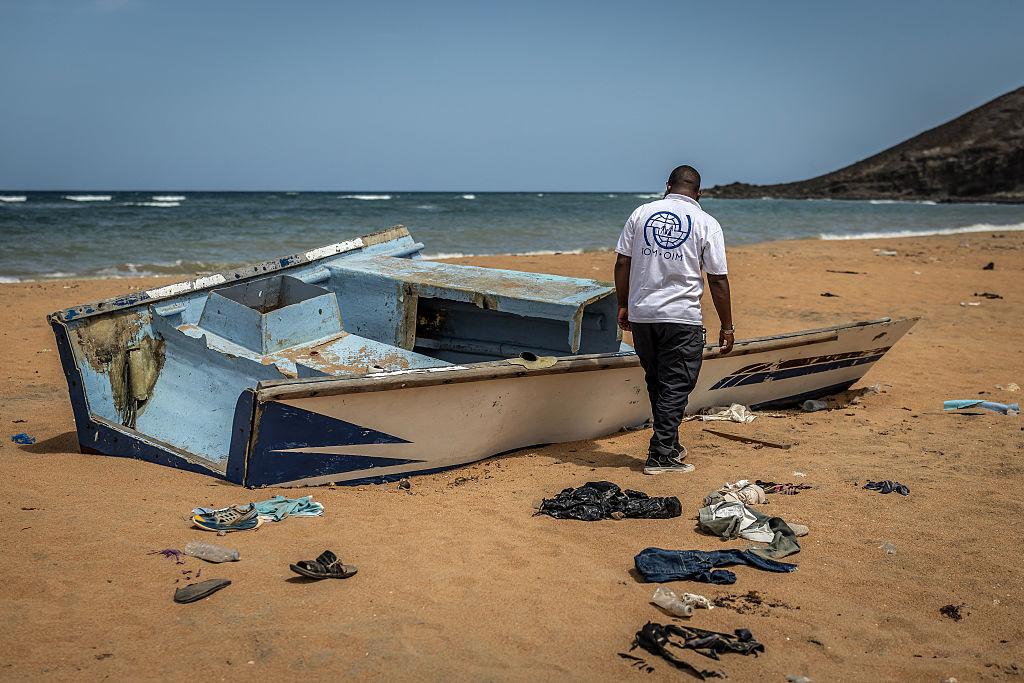
Images released by the UN migration agency showed personal belongings, including shoes and clothing, scattered along beaches near the accident site. Other photographs showed IOM staff and local responders assisting exhausted survivors and recovering remains from the shoreline.
The survivors are receiving medical treatment, food, water and psychological support in and around Obock. The IOM said emergency teams are working alongside Djiboutian authorities to identify survivors, support families and gather information about those still missing.
Many of those rescued are believed to be Ethiopian nationals. The Ethiopian government had not issued a detailed public accounting of the victims at the time of the latest reports, although officials are expected to work with Djibouti and the IOM as identification efforts continue.
The disaster comes amid renewed instability in Ethiopia, where conflict, economic hardship, drought and insecurity continue to drive migration from several regions. Fighting in northern Ethiopia and deteriorating living conditions have added to the pressures pushing young people to leave the country despite the risks associated with irregular migration.
For many migrants, Djibouti serves as the final departure point before the sea crossing into Yemen. From there, migrants attempt to travel north through Yemen and eventually reach Saudi Arabia or other Gulf states where they hope to find work in domestic service, construction, agriculture and other low wage sectors.
The journey is extraordinarily dangerous even before migrants reach the sea. People traveling through Ethiopia and Djibouti can face extortion, trafficking, kidnapping, dehydration and abuse by smugglers or criminal groups. Those who survive the land journey must then cross one of the busiest and most hazardous waterways in the region aboard vessels that are often overcrowded and poorly equipped.
Yemen itself is also experiencing renewed conflict and a worsening humanitarian crisis. More than 200,000 people have been displaced there since fighting intensified in September, complicating conditions for migrants arriving from the Horn of Africa.
Despite that instability, migrants continue attempting the crossing because many believe the risks of remaining at home outweigh the dangers of the journey. Economic desperation, unemployment, conflict and pressure from armed groups continue to push thousands of people onto the Eastern Route every year.
The IOM said more than 900 people died or went missing on the route in 2025 alone, making it one of the deadliest migration corridors in the world. Those numbers include people who died at sea as well as others who perished from dehydration, violence or abuse during the overland portion of the journey.
The organization has repeatedly called for greater international action to address the causes of irregular migration and expand safer legal pathways for people seeking employment abroad. It has also urged governments to strengthen protection systems for migrants and increase efforts against trafficking and smuggling networks that profit from desperate travelers.
The latest disaster is especially notable because of the number of children among the dead. At least 15 children have been confirmed among the victims, according to the IOM, although that figure could rise as identification work continues.
Children traveling on the route are particularly vulnerable to exploitation and abuse and often depend entirely on adults or smugglers for food, shelter and transport. When boats capsize, they are among those least able to survive long periods in the water.
The sinking also highlights the limits of search and rescue capacity along the Djibouti coast. The area around Obock is remote, and emergency teams must cover large stretches of coastline while dealing with changing currents and difficult sea conditions.
The IOM has said that local authorities responded quickly once the scale of the disaster became clear, but the number of passengers aboard the boat and the speed at which it overturned made the rescue operation extremely difficult.
Some victims were buried by local communities before full identification could be completed, which may complicate efforts to establish a definitive list of the dead. The IOM has said that only bodies confirmed by local authorities are included in the official toll.
The uncertainty surrounding identification is particularly painful for families in Ethiopia and elsewhere who may not know whether relatives survived, died or remain among the missing. Many migrants travel without formal documentation or use smugglers who provide little reliable passenger information.
That lack of records makes disasters along irregular migration routes difficult to document. Authorities often rely on survivor testimony, recovered bodies and family reports to reconstruct passenger lists after a sinking.
The latest tragedy is likely to renew pressure on regional governments to strengthen anti smuggling operations, but enforcement alone has historically failed to stop migration along the route. Migrants frequently change routes or use more dangerous methods when authorities tighten controls.
Humanitarian organizations argue that long term reductions in irregular migration will depend on improving economic conditions, reducing conflict and providing legal opportunities for workers who would otherwise turn to smugglers.
The disaster also reflects the unusual migration flow through Yemen. Unlike the movement of Yemenis fleeing conflict, many Horn of Africa migrants continue traveling into Yemen despite the war because they view it primarily as a transit point toward Saudi Arabia and other Gulf states.
That pattern has continued even during periods of intense fighting. Smuggling networks operate across the Red Sea and Gulf of Aden and have adapted to changing security conditions, often charging migrants large sums for crossings aboard vessels that provide almost no safety equipment.
The current conflict in Yemen has added another dimension to the crisis. In recent weeks, thousands of Yemenis have traveled in the opposite direction toward Djibouti to escape fighting, creating two way movement across the same dangerous waters.
That means Djibouti is simultaneously serving as a departure point for migrants heading toward Yemen and a refuge for people fleeing Yemen, placing additional strain on local humanitarian services.
Obock has long been at the center of those movements. Its location near the Bab el Mandeb strait makes it one of the closest African departure points for boats heading toward Yemen and the Arabian Peninsula.
The area has seen repeated migrant boat disasters. Earlier incidents have killed dozens of people at a time, prompting warnings about the dangers of overcrowded vessels and unregulated smuggling operations.
The latest sinking is larger than many previous incidents and has quickly become one of the deadliest recorded there. The scale of the loss has drawn renewed attention from international organizations and governments concerned about migrant safety across the Horn of Africa.
IOM Director General Amy Pope has called for stronger international cooperation and more legal migration pathways, arguing that people will continue risking their lives as long as they believe dangerous journeys are their only realistic option.
The organization has also emphasized that many migrants are motivated primarily by economic necessity rather than a single political or security crisis. That means migration pressures can continue even when conflict temporarily subsides if unemployment and poverty remain severe.
For Ethiopia, the loss is likely to have a particularly strong impact because most of those aboard are believed to have been Ethiopian. Families in rural and urban communities often borrow money or sell property to finance migration journeys, meaning a death can leave surviving relatives with both emotional and financial devastation.
The government may also face renewed questions over how effectively it is addressing trafficking and smuggling networks operating along the eastern corridor. Ethiopian authorities have conducted campaigns warning citizens about the risks of irregular migration, but the flow has continued.
Djibouti faces similar challenges. Its government must balance border controls and anti smuggling enforcement with humanitarian obligations to migrants passing through its territory.
International funding remains important because Djibouti has limited resources and regularly hosts migrants, refugees and displaced people from several neighboring countries.
The IOM has said it will continue assisting survivors and supporting search and recovery operations. Teams are also working to trace family members and provide psychological care to people traumatized by the sinking.
Survivors may also face difficult decisions over whether to return home or attempt the journey again. Previous migration disasters have shown that some survivors eventually make another attempt because the economic pressures that drove them to leave remain unchanged.
The latest disaster therefore extends beyond the immediate rescue operation. It raises broader questions about migration policy, regional instability and whether governments can reduce the incentives that keep pushing people onto dangerous boats.
The confirmed death toll of 139 already places the incident among the most severe maritime tragedies on the route in recent years. With 84 people still missing, the human cost could rise further as search teams continue working along the coast and surrounding waters.
Authorities have not announced when the recovery operation will formally end. The pace will depend on weather conditions, sea currents and whether additional bodies are found along more distant parts of the coastline.
For now, the immediate focus remains on identifying victims, locating those still missing and caring for the 82 survivors. The wider challenge will be preventing another overloaded vessel from attempting the same journey under similarly dangerous conditions.
The disaster has again exposed the scale of desperation driving migration from the Horn of Africa and the lethal risks created when that desperation intersects with smugglers, overcrowded boats and unstable transit countries. Until those underlying conditions change, the route between Djibouti and Yemen is likely to remain one of the most dangerous migration corridors in the world.