DELTA CHILD RIGHTS ACTIVIST AGHOGHO SEEKS WIDER ECOWAS COURT REVIEW OF HUMAN RIGHTS CASE AGAINST NIGERIA
Detained Delta State child rights activist Ighorhiohwunu Aghogho is reportedly seeking permission to expand his human rights case against the Federal Republic of Nigeria before the ECOWAS Community Court of Justice, amid continuing concerns over his prolonged detention and delays in his criminal proceedings. The activist, who has reportedly remained in custody in Warri since June 16, 2025, alleges unlawful detention, retaliatory prosecution, violations of freedom of expression and institutional failures to investigate suspected child trafficking in Delta State. The Take It Back Movement has urged the regional court to determine an outstanding application for interim protection, while official court records confirm that Aghogho also instituted a separate case concerning the rights of missing children from Agbarho. The precise contents of his latest reported application remain subject to independent verification.
Detained Nigerian child rights activist Ighorhiohwunu Aghogho is pursuing legal action against the Federal Republic of Nigeria before the Community Court of Justice of the Economic Community of West African States (ECOWAS), challenging the circumstances surrounding his prolonged detention, criminal prosecution and alleged institutional failures to investigate child trafficking in Delta State. The activist is reportedly seeking permission to expand his case before the regional court, amid growing concerns from civil society organizations over delays in determining an outstanding application for interim protection and the continuing suspension of substantive proceedings in his domestic criminal trial.
The litigation, registered as Suit No. ECW/CCJ/APP/28/25, has developed into a significant legal dispute involving allegations of unlawful detention, retaliatory prosecution, restrictions on freedom of expression and violations of Nigeria's obligations under regional and international human rights instruments. Aghogho, who has been involved in campaigns against child trafficking and irregular adoption practices in Delta State, maintains that his prosecution is connected to information he publicly disclosed concerning alleged abuses within institutions responsible for the protection and welfare of children.
The official journal of the ECOWAS Community Court of Justice confirms that Aghogho's substantive application against Nigeria was registered on June 11, 2025. The Federal Republic of Nigeria was identified as the respondent, with the Attorney-General of the Federation and the Federal Ministry of Justice designated as the appropriate representatives of the government. The official registration establishes the existence of the litigation, although it does not constitute a judicial finding that the allegations presented by the activist have been proven.
The reported request to expand the case introduces another potential procedural development in litigation that has already generated considerable concern among human rights advocates. Permission to amend or supplement an existing application would allow a litigant, subject to the court's rules and judicial approval, to introduce additional relevant facts, legal arguments or claims that were not adequately addressed in the original proceedings. However, the precise contents of Aghogho's latest reported application and the date on which it was received by the regional court have not been independently established.
The case has attracted renewed attention because of Aghogho's continued detention at the Nigerian Correctional Service's custodial facility in Okere, Warri, Delta State. According to the Delta State Chapter of the Take It Back Movement, the activist has remained in custody since June 16, 2025, following the revocation of his bail in criminal proceedings before the Federal High Court in Warri.
His supporters argue that the duration of his detention, combined with delays in resolving preliminary legal objections, has created serious concerns about access to justice and the constitutional protections available to individuals facing criminal prosecution. Those concerns have become increasingly prominent as applications concerning his detention and the conduct of the domestic proceedings remain unresolved.
Aghogho's legal difficulties can be traced to his arrest in July 2022, following publications concerning alleged irregularities in child adoption arrangements and the operation of institutions responsible for child welfare in Delta State. His legal representatives maintain that the publications were connected to his activities as a child rights advocate and whistleblower, while criminal proceedings were subsequently instituted against him under Nigeria's cybercrime legislation.
According to the substantive application reported in June 2025, Aghogho alleged that he had previously spent more than 600 days in custody at correctional facilities in Warri and Ogwashi-Uku. His lawyers argued that the circumstances surrounding the arrest, prosecution and detention represented an attempt to punish him for publicly raising concerns about suspected child trafficking and alleged misconduct within state institutions.
The allegations are serious and potentially extend beyond the individual circumstances of the activist's criminal prosecution. Aghogho maintains that his advocacy has exposed practices involving the disappearance, transfer and unlawful adoption of children, particularly within Delta State. He has also questioned the effectiveness of government oversight mechanisms intended to regulate institutions responsible for the care, rehabilitation and protection of vulnerable children.
The existence of those allegations, however, does not establish that the individuals or institutions identified in his legal submissions participated in criminal activity. Determining whether children were unlawfully transferred, whether official procedures were violated and whether public officers bear responsibility would require independent investigations supported by documentary evidence, witness testimony and other material capable of withstanding judicial examination.
Aghogho's original application reportedly requested that the regional court direct the Nigerian government to establish an independent investigation into allegations concerning the disappearance and trafficking of children in Delta State between 1991 and 2022. His lawyers have argued that such an investigation should extend beyond the circumstances of his own prosecution and examine the broader institutional arrangements responsible for adoption, child protection and the supervision of welfare facilities.
The activist's legal position is that the government's responsibilities under domestic legislation and international human rights treaties include investigating credible allegations of child exploitation and ensuring that individuals who report suspected abuses are not subjected to unlawful retaliation. He maintains that the failure to provide effective protection for whistleblowers can discourage other individuals from disclosing information concerning serious violations affecting vulnerable members of society.
Nigeria's response to the substantive allegations will remain central to the eventual determination of the litigation. The government is entitled to dispute the factual assertions advanced by Aghogho, challenge the legal basis of his claims and present evidence concerning the actions taken by relevant authorities. A final determination will depend on the regional court's examination of the submissions made by both parties rather than the allegations contained in the initiating application alone.
The criminal proceedings against Aghogho are pending before the Warri Judicial Division of the Federal High Court under Charge No. FHC/WR/92C/2022. His defense team has raised preliminary objections concerning the legal competence of the prosecution, arguing that important constitutional and procedural requirements were not satisfied before the charges were instituted.
Among the issues raised by his lawyers is an allegation that the prosecution was commenced without the necessary authorization of the Attorney-General of the Federation. The defense has questioned whether the prosecutorial authority relied upon in the proceedings was legally sufficient, maintaining that the alleged deficiencies should be addressed before the substantive criminal trial continues.
The validity of that argument remains a matter for judicial determination. Questions concerning prosecutorial authority can depend on the legislation under which charges are instituted, the identity and statutory powers of the prosecuting authorities, and the existence or scope of any relevant authorization. A defense allegation that a prosecution lacks jurisdiction does not automatically establish that the charges are invalid until the competent court has examined and resolved the objection.
The circumstances surrounding the revocation of Aghogho's bail have also become a significant component of his complaints before the regional court. According to statements issued by the Take It Back Movement, his bail was revoked on June 16, 2025, following allegations connected to a media publication. The activist has reportedly denied responsibility for authoring or publishing the material in question.
His lawyers maintain that the continuing detention has become increasingly difficult to justify because of the absence of substantive progress in the criminal trial. They argue that procedural and administrative disagreements have prevented the court from determining preliminary objections that could potentially influence whether the prosecution should proceed.
Bail decisions occupy an important position within criminal justice systems because they determine whether an accused person remains in custody while proceedings are pending. Courts may impose or revoke bail where relevant legal grounds exist, including concerns about compliance with judicial conditions or interference with proceedings. However, detention before conviction remains subject to constitutional protections and applicable human rights standards.
The presumption of innocence requires that individuals facing criminal charges are not treated as having been convicted before the relevant evidence has been examined and a lawful judgment delivered. Although pretrial detention may be justified under particular circumstances, its duration and continuing necessity can become important issues when proceedings experience substantial delays.
Aghogho's supporters have argued that the absence of progress in his criminal proceedings has intensified the consequences of the bail revocation. His continuing detention affects not only his personal liberty but also his ability to participate in advocacy activities, maintain ordinary family relationships and communicate with individuals who may possess information relevant to his child protection campaigns.
The activist's legal representatives have consequently pursued several avenues intended to secure a determination of the issues surrounding his prosecution. These efforts have included correspondence addressed to senior judicial authorities, requests for administrative intervention and applications seeking the reassignment of the criminal case to another judge.
In July 2026, Aghogho's counsel reportedly submitted a renewed request to the Chief Judge of the Federal High Court, Justice John Tsoho, seeking the transfer of the pending criminal proceedings from the Warri Judicial Division to another division. The request followed correspondence concerning the respective administrative responsibilities of the National Judicial Council and the leadership of the Federal High Court.
According to reporting on the July application, the defense relied on clarification indicating that responsibility for transferring or reassigning pending Federal High Court cases rests with the Chief Judge of that court rather than the National Judicial Council. Aghogho's lawyers argued that the clarification provided a basis for requesting administrative action capable of allowing the criminal proceedings to resume before another judicial officer.
The renewed transfer request also referred to proceedings held on February 16, 2026, during which the presiding judge, Justice Hyeladzira Nganjiwa, reportedly acknowledged the existence of petitions submitted to judicial authorities and issues raised before the ECOWAS Court. According to the defense's account, the judge indicated that further action would depend on administrative directives or the resolution of the outstanding petitions.
Subsequent appearances of the case on the court's schedule reportedly indicated that proceedings were awaiting a response from the Chief Judge. The defense maintains that this situation has prevented meaningful progress in the criminal trial while Aghogho continues to remain in custody.
These assertions should not be interpreted as established findings of misconduct against the judicial officers mentioned in the applications. Administrative decisions concerning case management, reassignment and the handling of complaints may involve legal considerations that are not fully reflected in statements issued by one party to litigation. Any conclusion regarding improper conduct would require examination through the appropriate judicial or disciplinary mechanisms.
The National Judicial Council occupies an important constitutional position within Nigeria's judicial system, with responsibilities relating to judicial appointments, discipline and institutional oversight. However, the administrative management of individual courts can involve distinct responsibilities exercised by their respective leadership. Disagreements over which institution possesses authority to address a particular complaint can complicate efforts by litigants seeking immediate intervention.
For individuals held in custody, prolonged uncertainty surrounding administrative procedures can have substantial consequences. Even where the underlying disagreement concerns case allocation rather than the merits of criminal charges, delays can extend the period during which an accused person remains unable to obtain a final determination of the allegations against them.
The regional proceedings have become increasingly important to Aghogho's legal strategy because they provide a separate mechanism through which he can challenge alleged violations of rights recognized under regional human rights instruments. His lawyers have argued that the continuing difficulties within the domestic proceedings demonstrate the necessity of obtaining protection from the ECOWAS Community Court of Justice.
The activist has requested interim measures from the regional court, including relief relating to his continued detention. Applications for interim protection generally seek to preserve the rights of litigants or prevent harm that could undermine the effectiveness of proceedings before a final judgment is delivered.
Such measures can be particularly important in cases involving personal liberty, threats to physical safety or circumstances in which the passage of time may substantially diminish the value of an eventual judicial remedy. However, interim relief remains subject to legal requirements, and the filing of an application does not guarantee that the court will grant the requested measures.
Aghogho's application for interim protection was reportedly argued before the ECOWAS Court on January 29, 2026, after which the matter was reserved for a ruling. Civil society organizations have since expressed increasing concern about the length of time that has elapsed without a publicly confirmed determination.
On November 16, the Delta State Chapter of the Take It Back Movement addressed a letter to the President of the ECOWAS Court requesting administrative attention to the outstanding application. The correspondence, signed by state coordinator Ochuko Etu and state secretary Efafe Okemute, emphasized the continuing consequences of Aghogho's detention and the importance of resolving requests for interim protection within a reasonable period.
The organization's intervention followed earlier efforts to obtain information concerning when the regional court intended to deliver its decision. In May 2026, the movement publicly referred to correspondence from the court's registry acknowledging receipt of an application seeking accelerated scheduling of the outstanding ruling.
According to the movement, the registry indicated in a letter dated March 23 that the parties would receive notification when a date was scheduled. The organization argued that the subsequent delay had reduced the practical value of an application intended to provide protection while the substantive case remained pending.
The Take It Back Movement acknowledged that the existence of an interim application did not automatically entitle Aghogho to his requested relief. Its principal concern was that an extended period of uncertainty could undermine the protective purpose of interim judicial measures, particularly where an applicant alleges that the violation complained of remains ongoing.
That concern has broader implications for the effectiveness of regional human rights mechanisms. Courts established to determine allegations of unlawful detention and other fundamental rights violations must balance the need for careful judicial examination against the importance of providing timely remedies. An eventual judgment may establish important legal principles, but its practical significance for an individual can diminish when the proceedings continue for prolonged periods without resolving urgent requests for protection.
The reported application seeking leave to expand Aghogho's case would represent an additional procedural step within that wider litigation. Depending on its precise contents, such an application could seek permission to introduce developments that occurred after the original proceedings were instituted or clarify the relationship between the activist's earlier complaints and his continuing detention.
Legal proceedings involving alleged continuing violations frequently develop as circumstances change. An applicant may discover new documents, experience additional consequences arising from the disputed conduct or receive information that was not available when the original application was prepared. Courts generally establish procedures governing how such material may be introduced to ensure that both parties receive adequate opportunities to respond.
An amendment is not necessarily a finding that the original allegations were defective or incomplete. In some circumstances, it may simply allow a court to consider developments that occurred while litigation was pending. The precise legal effect depends on the nature of the proposed changes and the applicable procedural rules.
Where additional claims are introduced, the respondent must ordinarily receive a fair opportunity to examine the allegations and prepare an appropriate response. Procedural fairness requires that governments and other defendants are informed of the cases they are required to answer, while applicants must comply with requirements governing the presentation of evidence and legal arguments.
The ECOWAS Court's decision on any request to expand Aghogho's application would therefore concern whether the proposed material may properly form part of the existing proceedings. Granting permission to amend would not establish that the new allegations were true, just as refusing permission would not necessarily amount to a final determination of the underlying human rights complaints.
The distinction is especially important because Aghogho has advanced serious allegations concerning institutional conduct. The regional court must examine whether the applicant has established an adequate legal and evidentiary basis for his claims while ensuring that the Nigerian government can respond to the accusations made against it.
Alongside the substantive proceedings involving his detention and prosecution, official ECOWAS Court records confirm that Aghogho has instituted another action against Nigeria concerning allegations involving missing children in Delta State.
The separate case, registered as Suit No. ECW/CCJ/APP/46/25 on September 19, 2025, identifies Aghogho as acting in a representative capacity to pursue child rights claims concerning children reported missing from Agbarho in Ughelli North Local Government Area.
The official registration notice describes allegations that Nigeria failed to meet its legal obligations to protect children against kidnapping, trafficking and unlawful detention. It also records challenges concerning the regulation of facilities described by the applicant as orphanages and juvenile welfare centers.
The existence of the second case demonstrates that Aghogho's regional litigation encompasses more than his personal detention. His legal campaign also seeks judicial examination of the broader allegations that children have been exposed to unlawful practices within systems intended to provide care and protection.
The two proceedings must nevertheless be distinguished. Suit ECW/CCJ/APP/28/25 concerns allegations involving the activist's rights, prosecution and associated child protection complaints, while Suit ECW/CCJ/APP/46/25 was instituted in a representative capacity concerning alleged violations of children's rights. Unless the regional court formally consolidates the proceedings or determines that particular claims may be considered together, they remain separate registered matters.
Child trafficking represents a serious human rights concern because it can involve the exploitation of children through forced labor, sexual abuse, unlawful adoption and other practices that separate vulnerable individuals from their families or expose them to harmful conditions.
Children who disappear from their communities may become particularly vulnerable when effective systems for identifying missing persons, investigating suspected trafficking and verifying guardianship arrangements are unavailable. The ability of authorities to respond depends on coordination among law enforcement agencies, social welfare departments, judicial institutions and organizations responsible for protecting children.
Nigeria has established several legal and institutional mechanisms intended to address those concerns. The Child's Rights Act of 2003 provides a framework recognizing numerous protections for children, while the National Agency for the Prohibition of Trafficking in Persons is responsible for investigating trafficking-related offenses and coordinating aspects of the country's response to exploitation.
The effectiveness of those institutions can depend on available resources, investigative capacity and cooperation among federal and state authorities. Nigeria's federal administrative structure means that child welfare arrangements often involve institutions operating at different levels of government, with responsibilities that can overlap or require coordination across state boundaries.
Adoption procedures represent an especially sensitive component of child protection because they involve the permanent or long-term transfer of parental responsibilities. Legitimate adoption can provide stable and supportive homes for children who cannot remain with their biological families. However, the process requires safeguards capable of preventing exploitation, ensuring informed consent where applicable and establishing that decisions serve the child's best interests.
Effective regulation generally requires authorities to verify the identity and circumstances of children entering welfare institutions, maintain accurate records and assess whether proposed placements comply with applicable legal requirements. Where those safeguards are inadequate or deliberately circumvented, children may become vulnerable to unlawful transfers and exploitation.
Aghogho has challenged aspects of the legal framework governing child protection in Delta State, including amendments to the state's child rights legislation. His original application reportedly questioned whether the amendments complied with federal law and international standards concerning adoption and child protection.
His lawyers have alleged that certain legal changes could have consequences for the treatment of previous adoption arrangements that the activist considers unlawful. Those assertions remain disputed legal claims, and determining their validity would require examination of the legislation itself, its intended operation and any relevant judicial interpretations.
The fact that a child welfare institution has been named in allegations does not establish that every person associated with the facility participated in wrongdoing. Child protection systems include legitimate organizations providing essential support to abandoned children, survivors of abuse and families experiencing serious difficulties.
Investigations into suspected trafficking must therefore distinguish credible allegations of criminal conduct from lawful child welfare activities. That distinction protects vulnerable children while ensuring that legitimate care providers are not subjected to unsupported accusations that could undermine their ability to operate.
The role of accurate documentation becomes particularly important when allegations concern children who have been transferred between institutions or placed with adoptive families. Investigators may require birth records, custody documents, adoption orders, admission registers and other information capable of establishing how individual children entered and subsequently left particular facilities.
Where records are incomplete or inconsistent, authorities may face difficulties tracing children and determining whether placements complied with applicable law. Those challenges can become more significant when allegations extend across several decades, during which documentation systems, legislation and administrative structures may have changed.
Aghogho's demand for an investigation covering alleged incidents between 1991 and 2022 consequently involves a potentially extensive examination of historical information. Any credible inquiry would need to distinguish individual cases, establish the reliability of available records and determine whether evidence exists to support criminal investigations or other remedial measures.
For families of missing children, uncertainty concerning the whereabouts of relatives can produce lasting emotional and practical consequences. Establishing what happened may require cooperation between local authorities, national investigative agencies and institutions holding information about child welfare placements.
Where children are located, authorities must also consider their current circumstances, safety and legal rights. Reunification decisions cannot always be addressed solely through biological relationships, particularly where significant periods have elapsed or where a child may face additional risks. The best interests of the child remain a central consideration in determining appropriate protective measures.
International legal instruments reinforce those obligations. Nigeria is a party to the United Nations Convention on the Rights of the Child and the African Charter on the Rights and Welfare of the Child, both of which establish responsibilities relating to child protection, exploitation and the treatment of vulnerable children.
Those instruments emphasize that children require protection against trafficking, unlawful separation and forms of abuse that threaten their development or well-being. Governments are expected to adopt appropriate legislative, administrative and protective measures, although the precise legal consequences of an alleged failure depend on the facts and the jurisdiction of the body examining the complaint.
Aghogho's original ECOWAS application also invokes protections concerning freedom of expression under the African Charter on Human and Peoples' Rights and the International Covenant on Civil and Political Rights. His legal representatives maintain that the prosecution interferes with his ability to disclose information concerning matters of substantial public interest.
Freedom of expression occupies a particularly significant position in discussions surrounding whistleblower protection. Individuals who possess information about suspected criminal conduct, corruption or institutional failures may play an important role in bringing concerns to public attention and prompting investigations.
However, freedom of expression does not eliminate all legal responsibility associated with published material. Governments may impose certain restrictions intended to protect legitimate interests, including the rights and reputations of other individuals, provided those restrictions comply with applicable legal standards.
The relevant question in cases involving criminal prosecution for public statements is frequently whether the restriction has a valid legal basis, pursues a legitimate objective and is necessary and proportionate under the circumstances. Courts may also examine whether criminal proceedings have been applied consistently or whether their use creates an unjustified interference with protected expression.
Nigeria's Cybercrimes Act has attracted sustained legal and public debate, particularly concerning provisions regulating communications through electronic platforms. Journalists, civil society organizations and human rights advocates have previously expressed concern that broadly interpreted cyberstalking provisions could be used to discourage legitimate criticism or reporting.
The government has maintained that cybercrime legislation serves important purposes, including addressing online threats, harassment, fraud and other unlawful conduct. The challenge lies in ensuring that legislation designed to address genuine digital harm is not applied in a manner that unnecessarily restricts lawful public discussion.
Nigeria amended its cybercrime legislation in 2024, introducing changes to provisions that had generated considerable controversy. The implications of those amendments for individual prosecutions depend on the charges involved, the timing of the alleged conduct and the interpretation of relevant statutory and constitutional provisions.
Aghogho's defense team has questioned the continuing legal basis of proceedings instituted under the earlier framework. Determining whether those arguments are legally sustainable remains a responsibility of the competent judicial institutions examining his prosecution.
The relationship between criminal law and whistleblower protection becomes especially important when an accused person maintains that the underlying publications concerned suspected abuses against children. Effective protection of public-interest disclosures can encourage individuals to provide information that authorities might otherwise struggle to obtain.
Nevertheless, allegations published in the public interest should still be subjected to appropriate verification. Unsupported accusations can harm individuals and institutions, potentially undermining confidence in legitimate investigative work. Independent investigations provide a mechanism through which serious claims can be examined without assuming either that a whistleblower's allegations are necessarily correct or that criminal prosecution is an appropriate response.
Aghogho's litigation therefore presents overlapping questions concerning the protection of children, the treatment of individuals who report suspected misconduct and the procedural safeguards available to defendants facing criminal charges.
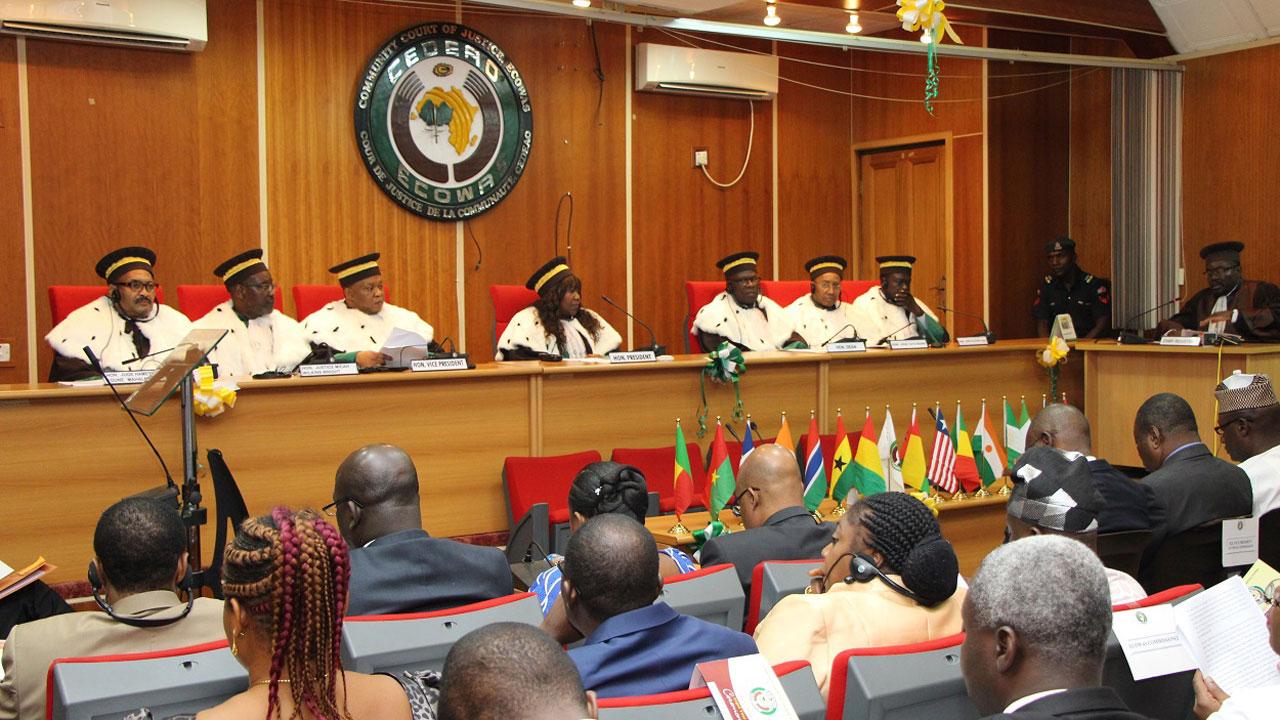
The ECOWAS Community Court of Justice has become an important institution for individuals and organizations pursuing human rights complaints against member states. Its jurisdiction extends beyond disputes concerning regional economic integration and includes allegations of violations of rights protected under applicable legal instruments.
The regional court is not simply another level of appeal within Nigeria's domestic judicial system. Its human rights jurisdiction concerns the international legal responsibilities of member states, meaning that applicants must establish alleged violations falling within the court's authority rather than merely requesting reconsideration of every unfavorable domestic judicial decision.
This distinction is central to understanding Aghogho's legal strategy. His application challenges conduct that he maintains constitutes violations of Nigeria's regional and international obligations, while separate domestic proceedings concern criminal charges and questions of Nigerian procedural law.
The regional court may examine facts arising from domestic proceedings insofar as they are relevant to allegations of human rights violations. However, the extent of available remedies depends on the court's jurisdiction, the admissibility of particular claims and the findings reached after examining the parties' submissions.
The institutional environment within which Aghogho's applications are pending has also undergone changes during 2026. The ECOWAS Court welcomed a new College of Judges in October and subsequently organized a judicial retreat focused on improving institutional procedures, strengthening case management and promoting the timely delivery of justice.
The retreat, held from November 16 to November 20 in Niger State, addressed the operational implementation of a harmonized legal framework and the deployment of electronic case management systems. Those reforms reflect the court's broader efforts to improve administrative efficiency and the quality of judicial services available to litigants throughout West Africa.
Although the institutional reforms were not specifically directed at Aghogho's case, their emphasis on timely justice is relevant to concerns expressed by organizations monitoring his detention. Effective case management can be especially important when courts receive applications seeking urgent protection against alleged continuing violations.
The increasing reliance on regional human rights institutions also raises questions concerning the implementation of their decisions. A favorable judgment can establish a state's legal responsibility and identify appropriate remedies, but its practical effectiveness depends on compliance with the resulting orders.
For applicants challenging detention or seeking investigations into institutional misconduct, implementation may require cooperation from several government agencies. Financial compensation, administrative reforms, investigative directives and measures concerning individual liberty can involve different responsibilities within national legal systems.
The Nigerian government, as the respondent in Aghogho's proceedings, will have an opportunity to present its legal position concerning the allegations and requested remedies. No comprehensive government response to the latest reported application seeking leave to expand the case was independently available at the time of reporting.
Similarly, no publicly verified decision granting permission to expand the application or resolving the outstanding request for interim protection was located. Those procedural matters should not be described as having been determined until the regional court issues an authoritative decision or makes the relevant records available.
For civil society organizations monitoring the litigation, the continuing concern remains the length of Aghogho's detention and the pace at which outstanding legal objections are being addressed. The Take It Back Movement has emphasized that timely judicial examination is particularly important where the consequences of disputed proceedings involve an individual's personal liberty.
For the families connected to the separate allegations involving missing children, the broader question concerns whether authorities will undertake sufficiently comprehensive investigations to establish what occurred and provide appropriate remedies where violations are proven. Those investigations must be capable of distinguishing documented facts from allegations while maintaining the privacy and safety of children who may be affected.
The immediate significance of Aghogho's reported request to expand his case lies in the possibility that additional developments could be brought before the regional court as part of its examination of Nigeria's human rights obligations. However, the exact scope of the proposed expansion remains uncertain without access to the latest application and any supporting documentation.
The regional court's eventual consideration of the litigation could provide further clarity concerning the relationship between freedom of expression, criminal prosecution, personal liberty and the responsibilities of governments to investigate allegations of child exploitation. Whether the applicant succeeds will depend on the evidence presented, the applicable legal standards and the court's determination of the claims properly before it.
Until those questions are resolved, Aghogho's allegations concerning his prosecution and the conduct of child welfare institutions remain unproven, while the Nigerian government retains the right to contest his claims. The prolonged nature of the proceedings nevertheless underscores the importance of ensuring that serious allegations involving vulnerable children receive credible investigation and that individuals facing criminal charges obtain the procedural protections guaranteed by law.
For Aghogho, the continuing litigation represents an effort to secure judicial examination of both his personal circumstances and the wider child protection concerns that have defined his advocacy. For Nigeria's judicial and child welfare institutions, the case presents questions concerning the effectiveness of legal safeguards, the treatment of public-interest disclosures and the availability of timely remedies when individuals allege violations of fundamental rights. The outcome will depend on the evidence and decisions of the competent courts, with the activist's outstanding request for protection and the unresolved allegations concerning missing children remaining central to the developing dispute.
#Aghogho #DeltaState #ECOWASCourt #Nigeria #ChildRights #ChildTrafficking #HumanRights #FreedomOfExpression #Warri #JudicialAccountability #ChildProtection #NigeriaNews #AfricanNews #VNtv