
DR CONGO EBOLA DEATH TOLL SURPASSES 5,400 AS HEALTH AGENCIES RACE TO REACH REMOTE COMMUNITIES
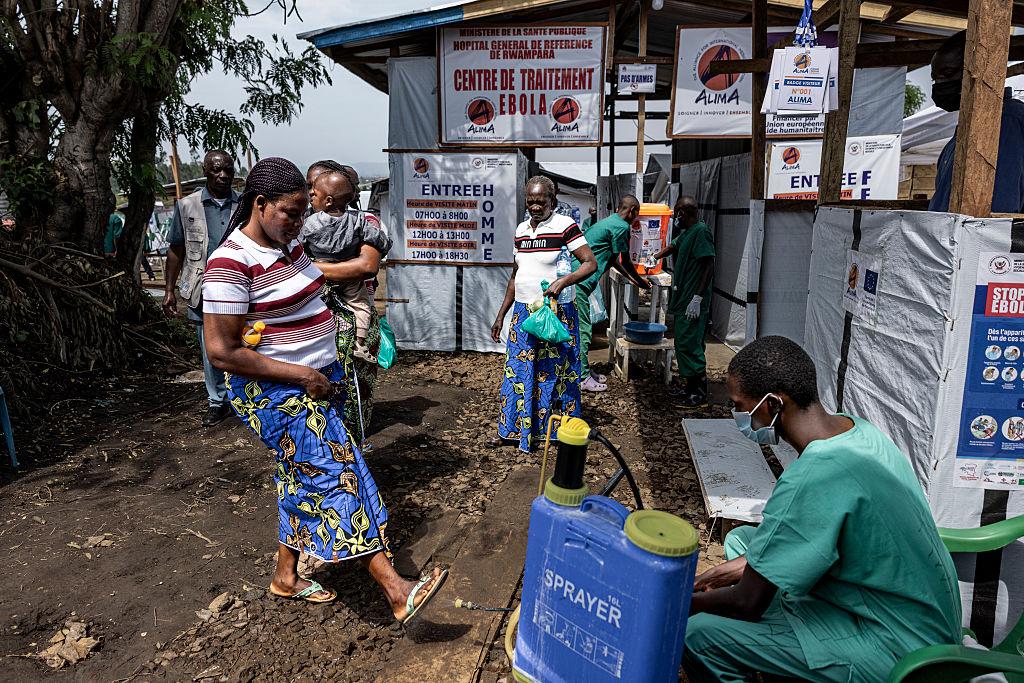
The Democratic Republic of the Congo’s Bundibugyo Ebola outbreak has surpassed 11,000 confirmed cases and 5,400 deaths, with Africa CDC reporting even higher government figures of more than 11,200 infections and 5,500 deaths as of November 15. The virus has spread across 67 health zones in eight provinces and continues to generate hundreds of new cases every week, while conflict, attacks on health workers, weak contact tracing, unpaid frontline staff and poor access to remote communities are preventing authorities from fully interrupting transmission. Children are among the hardest hit, with nearly 72 percent of infected children under five reported to have died, and WHO, Africa CDC, UNICEF and other partners are urging an urgent expansion of treatment, surveillance, community engagement and humanitarian access before the outbreak spreads further.
KINSHASA, DEMOCRATIC REPUBLIC OF THE CONGO — The Democratic Republic of the Congo is facing one of the gravest Ebola emergencies ever recorded, with more than 11,000 confirmed infections and more than 5,400 deaths reported six months after the outbreak began, as health authorities warn that the virus is continuing to expand through remote and conflict-affected communities faster than response teams can reliably trace every transmission chain. The outbreak, caused by the Bundibugyo species of Ebola virus, has spread across 67 health zones in eight provinces and is still generating hundreds of new cases each week, despite signs that transmission has slowed in some of the original epicentres. The World Health Organization, Africa Centres for Disease Control and Prevention, UNICEF, the World Food Programme and other response partners are now urging a major expansion of operations into hard-to-reach areas, arguing that progress in better-served locations will not end the epidemic while infected people in remote communities remain undetected, untreated and outside formal surveillance.
The latest official figures underline the scale of the crisis. WHO’s November 15 joint update said more than 11,000 cases and 5,400 deaths had been reported since the outbreak began in May, while Africa CDC Director-General Jean Kaseya said on November 15 that Congolese government data had moved even higher, beyond 11,200 infections and 5,500 deaths. Those numbers place the outbreak among the deadliest Ebola epidemics in history and reflect a case fatality rate close to 50 percent. WHO data from November 8 had already recorded 10,990 confirmed cases and 5,354 confirmed deaths, and earlier November updates showed sustained transmission in 51 health zones even as some previously affected areas began reporting fewer cases. The overall trajectory therefore remains deeply concerning: transmission is no longer accelerating everywhere, but the outbreak is still spreading geographically and has not been brought under control nationally.
The outbreak was first confirmed in May and has been driven by Bundibugyo virus, one of the species capable of causing Ebola virus disease. Unlike the Zaire Ebola virus that caused the devastating 2014–2016 West African epidemic and several previous outbreaks in Congo, Bundibugyo virus currently has no fully licensed vaccine or specific approved treatment. Patients are therefore managed mainly through supportive clinical care, including fluid replacement, treatment of complications and intensive monitoring, while researchers test candidate vaccines and therapeutic approaches. WHO says trials are already underway using Ervebo in a research setting and that expert groups have recommended adding two vaccine candidates designed specifically for Bundibugyo virus, but those studies are not yet a substitute for the immediate public-health measures needed to stop transmission.
The absence of a widely available licensed vaccine places even greater pressure on early detection, isolation, contact tracing, safe burials and community engagement. Those core measures become much less effective when cases are discovered late or when communities cannot be reached consistently. Africa CDC says more than 80 percent of new infections are now being detected outside known contact lists, a warning sign that response teams are missing large portions of active transmission chains. More than 65 percent of deaths are reportedly occurring in communities rather than in treatment centres, suggesting that many patients are reaching care too late or not reaching formal health services at all. That pattern increases both mortality and transmission because infected people can remain within households and communities during the period when they are most infectious.
WHO has repeatedly emphasized that remote access is now one of the defining challenges of the outbreak. Many affected communities are located in areas where roads are poor, transport is limited, communications are unreliable and health facilities lack basic supplies. Some villages can take hours or even days to reach, meaning a suspected case may deteriorate or die before a laboratory sample is collected or an ambulance arrives. Once a death occurs in a community without proper infection-prevention measures, the risk can increase further during burial practices involving close physical contact with the body, one of the most dangerous moments for Ebola transmission.
The problem is particularly severe in Ituri and North Kivu, where years of armed conflict have weakened health systems and displaced large populations. Ituri remains responsible for the largest cumulative share of cases, while North Kivu has become one of the principal sources of new transmission. Armed groups remain active across parts of both provinces, and insecurity can force health workers to suspend surveillance, abandon contact tracing or leave treatment facilities temporarily. WHO Director-General Tedros Adhanom Ghebreyesus said on November 11 that insecurity had become one of the greatest obstacles to the response, warning that progress in some health zones should not be mistaken for control of the epidemic as a whole.
Attacks on health workers have intensified those concerns. Africa CDC has warned that assaults on medical teams and facilities are directly disrupting the Ebola response, while Médecins Sans Frontières says violence has interrupted contact tracing and forced responders to withdraw from areas where infected people still require monitoring. In one recent attack in North Kivu, dozens of people were killed, including health workers, leaving surveillance teams unable to follow some contacts and contributing to cases being lost from formal monitoring. Such incidents demonstrate how Ebola control is inseparable from the wider security environment: a technically strong health response cannot function effectively if responders are unable to reach communities safely.
The danger extends beyond direct attacks. Population displacement caused by conflict can move infected people across large distances before symptoms become severe enough to seek care. Families fleeing violence may cross health-zone boundaries, provincial borders or international frontiers, making conventional contact tracing extremely difficult. The DRC’s borders with Uganda, Rwanda, Burundi, South Sudan, the Central African Republic and the Republic of Congo create multiple possible routes for cross-border spread, while major transport and trade networks connect eastern Congo with wider parts of Africa.
Imported cases have already been detected outside the DRC. Uganda recorded cases early in the outbreak and was able to contain local transmission. Kenya later confirmed imported cases linked to travel from Congo, and Nigeria also reported an imported case. A healthcare worker was medically evacuated from the DRC to the United Kingdom for treatment. These events have not produced sustained international transmission on the scale occurring inside Congo, but they demonstrate that the virus can travel beyond the epidemic zone when infected people move before diagnosis. WHO continues to assess the risk as very high within the DRC, high for neighboring countries and lower at the broader regional and global level, provided surveillance and preparedness remain strong.
The outbreak’s impact on children has been especially severe. UNICEF says children account for more than a quarter of confirmed cases and roughly one-third of all deaths, while mortality among the youngest patients is extraordinarily high. As of November 4, 2,959 children under 18 had been confirmed with Ebola and 1,737 had died. Nearly 72 percent of infected children under five had died, making young children one of the most vulnerable groups in the epidemic. UNICEF says the crisis is not limited to infection itself, because children are also losing parents and caregivers, missing school, suffering psychological trauma and facing stigma when relatives fear taking them in after Ebola enters a household.
More than 1,900 children had already been identified by early October as having lost or been separated from one or both parents or caregivers because of Ebola in eastern Congo, and UNICEF says the true figure is likely higher because the available data cover only areas where social-service teams are operating. That secondary humanitarian impact can persist long after a child recovers or tests negative, particularly where extended families are already struggling with displacement, hunger and poverty. Many affected communities entered the epidemic with fragile schools, limited social protection and weak access to healthcare, meaning Ebola is compounding crises that existed long before May.
The epidemic is also colliding with a broader humanitarian emergency across the DRC. UNICEF estimates that 14.9 million people in the country require humanitarian assistance in 2026, including approximately 8 million children. Food insecurity is widespread, conflict continues to displace families and outbreaks of other diseases remain active. In some affected communities, residents have told WHO that Ebola is only one of several dangers they face, alongside violence, hunger, loss of livelihoods and other illnesses. Tedros has warned that an effective response therefore cannot concentrate so narrowly on Ebola that ordinary health services collapse, because communities may reject response teams if seeking help for malaria, childbirth, malnutrition or other conditions becomes more difficult during the outbreak.
That lesson has been repeated throughout the history of Ebola response. Public-health authorities cannot simply arrive in a village, impose restrictions and expect cooperation without offering reliable medical support for the wider needs of the population. Trust becomes particularly important where previous outbreaks, conflict or government abuses have already made communities suspicious of outsiders. Residents may hide sick family members, avoid treatment centres or reject contact tracing if they believe responders are not listening to local concerns or if previous patients taken for treatment never returned.
WHO, Africa CDC and humanitarian agencies are therefore placing increasing emphasis on community-led response. That means working through local chiefs, religious leaders, women’s groups, youth organizations and community health workers who already have relationships with residents. Such networks can help identify suspected cases earlier, explain why safe burials are necessary, reduce rumors and encourage people to report symptoms before their condition becomes critical. WHO has stressed that community trust cannot be added at the end of an emergency response; it has to be built continuously through reliable services and honest communication.
The need to reach remote communities has become more urgent because response teams are still missing too many infections. Contact tracing is one of the most important tools for containing Ebola because authorities attempt to identify everyone who had significant exposure to a confirmed patient and monitor them for symptoms during the incubation period. Operational targets generally require extremely high follow-up rates, but WHO previously reported rates below the desired 95 percent threshold, and Africa CDC now says most new cases are appearing among people who were not known contacts at all. That means surveillance teams are not seeing the full network of transmission until people become ill.
This hidden transmission complicates every other part of the response. Treatment centres cannot plan bed capacity accurately if officials do not know how many cases are likely to arrive. Laboratories can become overwhelmed by sudden surges in testing. Burial teams may be notified only after unsafe funerals have already taken place. Communities can continue normal contact with infected individuals because nobody has identified them as exposed. Every missed contact therefore increases the possibility of another chain of transmission.
Health facilities themselves have also become places where transmission can occur when infection-prevention systems are weak. Ebola symptoms such as fever, weakness, vomiting and diarrhea can resemble other common illnesses during the early stage, meaning a patient may initially enter an ordinary clinic without being recognized as a potential Ebola case. If staff do not have sufficient protective equipment or isolation procedures, healthcare workers and other patients can be exposed before diagnosis.
MSF has warned that infections inside health facilities remain a major problem and that some frontline personnel are working without adequate training, supplies or support. The organization has been operating eight Ebola treatment centres and three rapid-response teams across several affected provinces, with thousands of locally recruited staff involved in its response. MSF says it has committed €64.6 million largely from private donations, but argues that wider international resources have not consistently reached the places where they are most urgently needed.
Funding has become one of the most politically sensitive parts of the response. International donors have announced large financial commitments, but Africa CDC and MSF have raised concerns about delays between pledges and actual delivery to frontline operations. Africa CDC says billions of dollars have been promised while essential teams still lack fuel, trained personnel, functioning ambulances and timely salary payments. Kaseya has called the mismatch between declared resources and conditions on the ground a collective failure and has urged donors to release outstanding funds while improving coordination with the Congolese government.
Delayed salaries for frontline workers are a particularly dangerous problem. Health workers asked to enter Ebola treatment units or travel into high-risk communities are performing dangerous work that requires protective equipment, specialist training and regular compensation. When salaries are delayed, strikes or work stoppages can interrupt surveillance and treatment at precisely the moment uninterrupted operations are required. WHO has therefore made timely payment of frontline workers one of its main demands to governments and partners.
The payment issue is also linked to accountability. Emergency responses often involve multiple layers of funding from governments, UN agencies, international donors and nongovernmental organizations. Without transparent systems showing who has been hired, who has been paid and where resources are being spent, money can become delayed, duplicated or lost through bureaucracy. The Congolese government is now working to digitize health-worker payrolls as part of an effort to reduce such problems and ensure that people actually delivering services receive compensation.
The response has nevertheless achieved important successes. Uganda stopped local transmission after imported and related cases were detected, demonstrating that Bundibugyo Ebola can be contained when surveillance, isolation and community cooperation are strong. Several of the original Congolese epicentres have also reported declining transmission, and almost 3,000 patients had recovered by early November. WHO says these improvements show that the fundamental public-health tools are working where they can be applied consistently.
The danger is that those successes could create premature optimism. The outbreak has become geographically broader even as certain locations improve. WHO says 400 to 500 new cases are still being reported each week, meaning the epidemic remains large enough to seed fresh hotspots if even a small number of infections are missed. The movement of displaced populations and traders means a case in one remote community can become a problem in another province or country within days.
The outbreak has also become historically significant. It is already the largest Ebola epidemic ever recorded in the DRC and one of the largest globally. The 2014–2016 West African epidemic remains the benchmark for catastrophic Ebola spread, but public-health officials are warning that the current outbreak could approach or surpass historic records if transmission is not reduced substantially. Africa CDC has said the outbreak remains out of control six months after it was declared and warned that continued growth could make it the worst Ebola emergency on record.
Such comparisons should be interpreted carefully because the two outbreaks involve different virus species, geographies, health systems and surveillance conditions. The West African epidemic involved widespread transmission in Guinea, Liberia and Sierra Leone, while the present crisis remains overwhelmingly concentrated in the DRC despite imported cases elsewhere. Even so, the speed of case accumulation and high fatality rate make the Congolese outbreak an extraordinary public-health event.
The virus species itself contributes to the challenge. The Bundibugyo virus has caused previous outbreaks, including in Uganda and Congo, but far less research and pharmaceutical development have focused on it than on Zaire Ebola virus. The successful Ervebo vaccine was designed for Zaire Ebola and cannot simply be assumed to provide equivalent protection against Bundibugyo virus. That is why current vaccine research is so important.
WHO says two new candidate vaccines are being added to research efforts while the response continues. If those candidates eventually demonstrate strong protection, they could transform future Bundibugyo outbreaks in the same way vaccination has changed the response to Zaire Ebola. However, vaccine development, testing, regulatory review and large-scale manufacturing take time, meaning the current epidemic still depends heavily on traditional containment methods.
Clinical research is also evaluating treatment options. Existing monoclonal antibody therapies have proven valuable against Zaire Ebola but are not automatically effective against other Ebola species. Scientists therefore need evidence that any therapy used against Bundibugyo provides meaningful benefit. Until that evidence exists, rapid supportive treatment remains critical because patients who receive early care generally have a better chance of surviving than those who arrive after severe dehydration, organ dysfunction or shock has developed.
The high number of community deaths demonstrates how often early care is still not happening. When most deaths occur outside treatment centres, it suggests the response is reaching patients too late. Public-health officials therefore argue that bringing services closer to remote communities can save lives even before it breaks transmission, because people are more likely to seek help quickly if testing and treatment are available nearby rather than several hours away.
That may require smaller decentralized treatment units, mobile laboratory capacity, community isolation facilities and more ambulances rather than concentrating resources only in major urban centres. Such decentralization is difficult because Ebola treatment requires strict infection-control standards and trained personnel, but the scale of the current outbreak makes it increasingly necessary.
Logistics remain another major obstacle. Protective equipment, chlorine, laboratory materials, medicines, food and fuel must be transported to facilities that may be accessible only by damaged roads or aircraft. During the rainy season, some routes become almost impossible to use. A treatment centre can have trained staff and available beds but still become ineffective if it runs out of fuel for generators or ambulances.
That is why the joint November 15 call from WHO, Africa CDC, UNICEF, UNFPA and WFP places so much emphasis on hard-to-reach communities. The agencies argue that simply expanding capacity in established centres will not be enough. The response has to follow the epidemic into isolated areas before those communities become new engines of transmission.
Food assistance and basic social support are also part of that strategy. Families asked to isolate or stop working because of Ebola exposure may lose income or food. If public-health measures leave households unable to survive, people may hide exposure or ignore restrictions. Providing food and essential supplies can therefore become an infection-control measure as well as humanitarian assistance.
The same applies to safe burials. Communities grieving relatives may resist outside burial teams if procedures are perceived as disrespectful or exclude families entirely. Modern Ebola response increasingly tries to combine infection prevention with culturally sensitive practices that allow relatives to participate safely. Trust built during those moments can affect whether future suspected cases are reported quickly.
The DRC has extensive experience with Ebola, having confronted numerous outbreaks since the virus was first identified near the Ebola River in 1976. That experience provides valuable technical expertise, but the current scale has stretched even experienced teams. The country is now managing an outbreak across multiple provinces at the same time, rather than a smaller cluster that can be surrounded quickly.
That geographical spread means national coordination is essential. One province improving cannot reduce its guard if neighboring areas remain highly active. Surveillance data, laboratory results and movement information have to be shared rapidly across provincial boundaries, while national authorities must ensure that poorer or more remote regions are not left behind because attention concentrates on the largest hotspots.
The Congolese government has extended its national response plan through January 2027, and WHO and Africa CDC are revising the continental preparedness framework for the next phase. Those plans acknowledge that the epidemic is unlikely to disappear immediately and that surrounding countries need to remain prepared for imported cases.
Border screening can help identify symptomatic travelers, but it cannot completely prevent spread because infected people can travel during the incubation period before symptoms appear. Preparedness therefore requires hospitals in neighboring countries to recognize possible Ebola cases quickly, isolate patients safely and begin contact tracing without waiting for large outbreaks to emerge.
Nigeria and Kenya’s imported cases demonstrate the value of rapid detection. Imported infection does not automatically become community transmission if health authorities identify the patient quickly and monitor contacts effectively. That experience is reassuring, but it also depends on countries maintaining vigilance even when they are not experiencing sustained outbreaks.
The international implications extend beyond Africa. The medical evacuation of a healthcare worker to Britain shows that global health systems must be prepared to manage occasional imported cases safely. Such events can generate significant public concern, but WHO has emphasized that the greatest danger remains inside the DRC and neighboring areas rather than in countries with strong surveillance and isolation capacity.
The response therefore requires international attention without panic. Travel bans and indiscriminate border closures can disrupt humanitarian operations and discourage countries from reporting outbreaks transparently, while carefully targeted screening, health alerts and preparedness are generally more useful. The priority is stopping transmission where it is occurring rather than isolating affected populations from the rest of the world.
For Congo, that means reaching the communities that remain outside effective surveillance. The figure of more than 5,400 deaths is not simply a measure of how deadly Ebola can be; it is also evidence of how conflict, weak infrastructure and unequal access to healthcare shape survival. People who reach treatment early have a better chance than those whose villages are several hours from the nearest functioning centre.
The outbreak therefore exposes structural health inequalities as much as viral biology. An Ebola patient in a secure area with rapid ambulance access, laboratory testing and trained clinicians faces a very different situation from a patient in a remote village where armed groups control the road and health workers have not been paid.
That is why WHO has called for the response to strengthen the health system rather than create a temporary emergency structure that disappears once the epidemic ends. If laboratories, surveillance networks, infection-control systems and community health services remain stronger afterward, the investment can help Congo confront future outbreaks of Ebola and other diseases.
The challenge is maintaining that long-term perspective during an emergency where every week adds hundreds of infections. Governments and donors naturally focus on immediate containment, but repeated outbreaks show that weak health systems recreate the same vulnerabilities.
The crisis also carries lessons for global health preparedness. The availability of a highly effective vaccine for one Ebola species did not eliminate the threat from other species. Research investment therefore needs to cover diseases before they become large emergencies rather than accelerating only after thousands of people have been infected.
Bundibugyo Ebola was already known to science before the current outbreak, but the world entered 2026 without a widely available licensed vaccine or specific treatment for it. The consequences are now being measured in thousands of deaths.
Scientists may eventually develop better tools, but the immediate task remains stopping the transmission chains already active. That requires identifying cases earlier, following contacts more consistently, protecting health workers, paying responders, expanding treatment capacity and gaining safe access to communities isolated by conflict and poor infrastructure.
None of those interventions is technologically exotic. Their difficulty lies in delivering them reliably at enormous scale across one of the most challenging humanitarian environments in the world.
The next several weeks will therefore be critical. If new cases continue at 400 to 500 a week, the outbreak will remain capable of expanding into fresh areas and creating additional international cases. If surveillance improves and more infections are detected among known contacts rather than appearing unexpectedly in communities, public-health agencies will have a clearer sign that transmission chains are being brought under control.
Community deaths will provide another key indicator. A sustained fall in the proportion of patients dying outside treatment centres would suggest people are reaching care earlier and that trust in the response is improving. Until that happens, the large number of community deaths will remain one of the clearest signs that responders are still arriving too late.
Africa CDC’s assessment that the outbreak remains out of control is therefore not simply based on the total number of deaths. It reflects the continuing appearance of untracked cases, the geographic expansion of transmission, attacks on health workers and the gap between resources pledged internationally and services actually reaching frontline communities.
The encouraging signs in some early epicentres matter, but WHO’s warning is equally important: progress in one part of the country does not mean the national epidemic is ending. Ebola can disappear from one district while quietly spreading through another if surveillance weakens.
Six months into the emergency, the DRC has now reached a point where the response must become both more targeted and more expansive. The largest known hotspots need intensive treatment and surveillance, while smaller remote communities need enough support to prevent them becoming the next major centres of transmission.
That combination will require secure humanitarian access, reliable funding and sustained political engagement. Health workers cannot negotiate every armed checkpoint themselves, and aid organizations cannot solve insecurity without cooperation from national authorities, regional actors and armed groups.
Protecting medical personnel should therefore become part of the wider diplomatic response. Every attack that forces a team to suspend contact tracing gives the virus additional opportunities to spread.
The human consequences of failure are already visible in the death toll, the thousands of affected children and the families separated by infection. They are also visible in communities where ordinary healthcare has been disrupted because facilities are overwhelmed or workers are afraid of exposure.
Ending the outbreak will require restoring those services as well as treating Ebola itself. A woman should not die in childbirth because the nearest clinic has shut down during an Ebola response, and a child with malaria should not be afraid to seek care because a health facility has become associated only with Ebola.
That broader understanding is at the heart of the latest international appeal. The agencies coordinating the response are no longer asking only for more treatment beds; they are asking for better access, stronger community partnerships, paid and protected health workers and a response that reaches people before they become part of another unrecognized transmission chain.
The DRC’s outbreak has already surpassed 5,400 deaths and is still expanding, making complacency impossible. Yet it is not uncontrollable in the sense that nothing can be done. The decline seen in some original epicentres and Uganda’s successful interruption of local transmission demonstrate that the virus can be stopped when public-health measures are applied consistently.
The central question is whether those measures can now reach every affected community with the same intensity. If they can, the epidemic can begin moving toward control. If insecurity, delayed funding and weak surveillance continue to leave large populations beyond the effective reach of the response, the death toll will continue rising.
For the thousands of Congolese families already affected, the distinction is not abstract. It determines whether the next person with fever is found early enough to survive and whether the next remote village becomes another hotspot.
The international agencies now warning about hard-to-reach communities are therefore identifying the decisive battlefield in the next phase of the outbreak. The emergency will not end simply because major treatment centres improve or because case numbers decline temporarily in one province. It will end only when the response can find infected people wherever they live, protect those caring for them, trace the people they may have exposed and maintain enough community trust that families seek help before the virus spreads again.