DR CONGO EBOLA OUTBREAK TOPS 9,000 CASES AND 4,300 DEATHS AS VIRUS SPREADS ACROSS MORE PROVINCES
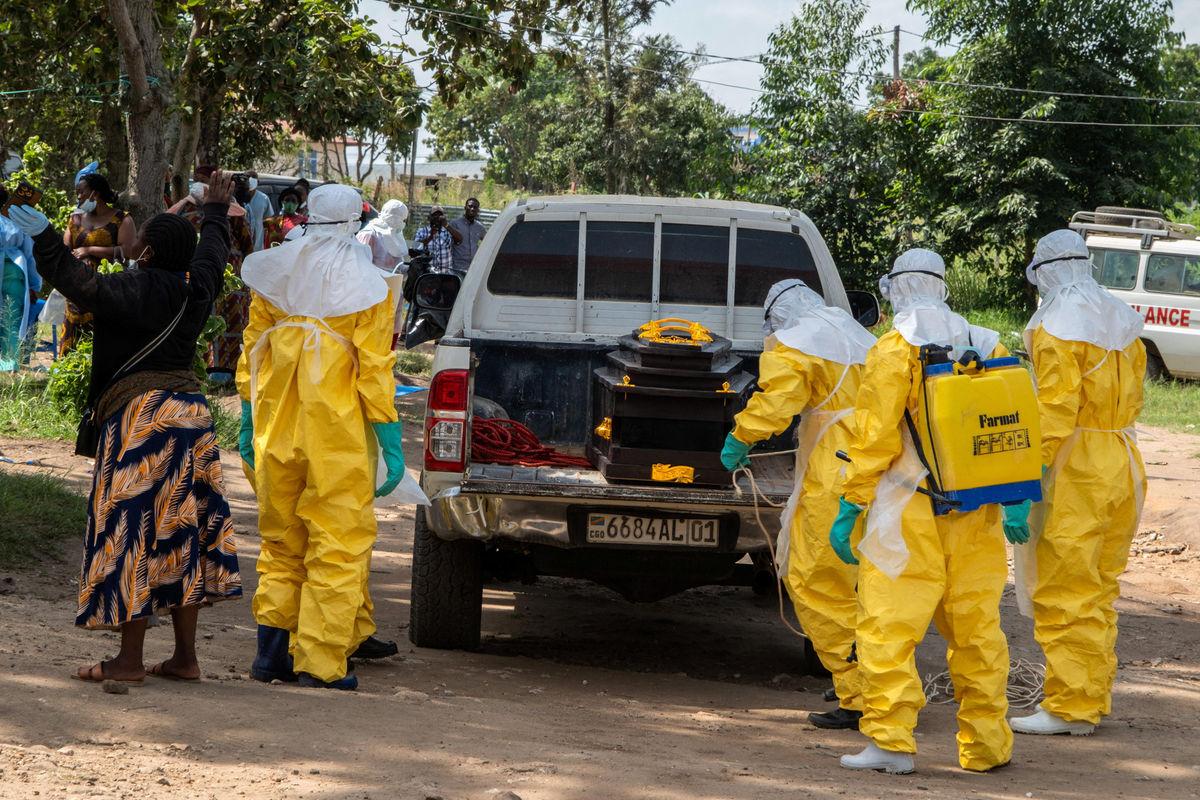
The Democratic Republic of Congo’s Bundibugyo Ebola outbreak has reached 9,066 confirmed cases and 4,381 deaths, making it the largest and deadliest Ebola outbreak in the country’s history and the second-largest ever recorded globally. WHO says transmission remains active across dozens of health zones, while health officials have reported further spread into North Ubangi, potentially bringing the number of affected provinces to eight. The Bundibugyo strain has no approved vaccine or specific licensed treatment, and the response continues to be complicated by conflict, weak health infrastructure, population movement and cross-border transmission risks.
The Democratic Republic of Congo is confronting the largest and deadliest Ebola outbreak in its history, with more than 9,000 confirmed infections and over 4,300 deaths as the Bundibugyo strain continues to spread across multiple provinces and challenge a response already strained by conflict, population movement, weak health infrastructure and the absence of an approved vaccine or specific treatment for the virus. The latest World Health Organization situation report recorded 9,066 confirmed cases and 4,381 confirmed deaths as of October 11, giving the outbreak a crude case fatality rate of 48.3 percent and confirming that the epidemic remains geographically active with no sustained nationwide decline in transmission.
The outbreak, first identified in May, has now become the second-largest Ebola epidemic ever recorded globally, behind only the 2014 to 2016 West Africa outbreak that infected more than 28,600 people and killed more than 11,000 across Guinea, Liberia and Sierra Leone. It has already surpassed Congo’s 2018 to 2020 Ebola epidemic, which had previously been the country’s worst, and health authorities say the current outbreak continues to produce new infections across a wide area rather than contracting consistently toward a single remaining hotspot.
WHO said 65 health zones across seven provinces had reported confirmed cases as of October 11, with Ituri remaining the main center of transmission. The province accounted for nearly three quarters of all confirmed infections, while significant transmission continued in North Kivu and Haut-Uélé. Cases have also been recorded in Tshopo, Bas-Uélé, South Kivu and Sud-Ubangi, reflecting the increasingly fragmented nature of the epidemic and the difficulty of coordinating surveillance, isolation, laboratory testing and contact tracing over large distances.
The geographic picture widened again this week when two health officials told Reuters that Bundibugyo Ebola had been confirmed in North Ubangi province, which borders the Central African Republic. If incorporated into the national count, North Ubangi would become the eighth province affected by the current outbreak. The cases were linked to the Wapinda health zone after suspicious deaths prompted laboratory investigation. The expansion has heightened concern over another possible route for cross-border transmission, particularly in an area where communities move frequently across porous national boundaries for trade, family visits and work.
The outbreak is caused by Bundibugyo virus disease, a comparatively rare Ebola species that presents a major challenge because there is currently no approved vaccine or specific licensed treatment for it. Vaccines and antibody therapies that have dramatically improved outbreak control for Zaire Ebola cannot simply be assumed to provide the same protection against Bundibugyo. WHO and research partners are testing experimental options, but response teams remain heavily dependent on rapid identification of cases, isolation, supportive clinical care, contact tracing, infection prevention, safe burials and public cooperation.
Supportive treatment can include intravenous fluids, electrolyte replacement, oxygen where necessary and treatment of complications, while early medical care can improve a patient’s chances of survival. The difficulty is that many people still reach treatment centers late, sometimes after remaining in their communities for days while infectious. Early symptoms such as fever, weakness, headache and muscle pain can resemble malaria, typhoid and other common illnesses, making laboratory confirmation essential and increasing the risk that cases are missed during the first phase of disease.
The latest WHO assessment shows how difficult it has been to maintain complete contact tracing. As of early October, response teams were reaching about 80 percent of identified contacts, below the level health officials want for consistent outbreak control. Tens of thousands of people may require daily monitoring after exposure, and every missed contact creates a possibility that an infected person will develop symptoms and transmit the virus before authorities can intervene.
Conflict and insecurity in eastern Congo continue to complicate every part of the response. Parts of Ituri, North Kivu and South Kivu remain affected by armed groups, displacement and fragile public services. Health workers may be unable to reach certain communities safely or consistently, while roads and transport links can make it difficult to move patients, laboratory samples, protective equipment and response teams quickly between remote areas. Treatment centers have also operated under extraordinary pressure as the number of patients has risen.
The outbreak has unfolded within a wider humanitarian crisis. Millions of people in eastern Congo have been displaced by years of fighting, and many live in crowded communities or camps where access to clean water, medical care and reliable public information is limited. Frequent movement among displaced populations can make conventional contact tracing more difficult because patients and their contacts may relocate before monitoring is completed.
Community distrust has added another layer of difficulty. Previous Ebola responses in Congo have shown how fear, misinformation and suspicion toward government or international health workers can slow containment. During the current outbreak, some families have delayed seeking treatment, rejected official guidance or turned to traditional healers because they feared Ebola centers or did not believe health authorities. Those delays can increase both mortality and the number of people exposed before a patient is isolated.
The consequences are now extending beyond Ebola itself. Health workers in Ituri have reported a serious decline in the use of routine health services as families avoid hospitals and clinics because they fear infection. Maternal deaths in the province rose sharply between May and July, while prenatal consultations and hospital deliveries declined in heavily affected areas. Medical professionals warn that women who avoid care because of Ebola may later die from pregnancy complications that could otherwise have been treated.
Children are facing similar indirect risks. Routine immunization coverage has fallen in parts of the outbreak zone, including a steep reduction in first-dose measles vaccination in Mongbwalu, one of the early centers of transmission. Thousands fewer routine vaccine doses were administered during some of the worst months of the epidemic, raising concern that Congo could face additional outbreaks of measles or other preventable diseases while its health system is already struggling with Ebola.
The effect on ordinary health care illustrates how an Ebola epidemic can kill far beyond the official case count. When hospitals become associated with infection, people with malaria, pneumonia, obstetric emergencies or chronic illnesses may stay away until their condition becomes severe. Health workers may also be reassigned from routine services to outbreak response, further reducing the capacity of already stretched clinics.
The Bundibugyo strain’s high fatality rate remains particularly troubling. WHO’s latest national figure of 48.3 percent means that nearly half of all confirmed patients have died. Previous Bundibugyo outbreaks have also produced high fatality rates, although outcomes can improve when patients reach treatment facilities early and receive intensive supportive care. The continuing level of deaths suggests that delays in case detection and access to treatment remain significant problems.
Researchers are trying to change that picture. Experimental therapies are being evaluated, including antiviral approaches and investigational antibody treatments that may eventually provide specific options for Bundibugyo disease. An experimental drug study has been underway in Ituri involving people exposed to confirmed patients, but no candidate has yet become an approved standard treatment for the strain. Until stronger pharmaceutical tools become available, traditional public health measures remain the main line of defense.
The virus has also demonstrated its ability to move beyond Congo. Uganda recorded 20 confirmed cases and two deaths earlier in the outbreak before being declared free of Ebola in August after completing the required period without new infections. Several other international cases involving people infected in Congo were treated abroad, while Kenya has now reported two confirmed cases linked to the current epidemic.
Kenya’s first patient was a man who had traveled from Congo through Uganda before reaching Nairobi. He later became ill and died on October 5. A close family member who had already been identified and quarantined subsequently developed symptoms and tested positive, becoming Kenya’s second confirmed case. Kenyan authorities said the cases were epidemiologically linked and that there was no evidence of broad community transmission, but they increased monitoring at borders and airports and intensified contact tracing around the affected family.
The Kenyan case also exposed the limitations of border screening. Ebola has an incubation period during which an infected person may have no symptoms and cannot necessarily be identified by temperature checks or routine questioning. A traveler can therefore move through several countries before becoming visibly ill, making rapid information sharing among health authorities essential once a case is confirmed.
North Ubangi’s apparent inclusion in the outbreak creates similar concern because the province shares a border with the Central African Republic. Health authorities are expected to increase surveillance on both sides, although informal crossings and cross-border trade make complete monitoring difficult. The appearance of cases in provinces far from the original epicenter also shows that geography alone cannot be relied upon to contain the virus.
WHO has described transmission as increasingly heterogeneous. That means some areas may show falling case numbers while others record renewed or newly established transmission, preventing a clear national decline. The pattern has been visible in recent months as established hotspots in Ituri have fluctuated while North Kivu, Haut-Uélé and other areas have continued to report new infections. The result is an epidemic that moves geographically rather than disappearing uniformly.
This shifting pattern makes interpretation of short-term improvements difficult. A decrease in cases over several days can reflect genuine progress, but it can also result from interrupted surveillance, delayed laboratory testing or limited access to communities. Health authorities therefore look for a sustained decline across multiple reporting periods before concluding that transmission is truly slowing.
The official case count may also underestimate the real number of infections. AP has reported that many deaths have occurred outside treatment centers, particularly in areas where communities are difficult to reach or where families avoid formal health services. People who die before being tested may not appear in confirmed statistics, while incomplete surveillance can miss patients with mild or atypical symptoms.
That uncertainty is important when assessing the scale of the outbreak. The verified figure of 9,066 cases represents laboratory-confirmed infections known to authorities, but epidemiologists caution that actual transmission may be greater. The same applies to deaths, particularly in remote or insecure communities where official confirmation may be delayed or impossible.
Safe burials remain a crucial part of the response because people who die from Ebola remain highly infectious. Traditional funeral practices can involve washing or touching bodies, creating an opportunity for transmission if the deceased had Ebola. Response teams therefore use protective equipment and specialized procedures while trying to work with families and religious leaders so that burials remain culturally acceptable.
Health workers themselves remain at considerable risk. Doctors, nurses, laboratory staff and burial teams repeatedly come into close contact with highly infectious patients and contaminated materials. Proper protective equipment can substantially reduce risk, but breaches in infection control, exhaustion or shortages can have serious consequences. Several health workers have been infected during the wider outbreak response, reinforcing concerns over staffing and safety.
The strain on personnel has been made worse by disputes over pay and working conditions in some affected areas. Previous reporting has documented health workers protesting delayed payments while continuing to operate in high-risk environments. Any disruption to staffing can slow contact tracing, laboratory work and clinical care at precisely the moment when rapid response is most important.
International financing has also become a significant concern. Ebola responses require extensive logistics, treatment facilities, surveillance teams, laboratories, protective equipment, ambulances, communication campaigns and support for families under quarantine. The longer an outbreak lasts and the farther it spreads, the more expensive these operations become. Funding shortages can force agencies to make difficult choices over where to deploy personnel and supplies.
Congo’s health system was under severe pressure even before the outbreak began. The country continues to manage malaria, cholera, mpox, measles, malnutrition and other health emergencies while supporting millions of people affected by conflict and displacement. Ebola has added another high-cost emergency that requires specialized resources and intensive monitoring.
The outbreak also affects economic activity. Fear of infection can reduce movement through markets and transport hubs, while quarantine measures may prevent people from working. Mining communities have been particularly important in the epidemic because workers often travel between remote mining areas and their family homes. That mobility can carry the virus across health zones before an infection is recognized.
Mongbwalu in Ituri, one of the earliest and most heavily affected areas, illustrates that challenge. Mining activity draws people from multiple communities, and workers may leave an area quickly if they become ill, either to seek care elsewhere or return to family members. That movement can create chains of transmission that cross administrative boundaries before health authorities identify the original case.
Regional governments have stepped up preparedness in response. Uganda, Kenya, Rwanda, Burundi, South Sudan and the Central African Republic are among countries monitoring travelers and reviewing treatment capacity. WHO has not recommended blanket travel bans, arguing that strong surveillance, contact tracing and rapid isolation are more effective than broad restrictions that can disrupt trade and drive travel onto informal routes.
Kenya’s detection of its second case demonstrates the value of quarantine when contacts are identified quickly. Because the infected relative was already being monitored, authorities were able to isolate him when symptoms appeared rather than allowing him to move freely in the community. Officials say that has reduced the likelihood of a larger transmission chain, although monitoring continues.
The current epidemic also carries important historical significance. Congo has experienced numerous Ebola outbreaks since the virus was first identified near the Ebola River in 1976, but none approached the current number of confirmed infections. The 2018 to 2020 outbreak, centered largely in North Kivu and Ituri, recorded just over 3,300 cases. The present outbreak surpassed that total months ago and has continued expanding.
The 2014 to 2016 West Africa epidemic remains the largest in history, however, and that distinction is important. More than 28,600 cases and over 11,000 deaths were recorded in Guinea, Liberia and Sierra Leone during that crisis. The current Congo outbreak is therefore not Africa’s largest on record, but it is the second-largest globally and the worst the DRC has ever faced.
Public health officials are increasingly focused on whether the epidemic can be prevented from approaching the scale of West Africa. The two outbreaks occurred under different circumstances, but the current rapid expansion, international cases and broad geographic spread have revived memories of how quickly Ebola can overwhelm health systems when transmission becomes established across multiple communities.
The lack of an approved Bundibugyo vaccine is one of the largest differences. During more recent Zaire Ebola outbreaks, ring vaccination allowed health teams to immunize contacts and contacts of contacts around confirmed patients, creating barriers around transmission chains. That option is not yet available as an established tool for Bundibugyo disease.
Researchers are evaluating possible vaccine candidates, while some existing products are being studied for whether they may provide partial protection. Until efficacy is demonstrated, health authorities cannot assume that strategies successful against the Zaire species will work against Bundibugyo.
That leaves the response dependent on speed and trust. A patient who reports symptoms quickly, is tested rapidly and enters isolation early creates far fewer opportunities for transmission than someone who remains at home or moves between communities for several days. The entire system therefore depends on people believing health authorities enough to seek care.
Community leaders are critical to that effort. Local religious figures, traditional leaders, health volunteers and civil society organizations can often reach residents more effectively than national authorities or international agencies. They can explain symptoms, challenge misinformation, encourage testing and help families understand why safe burials and contact monitoring are necessary.
The outbreak remains far from the point at which officials could consider declaring it over. Ebola outbreaks are normally considered ended only after two full incubation periods, or 42 days, pass without a new case. With dozens of new infections still being recorded and new areas continuing to report transmission, Congo is nowhere near that threshold.
The immediate challenge is stopping the geographic expansion while reducing transmission in existing hotspots. That will require raising contact tracing coverage, ensuring laboratories can return results quickly, expanding treatment capacity and maintaining protective supplies for health workers. It will also require continued cooperation from neighboring countries because cross-border cases are likely to remain possible as long as transmission continues inside Congo.
The latest figures show that the epidemic has entered a dangerous phase in which scale itself becomes an obstacle to control. More patients mean more contacts, more treatment beds, more laboratory samples, more burials and greater pressure on already limited staff. Each new province also requires additional logistics and coordination, making containment increasingly difficult if resources fail to keep pace.
At the same time, the situation is not beyond control. Uganda successfully ended its transmission chain, and Kenya’s second case was detected while the patient was already quarantined. Those examples show that rapid surveillance and isolation can still prevent imported infections from turning into sustained community outbreaks.
Inside Congo, however, the situation remains more complex because transmission is established across numerous health zones rather than limited to a handful of imported cases. The response must therefore suppress dozens of simultaneous chains while continuing to search for infections that have not yet been detected.
The latest WHO data provide no evidence of a sustained national decline, and that remains the central concern. Cases have risen and fallen locally, but the overall epidemic continues to expand geographically. The appearance of suspected or confirmed transmission in North Ubangi reinforces the risk that progress in one province can be offset by new outbreaks elsewhere.
The current public health priority is therefore not simply reducing the daily number of confirmed cases but shrinking the number of places where the virus is circulating. Until transmission is interrupted across the affected provinces, Congo will remain vulnerable to renewed surges and additional international spread.
With more than 9,000 confirmed infections and 4,381 deaths, the Bundibugyo outbreak has already reached a scale unprecedented in Congo’s history. The next several weeks will be critical in determining whether strengthened surveillance, contact tracing and community engagement can finally produce a sustained decline or whether the virus continues expanding into new areas.
For now, the official picture remains one of an active and exceptionally deadly epidemic. Congo is dealing with the second-largest Ebola outbreak ever recorded globally, a virus without an approved strain-specific vaccine or treatment, persistent transmission across multiple provinces and continuing cross-border risk. Health authorities are warning that control will depend on maintaining an intensive response long enough to reduce both the number of cases and the geographic footprint of transmission, while protecting ordinary health services from further disruption.