EIGHT GHANAIAN SEAFARERS RETURN HOME AFTER 12 MONTHS DETAINED IN IRAN AS ABLAKWA RECEIVES THEM AND PLEDGES CONTINUED SUPPORT
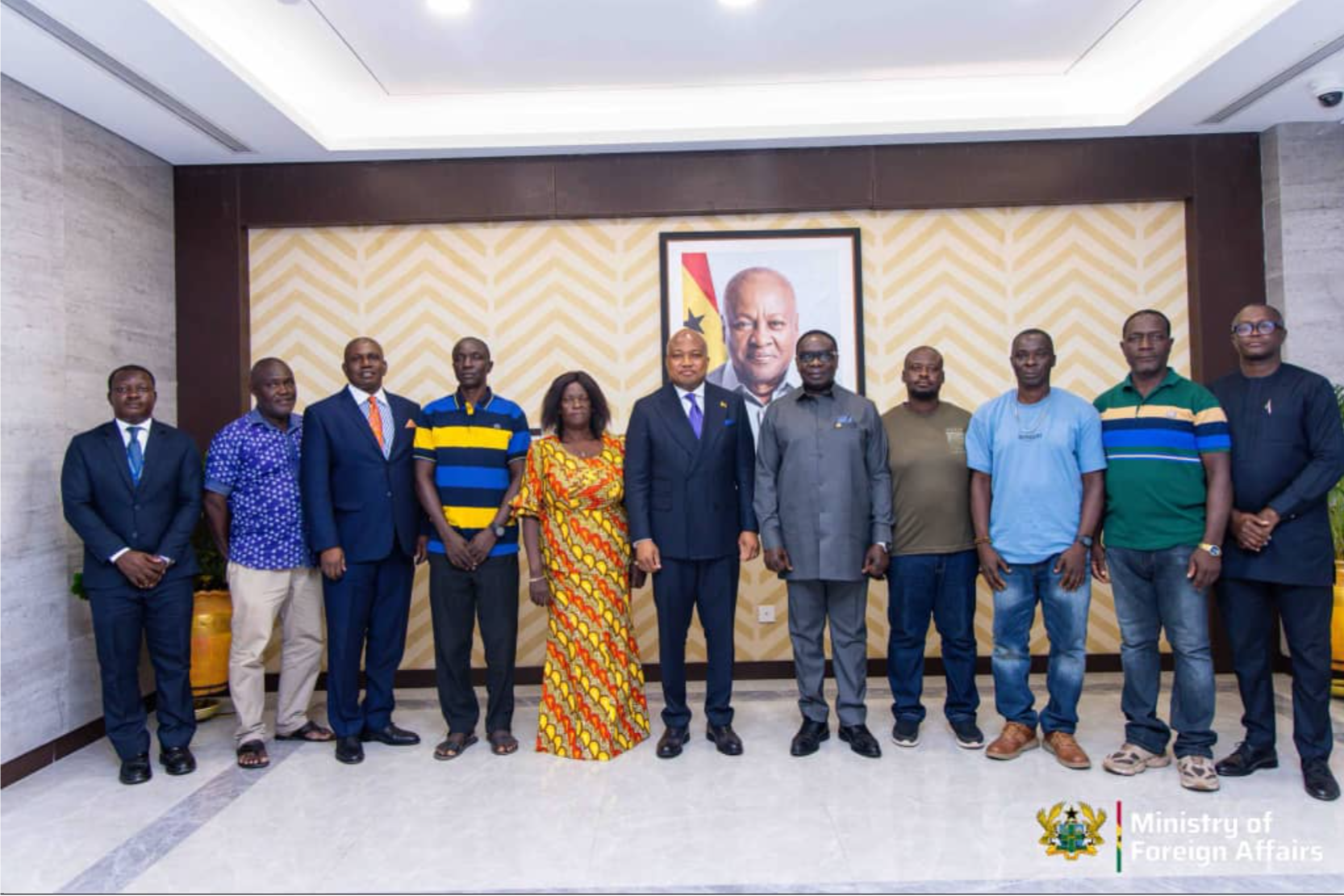
Eight Ghanaian seafarers are back home after spending 12 months detained in Iran, following the detention of the fishing vessel they worked on. Foreign Affairs Minister Samuel Okudzeto Ablakwa personally received them on Monday, November 16, 2026. Their release followed diplomatic efforts led by Ghana's Ministry of Foreign Affairs. Ablakwa described the reunion as "heartwarming" and said the Ministry will keep assisting the men as they rebuild their lives. The homecoming is a moment of relief for the seafarers and their families, who spent a year in uncertainty. It also raises serious questions. Why do Ghanaian workers keep ending up stranded aboard foreign vessels? Who protects them when ships are seized or abandoned? And how prepared is Ghana to reach citizens in distant and politically sensitive countries? The full circumstances of the vessel's detention have not been set out in detail in public. Even so, the case fits a wider global pattern. Seafarers from developing countries are often the first to suffer when ships are seized, owners walk away, or legal disputes drag on in foreign ports. The rescue adds to a growing list of efforts by Ablakwa's ministry to bring home Ghanaians stranded, exploited or trafficked abroad. The real test now is whether Ghana can move from rescuing citizens after the damage is done to protecting them before they leave.
For a full year, eight Ghanaian families lived with a silence no family should have to endure. Their sons, husbands, brothers and fathers had gone to sea to earn a living, working aboard a fishing vessel far from home. Then the vessel was detained in Iran, and the men were trapped with it. Weeks turned into months. Holidays passed without them. Children grew older without their fathers. On Monday, November 16, 2026, that long wait finally ended. Foreign Affairs Minister Samuel Okudzeto Ablakwa personally received the eight seafarers after their release, the result of diplomatic efforts led by Ghana's Ministry of Foreign Affairs. Ablakwa called the moment "heartwarming," and few who saw the men return would disagree. Yet behind the relief lies a harder story about how easily Ghanaian workers can disappear into the gaps of the global shipping industry, and how much effort it takes to get them back.
The homecoming carried obvious emotional weight. These men spent 12 months unable to return home, far from their families and cut off from the lives they had left behind. A year is a long time in any circumstances. In detention, in a foreign country where the language, legal system and culture are unfamiliar, it can feel endless. Seafarers held in such conditions often describe the same struggles: uncertainty about when, or whether, they will be released, limited contact with home, worry about families who depend on their income, and the slow mental toll of waiting with no clear end in sight. Many lose wages for the entire period. Some return in poor health. Almost all carry the strain of having no control over their own fate for months on end. For the eight Ghanaians, stepping back onto home soil and being greeted by the country's top diplomat was more than a ceremony. It was proof that they had not been forgotten.
Ablakwa's decision to receive the men in person sent a clear message. Ministers do not usually greet every returning citizen, and his presence signaled that the government wanted to treat the case as a national priority rather than a routine consular file. Since taking office as Foreign Affairs Minister in 2025, Ablakwa has built a reputation for high-profile interventions on behalf of Ghanaians in trouble abroad. He has spoken openly about citizens stranded, exploited or trafficked overseas, and his ministry has publicized several efforts to bring people home. Supporters see this as a welcome change, a foreign ministry that treats the welfare of ordinary citizens as central to its work instead of focusing only on summits and state visits. Critics argue that public receptions risk turning rescues into political theater. Both views can hold some truth at once. What matters most to the families, though, is simple: their loved ones are home.
The full circumstances of the vessel's detention have not been laid out in detail in public, and fairness demands caution before drawing conclusions about what happened at sea. What is known is that the men were working aboard a fishing vessel that was detained in Iran, and that they remained held for 12 months before their release. Iranian authorities have, over the years, seized foreign vessels in the Gulf and surrounding waters on a range of grounds, including alleged smuggling, illegal fishing and violations of territorial waters. In many such cases around the world, the crew members are not the people who made the decisions that led to the seizure. They are hired hands, often from poorer countries, who follow orders from captains and owners. Yet when a vessel is held, the crew is usually held with it. They become, in effect, collateral in a dispute they had little part in creating.
That reality is one of the cruelest features of modern shipping. A vessel may be owned by a company in one country, registered under the flag of another, managed by a firm in a third and crewed by workers from several more. This system, sometimes called the "flag of convenience" model, allows owners to cut costs and avoid stricter regulations. It also makes accountability hard to pin down when things go wrong. If a ship is seized, the owner may decide the vessel is not worth fighting for and simply walk away. The flag state may have little real connection to the ship. Recruitment agents may have disappeared. The crew is left stranded in a foreign port, sometimes unpaid, sometimes short of food and water, and often unsure who is responsible for helping them.
International bodies have warned for years that crew abandonment is a growing crisis. The International Labour Organization and the International Maritime Organization keep a joint database of abandoned seafarers, and the number of reported cases has climbed sharply in recent years, reaching record levels. Seafarer welfare groups and unions, including the International Transport Workers' Federation, have repeatedly called on governments to do more. The Maritime Labour Convention of 2006, often described as a bill of rights for seafarers, requires shipowners to provide financial security to cover repatriation and unpaid wages if a crew is abandoned. In practice, enforcement is uneven, especially on smaller vessels and in fishing fleets, which often fall outside the strongest protections. Fishing crews in particular are among the most vulnerable workers at sea, facing long hours, dangerous conditions and weak oversight.
For Ghana, the issue strikes close to home. Ghana is a coastal nation with a long maritime tradition, and fishing supports the livelihoods of hundreds of thousands of people along its shores. Many young Ghanaians, especially from coastal communities, seek work on foreign fishing vessels and merchant ships because opportunities at home are limited. Some sign contracts through licensed agencies. Others go through informal recruiters who promise good pay and safe conditions but deliver neither. Once at sea, these workers may have little access to legal advice, consular help or even a phone. When something goes wrong in a distant port, their families in Ghana are often the last to know.
The case of the eight seafarers also highlights the challenge of protecting citizens in countries where Ghana has limited diplomatic reach. Iran is a complex and politically sensitive place for any government to engage with. It operates under heavy international sanctions and sits in a region that has seen sharp tensions in recent years. Negotiating the release of foreign nationals there can involve layers of legal process, security concerns and diplomatic sensitivities. For a country like Ghana, which does not carry the diplomatic weight of major powers, securing results requires patience, persistence and careful use of whatever channels are available. That the ministry was able to bring the men home is a real achievement. That it took a full year is a reminder of how slowly these processes can move, and how much ordinary people suffer while governments negotiate.
The rescue does not stand alone. It adds to a troubling list of cases involving Ghanaians stranded, exploited or trafficked abroad. In recent years, reports have emerged of young Ghanaians lured to the Gulf with promises of well-paid domestic or hospitality jobs, only to face confiscated passports, unpaid wages and abuse. Others have been drawn into dangerous migration routes through the Sahara and across the Mediterranean, where many have died or ended up in detention centers in Libya. Reports from across Africa have described young people recruited for jobs in Asia who instead found themselves forced to work in online scam compounds. There have also been troubling reports of African nationals, including Ghanaians, recruited into fighting in the Russia-Ukraine war under false or misleading promises. Each case follows a familiar pattern: economic hardship at home, a tempting offer abroad, weak checks on recruiters, and a sudden collapse into danger once the person has left.
Ablakwa has repeatedly said that protecting Ghanaians abroad is a priority, and his ministry's actions in this case support that claim. But rescuing citizens after they fall into trouble is only one part of the job. The harder and more important work is preventing those situations in the first place. That means tighter regulation of recruitment agencies, including those that place workers on fishing vessels and merchant ships. It means clearer information for job seekers about their rights and the warning signs of exploitation. It means stronger cooperation between the Ministry of Foreign Affairs, the Ghana Maritime Authority, the Ministry of Labour, immigration authorities and the police to track who is leaving the country, for what work and under what contracts. And it means insisting that shipowners who employ Ghanaian crews carry the financial guarantees required under international law, so that no seafarer is left stranded without wages or a way home.
There are also lessons about communication. Families of detained or stranded workers often describe feeling shut out, unsure whether anyone in government is working on their case. A dedicated, accessible system for families to report missing or detained relatives abroad, and to receive regular updates, would ease some of that anguish. Publicly sharing what happened in cases like this one, while respecting the privacy of those involved, would also help other Ghanaians understand the risks and make safer choices. Transparency about how long such cases take, and why, would build public trust in the ministry's work.
For the eight seafarers themselves, the end of detention is not the end of the story. Returning home after a year away brings its own challenges. Some may have lost a year's wages and face debts that piled up while they were gone. Some may struggle with the emotional effects of prolonged detention, from anxiety to sleeplessness to a deep loss of trust. Readjusting to family life, finding new work and deciding whether to return to sea are heavy decisions. Ablakwa's pledge that the Ministry will continue assisting them is significant because it recognizes that the government's duty does not end at the airport arrival hall. Practical support, such as help pursuing unpaid wages, access to medical and psychological care, and links to job opportunities, would turn a moving homecoming into a lasting recovery.
There is a wider question too about accountability. If the men were owed wages, someone should pay them. If a recruiter placed them on a vessel without proper protections, that recruiter should answer for it. If the shipowner failed to meet obligations under international maritime law, Ghana should press for consequences through every available channel. Rescue without accountability risks sending the message that those who profit from vulnerable workers can walk away whenever trouble strikes. Holding the right parties responsible would protect not only these eight men but the many Ghanaians who will board foreign vessels in the years ahead.
Monday's reunion was, as Ablakwa said, heartwarming. Families embraced loved ones they had not seen in a year. A government showed that it could deliver for its citizens in a difficult and distant place. Those are things worth celebrating. But the joy of this homecoming should also sharpen the country's focus. Somewhere at sea right now, other Ghanaians are working long hours on vessels flying foreign flags, trusting that someone will stand up for them if something goes wrong. The true measure of this rescue will be whether it leads to stronger protections that keep the next group of workers from losing a year of their lives in a foreign port. Eight men are home. The work of making sure others never face the same ordeal has only just begun.