ELIZABETH HOLMES DOCUMENTARY STUNS BOX OFFICE WITH $15 MILLION OPENING FROM JUST 855 CINEMAS AS STREET FIGHTER TAKES WEEKEND CROWN
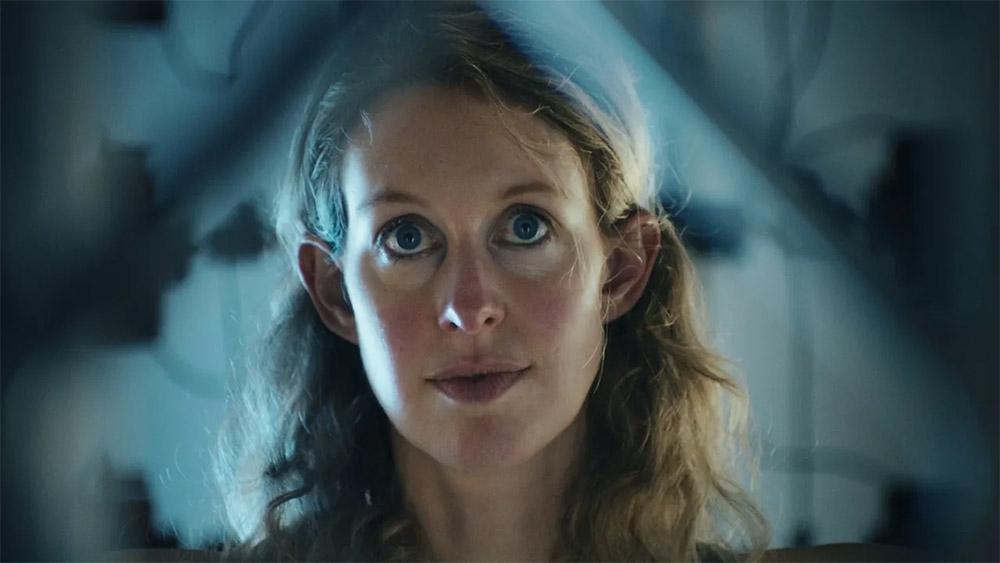
The Elizabeth Holmes documentary You Can See Everything has delivered a surprise $15 million opening from only 855 North American cinemas, with more than 2,000 screenings reportedly selling out during the October 16 to October 18 weekend. Directed by Nathan Fielder and Lance Oppenheim, the nearly three-hour documentary examines the former Theranos founder and includes extensive footage from the weeks before she entered federal prison. Its unusually strong performance placed it second at the weekend box office and among the biggest documentary openings in modern theatrical history. Street Fighter remained number one overall, earning an estimated $31 million from 3,575 cinemas.
The new Elizabeth Holmes documentary You Can See Everything has emerged as one of the biggest surprises of the North American box office after earning an estimated $15 million from just 855 cinemas during its opening weekend from October 16 to October 18, 2026. The film, directed by Nathan Fielder and Lance Oppenheim, examines the rise and collapse of former Theranos founder Elizabeth Holmes and drew exceptionally strong interest despite being a nearly three-hour documentary competing against several major studio releases. According to Sunday studio estimates, the film recorded more than 2,000 sold-out screenings across the United States and Canada, giving it one of the strongest theatrical debuts for a documentary in more than two decades.
The result was particularly remarkable because You Can See Everything opened on fewer than 1,000 screens, far below the nationwide theatre count normally associated with major box office releases. Its estimated $15 million gross translated into an average of roughly $17,500 per cinema, more than double the average earned by some of the weekend’s wider releases. A24, which distributed the film, said the number of sell-out screenings exceeded 2,000, demonstrating that demand was concentrated and intense rather than spread thinly across a massive number of cinemas.
The documentary finished second overall for the weekend, behind Paramount’s Street Fighter, which opened with an estimated $31 million from 3,575 North American cinemas. Street Fighter therefore remained the clear box office leader in total ticket sales, but the Elizabeth Holmes documentary attracted much of the weekend’s cultural conversation because of how unusual its performance was for a nonfiction film. The difference in release scale was substantial, with Street Fighter playing on more than four times as many screens as You Can See Everything.
The performance places You Can See Everything among the most successful documentary openings in modern box office history. Industry reports described it as the second-biggest opening ever recorded for a documentary, behind Michael Moore’s Fahrenheit 9/11, which debuted with almost $24 million from 868 cinemas in 2004. The figures are not adjusted for inflation, but the comparison still demonstrates how unusual it is for a documentary to generate this level of ticket sales immediately upon release.
The film also recorded the strongest opening for any movie released on fewer than 1,000 screens since Borat earned approximately $26.5 million in 2006. That achievement is important because films released in limited numbers of cinemas normally rely on strong reviews and gradual expansion over several weeks rather than immediately producing blockbuster-level revenue.
You Can See Everything instead arrived with unusually high audience awareness. The project had been filmed largely in secret over approximately three years and generated major interest when details began emerging shortly before its release. Fielder and Oppenheim gained extensive access to Holmes and members of her family during the period immediately before she began serving her federal prison sentence.
The documentary follows Holmes during the final weeks before she reported to prison in May 2023 after being convicted of defrauding investors connected to Theranos, the blood-testing technology company she founded. The company had once been valued at billions of dollars and Holmes was promoted as one of Silicon Valley’s most important young entrepreneurs before investigations revealed serious problems with its technology and representations to investors.
Holmes was eventually convicted in federal court on fraud charges and sentenced to more than 11 years in prison. Her fall became one of the most closely followed corporate scandals in recent American history, producing books, podcasts, scripted television productions and earlier documentaries examining how Theranos became so valuable despite questions surrounding the reliability of its blood-testing technology.
You Can See Everything approaches the story differently by focusing heavily on Holmes herself rather than only reconstructing the business scandal from outside. Fielder spent more than a month with Holmes and her family before her imprisonment, creating footage that gives audiences access to her personal life, conversations and relationships during a period when she knew she was preparing to enter federal custody.
That level of access appears to have played a major role in public curiosity surrounding the film. Holmes has remained one of the most controversial figures associated with Silicon Valley, and audiences have already seen multiple versions of the Theranos story. The documentary therefore needed to offer something significantly different to convince people to buy cinema tickets for another examination of the same subject.
The involvement of Nathan Fielder also contributed to the film’s unusual appeal. Fielder is known for projects that blur the boundaries between documentary, performance, reality television and psychological experimentation. His previous work has frequently placed real people inside situations that become increasingly complex and uncomfortable, creating uncertainty about where conventional documentary observation ends and constructed performance begins.
Lance Oppenheim brings a different documentary background, with previous films focused on unusual American communities and individuals. Their collaboration created a project that critics have described as difficult to categorise, combining intimate documentary footage with Fielder’s distinctive methods of questioning and staging.
That creative approach helped transform the film from a straightforward true-crime or business documentary into a broader cultural event. Marketing materials deliberately avoided revealing too much about the film’s structure, encouraging audiences to see it quickly before major details and surprises circulated online.
This strategy appears to have worked. The film generated strong social media discussion during its opening weekend, with viewers warning others to avoid spoilers and encouraging them to experience the documentary in cinemas. That kind of behaviour is far more common around major franchise releases, horror films or event movies than around long-form documentaries.
Audience demographics also suggest the movie reached beyond the traditional documentary audience. Associated Press reporting said more than 70 per cent of opening-weekend viewers were under the age of 35, indicating that younger moviegoers were a major factor in its success. This is significant because theatrical documentaries have often struggled to attract younger audiences who are accustomed to watching nonfiction content through streaming platforms, YouTube and social media.
The film’s strong per-theatre performance demonstrates the intensity of that demand. An estimated $15 million spread across only 855 cinemas means the movie generated a level of revenue per location that exceeded Street Fighter despite Street Fighter earning more overall. Street Fighter averaged roughly $8,700 per cinema, while You Can See Everything earned about twice that figure.
This does not mean the documentary was commercially bigger than Street Fighter in absolute terms. Street Fighter remained number one with $31 million and played to a far broader national audience. The comparison instead highlights how efficiently the documentary converted a smaller number of screens into ticket sales.
For A24, the result represents another example of how carefully targeted releases can compete with much larger studio productions. The company has built its reputation around distinctive films that rely heavily on critical attention, online discussion and audience loyalty rather than the enormous advertising campaigns associated with traditional blockbuster releases.
You Can See Everything reportedly cost less than $7 million to produce, with marketing spending below $10 million. If those figures are accurate, a $15 million domestic opening gives the film a strong commercial foundation before international releases, future domestic weekends and eventual digital distribution are considered.
The film’s commercial success is especially notable because documentaries rarely receive wide theatrical releases at all. Most nonfiction films now debut through streaming platforms, specialised cinema runs or film festivals because distributors often assume audiences will not pay theatre prices to watch documentary material.
The Holmes film challenges that assumption, although its performance should not automatically be treated as evidence that every documentary can reproduce the same success. Elizabeth Holmes is a globally recognised figure, Fielder has a strong following, A24 has a dedicated audience, and the film arrived with unusually intense critical and social-media attention.
Its near-three-hour running time also makes the box office performance more surprising. Longer films reduce the number of screenings a cinema can schedule in a day, meaning each screen has fewer opportunities to sell tickets. Despite that limitation, the documentary still produced more than 2,000 sold-out screenings during the weekend.
Critical reception has helped sustain that momentum. The film entered its opening weekend with exceptionally strong scores on major review platforms, while audience exit polling also indicated a high level of recommendation. Those numbers can change as more reviews are added, but the early response suggests that curiosity alone did not drive the opening.
Word of mouth will now become important because the film’s second weekend could determine whether the opening was a short-lived cultural spike or the beginning of a longer theatrical run. A strong hold would make the film an even more significant documentary success and could encourage A24 to expand it into additional cinemas.
Expansion appears likely if demand continues. Films opening on fewer than 1,000 screens typically have room to grow geographically, particularly if locations outside major metropolitan areas begin requesting bookings after seeing strong national performance.
The timing may also help. The October release places the documentary within the early stages of awards season, when studios begin positioning films for Oscar and other industry recognition. Strong box office numbers can reinforce awards campaigns by demonstrating that a film has connected with both critics and general audiences.
Documentaries have historically struggled to break into major categories beyond documentary-specific awards. No documentary has ever won the Academy Award for Best Picture, and even highly successful nonfiction films are rarely treated as conventional awards-season contenders across multiple categories.
The reception to You Can See Everything has already prompted speculation about whether it could challenge those boundaries. Such discussion remains premature before nominations are announced, but the combination of critical acclaim, audience enthusiasm and strong commercial performance has given the film a profile normally associated with major scripted releases.
The project also arrives at a moment when audiences remain fascinated by stories involving failed technology companies, corporate fraud and the culture of Silicon Valley. Holmes became a symbol of an era in which ambitious technology founders could attract enormous investment and media attention before their products had been fully demonstrated.
Theranos claimed it could conduct a wide range of medical tests using extremely small amounts of blood. The company attracted major investors and high-profile board members while Holmes became one of the most celebrated young entrepreneurs in the United States.
Investigative reporting later exposed serious questions about whether the technology performed as advertised. The company eventually collapsed, and criminal investigations followed.
Holmes’s trial became a major media event because prosecutors argued that she knowingly misled investors about the company’s capabilities and financial condition. Her defence argued that she genuinely believed in Theranos and did not intend to defraud investors.
A jury ultimately convicted her on four fraud-related counts involving investors while acquitting her on other charges. She later began serving her sentence at a federal prison in Texas.
The documentary enters territory already explored extensively through journalism and entertainment, meaning its success reflects not simply interest in the basic facts but curiosity about Holmes as a person. Fielder’s extended access allowed the filmmakers to capture material from a period that had previously received far less direct documentation.
That access included Holmes’s partner Billy Evans and their two young children. The filmmakers spent time with the family during the 34 days before Holmes entered prison, creating scenes that contrast ordinary domestic life with the extraordinary circumstances surrounding her conviction.
The presence of children adds emotional complexity because they were too young to understand the full legal and public circumstances facing their mother. Critics have debated whether the film’s intimacy humanises Holmes appropriately or risks shifting attention away from the people affected by Theranos.
That debate is likely to continue as the film reaches larger audiences. Documentaries about convicted public figures frequently face questions about whether access itself creates sympathy and whether filmmakers should challenge subjects more aggressively.
Fielder’s role complicates that issue because he is not known for conventional sympathetic interviewing. His work often creates situations in which subjects reveal themselves through extended interactions rather than through direct confrontation.
This has contributed to the documentary’s unusual tone and may explain why many viewers are describing the film as difficult to predict even if they already know the Theranos story.
The marketing campaign leaned heavily into that uncertainty. Trailers showed Holmes participating in unusual filming setups while Fielder appeared alongside her, creating questions about what exactly the documentary was attempting to do.
That campaign also benefited from secrecy. Because the project had not been extensively discussed throughout production, it was able to arrive with an element of surprise that is increasingly rare in modern entertainment.
The Telluride Film Festival played an important role in generating early momentum after the film screened there in September. Critical reaction from the festival quickly spread through entertainment media, creating awards buzz and strong word of mouth before the official theatrical release.
By opening weekend, audiences had heard that the film was unusual without necessarily knowing why. That combination of strong reviews and limited information helped create urgency.
A24’s release strategy took advantage of that urgency by avoiding an enormous initial theatre count. Instead, the company placed the film in 855 cinemas where demand was likely to be concentrated.
The more than 2,000 sold-out screenings indicate that many of those locations reached capacity repeatedly. This creates a visible sense of scarcity and can encourage people to book tickets quickly rather than waiting for later weeks.
Street Fighter followed the opposite model. As a major video-game adaptation backed by Paramount and Legendary, it opened in 3,575 cinemas and was designed to reach as many viewers as possible immediately.
Its $31 million opening was therefore stronger overall, and it deservedly led the weekend box office. The contrast between the two films illustrates how different distribution strategies can produce success in different ways.
Street Fighter relied on franchise recognition, action spectacle and a wide theatrical footprint. You Can See Everything relied on cultural conversation, critical attention and concentrated demand.
The weekend also included several other releases, but none approached the two leaders. Other Mommy earned approximately $8.4 million, Whalefall opened with around $8 million, and Sense and Sensibility generated roughly $7.3 million.
That placed the Holmes documentary comfortably in second position and nearly twice as high as the next group of releases.
The overall North American box office generated approximately $101.6 million during the weekend, according to industry estimates, representing a substantial increase from the comparable weekend in 2025.
The broader market therefore provided a relatively healthy environment for the documentary’s debut. Audiences were attending cinemas for multiple different types of films rather than one blockbuster dominating almost all available demand.
Even within that favourable environment, however, a $15 million documentary opening remains highly unusual.
Historically, some of the biggest nonfiction theatrical successes have been music films, concert documentaries and politically charged releases. Fahrenheit 9/11 remains one of the most prominent examples because it combined enormous political attention with a major theatrical rollout.
You Can See Everything differs because it centres on a corporate fraud case and a single controversial individual rather than a major political event or music star.
Its success may therefore encourage distributors to reconsider whether certain high-profile nonfiction stories can be treated as theatrical events rather than streaming content.
Streaming has transformed the documentary business over the past decade. Netflix, HBO, Amazon and other platforms have financed large numbers of documentaries because nonfiction programming can attract audiences at lower production costs than many scripted projects.
That shift has reduced the number of documentaries receiving major cinema releases. Audiences have become accustomed to watching even prestigious nonfiction films at home.
You Can See Everything demonstrates that people may still attend cinemas when the documentary itself is marketed as an event that viewers want to discuss immediately.
The communal nature of cinema may also matter for a film designed to provoke strong reactions. Audiences watching together can respond collectively to surprising or uncomfortable moments, creating an experience that feels different from watching alone at home.
Social media then extends that experience after the screening as viewers debate the film and attempt to avoid revealing its most discussed moments.
This cycle can generate additional demand quickly, particularly among younger audiences.
The documentary’s opening also strengthens A24’s position within specialty distribution. The company has increasingly moved beyond small arthouse releases and has shown a willingness to spend more heavily on ambitious projects while still maintaining its reputation for unusual filmmaking.
A $15 million opening from 855 cinemas is a commercially significant result for any specialty distributor.
The reported production and marketing costs also suggest that the film could become profitable relatively quickly compared with expensive studio productions that need hundreds of millions of dollars worldwide to recover their investment.
Theatrical revenue is shared with cinemas, meaning the distributor does not retain the entire $15 million gross. However, strong domestic ticket sales increase the film’s value across later windows including international distribution, premium video-on-demand and streaming.
International markets have not yet contributed significantly to the opening figure because the $15 million estimate covers the United States and Canada.
The film is expected to reach additional territories later, including the United Kingdom and Australia, where interest in the Theranos story and Fielder’s work could generate further revenue.
Its performance outside North America will help determine how internationally transferable the current excitement is.
Elizabeth Holmes remains much more culturally prominent in the United States than in some overseas markets, but Theranos became an international business story and previous productions about the scandal were distributed globally.
The film’s unusual creative reputation may therefore attract viewers who are interested in Fielder even if they have only limited familiarity with Theranos.
The success has also revived debate about public fascination with convicted fraudsters and disgraced business leaders. Entertainment companies have repeatedly produced films and series centred on scandals involving technology founders, financial fraud and corporate misconduct.
Critics argue that constant dramatisation can sometimes transform wrongdoing into celebrity. Supporters of such projects say examining these cases helps audiences understand how deception, investor culture and media hype can allow major failures to develop.
You Can See Everything appears likely to intensify that debate because Holmes participates directly in the documentary rather than being portrayed exclusively through archival material or actors.
Her own involvement gives her an opportunity to present herself to audiences, even though the filmmakers retain editorial control over the final product.
This creates ethical questions about documentary access that are likely to remain part of critical discussion long after the opening weekend.
From a purely commercial perspective, however, the numbers are already clear. Audiences showed an exceptional willingness to pay for the film.
The 855-screen release produced approximately $15 million.
More than 2,000 screenings sold out.
The film finished second at the North American box office.
And its per-cinema performance substantially exceeded that of the weekend’s overall number-one film.
Those figures make the documentary one of the most significant box office stories of October.
Street Fighter remains the weekend champion with $31 million, but the Holmes documentary is the unexpected result that industry analysts are most likely to study.
Its success challenges several assumptions at once: that documentaries belong primarily on streaming, that very long films are difficult to sell, that nonfiction cannot create spoiler-driven urgency and that limited releases cannot compete with major studio titles.
Whether those lessons apply to other films will depend on context. Few documentaries will have this exact combination of subject, filmmakers, distributor and cultural attention.
But the performance still gives filmmakers and studios a powerful example of what is possible when a documentary becomes an event rather than simply another piece of content.
The next weekend will provide the first major test of sustainability. If ticket sales remain strong and A24 expands the release, the film could quickly become one of the highest-grossing documentaries of the modern era.
If sales fall sharply after the initial wave of curiosity, the opening will still remain historically impressive.
Either outcome reinforces the fact that You Can See Everything has already exceeded normal expectations for a documentary.
The opening estimates were far above some industry projections made before the weekend, showing that demand developed more aggressively than analysts anticipated.
That surprise itself can create additional momentum because audiences often become curious about films that outperform expectations.
People who had no interest in the documentary before may now hear about the extraordinary box office numbers and want to understand why so many screenings sold out.
That creates a feedback loop in which commercial success generates publicity, and publicity generates further ticket sales.
A24 will likely try to sustain that effect while carefully controlling how much of the film’s content is revealed in marketing.
The distributor’s challenge will be expanding access without destroying the sense that audiences should see the film before its surprises become widely known.
For cinema owners, the strong per-screen average provides a clear financial incentive to add showtimes or bring the film into new locations.
For other distributors, the result is likely to become a case study in how social-media conversation can transform a specialised documentary into a mainstream theatrical attraction.
For Fielder and Oppenheim, the opening immediately gives the project a commercial profile far beyond most documentary releases.
And for Holmes, who remains in federal custody, the film has once again placed her story at the centre of American popular culture.
That renewed attention may be uncomfortable for people who lost money through Theranos or who believe earlier coverage gave Holmes excessive celebrity. Those perspectives are part of the wider debate surrounding any new entertainment treatment of the scandal.
The documentary’s success does not alter the legal record. Holmes was convicted of fraud against investors and is serving a federal prison sentence.
The box office story concerns the public’s continuing fascination with how the Theranos story happened, how Holmes presents herself now and how Fielder and Oppenheim chose to portray the final weeks before her imprisonment.
For VNTV, this is not an hourly breaking development but a significant entertainment and business story emerging from the October 16 to October 18 North American box office period.
Sunday studio estimates place the film at $15 million from 855 cinemas, with more than 2,000 sold-out screenings.
Street Fighter remained number one with $31 million.
The unusual part is how close a long documentary released on fewer than 1,000 screens came to becoming the central story of a weekend dominated numerically by a major video-game adaptation.
You Can See Everything may not have won the box office weekend, but it produced the performance that few people expected.
That surprise has turned a documentary about one of Silicon Valley’s most notorious scandals into a theatrical success story of its own, and the next several weeks will reveal whether its extraordinary opening becomes the beginning of a much larger run.