
ETHIOPIAN DRONES STRIKE ERITREAN FORCES IN TIGRAY AS ADDIS ABABA ACCUSES ASMARA OF “ALL-OUT INVASION”
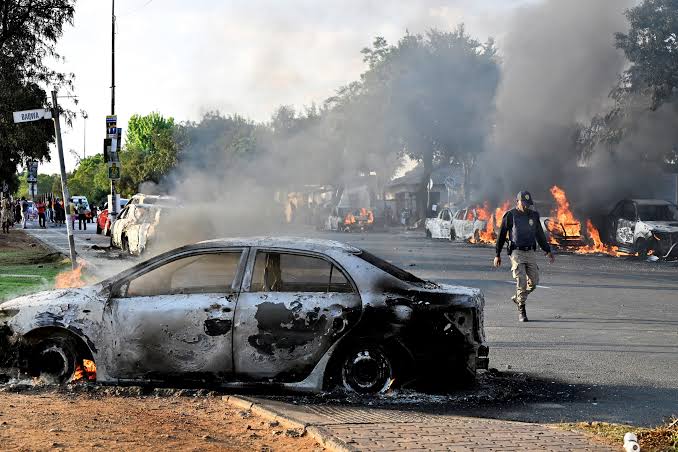
The central development is strongly supported by Reuters, AP and ACLED reporting: witnesses saw Eritrean troops inside Adigrat and other parts of northern Tigray, while ACLED reported that drones believed to belong to Ethiopia struck Eritrean vehicles and ammunition as some of those troops withdrew or repositioned. Ethiopia has since escalated its official language, accusing Eritrea in a letter to the UN of an “all-out invasion.” Eritrea rejects Addis Ababa’s narrative and accuses Ethiopia of seeking a pretext for aggression.
Ethiopia has launched drone strikes against Eritrean troops operating inside its northern Tigray region, according to conflict monitors, witnesses and multiple international news organizations, sharply escalating a crisis that is now raising fears of a direct war between two neighboring states that were military allies only a few years ago. The strikes targeted Eritrean military vehicles and ammunition around the northern Tigrayan city of Adigrat after Eritrean forces crossed the border and moved several dozen kilometers into Ethiopian territory, while Addis Ababa has now formally accused Asmara of carrying out what it calls an “all-out invasion” and says it is acting in self-defense.
The latest confrontation represents one of the most serious direct military exchanges between Ethiopia and Eritrea since relations between the two countries deteriorated after the end of the 2020-2022 Tigray war. Eritrean troops were seen moving through Adigrat on Wednesday, October 7, and the Armed Conflict Location & Event Data Project, or ACLED, said Ethiopian drones subsequently struck Eritrean forces and military equipment in and around the area overnight into Thursday. Witnesses reported hearing multiple explosions, seeing damaged Eritrean military vehicles and observing Eritrean troops apparently moving north following the bombardment.
The confrontation intensified further on Friday when Ethiopian Foreign Minister Gedion Timothewos told the United Nations that Eritrea had launched an “all-out invasion” of Ethiopian territory and that the government had no choice but to defend the country’s sovereignty. According to a diplomatic letter reported by Reuters, Ethiopia says Eritrean troops advanced as far as about 60 kilometers inside its territory. Eritrea disputes Ethiopia’s broader narrative and has accused Prime Minister Abiy Ahmed’s government of manufacturing a justification for aggression against Asmara.
The Ethiopian government’s latest position is more explicit than its earlier statements. On Thursday, the foreign ministry publicly demanded the immediate withdrawal of Eritrean forces and said Ethiopia reserved the right to defend its sovereignty and territorial integrity under international law. Addis Ababa has not released a detailed battlefield account of the drone strikes, and the Ethiopian military has not publicly disclosed casualty figures. There is also no independently verified count of Eritrean soldiers killed or wounded in the attacks.
What is much clearer is that Eritrean troops have been observed inside northern Ethiopia. Reuters reported that at least two witnesses saw dozens of Eritrean soldiers in trucks passing through Adigrat, approximately 25 kilometers south of the Eritrean border, while another resident said relatives had also seen Eritrean troops. A commander from the pro-government Tigray Peace Force likewise said Eritrean soldiers had entered Tigray in uniform and with heavy weaponry. Reuters could not independently verify every detail of the troop movements, but the combined witness accounts and ACLED reporting provide strong evidence that Eritrean forces crossed the border.
AP reporting also indicates that Eritrean troops were present not only around Adigrat but also in Idaga Hamus, further south, while ACLED said forces crossed around Zelambesa before moving into the interior. That would place Eritrean units along a strategically important corridor running from the border toward central Tigray.
The drone attacks appear to have been aimed at slowing or reversing that movement. ACLED said Eritrean military vehicles were struck as forces withdrew or repositioned, and witnesses told international media that some Eritrean trucks had been destroyed. One resident reported hearing a major explosion overnight and later seeing military vehicles that appeared to have been hit by drones. Another said Eritrean forces no longer appeared in the streets in the numbers seen earlier.
Neither Ethiopia nor Eritrea has released a complete military account of what happened around Adigrat, leaving uncertainty over the scale of the fighting and whether Eritrean forces remain in significant numbers inside Tigray. A senior Ethiopian official cited by Reuters alleged that Eritrea had deployed one mechanized division and three infantry divisions into Tigray, each containing roughly 1,500 soldiers, but Reuters said it could not independently verify that claim.
The fighting comes during a broader resurgence of war inside northern Ethiopia. Hostilities between the federal government and an opposition alliance led by the Tigray People’s Liberation Front resumed in late September, shattering the relative calm that followed the 2022 peace agreement ending the previous Tigray war. The renewed conflict has already spread across parts of Tigray, Afar and Amhara and has drawn in government-aligned militias and other armed factions.
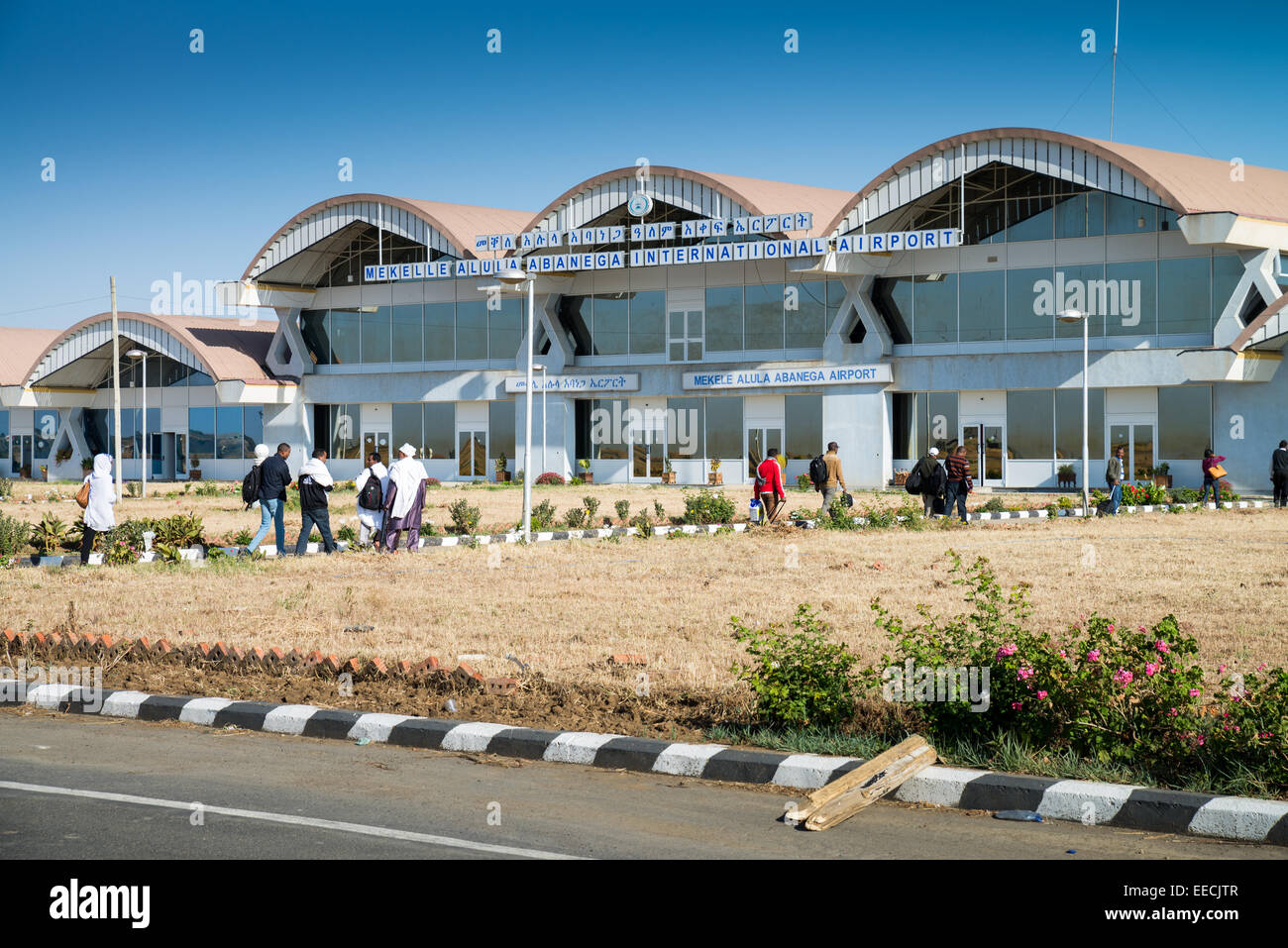
The TPLF and six allied groups launched a major offensive on September 23, seizing territory and challenging federal forces before Ethiopian troops and allied groups mounted a counteroffensive. Earlier this month, government-aligned forces regained Mekelle, the capital of Tigray, after TPLF forces withdrew. The loss of Mekelle was a significant setback for the opposition alliance, though fighting has continued elsewhere in northern Ethiopia.
The renewed war has become even more dangerous because it now overlaps with the rapid collapse of relations between Ethiopia and Eritrea. Addis Ababa expelled 10 Eritrean diplomats and closed its embassy in Asmara at the beginning of October after accusing Eritrea of supporting anti-government forces. Eritrea responded by severing diplomatic relations entirely, ending a period of formal engagement that had begun with extraordinary optimism eight years earlier.
In 2018, Abiy and Eritrean President Isaias Afwerki restored relations after years of hostility following the 1998-2000 border war between their countries. The rapprochement helped Abiy win the 2019 Nobel Peace Prize and was initially seen as one of the most important diplomatic breakthroughs in the Horn of Africa.
That partnership later became a wartime alliance. When the Ethiopian government fought the TPLF between 2020 and 2022, Eritrean forces entered Tigray and fought alongside Ethiopian federal troops against the TPLF, their longstanding enemy. Eritrean troops were also repeatedly accused by human-rights groups and survivors of serious abuses during that conflict, allegations that Eritrea has denied.
The 2022 Pretoria agreement between Ethiopia’s federal government and the TPLF ended the large-scale war but did not include Eritrea as a signatory. Eritrean leaders were reportedly unhappy with aspects of the settlement, and relations with Addis Ababa gradually deteriorated. What had been an alliance built around opposition to the TPLF became increasingly strained by disagreements over regional security, Tigray and Ethiopia’s growing campaign for direct access to the Red Sea.
That maritime question has now become central to Eritrea’s concerns. Ethiopia became landlocked when Eritrea gained independence in 1993, leaving the country dependent on neighboring states for port access. Abiy has repeatedly argued that a country of Ethiopia’s size and population needs secure access to the Red Sea and has described maritime access as strategically and economically essential.
Earlier this week, as he began another term in office, Abiy again said Ethiopia would pursue access to the sea through negotiation and mutual benefit. He has publicly emphasized peaceful means, but his repeated statements have alarmed neighboring coastal states, especially Eritrea, because the most geographically direct routes to the Red Sea run through Eritrean territory and toward ports such as Assab and Massawa.
Eritrea has increasingly accused Ethiopia of using regional instability as a pretext to pursue territorial or political objectives against it. Eritrean officials say Ethiopia is supporting Eritrean opposition groups and is seeking regime change in Asmara, while Ethiopian authorities accuse Eritrea of backing armed groups fighting the federal government.
Both sides therefore present themselves as responding defensively to the other.
Eritrean Information Minister Yemane Meskel has accused Addis Ababa of constructing what he called a false self-defense narrative to justify aggression. Eritrea has also denied Ethiopian allegations that it supports the TPLF-led armed alliance. Ethiopia, by contrast, says the entry of Eritrean troops into Tigray demonstrates that Asmara is already directly involved in the conflict.
The apparent presence of Eritrean troops creates a particularly complicated battlefield because Eritrea and the TPLF remain bitter enemies from the last war. It is not yet clear whether Eritrean forces entered Tigray primarily to confront federal troops, protect the Eritrean border, influence the anti-government rebellion or pursue their own strategic objectives. Different actors are offering competing explanations, and independent access to the front is limited.
Some analysts believe Eritrea may be attempting to create a buffer zone inside Tigray to prevent Ethiopian forces or armed Tigrayan groups from approaching its border. Others argue that Asmara fears that Abiy’s Red Sea ambitions could eventually lead to military action against Eritrea and is moving forces preemptively. Those interpretations remain analytical rather than established fact.
What can be established is that the military geography is becoming increasingly dangerous. Adigrat lies on a major route between the Eritrean border and central Tigray, and control of roads around the town can shape military access deeper into the region. If Ethiopian drones continue targeting Eritrean forces there, or if Eritrea responds directly against Ethiopian military positions, the confrontation could move quickly from limited cross-border intervention into a formal interstate war.
That prospect is particularly alarming because Ethiopia and Eritrea have already fought one devastating interstate conflict. Their 1998-2000 war killed tens of thousands of soldiers and civilians and left relations frozen for almost two decades. The current confrontation differs because it is unfolding inside an already fractured Ethiopian internal conflict involving Tigrayan forces, federal troops, regional militias and competing alliances.
A renewed Ethiopia-Eritrea war would therefore not begin on an empty battlefield. It would overlap with ongoing fighting across northern Ethiopia and could create several simultaneous fronts, increasing the danger of mass displacement and civilian casualties.
The humanitarian environment is already deteriorating. The earlier Tigray war caused catastrophic destruction and enormous loss of life, although estimates remain disputed and vary widely. Hundreds of thousands of people were displaced, food insecurity became severe and health infrastructure was devastated. Many communities had not fully recovered before the latest round of fighting began.
Recent clashes have again disrupted banking, transportation, communications and public services in parts of Tigray. Residents have reported shortages of cash, fuel and basic goods, while aid groups have treated hundreds of war-wounded patients since the latest escalation began. Thousands of civilians are already displaced or living in areas where renewed fighting could force them to flee again.
The fall of Mekelle to federal and allied forces has not ended the conflict. Federal police are attempting to restore order in the city after the TPLF withdrawal, and a new regional administration has not yet been fully established. Curfews and security restrictions remain in place, while the wider region remains unstable.
The addition of Eritrean troops could undermine any attempt to stabilize Tigray. Memories of Eritrean involvement in the previous war remain extremely painful for many Tigrayans, and a renewed Eritrean presence may strengthen resistance among local armed groups even if their political relationships with Addis Ababa are changing.
There are also wider geopolitical consequences. Ethiopia has accused not only Eritrea but also Egypt and Sudan of supporting opposition forces, allegations those countries reject. Relations between Ethiopia, Egypt and Sudan have already been strained for years over the Grand Ethiopian Renaissance Dam and management of the Nile.
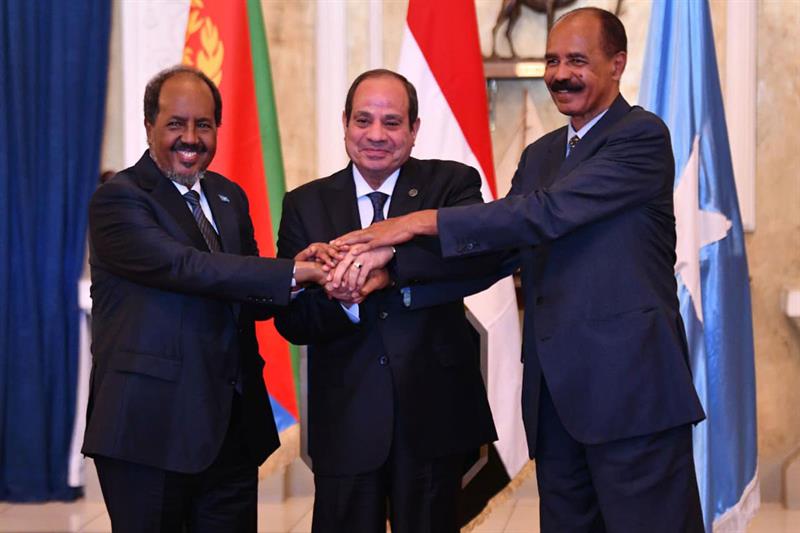
Eritrea, Sudan, Egypt and Somalia have also increasingly found common ground in resisting what they view as unilateral Ethiopian regional ambitions, particularly around access to the Red Sea. Earlier this week, those countries emphasized that coastal states retain sovereignty over Red Sea access and called for regional disputes to be handled politically.
That emerging alignment adds another layer to the crisis. If the Ethiopia-Eritrea confrontation intensifies, it could draw diplomatic, logistical or political involvement from countries already competing over Red Sea security, Nile water, ports and influence in the Horn of Africa.
The region is already under severe strain from Sudan’s civil war. A second large interstate or regional conflict involving Ethiopia and Eritrea would place additional pressure on borders, humanitarian agencies and regional organizations.
The African Union, whose headquarters are in Addis Ababa, faces particular pressure to prevent escalation. The organization was central to the 2022 Pretoria peace agreement and has a strong institutional interest in preserving that settlement. However, the latest fighting demonstrates how fragile implementation has been and how quickly unresolved disputes can reopen.
International governments will also be watching the drone strikes closely because Ethiopia has increasingly relied on unmanned aircraft as part of its military strategy. Drones played a significant role in the previous Tigray war and have remained central to federal military operations. Their use against a neighboring country’s forces marks a potentially important escalation because it directly links Ethiopian military action to foreign troops.
So far, no government has publicly provided reliable casualty figures from the strikes around Adigrat. Reports that vehicles were destroyed do not establish how many soldiers were killed, and VNTV has found no credible independently verified death toll. Claims circulating online about large numbers of Eritrean casualties should therefore be treated cautiously unless confirmed by multiple reliable sources.
The same caution applies to reports about the exact depth of the Eritrean advance. Ethiopia says troops moved as far as about 60 kilometers inside its territory, while witness reporting initially placed confirmed Eritrean units in Adigrat, roughly 25 kilometers from the border. Different units may have advanced along different routes, but the larger 60-kilometer figure currently comes from Ethiopian government claims rather than independent battlefield verification.
Eritrea has not acknowledged an invasion and rejects Ethiopia’s characterization. That leaves the international community facing sharply conflicting narratives: Addis Ababa says it is defending itself against an incursion, while Asmara says Ethiopia is creating a pretext for war.
Independent monitoring will therefore be critical. ACLED’s reporting, witness accounts and international news organizations provide some confirmation of troop movements and drone strikes, but communications restrictions and insecurity make comprehensive verification difficult.
The immediate question is whether Eritrean troops continue withdrawing north or instead establish new positions inside Tigray. Witnesses and diplomats cited in recent reporting said some forces appeared to be moving back after the drone attacks, but it was unclear whether they were leaving Ethiopia completely or merely redeploying.
The next question is how Eritrea responds. If Asmara chooses not to retaliate directly, the crisis could remain a dangerous but limited border confrontation. If Eritrean forces strike Ethiopian military positions, or if Ethiopia expands attacks across the border into Eritrea, the conflict would enter an entirely different phase.
Diplomatic channels are especially weak because the two countries have severed ties and closed diplomatic missions. That reduces the opportunities for direct crisis communication at exactly the moment when misunderstandings could prove most dangerous.
The United Nations, African Union and outside governments may therefore become increasingly important as intermediaries. Ethiopia has already taken its complaints to the United Nations, and its foreign minister has framed the issue as a matter of national self-defense. Eritrea is likely to continue arguing that Ethiopia itself is the aggressor.
For civilians in northern Ethiopia, however, the legal and diplomatic arguments are secondary to the immediate danger. Communities that survived one of Africa’s deadliest recent wars are once again living around troop movements, drone strikes, artillery fire and shifting front lines.
The most important fact in the latest development is that the Ethiopia-Eritrea crisis has moved beyond rhetoric. Eritrean troops have been observed inside Tigray, Ethiopian drones have reportedly struck them, and Ethiopia is now formally describing the situation as an invasion. Those developments place the two governments closer to direct war than at any point since their relationship began deteriorating after 2022.
Whether that escalation can still be contained will depend on what both governments do in the coming days. A withdrawal of Eritrean forces and an end to cross-border military action could create space for diplomacy, while further troop deployments or retaliatory strikes would increase the risk of a much larger regional conflict.
For now, the fighting around Adigrat should be understood not simply as another battle in Ethiopia’s renewed Tigray conflict but as a potentially decisive regional escalation. The same two governments that fought alongside each other against the TPLF only a few years ago are now facing each other militarily inside Tigray, while their diplomatic relations have collapsed and their accusations against one another are becoming increasingly severe. That reversal has turned northern Ethiopia into the center of a crisis with implications far beyond Tigray and has once again placed the stability of the wider Horn of Africa at risk.