EUROPE’S ABANDONED FARMLAND IS TURNING INTO WILDFIRE FUEL AS EMPTYING VILLAGES LEAVE FORESTS TO GROW UNMANAGED
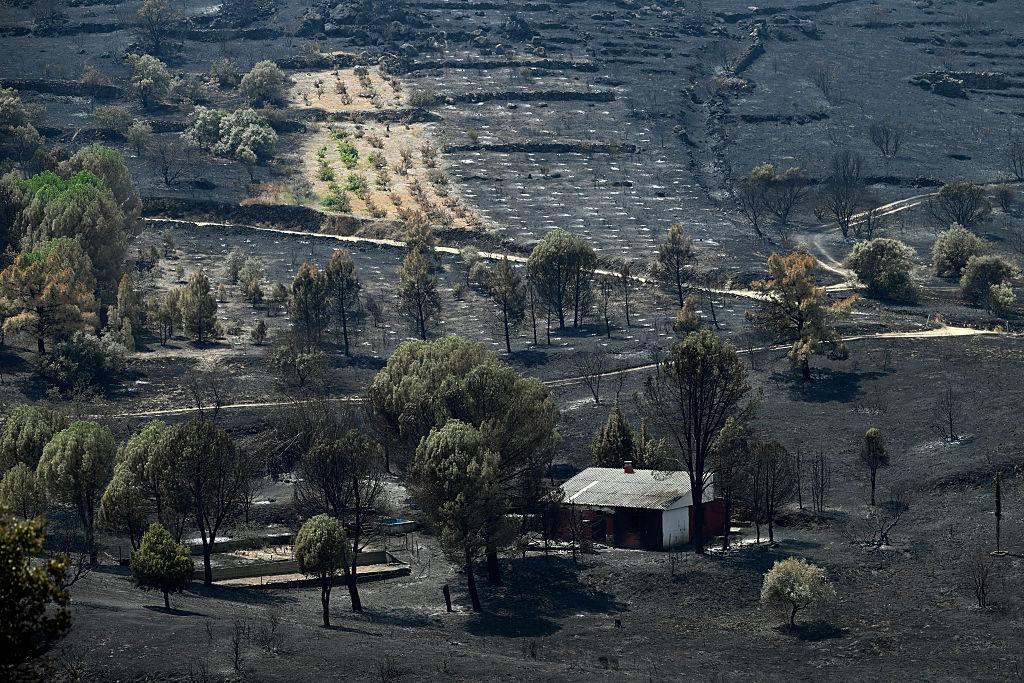
Europe’s abandoned farmland is becoming an increasingly important part of its wildfire crisis as rural depopulation allows forests and shrublands to expand across land once divided by fields, grazing areas and regularly cleared vegetation. During Spain’s massive 2026 central wildfire, around 63,000 hectares burned before the final hotspots were extinguished on October 3. Forest cover inside the affected area had increased by more than 54% between 1990 and 2018, creating more continuous vegetation capable of carrying flames across large distances. Spain recorded more than 300,000 hectares burned during 2026 and at least 21 wildfire-related deaths.
Europe’s worsening wildfire crisis is being driven not only by extreme heat, drought and climate change but also by a quieter transformation unfolding across the continent’s countryside, where abandoned farms, disappearing livestock, ageing rural populations and unmanaged forests are allowing huge amounts of combustible vegetation to build up. The consequences became devastatingly clear during Spain’s 2026 wildfire season, when one massive fire complex west of Madrid consumed approximately 63,000 hectares, forced tens of thousands of people from their homes and demonstrated how landscapes that once contained fields, grazing animals and regularly cleared vegetation have become increasingly continuous forests and shrublands capable of carrying flames across enormous distances.
The disaster began on July 22 near Burgohondo in Ávila province, around 90 kilometres west of Madrid, after sparks from heavy machinery ignited vegetation in an area already experiencing dangerous fire conditions. Strong winds pushed the flames rapidly across the surrounding mountains, while separate fires later developed around Almorox in Toledo province and San Martín de Valdeiglesias in the Madrid region. By July 26, the fires had merged into a much larger fire complex capable of overwhelming local firefighting capacity and forcing authorities to declare an unprecedented national wildfire emergency.
The fire continued burning for weeks, with some hotspots surviving long after the main fronts had been contained. By the time the final hotspots were extinguished on October 3, approximately 63,000 hectares had burned across parts of Ávila, Madrid and Toledo. Homes, farms, restaurants, forests and sports facilities were damaged or destroyed, while entire communities faced evacuation or confinement as emergency crews struggled to control flames moving through an increasingly connected landscape of forests and scrub.
What made the disaster particularly significant was not only its size but the way the land itself had changed over several decades. Analysis of land-cover data inside the area ultimately affected by the fire shows that forest cover increased by approximately 54 per cent between 1990 and 2018. Roughly 12,000 additional hectares of pine, oak and other vegetation appeared within the future fire perimeter during that period, taking the total classified forest area there to about 35,000 hectares.
Much of that expansion did not result from deliberate commercial forestry. It happened because agricultural land, grazing areas and other open spaces were gradually abandoned and allowed to transition into shrubland and eventually woodland. Areas that previously contained cultivated fields, livestock and regularly used rural roads became increasingly covered by bushes, young trees and dense vegetation. Parcel boundaries that once divided farmland and created natural breaks between combustible areas gradually disappeared beneath expanding forests.
That change matters enormously during a wildfire. A landscape made up of fields, orchards, pasture and forest patches can slow a fire because flames repeatedly encounter roads, grazed land, recently ploughed soil or other areas containing less fuel. When those spaces disappear and trees and shrubs become continuous, flames can move from one section of the countryside to another without encountering the same natural barriers.
Older residents in rural areas of Spain have witnessed that transformation directly. Decades ago, many villages were surrounded by land actively used for crops, sheep, cattle, goats, firewood collection and small-scale farming. Families cleared brush because the vegetation itself had economic value. Livestock consumed grasses and shrubs, farmers cultivated plots and residents collected timber and other material from woodland.
As younger generations moved to Madrid, Barcelona and other cities in search of employment and education, many of those practices declined. Fields were abandoned, rural populations aged and livestock numbers fell in some areas. Vegetation that previously would have been eaten, harvested or cleared instead remained in place and continued accumulating.
The result is a countryside that may appear greener but can become substantially more dangerous during periods of extreme heat. Grass dries. Shrubs grow beneath trees. Dead branches remain on the forest floor. Young trees fill spaces that were previously open. Together they create what firefighters describe as continuous fuel capable of moving flames from the ground into shrubs and then into tree canopies.
Once fire reaches the tops of trees, it can become dramatically more difficult to control. Crown fires can produce intense heat, spread rapidly in strong winds and throw burning embers far ahead of the main fire front. Those embers can ignite new fires kilometres away, creating multiple fronts and trapping emergency crews between rapidly changing fire lines.
The risk becomes particularly severe after wet winters and springs. Rain can encourage explosive vegetation growth, producing thick grass and new plants across the countryside. If summer then brings extreme heat and drought, that vegetation dries and becomes additional fuel.
Spain experienced precisely that combination during 2026. Vegetation grew strongly during wetter periods before record-breaking heat dried large areas of the country. By the peak of summer, grasslands, shrublands and forests contained enormous quantities of dry material ready to burn.
Climate change remains a critical part of the story because hotter temperatures and more severe drought increase the probability that vegetation will become dangerously dry. But temperature alone does not determine how destructive a fire becomes. The amount, type and arrangement of vegetation also determine whether flames remain relatively manageable or accelerate into a massive fire capable of overwhelming firefighters.
Spain’s experience therefore illustrates how climate change and rural abandonment can reinforce one another. Hotter conditions make fires easier to ignite and harder to suppress, while unmanaged vegetation provides the fuel those fires need to spread.
The pattern extends far beyond the area around Madrid. Spain’s overall forest cover increased substantially between 1990 and 2025, reaching around 19.1 million hectares. Woodland has expanded as agriculture has retreated from less productive or more remote land, while tree-planting programmes have also contributed to the increase.
Across Europe as a whole, forest cover increased by roughly 11 per cent between 1990 and 2025. On its own, more forest is not necessarily environmentally harmful. Forests can store carbon, protect biodiversity, reduce soil erosion and provide valuable ecosystems.
The wildfire problem emerges when forest expansion occurs without adequate management. Young forests developing on abandoned agricultural land may become exceptionally dense because nobody removes smaller trees or undergrowth. Without grazing or controlled clearing, combustible material can accumulate year after year.
Many Mediterranean countries now face this challenge. Spain, Portugal, Italy, Greece and parts of France contain extensive rural regions where populations have declined and traditional farming practices have weakened. At the same time, hotter summers are creating increasingly dangerous fire conditions.
Europe’s 2026 wildfire season provided a dramatic demonstration of the consequences. By early October, almost 700,000 hectares had burned across the European Union. The total was far above the long-term average, even though it remained below the extraordinary record recorded in 2025.
Spain was one of the countries hardest hit. More than 300,000 hectares burned during 2026 according to satellite-based estimates, approximately three times the country’s average annual burned area over the previous two decades.
Spanish government figures based on regional reporting recorded more than 275,000 hectares burned by late September, with final estimates continuing to rise as authorities assessed later fires and updated the perimeters of earlier ones.
At least 21 people died in Spain’s wildfires during the season, making 2026 one of the country’s deadliest fire years in decades. Seventy people were reported injured, while approximately 118,000 people were evacuated during different incidents.
One particularly devastating fire at Los Gallardos in Almería killed 15 people. Elsewhere, massive fires forced road closures, emergency accommodation, evacuations and the deployment of thousands of military, police and firefighting personnel.
Authorities were forced to extend Spain’s official summer wildfire campaign through the end of October because the danger remained unusually high long after the period in which the country would normally expect peak wildfire activity to begin easing.
The crisis has intensified debate over whether governments are spending enough money on fire prevention compared with emergency firefighting. Aircraft, helicopters, military units and thousands of firefighters can suppress many fires, but there are limits to what emergency services can do when flames reach extreme intensity.
Fire specialists increasingly argue that prevention must begin months or years before ignition. That means reducing the amount and continuity of combustible vegetation across landscapes vulnerable to major fires.
One approach is controlled burning, in which carefully managed fires remove dry vegetation under conditions where firefighters can control the flames. Prescribed burns are already used in several countries but can face public resistance because residents worry that intentionally lighting fires may create new danger or produce smoke.
Mechanical brush clearing can achieve similar results but is expensive, particularly across enormous rural areas. Workers must repeatedly remove shrubs, branches and smaller trees because vegetation eventually grows back.
Livestock provides another possible tool. Sheep, goats and cattle naturally consume grasses and shrubs, reducing some of the vegetation available to burn. Several wildfire programmes in Mediterranean Europe have experimented with using grazing animals to maintain strategic firebreaks.
Agricultural revival could also help in some locations. Keeping farmland active prevents forests and shrublands from becoming completely continuous, while orchards, vineyards and cultivated fields can form breaks in the vegetation.
The challenge is economic. Many rural farming activities disappeared precisely because they were no longer financially attractive. Older farmers retired, younger residents moved away and small properties were abandoned because they generated too little income.
Governments attempting to bring farming or grazing back into those landscapes may therefore need to provide subsidies or other incentives. Fire prevention can become part of the economic justification because maintaining rural activity may cost less than repeatedly fighting enormous fires and rebuilding destroyed communities.
Private ownership further complicates the problem. Much of Europe’s forest and abandoned agricultural land is divided among large numbers of owners, some of whom may live hundreds of kilometres away or may not even know precisely which plots they inherited.
Local governments can order vegetation to be cleared, but enforcing those requirements across thousands of small parcels is difficult. Some owners cannot afford the work, while others simply ignore regulations.
Climate change means governments have less room to postpone those decisions. A landscape that might have burned occasionally under the climate of several decades ago may now experience longer fire seasons and more frequent periods of extreme fire weather.
Firefighters increasingly describe events in which conditions become so intense that conventional suppression becomes impossible. Crews may retreat not because resources are lacking but because heat, wind and flame behaviour make direct attack too dangerous.
The Burgohondo fire demonstrated this problem. As separate fires merged, the combined system produced enormous energy and moved across provincial and regional boundaries. Emergency services were dealing not with a single flame front but a rapidly evolving event capable of generating its own complex behaviour.
The geography complicated operations further. Mountains, narrow roads and scattered rural settlements forced authorities to protect communities while also attempting to slow the fire itself.
More than 60,000 people were evacuated during the central Spain emergency. The government activated its highest national wildfire emergency mechanism, placing the response under stronger central coordination and deploying military personnel, aircraft, police and firefighting resources from across the country.
Yet even the enormous emergency mobilisation could not prevent tens of thousands of hectares from burning. That reality has strengthened arguments that firefighters should be treated as the final defensive line rather than the main solution to Europe’s wildfire problem.
The disappearance of farmland is especially important because traditional agriculture unintentionally performed fire-prevention work. Farmers were not clearing vegetation primarily to protect against wildfires. They were preparing fields, feeding livestock and collecting useful materials.
Those activities nevertheless removed fuel and broke landscapes into smaller compartments. When agriculture disappeared, that maintenance disappeared with it.
The visual transformation can be striking. Historical aerial photographs of areas west of Madrid show open farmland divided into small parcels, roads and grazing areas. Later images show vegetation progressively filling those spaces until large sections become connected forest.
Some of the newly wooded landscape is valuable habitat and should not simply be cleared. The challenge is determining where vegetation can be safely retained and where strategic management is necessary to prevent fires from moving unchecked toward villages and towns.
This is particularly important around the wildland urban interface, where homes are surrounded by forests or scrub. Many European communities have expanded into areas previously used for agriculture, meaning houses now sit directly beside vegetation capable of carrying intense fire.
Residents may value the natural surroundings until a fire approaches. Then narrow rural roads, dense trees and limited evacuation routes can create life-threatening conditions.
Fire-prevention strategies increasingly emphasise creating defensible space around homes, removing vegetation close to buildings and ensuring firefighters can safely enter communities. Building materials also matter because roofs, windows and vents can determine whether embers ignite a property even when the main fire remains some distance away.
Spain’s 2026 season showed that rural villages are not the only areas at risk. Fires burning near Madrid demonstrated how quickly major population centres can face smoke, road closures and evacuation pressure when surrounding countryside becomes highly combustible.
The economic damage extends beyond destroyed houses. Wildfires damage farms, tourism businesses, restaurants, electricity networks, roads and water infrastructure. They can devastate livestock operations and leave communities dependent on government assistance for years.
Ecological damage can also continue long after flames disappear. Heavy rainfall on burned mountainsides can wash soil into rivers because vegetation no longer holds the ground together. Burned forests can lose wildlife, while repeated fires may prevent ecosystems from recovering before the next event.
Carbon emissions create another climate consequence. Fires release carbon stored in vegetation back into the atmosphere, while the destruction of forests reduces their ability to absorb future emissions.
This creates a dangerous feedback cycle. Climate change increases fire conditions, fires release more carbon and damaged ecosystems may become less capable of absorbing carbon later.
The solution is unlikely to be a return to the exact rural landscape of the 1950s. Europe’s economies and populations have changed too dramatically, and forcing people back into farming would neither be practical nor desirable.
Instead, researchers increasingly argue for new forms of landscape management capable of recreating some of the fire-resistance once provided unintentionally by agriculture.
That could include professional forest management, subsidised grazing, strategic agriculture, prescribed burns, mechanical clearing and redesigned settlement boundaries.
Some areas may need to be deliberately thinned to create mosaics of vegetation rather than continuous forests. Firebreaks can be designed around towns, transport routes and critical infrastructure.
Authorities can also prioritise areas where wildfire models show flames are most likely to move rapidly toward populated communities. Managing every hectare of forest would be impossible, but managing strategic zones could substantially change fire behaviour.
The financial question remains difficult. Prevention produces few dramatic images when it succeeds because the result is a fire that never becomes catastrophic. Emergency firefighting, by contrast, attracts immediate political attention because aircraft, flames and evacuations are visible.
Governments therefore face pressure to spend heavily during emergencies while prevention budgets can be easier to cut during quieter years.
The 2026 season may change those calculations. Spain experienced thousands of fires, dozens of major incidents and one of its highest death tolls in decades.
The lesson from the central Spain megafire is that increasing firefighting capacity alone may not be enough if the landscape itself has become more combustible.
The 54 per cent growth in forest cover inside the eventual fire perimeter between 1990 and 2018 shows how dramatically land use can change within a single generation. What once contained disconnected fields and woodland became a much more continuous mass of vegetation.
That does not mean forests caused the fire. The ignition near Burgohondo was linked to sparks generated by machinery, while extreme heat, drought and wind created dangerous fire conditions.
But once the fire started, the structure of the landscape helped determine how far and how intensely it could spread.
This distinction is important. Preventing every ignition is impossible. Machinery fails, lightning strikes, electrical lines malfunction and people make mistakes.
Wildfire policy therefore has to assume that fires will start and concentrate on whether the landscape allows those fires to become disasters.
Europe’s abandoned countryside increasingly makes that task harder.
As fields disappear beneath shrubs and forests, roads become overgrown and livestock grazing declines, large stretches of land can become connected fuel networks.
In a cooler climate, those changes might have been manageable. In an increasingly hot and dry Mediterranean climate, they can transform ordinary summer fires into events that destroy entire communities.
Spain’s 2026 season offers a warning for the rest of Europe. More than 300,000 hectares burned, at least 21 people died and the country experienced massive evacuations despite sophisticated firefighting services and extensive emergency resources.
The problem is therefore no longer simply how quickly helicopters can reach a fire.
The deeper question is what kind of landscape those helicopters are trying to defend.
If rural populations continue shrinking and former farmland continues turning into unmanaged woodland, governments may need to replace the fire-prevention work that farmers and grazing animals once performed without deliberately thinking of it as fire prevention.
That will require money, workers, political commitment and difficult decisions about which forests should remain dense and which landscapes need intervention.
It will also require accepting that a greener-looking countryside is not automatically a safer countryside.
Healthy, managed forest can provide enormous environmental benefits. Dense, abandoned vegetation exposed to record heat and prolonged drought can become something very different.
The wildfire that began near Burgohondo and eventually consumed about 63,000 hectares before its final hotspots disappeared on October 3 demonstrates how quickly that distinction can become catastrophic.
Europe’s next wildfire crisis may again begin with a single spark. Whether that spark becomes another megafire will depend not only on the weather on that particular day but on decisions made years beforehand about farms, forests, grazing, rural communities and the millions of hectares of land increasingly being left to manage themselves.