
EXISTING GHANA CEDI NOTES REMAIN LEGAL TENDER AS NEW HERITAGE SERIES ENTERS CIRCULATION DECEMBER 1

The Bank of Ghana says existing cedi banknotes will remain legal tender and circulate alongside the newly unveiled Heritage Series, which will enter circulation from December 1, 2026. Governor Dr Johnson Pandit Asiama says the transition will be gradual and Ghanaians do not need to rush to exchange their current notes. The Heritage Series covers denominations from GH¢1 to GH¢200, reintroduces the GH¢2 banknote and adds stronger security, durability and accessibility features.
The Bank of Ghana has assured Ghanaians that all existing cedi banknotes will remain legal tender and can continue to be used normally after the newly unveiled Ghana Heritage Series enters circulation on December 1, 2026, dismissing concerns that members of the public will need to rush to banks to exchange their current money. Governor of the Bank of Ghana Dr Johnson Pandit Asiama said the introduction of the redesigned notes would be gradual, allowing households, traders, financial institutions and businesses sufficient time to become familiar with the upgraded currency without creating unnecessary disruption to everyday economic activity.
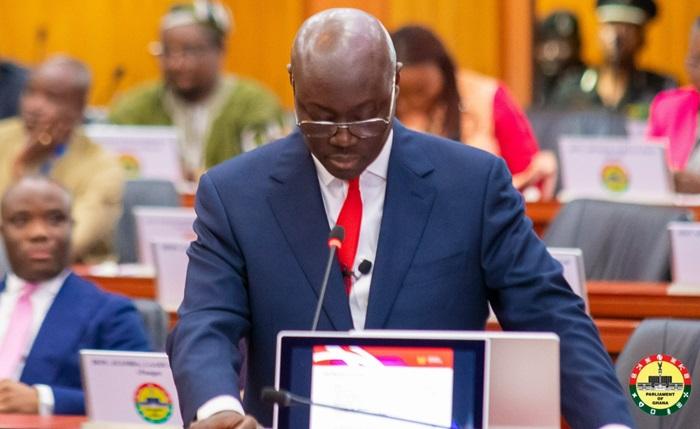
Speaking at the official unveiling of the Ghana Heritage Series Banknotes at Bank Square in Accra on Thursday, November 12, Dr Asiama emphasised that the programme does not represent the immediate withdrawal or demonetisation of the banknotes currently circulating across the country. Instead, the Heritage Series will enter the payment system alongside the existing notes, with both versions remaining valid for transactions as the central bank manages a gradual transition toward the upgraded currency.
The Governor said the Heritage Series would officially enter circulation from December 1, 2026, giving commercial banks, cash handling companies, businesses and the public several weeks after the launch to prepare for the new designs. The phased approach is intended to avoid some of the practical difficulties that can arise when new currency is introduced rapidly, including problems with automated teller machines, cash processing machines and retail systems that have not yet been calibrated to recognise redesigned notes.
Dr Asiama repeatedly stressed that there is no reason for anyone to rush to exchange existing banknotes solely because a new series is being introduced. Current Ghana cedi notes retain their full value and legal status, meaning they can continue to be used to buy goods, pay for services, settle debts and conduct other financial transactions even after Heritage Series notes begin appearing in banks, shops, markets and ATMs.
That assurance is particularly important because the introduction of redesigned currency can sometimes create public anxiety, especially where people incorrectly assume that older banknotes are about to become worthless. The Bank of Ghana is therefore seeking to prevent panic withdrawals, unnecessary queues and attempts by individuals or businesses to reject perfectly valid currency during the transition period.
Under the new arrangement, an existing GH¢50 note and a Heritage Series GH¢50 note will both represent exactly the same monetary value and will be accepted simultaneously. The same principle will apply across the other denominations covered by the upgrade, allowing people to encounter both designs during ordinary transactions without needing to distinguish between them for purposes of value.
The Heritage Series will include upgraded banknotes in GH¢1, GH¢2, GH¢5, GH¢10, GH¢20, GH¢50, GH¢100 and GH¢200 denominations. The Bank of Ghana has also confirmed the reintroduction of the GH¢2 banknote, while making clear that it is not introducing a GH¢500 note or any denomination higher than the existing GH¢200 ceiling.
The central bank has consistently described the programme as a banknote modernisation exercise rather than a redenomination of the Ghana cedi. The face value of the currency remains unchanged, meaning one cedi under the existing series remains equal to one cedi under the Heritage Series. Prices, salaries, bank balances, contracts and other financial obligations will not be converted into a new numerical system as occurred during Ghana’s 2007 currency redenomination.
Bank of Ghana officials say the principal objective is to modernise banknotes whose basic designs have been in circulation for more than two decades. Currency technology has evolved significantly during that period, while counterfeiters have also gained access to increasingly sophisticated printing, scanning and digital reproduction tools. The central bank believes periodic redesign is therefore necessary to maintain the integrity of the national currency and make counterfeiting more difficult.
The Heritage Series incorporates enhanced security features intended to make genuine notes easier for the public, financial institutions and law enforcement agencies to authenticate. Although the Bank has not publicly disclosed every technical anti counterfeiting element in a manner that could assist criminals, it has said the upgraded banknotes contain stronger security technologies than the notes currently in circulation.
Durability is another major objective. Banknotes pass through thousands of hands during their lifespan and are exposed to moisture, dirt, folding and other forms of physical stress. Notes that deteriorate rapidly have to be withdrawn, destroyed and replaced, creating significant costs for the central bank and ultimately for the wider economy.
The Bank of Ghana has therefore strengthened the material used in the Heritage Series while retaining a cotton based substrate rather than switching the country to polymer banknotes. Officials believe the improved construction should allow the notes to remain usable for longer periods before they need to be replaced.
That durability objective is closely connected to the Bank’s renewed campaign against the misuse of currency. Ahead of the November launch, the central bank warned Ghanaians against crumpling banknotes, writing on them, stapling them, spraying money at social events or using notes to create decorative money bouquets. It says such practices shorten the lifespan of currency and increase the cost of maintaining a clean and functional banknote supply.
The warning applies to both the Heritage Series and existing notes. Bank officials have argued that currency should be treated as a national asset rather than as a disposable decorative object because every damaged note eventually has to be collected, processed and replaced at public cost.
The design philosophy of the Heritage Series also extends beyond security and durability. The Bank says each denomination incorporates Ghanaian iconographic elements intended to tell parts of the country’s history while reflecting its future aspirations. National heroes, cultural symbols and important aspects of Ghana’s heritage are being used to strengthen the connection between the currency and the country’s identity.
The series is being introduced under the theme, “The Cedi, Our Future: Secure, Designed to Last,” reflecting the Bank’s attempt to combine national symbolism with technical improvements. Officials have said the redesign is intended to create notes that Ghanaians can recognise as distinctly national while also meeting modern international standards for currency security.
Accessibility has also played an important role in the development of the new banknotes. The Bank of Ghana consulted organisations representing persons with disabilities before the launch and says the Heritage Series retains different physical sizes across denominations while improving tactile markings designed to help visually impaired users distinguish one note from another by touch.
Director of Currency Management Dominic Owusu explained during consultations with disability groups that the tactile features on the new notes have been strengthened because similar features on older banknotes can become difficult to identify after extended circulation. The central bank is also exploring digital tools capable of scanning banknotes and announcing their denomination for visually impaired users.
Those measures reflect the wider reality that physical cash remains important even as Ghana rapidly expands digital payments. Mobile money, bank transfers, cards and financial technology platforms have transformed the way millions of Ghanaians transact, but cash remains central to markets, transportation, informal businesses and many rural communities.
Dr Asiama used the launch to argue that cash also performs an important resilience function within the national payment system. Electronic payment systems depend on telecommunications networks, electricity, software infrastructure, data centres and cybersecurity systems, meaning disruptions in any of those areas can temporarily prevent digital transactions from functioning.
The Governor pointed to international experience showing that payment networks can be interrupted by technical failures, cyberattacks, natural disasters and deliberate attacks on infrastructure. In such circumstances, physical currency provides an alternative means of exchange that can continue functioning even when electronic systems are unavailable.
That argument is particularly relevant as financial systems around the world become more dependent on digital infrastructure. Governments and central banks are encouraging electronic payments because they improve speed, convenience and financial inclusion, but many are also cautious about allowing cash to disappear completely because a fully digital economy can become vulnerable when networks fail.
Ghana has experienced occasional interruptions in mobile telecommunications and electronic services, illustrating why the Bank of Ghana wants to preserve a strong physical currency system alongside digital payment expansion. The Heritage Series therefore forms part of a broader approach in which cash and digital payments are expected to coexist rather than one immediately replacing the other.
The gradual December rollout is intended to support that coexistence without creating confusion. Commercial banks will serve as a major channel through which the new notes enter circulation, while ATMs and cash handling systems will be calibrated to recognise the redesigned currency.
That preparation is important because the introduction of the GH¢200 denomination in the past exposed problems when some ATMs were not immediately configured to handle the note. The Bank wants to avoid repeating similar difficulties by giving financial institutions enough time between the official unveiling and the December 1 circulation date.
Public education will also be central to the transition. The Bank is expected to provide information explaining how to recognise genuine Heritage Series notes, the security features ordinary users should check and the visual differences between denominations.
Businesses will need to train staff as well. Cashiers, market traders, fuel stations, restaurants, transport operators and other cash intensive businesses are among those most likely to encounter the new notes quickly once circulation begins.
The Bank of Ghana is particularly concerned about criminals attempting to exploit public unfamiliarity during the early stages of the rollout. Counterfeiters sometimes take advantage of currency redesigns because people have not yet learned what genuine new banknotes should look or feel like.
A strong education programme can reduce that risk by ensuring the public understands the most visible security features. Banks and businesses will also rely on specialised equipment and professional authentication processes for higher volumes of cash.
The coexistence of both currency series means people will have to become comfortable with receiving different designs for the same denomination. A trader may receive an existing GH¢20 note from one customer and a Heritage Series GH¢20 note from another, with both remaining valid and carrying equal value.
The Bank has therefore warned businesses not to reject existing notes simply because newer versions become available. Unless the central bank formally announces a future withdrawal process, current notes remain legal tender.
Any eventual reduction in the quantity of older notes is expected to happen naturally as commercial banks return worn currency to the Bank of Ghana. Rather than requiring every citizen to exchange notes on a particular date, the central bank can gradually withdraw older notes from circulation as they pass through the banking system.
That approach reduces administrative pressure and prevents disruption. People can continue spending old notes normally, after which banks receiving those notes can determine which remain fit for circulation and which should be removed.
The Bank has not announced a final date on which the current banknote designs will cease to be legal tender. Until such an announcement is made, the public should treat them as fully valid currency.
The introduction of the Heritage Series also has implications for currency management costs. Designing and printing banknotes is expensive, particularly where notes must frequently be replaced because of physical damage or counterfeiting risks.
More durable banknotes can remain in circulation longer, reducing the frequency with which the central bank must place new printing orders. Enhanced security can also reduce economic losses associated with counterfeit currency and strengthen public confidence in cash transactions.
Confidence is essential to any currency system. A banknote functions because people believe others will accept it at its stated value. Confusion over legitimacy or widespread counterfeiting can undermine that trust and make everyday transactions more difficult.
The Bank of Ghana’s repeated reassurance about existing notes is therefore intended to protect confidence during the transition. It wants people to see the Heritage Series as an upgrade to the cedi rather than the introduction of a separate currency.
That distinction will also help prevent misinformation. Currency changes often generate rumours on social media, including claims that people must exchange money immediately or that new high value denominations are being introduced.
The Bank has already rejected claims that the Heritage Series includes a GH¢500 note. Officials have said the highest denomination remains GH¢200 and that the programme focuses on improving existing denominations rather than creating a significantly different structure for the currency.
The return of the GH¢2 banknote is one notable change. Ghana already has a GH¢2 coin, but the Bank has confirmed that the Heritage Series will once again include a paper GH¢2 denomination as part of the upgraded series.
That decision gives consumers another physical form of the denomination and could prove useful in transactions where coins are sometimes less convenient. The GH¢2 coin nevertheless remains legal tender alongside the banknote.
Indeed, the Bank of Ghana has separately reminded Ghanaians that all legitimate coins remain legal tender and should not be rejected by traders, transport operators or businesses. Earlier this year, the central bank warned that refusing lawful Ghana cedi coins simply because they are inconvenient or have low values can breach Ghanaian currency laws.
The Heritage Series rollout therefore fits within a broader effort to reinforce respect for Ghana’s entire currency system, including both coins and banknotes. The central bank wants businesses to accept all legitimate forms of the cedi and wants members of the public to handle them properly.
The November 12 unveiling at Bank Square represents the symbolic beginning of that programme, but December 1 will be the more practical milestone for ordinary Ghanaians because that is when the new notes begin entering daily circulation.
The interval allows banks to prepare their infrastructure and gives the public time to learn about the notes before receiving them in routine transactions. It also allows the Bank of Ghana to continue consultations with groups requiring specialised accessibility support.
Representatives of the Ghana Blind Union and other disability organisations have already asked for continued engagement after the notes become physically available. Their concern is that accessibility features that appear effective during design may behave differently after banknotes have been handled repeatedly and begin to wear.
The Bank has said it will continue those consultations and examine additional technologies for identifying and authenticating notes. Such measures could eventually include smartphone applications capable of recognising denominations through a phone camera and providing audible information to users.
The broader currency modernisation programme is also taking place at a time when Ghana’s financial system is changing rapidly. Mobile money has become one of the dominant forms of everyday payment, while banks continue expanding digital services and electronic transfers.
However, cash continues to circulate extensively, particularly in informal markets and smaller transactions. That means improvements to physical currency remain economically significant even in an increasingly digital economy.
The Bank’s position is that digital progress should not create overdependence on a single payment channel. A resilient financial system should allow households and businesses to continue transacting even when one part of the system experiences disruption.
Physical cash provides that redundancy because it does not require electricity, internet connectivity or a functioning telecommunications network at the point of transaction. A buyer and seller can complete a payment directly without relying on external technology.
The central bank’s argument has gained greater attention globally as cyber incidents increasingly affect banks, governments and other critical infrastructure. Even countries with highly advanced digital payment systems maintain contingency plans involving cash because electronic outages can occur unexpectedly.
For Ghana, maintaining confidence in physical currency is therefore part of financial stability rather than simply tradition. The Heritage Series is designed to ensure that banknotes remain secure enough to continue performing that role for years to come.
Businesses and financial institutions will also have responsibilities during the transition. Banks will need to ensure customers understand that old notes remain valid and must avoid creating the impression that exchanges are required immediately.
Retail businesses similarly need to instruct employees not to reject current notes merely because they look different from the newly issued series. Such rejection could unnecessarily create confusion and inconvenience for consumers.
Public transport operators and informal traders will be particularly important because they handle large numbers of small cash transactions every day. Effective public education will need to reach beyond formal banks and businesses into markets, transport terminals and rural communities.
The Bank of Ghana’s communication strategy will therefore determine much of the transition’s success. People need clear information about which notes remain valid, what the new ones look like and how long both series will circulate together.
Dr Asiama has attempted to establish that message clearly from the beginning. The key instruction is that the public should continue using the money already in circulation normally and should not interpret the December introduction as an emergency exchange exercise.
That message also reduces the possibility of fraudsters taking advantage of vulnerable people. During currency changes, criminals sometimes falsely claim that old money has become invalid and offer to exchange notes at discounted rates.
By making clear that existing banknotes remain legal tender, the Bank is removing any legitimate basis for such schemes. Anyone claiming that people must urgently surrender their current notes because they will become worthless would be contradicting the central bank’s official position.
The Heritage Series also carries symbolic significance because banknotes are among the most widely circulated representations of national identity. Unlike monuments or museums, currency passes through the hands of almost every citizen and is seen constantly during everyday economic life.
Using the notes to highlight Ghana’s historical figures, cultural imagery and national achievements therefore gives the central bank an opportunity to tell aspects of the country’s story through objects used every day.
At the same time, the Bank must balance visual symbolism with security and functionality. Banknotes need to be easily distinguished, durable enough for repeated use and difficult enough to reproduce that counterfeiters cannot imitate them cheaply.
The new designs have been developed with those multiple objectives in mind. Improved tactile elements support accessibility, modern security features support authentication, reinforced materials support durability and cultural imagery supports national identity.
The effectiveness of those improvements will become clearer once the notes begin circulating widely after December 1. Banks, businesses and consumers will quickly test whether the notes perform as intended under ordinary conditions.
The Bank of Ghana is likely to monitor public feedback closely during the first months of circulation. Problems involving ATMs, authentication equipment, accessibility or public understanding could require additional education or technical adjustments.
The central bank has deliberately chosen a gradual approach so those issues can be identified without creating a sudden nationwide changeover. Existing notes provide continuity while the new series is absorbed progressively into the economy.
That makes the Heritage Series fundamentally different from a currency replacement exercise in which old notes are withdrawn on a strict deadline. There is currently no such deadline for Ghana’s existing cedi banknotes.
For ordinary citizens, the practical message is therefore straightforward. Money already held in wallets, homes, shops, banks and businesses remains valid. There is no requirement to withdraw savings in cash, queue at commercial banks or exchange existing notes before December 1.
From December 1, Ghanaians will simply begin seeing Heritage Series notes appear alongside familiar banknotes during normal transactions. Over time, the share of new notes in circulation is expected to increase as the Bank of Ghana supplies them through the banking system and older worn notes are gradually withdrawn.
The process could continue for a significant period because millions of existing banknotes are already circulating across the economy. Replacing them naturally rather than abruptly will reduce costs and make the transition easier for the public.
For businesses, the main requirement will be to recognise and accept both series. For banks, the challenge will be ensuring their machines and staff can process the new notes without disruption. For the Bank of Ghana, the test will be maintaining public confidence while strengthening the security and durability of the national currency.
Dr Asiama’s message at Bank Square was therefore as much about continuity as change. Ghana is receiving redesigned money, but it is not receiving a new monetary unit and citizens are not losing the value of the notes they already possess.
The Heritage Series represents an upgrade to the physical form of the cedi rather than a replacement of the currency itself. Existing banknotes remain legal tender, new banknotes will join them from December 1 and both will continue circulating during a carefully managed transition.
That assurance will be central to the rollout as millions of Ghanaians encounter the redesigned notes for the first time. By avoiding an abrupt withdrawal and allowing both series to coexist, the Bank of Ghana hopes to modernise the currency without disrupting markets, businesses or household transactions.
The ultimate objective is a cedi that is more secure against counterfeiting, more durable during everyday use, more accessible to people with disabilities and better able to function alongside Ghana’s increasingly digital payment economy. For the public, however, the most immediate message remains the simplest one: the cedi notes already in circulation are still money, they remain legal tender, and there is no reason to rush to exchange them.