FAA SHUTDOWN SENDS DELAYS ACROSS ASIA AS AIR INDIA AND OTHER CARRIERS WARN OF U.S. FLIGHT DISRUPTIONS
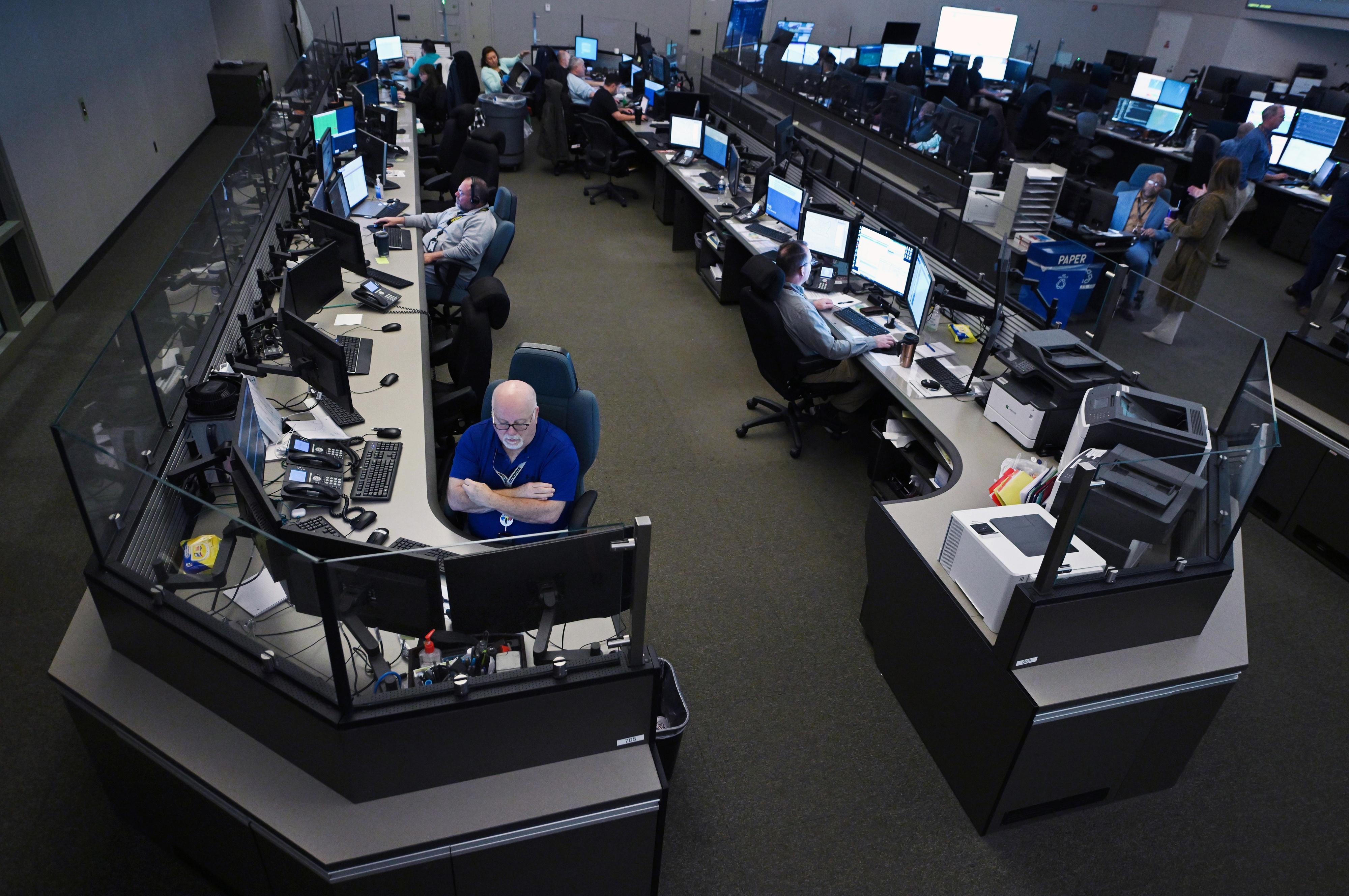
A nationwide FAA ground stop in the United States has sent disruptions across international airline networks, with Air India warning passengers of possible delays and Cathay Pacific, Korean Air and Asiana among Asian carriers affected by the fallout. The FAA halted departing flights across the United States on Friday after communications problems affected air traffic control centers, before reopening the airspace at 8:15 p.m. Eastern Time. Thousands of cancellations and delays left aircraft and crews out of position, creating knock-on effects that continued into Saturday even after the nationwide restriction was lifted. U.S. officials said there was no evidence of a cyberattack and linked the breakdown to overloaded routers and aging air traffic control infrastructure.
WASHINGTON The effects of an extraordinary nationwide shutdown of departing flights across the United States spread deep into international aviation schedules on Saturday, with Air India, Cathay Pacific and major South Korean carriers warning of delays and disrupted operations as airlines struggled to recover from an hours-long failure in the Federal Aviation Administration’s air traffic communications network. The FAA lifted the nationwide ground stop at 8:15 p.m. Eastern Time on Friday, November 13, after more than four hours of severe disruption, but the reopening did not immediately restore normal travel. Thousands of flights had already been canceled or delayed, aircraft and flight crews were left out of position across the United States, airport gates had filled with arriving planes, and long-haul carriers in Asia were forced to adjust departures many hours after the original technical failure occurred.
Air India advised passengers traveling to and from the United States to expect possible disruptions and urged customers to check the latest status of their flights before leaving for the airport. The warning reflected the particular vulnerability of long-haul international schedules to a shutdown inside the United States because a departure delayed in New York, Chicago, San Francisco or another American gateway can affect the same aircraft’s return service to Asia many hours later. Even after the FAA reopened U.S. airspace, Air India said it was continuing to monitor developments, as the airline and its passengers faced the possibility of consequential delays caused by aircraft rotations, crew duty limits and congested airports rather than by a continuing nationwide ban on departures.
Cathay Pacific separately confirmed that two of its flights departing the United States on November 13, CX807 and CX879, were affected by the restrictions. The Hong Kong carrier said affected passengers were being provided with overnight hotel accommodation and warned that delays could continue on some services as airlines worked with air traffic controllers and airport authorities to clear the congestion created by the ground stop. Cathay said its remaining U.S. flights were operating as scheduled at the time of its latest update, but it urged passengers to monitor their flight status before traveling to the airport, illustrating how the disruption had moved from an immediate nationwide shutdown into a more complicated recovery involving individual airports and airline networks.
The consequences were also visible in South Korea, where U.S.-bound flights from Incheon International Airport were delayed by roughly two hours on Saturday morning. Flights serving New York, Atlanta and Boston were among those affected as South Korean airlines responded to restrictions and instructions connected to the disruption in the United States. Korean Air and Asiana Airlines initially faced possible cancellations on some routes before revising their plans after the FAA reopened the airspace. Korean Air services to Atlanta and other U.S. destinations were prepared for delayed departures, while Asiana moved to operate a New York service that had earlier been expected to be canceled. South Korean aviation officials said airlines were adjusting U.S.-bound departures in response to requests associated with the American air traffic control disruption.
The international ripple effects emerged from one of the most serious failures of the U.S. air traffic control system in years. The FAA issued the nationwide ground stop at approximately 3:54 p.m. Eastern Time on Friday after communications problems affected air route traffic control centers responsible for managing aircraft moving between airports across the country. Flights already airborne were allowed to continue and land safely, but aircraft waiting at airports were prevented from departing. At the moment the nationwide restriction was imposed, more than 4,000 aircraft were already in the air heading toward U.S. destinations, creating a complicated situation in which controllers had to continue managing arriving traffic while the flow of new departures was effectively frozen.
Transportation Secretary Sean Duffy said the technical problems had begun shortly before the nationwide order and involved instability in the FAA’s communications and radar-related infrastructure. According to Duffy, network switches and routers became overloaded with data and began producing inconsistent information, prompting authorities to shut down departures as a safety precaution. Officials emphasized that controllers did not completely lose radar or communications capabilities and that thousands of aircraft already in flight were able to land safely. The nationwide departure halt was imposed because the reliability of the underlying system could no longer be guaranteed at the level required for normal operations.
Homeland Security Secretary Markwayne Mullin said authorities had found no evidence that the disruption resulted from a malicious cyberattack. Officials continued investigating the precise sequence of technical events, with the government saying that older technology and overloaded routers were central to the failure. Mullin said newly introduced security patches appeared to have overwhelmed parts of the aging system, while Duffy pointed more broadly to the condition of the FAA’s legacy infrastructure. Authorities did not publicly establish that a foreign actor, deliberate attack or rogue artificial intelligence system was responsible, and officials cautioned against speculation while engineers examined the failure.
The outage rapidly became a major operational crisis. Updated flight tracking figures showed thousands of cancellations and delays across the United States, with the disruption expanding as the evening progressed. Reuters reported that more than 6,600 flights had been canceled and approximately 8,600 delayed, while additional cancellations were already appearing on later schedules as airlines attempted to reorganize their networks. Tens of thousands of travelers were left stranded, and the disruption spread outside the United States as international carriers faced restrictions on aircraft that were scheduled to fly into or depart from American airports.
The impact of a nationwide U.S. aviation shutdown can travel much farther than the airports where the original problem occurs because modern airline networks depend on tightly synchronized aircraft, crew and passenger connections. A widebody aircraft arriving several hours late from the United States may no longer have enough time to operate its scheduled return flight before a crew reaches its maximum legally permitted working hours. Passengers connecting through major hubs can miss onward services, replacement aircraft may not be available, and airport curfews in some countries can make recovery more difficult. For airlines operating long routes between Asia and North America, a delay created in the United States on Friday afternoon can therefore continue affecting schedules in India, Hong Kong, South Korea and other parts of the region well into the following day.
The international effects also underline the importance of the United States within global aviation. American airports serve as major endpoints and transfer hubs for carriers from Asia, Europe, Canada, Latin America and the Middle East, meaning a nationwide restriction can immediately affect airlines far beyond U.S. territory. Long-haul carriers plan aircraft rotations many hours in advance, and a single disrupted trans-Pacific or trans-Atlantic flight can create multiple downstream problems because the same aircraft may be scheduled for another international departure shortly after it lands. Airline recovery teams must then decide whether to delay flights, substitute aircraft, reassign crews or cancel services entirely.
The FAA said it thoroughly tested its systems before allowing departures to resume and confirmed that operations were sufficiently stable to reopen the national airspace. Duffy nevertheless warned travelers that the recovery would be gradual rather than immediate because airlines first had to deal with aircraft and crews stranded in the wrong locations. Some U.S. carriers requested additional airport-specific ground stops even after the nationwide restriction was lifted as they attempted to regain control of their schedules. The FAA’s Saturday operational plan showed that several localized restrictions remained possible or active, demonstrating that reopening the entire system did not mean individual airports had immediately returned to normal conditions.
The disruption has also renewed scrutiny of the age and resilience of the U.S. air traffic control network. The Government Accountability Office reported in 2024 that 51 of 138 FAA air traffic control systems it examined were unsustainable and another 54 were potentially unsustainable, meaning more than three-quarters of the systems reviewed raised significant concerns about their long-term viability. FAA Administrator Bryan Bedford has previously described hundreds of air traffic facilities as technological silos, with some relying on decades-old computers and communications equipment that cannot communicate seamlessly with one another. In some instances, obsolete equipment has become so difficult to maintain that replacement components have had to be sourced through unconventional channels or recreated because manufacturers no longer produce them.
Friday’s shutdown came on the same day the White House and Transportation Department sought an additional $30.1 billion from Congress for aviation modernization, including approximately $10.1 billion specifically for air traffic control improvements. Congress had already approved $12.5 billion in 2025 for modernization of communications, radar and other infrastructure, and the government says a large portion of the FAA’s older copper telecommunications network has been replaced with high-speed fiber. Officials have nevertheless acknowledged that replacing cables alone will not solve the wider problem if the architecture connecting facilities remains outdated and vulnerable to failures elsewhere in the system.
A previous disruption in September provided another warning about those weaknesses when telecommunications problems and damage to backup infrastructure caused widespread delays in the northeastern United States. That episode affected thousands of flights and demonstrated how a primary failure could become more serious when redundancy systems were themselves unreliable. The nationwide shutdown on Friday was considerably more consequential because it affected departures across the entire country rather than a particular region, making it the first nationwide ground stop since January 2023 and only the second such nationwide order since the September 11, 2001, attacks.
The January 2023 shutdown followed a failure in the FAA system responsible for distributing safety notices to pilots and disrupted more than 10,000 flights. Although the technical cause differed from Friday’s communications failure, the repeated nationwide interruptions have intensified questions about how quickly the United States can replace aging infrastructure while continuing to operate the world’s most complex air traffic network. Modernization projects are being pursued while the existing system remains in daily use, leaving aviation authorities with the difficult task of replacing critical technology without creating additional operational risks.
Government auditors have raised concerns not only about the condition of the technology but also about the planning behind the modernization program. The Government Accountability Office warned that the FAA lacked a reliable integrated schedule and comprehensive cost estimate for parts of its air traffic modernization effort. Thousands of individual project schedules were being managed without a fully coordinated master plan, increasing the possibility of delays, duplication and cost overruns. The FAA aims to complete an initial phase of the modernization effort by the end of 2028, but continuing failures have increased political pressure for faster progress.
The consequences of Friday’s shutdown were not limited to commercial aviation. Sporting organizations, charter operators and other groups traveling by air were also forced to change plans, while some passengers spent hours waiting inside terminals with little certainty about when they would be able to leave. Airlines were required to manage not only the initial cancellation wave but also the complicated process of repositioning aircraft and crews once the restriction ended. For international passengers, particularly those beginning journeys thousands of miles away, the uncertainty meant that a flight still displayed as scheduled could later be delayed if its inbound aircraft or operating crew had been caught in the U.S. disruption.
For Air India, Cathay Pacific, Korean Air, Asiana and other airlines serving the United States from Asia, the immediate priority has been to stabilize schedules while avoiding unnecessary additional disruption. Advising passengers to check flight status before traveling to airports has become particularly important because the network is recovering at different speeds in different cities. An airline may be able to operate normally from one U.S. gateway while facing congestion, crew shortages or aircraft-positioning problems at another, meaning the effect on individual passengers can vary considerably even when the nationwide ground stop itself has ended.
The disruption also carries financial consequences for airlines. Cancellations and long delays can generate accommodation, meal, staffing and repositioning costs while reducing aircraft utilization and disrupting revenue-generating schedules. International airlines may need to house passengers overnight or move them onto later flights, while displaced crews can require replacement staff or additional rest before they are legally permitted to fly. Those costs can multiply rapidly when a disruption affects an entire national system rather than one airport or region.
What remains unresolved is the precise technical chain that caused the FAA’s network to fail on such a broad scale and whether the same weakness could trigger another nationwide disruption before modernization is completed. Officials have identified overloaded routers and legacy communications infrastructure as central elements, but investigators still have to establish why the system became overwhelmed and whether changes in configuration, security updates or network design made the failure more likely. The absence of evidence of a cyberattack has reduced immediate security concerns, but it has also sharpened attention on the possibility that the outage was caused by weaknesses within the system itself.
For travelers, the immediate situation is more straightforward but still uncertain. The United States has reopened its airspace, and major Asian airlines are operating or attempting to operate their U.S. schedules, but residual delays can continue as aircraft and crews return to their intended positions and American airports clear the backlog accumulated during the shutdown. Passengers flying between Asia and the United States have been advised to monitor airline notifications closely and confirm their flight status before beginning their journeys, particularly where itineraries include connections through heavily affected U.S. hubs.
The larger significance of the disruption will extend beyond the passengers stranded on Friday and Saturday. The episode has exposed how a technical failure inside the United States can move rapidly through global aviation, reaching airline schedules in India, Hong Kong and South Korea within hours and forcing carriers thousands of miles from the original outage to reorganize operations. It has also strengthened the argument that U.S. air traffic control modernization is not solely a domestic infrastructure issue, because failures in the American system can directly affect international airlines, passengers and airport networks across multiple continents.
As airlines work through the backlog, attention will increasingly shift from the immediate recovery to the FAA’s investigation and the political debate over replacing the technology that failed. The ground stop has ended, but the questions raised by it remain unresolved: whether the existing network can reliably withstand increasing traffic and data demands, how quickly modernization can be completed, and whether enough redundancy exists to prevent another technical problem from developing into a nationwide aviation shutdown. For Air India and other Asian carriers, the immediate test is restoring normal U.S. schedules; for American aviation authorities, the more difficult challenge is demonstrating that Friday’s breakdown will not become a recurring feature of an increasingly strained air traffic system.