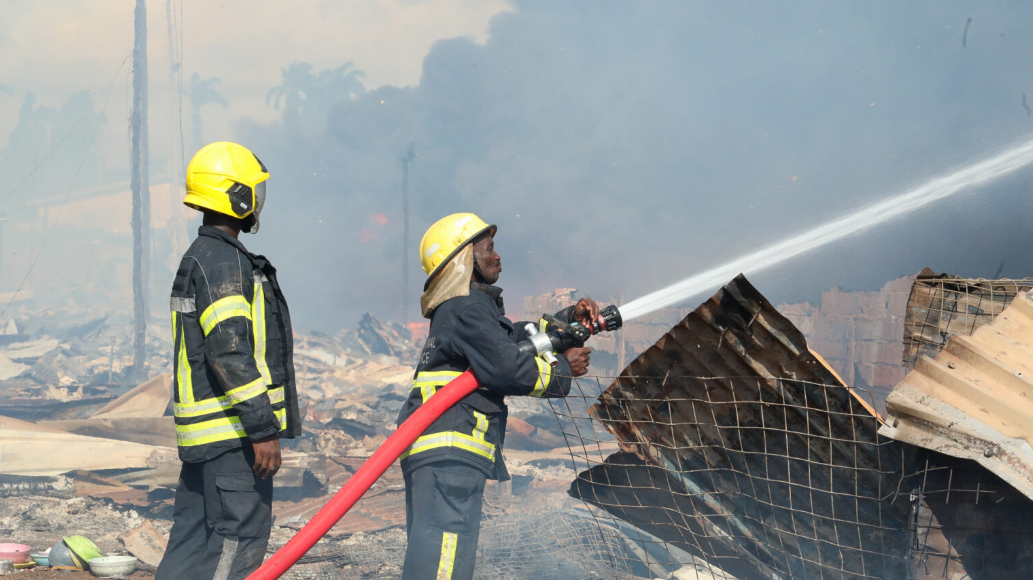

FAMILY OF FOUR INCLUDING THREE WEEK OLD BABY KILLED IN WESTERN REGION HOUSE FIRE
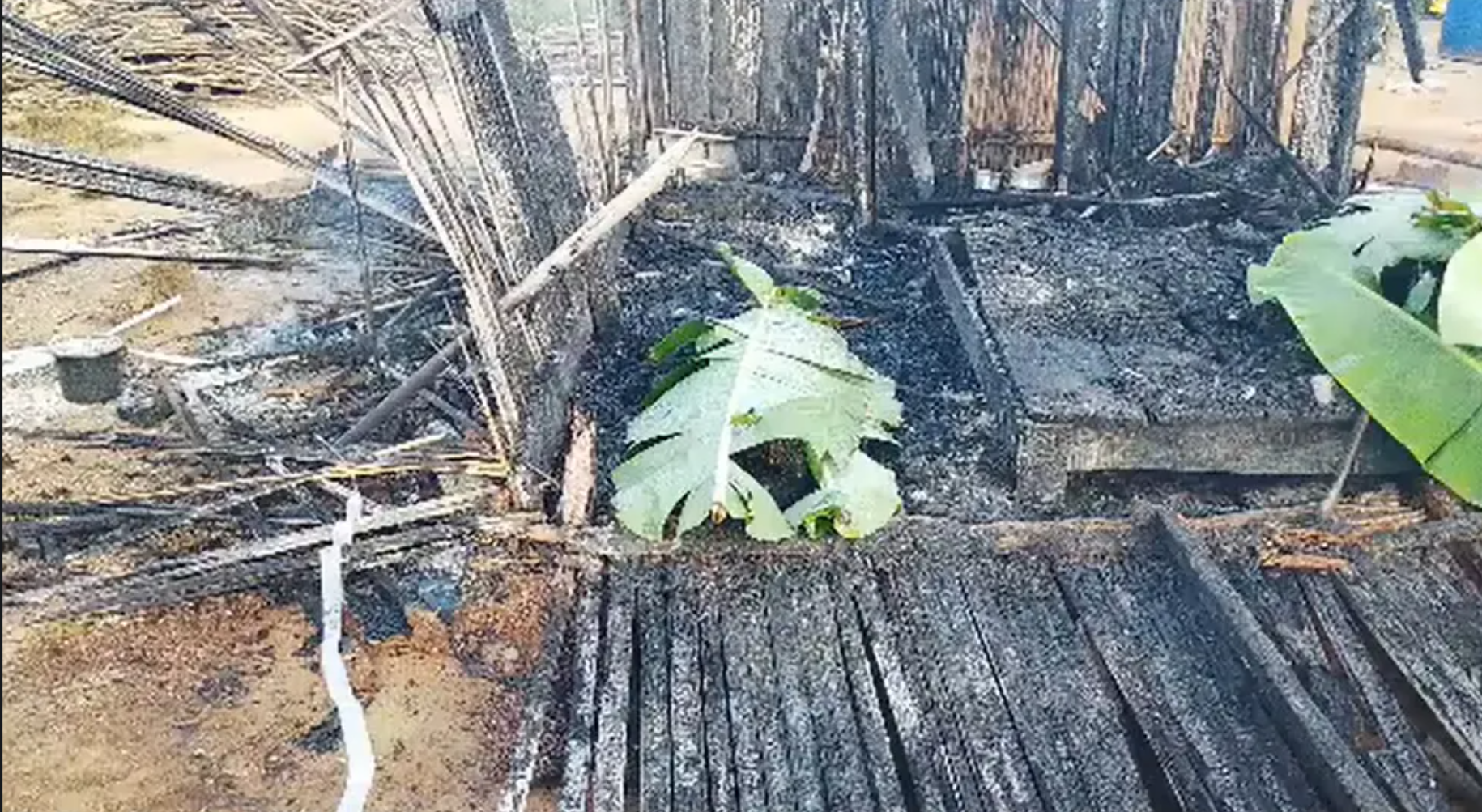
A family of four, including a three-week-old baby and a four-year-old child, has died in a devastating house fire at Apemanim No. 2 in the Ahanta West Municipality of Ghana's Western Region. The fire broke out at about 2 a.m. on Thursday, October 1, while the family was reportedly asleep. The victims have been identified in local reports as 23-year-old Kwesi, his wife Maa Abena, their four-year-old child and their three-week-old baby. Residents attempted to rescue the family and extinguish the blaze, but the fire spread rapidly and all four occupants were trapped inside. The cause of the fire has not yet been established and investigations are underway.
A family of four, including a three-week-old baby and a four-year-old child, has died after a fire engulfed their home at Apemanim No. 2 in the Ahanta West Municipality of the Western Region.
The fire reportedly broke out at about 2 a.m. on Thursday, October 1, while the family was asleep.
Local reports identified the adult victims as 23-year-old Kwesi and his wife, Maa Abena.
Their two children, a four-year-old and a baby only three weeks old, also died in the blaze.
Residents said they attempted to rescue the family after noticing the fire, but the flames spread too quickly for them to reach those trapped inside.
RESIDENTS TRIED TO SAVE THE FAMILY
Eyewitness accounts indicate that people living nearby rushed to the house after smoke and flames were noticed.
Some residents fetched water and attempted to contain the blaze.
Others tried to gain access to the burning structure.
One eyewitness said a resident used a stick to disconnect an electricity line as efforts were made to reach the family.
Despite those attempts, rescuers were unable to save the four occupants.
The intensity of the fire reportedly made it impossible for residents to enter the building safely.
FAMILY WAS TRAPPED INSIDE
The victims were reportedly asleep when the fire began.
That timing may have reduced their ability to escape before the flames spread through the house.
Nighttime residential fires can become particularly dangerous because occupants may not notice smoke until escape routes are already blocked.
In this case, witnesses said the fire spread rapidly through the building.
By the time residents gathered and attempted a rescue, the family remained trapped inside.
THE VICTIMS
Local media have identified the father as Kwesi, aged 23.
His wife was identified as Maa Abena.
Their older child was four years old.
The youngest was only three weeks old.
The age of the newborn has made the tragedy particularly devastating for residents of the community.
The family reportedly lived together in the affected house before the fire destroyed the property.
CAUSE OF FIRE STILL UNKNOWN
Authorities have not yet announced what caused the blaze.
No official finding has established whether the fire resulted from an electrical fault, cooking equipment, an open flame or another source.
Speculation about the cause would therefore be premature.
Investigators are expected to examine the burned structure and speak with witnesses as they work to determine how the fire started.
BODIES TAKEN TO MORTUARY
The remains of the four victims have been transported to a mortuary.
Authorities are expected to continue investigations into the circumstances surrounding the deaths.
The process may include examination of the fire scene and assessment of electrical installations and other possible ignition sources.
Further information from the Ghana National Fire Service or police may help establish the cause.
COMMUNITY LEFT IN SHOCK
The deaths have shocked residents of Apemanim No. 2.
The loss of an entire household in a single incident can have a profound effect on a small community.
Neighbors who tried to help were confronted with a fire they could not control.
Eyewitnesses described desperate attempts to extinguish the flames before discovering that the family could not be saved.
WHY NIGHTTIME FIRES ARE ESPECIALLY DANGEROUS
House fires occurring in the early hours of the morning can be particularly deadly.
People who are asleep may not smell smoke or hear signs of danger immediately.
Smoke can also cause confusion, disorientation and loss of consciousness before occupants are able to escape.
If a home has limited exits, locked security barriers or narrow escape routes, the danger can increase further.
That is why fire safety experts often recommend working smoke alarms in sleeping areas and clearly accessible exits.
SMOKE CAN KILL BEFORE FLAMES REACH VICTIMS
In many residential fires, smoke inhalation is as dangerous as direct contact with flames.
Burning household materials can release toxic gases.
Dense smoke can make it difficult to see doors or windows, especially in darkness.
People may become disoriented while attempting to escape.
Investigators will need to determine the precise cause of death in this case if a formal postmortem examination is conducted.
FIRE SAFETY REMAINS A SERIOUS PUBLIC ISSUE
Fatal residential fires are a recurring concern in Ghana.
Homes may contain overloaded electrical systems, aging wiring, cooking gas cylinders and highly combustible materials.
In some communities, emergency vehicles can also struggle to reach burning houses because of narrow roads or poor access.
The circumstances of the Apemanim fire have not yet been fully established, so none of those factors should automatically be assumed to have caused this incident.
But the tragedy highlights the importance of household fire preparedness.
EARLY WARNING CAN SAVE LIVES
Smoke alarms are among the simplest tools for reducing deaths in residential fires.
They can alert sleeping occupants before smoke and flames become overwhelming.
In many homes, however, smoke detectors remain uncommon.
Fire safety education also encourages families to identify more than one possible exit and to avoid obstructing doors and windows.
During emergencies, even a few additional seconds can determine whether occupants escape.
ELECTRICAL SAFETY WILL LIKELY FORM PART OF THE INVESTIGATION
Electrical faults are frequently investigated after unexplained house fires.
Authorities may examine wiring, sockets, appliances and power connections.
That does not mean electricity has been identified as the cause in this case.
One eyewitness account that a resident disconnected an electricity line describes an emergency response after the fire had already been noticed.
It should not be treated as evidence that electricity caused the blaze.
GAS AND COOKING EQUIPMENT MAY ALSO BE EXAMINED
Investigators may also consider cooking appliances, gas cylinders or other potential ignition sources.
Again, there is currently no evidence publicly establishing any of these as the cause.
Proper investigation is necessary before drawing conclusions.
A fire scene can contain many damaged items, and determining where flames first started often requires technical examination.
IMPORTANCE OF OFFICIAL FIRE INVESTIGATION
Fire investigators typically look for the point of origin of a blaze.
They assess burn patterns and damaged electrical equipment.
They may also review witness accounts about smells, sounds or visible smoke before flames became widespread.
That process can help determine whether a fire was accidental or whether further investigation is required.
Until those findings are available, reporting should remain limited to confirmed facts.
EMERGENCY RESPONSE QUESTIONS MAY FOLLOW
The tragedy could also lead to questions about how quickly emergency services were notified and how long it took firefighters to reach the area.
There is not yet sufficient confirmed information to assess the emergency response timeline.
Residents' attempts to fight the fire suggest the blaze had already become severe before the family could be reached.
Any assessment of response times should wait for official information.
CHILDREN ARE PARTICULARLY VULNERABLE IN HOUSE FIRES
Young children face additional risks during fires.
They may be unable to understand instructions or escape without adult assistance.
A three-week-old baby would have been entirely dependent on adults for evacuation.
A four-year-old child would also likely have needed help to leave a smoke filled or burning house.
The presence of two very young children would therefore have made escape even more difficult once the fire spread.
COMMUNITY SUPPORT MAY BE NEEDED
The deaths leave extended family members and neighbors dealing with sudden loss.
Community leaders, religious organizations and local authorities may become involved in supporting surviving relatives.
Funeral arrangements have not yet been publicly detailed.
The immediate focus remains on establishing what caused the fire and completing the necessary investigations.
A TRAGEDY THAT UNDERLINES PREVENTION
Not every house fire can be prevented.
But many deaths can be reduced through early warning, safer electrical installations and clear evacuation routes.
Households should avoid overloading electrical sockets.
Damaged cables should be replaced rather than repaired temporarily.
Gas cylinders and cooking equipment should be checked regularly.
Children should also be taught simple emergency procedures as they become old enough to understand them.
AUTHORITIES MUST ESTABLISH WHAT HAPPENED
The most important next step is determining the cause.
A proper investigation can provide the family and community with answers.
It can also reveal whether there are broader safety lessons that could prevent another tragedy.
If an electrical installation failed, that would require one type of response.
If another factor caused the fire, authorities may need to issue different safety advice.
Evidence, not speculation, should guide that process.
WHAT HAPPENS NEXT
Investigators are expected to continue examining the house and gathering witness statements.
The Ghana National Fire Service may later release its findings on the origin and cause of the blaze.
Police may also become involved if the investigation identifies circumstances requiring further inquiry.
For now, the confirmed facts are devastating.
Four members of one family died.
Two of them were children.
One was only three weeks old.
Their home was consumed by fire while they were reportedly sleeping.
And a community in Ghana's Western Region is now waiting for answers about how an ordinary night ended in the loss of an entire family.