

FEAR OF ANOTHER WAR GRIPS TIGRAY AS INTERNET AND PHONE NETWORKS GO DARK
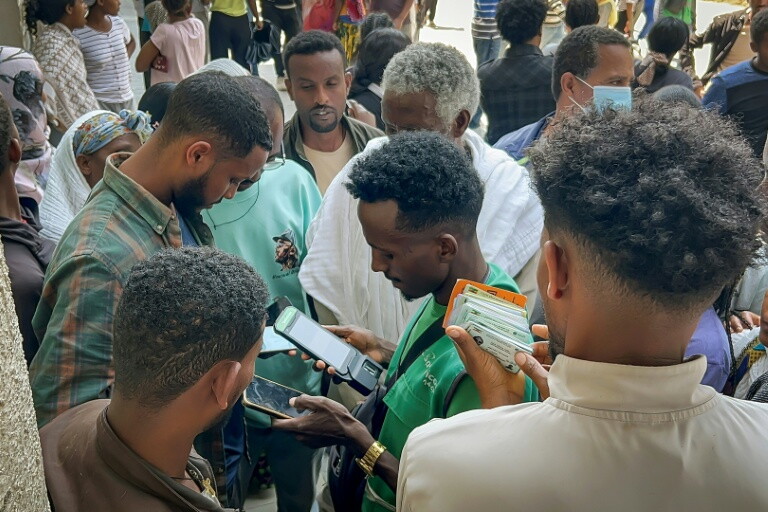
Internet and telephone networks have been disrupted across Ethiopia's Tigray region as renewed fighting triggers fears of a return to wider war. Residents have rushed to withdraw cash and stock up on food and other essentials as the latest escalation spreads beyond Tigray into neighboring regions.
Internet and telephone networks have been disrupted across Ethiopia's northern Tigray region as a sharp escalation in fighting fuels fears that the country could be sliding back toward a wider conflict four years after a peace agreement ended one of Africa's deadliest recent wars.
Internet monitoring organization NetBlocks said on Friday that network data showed a significant disruption in northern Ethiopia consistent with reports of a telecommunications blackout in Tigray.
The cause of the disruption was not immediately clear.
Representatives of Prime Minister Abiy Ahmed's government and Tigray's regional ruling party, the Tigray People's Liberation Front, did not immediately respond to Reuters requests for comment about the outage.
But the communications disruption comes at an increasingly dangerous moment.
The latest fighting represents the most serious escalation between federal forces and Tigrayan forces since the devastating 2020–2022 war.
Tigrayan forces have seized three local airports and, alongside allied groups, launched operations into neighboring Afar and Amhara regions this week.
Competing accounts have emerged over who initiated the latest escalation.
Tigrayan forces have accused the federal government of launching a major offensive involving troops, mechanized units and drones.
Federal government figures and their allies have accused Tigrayan forces of initiating the attacks.
Those competing claims have not been independently resolved.
What is increasingly clear is the impact on civilians.
Residents in Tigray rushed to shops on Wednesday and Thursday to purchase food and other basic supplies as fears spread that renewed fighting could once again isolate the region.
People also moved to withdraw cash.
Residents told Reuters that shelves were being emptied as panic-buying intensified.
The communications disruption has added to those fears because of what happened during the previous war.
Between 2020 and 2022, Tigray was largely cut off from the outside world as telephone and internet connections were severed and access to cash, food and medicines became severely restricted.
The conflict produced widespread humanitarian suffering and displaced huge numbers of people.
The memory of that period remains fresh across the region.
For many residents, the disappearance of communications services is therefore being viewed as more than a technical problem.
It is a warning sign associated with one of the darkest periods in Tigray's recent history.
A Tigrayan source living abroad told Reuters that attempts to reach people inside the region had failed, while contacts in Addis Ababa were also struggling to communicate with relatives in Tigray.
Separate reporting from AFP confirmed connection difficulties.
NetBlocks said its network measurements showed a subnational internet disruption in northern Ethiopia corresponding with reports of a telecoms blackout in Tigray.
The worsening security situation follows months of rising tension.
The Pretoria Peace Agreement signed in November 2022 formally ended the two-year conflict between Ethiopia's federal government and the TPLF.
But several elements of the agreement were never fully implemented, while political divisions inside Tigray and disputes involving neighboring regions continued.
Sporadic clashes and drone strikes subsequently returned.
The political landscape has also changed dramatically.
Earlier this week, seven Ethiopian armed groups announced the creation of the Ethiopian Peoples' Forces Alliance for Survival, a new coalition opposing Abiy's federal government.
The alliance includes the TPLF as well as armed groups from several other parts of Ethiopia.
Some of those organizations previously fought on opposing sides during the earlier war, demonstrating how significantly Ethiopia's political and military alliances have shifted since the Pretoria agreement.
The Ethiopian government has accused the alliance of receiving support from neighboring Eritrea.
Eritrea has denied supporting Ethiopian armed groups.
The latest fighting has now spread beyond Tigray.
Heavy clashes have been reported in parts of neighboring Amhara and Afar, raising fears that what began as renewed confrontation involving Tigray could develop into a broader national conflict.
Air travel has also been disrupted.
The seizure of airports in Tigray and deteriorating security conditions have affected flights into the region.
International concern is growing.
The Intergovernmental Authority on Development has called for hostilities to stop and urged the parties to return to dialogue.
The United Nations has also expressed concern about the deteriorating security situation.
The immediate fear among civilians, however, is that the pattern of the previous war could begin repeating itself.
Communications have already been disrupted.
Residents are stocking up on supplies.
Cash withdrawals have increased.
Fighting is spreading geographically.
And accusations between the opposing sides are becoming increasingly severe.
None of those developments alone establishes that Ethiopia is returning to a conflict on the scale of the 2020–2022 war.
But together they explain why anxiety is spreading rapidly across Tigray.
For residents who experienced years of violence, displacement, shortages and isolation, the loss of internet and telephone services carries a particularly disturbing significance.
Four years after a peace agreement was supposed to bring an end to the conflict, the fear now gripping Tigray is that the silence on their phones could be signalling the beginning of something much bigger.