FIFA SUSPENDS EGYPT COACH HOSSAM HASSAN FOR THREE MATCHES OVER WORLD CUP REFEREE CRITICISM
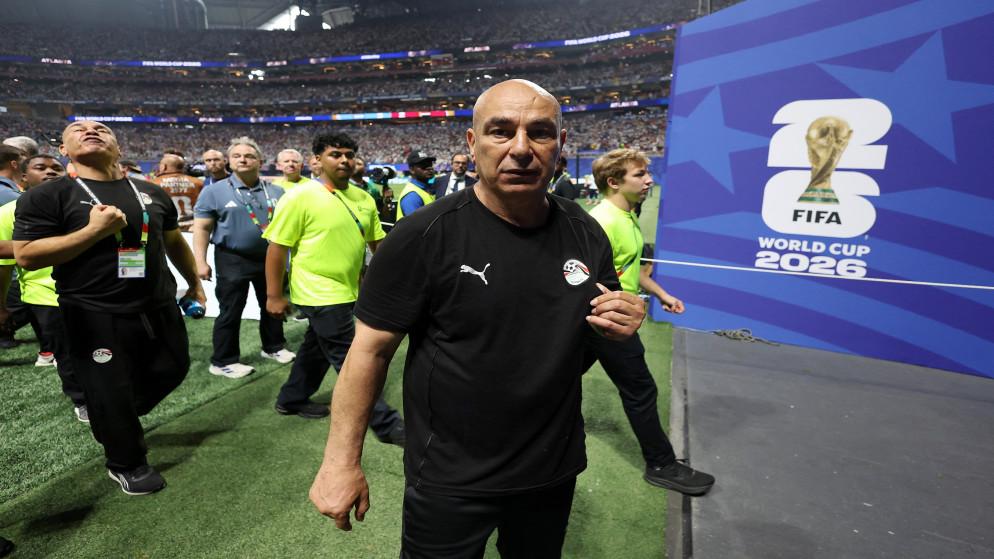
FIFA has suspended Egypt national team coach Hossam Hassan for three matches following his public criticism of referee François Letexier after Egypt’s 3-2 World Cup round-of-16 defeat to Argentina. Egypt national-team director Ibrahim Hassan has also received a three-game suspension, while forward Mostafa Zico has been banned for five matches. The Egyptian Football Association has asked FIFA for the detailed legal reasoning behind the sanctions and is considering an appeal.
FIFA has handed Egypt national team head coach Hossam Hassan a three-match suspension following comments he made about refereeing after Egypt’s dramatic 3-2 defeat to Argentina in the round of 16 of the 2026 FIFA World Cup. The sanction was confirmed by the Egyptian Football Association, which said FIFA’s Disciplinary Committee had also suspended national team director Ibrahim Hassan for three matches and forward Mostafa Zico for five. The EFA has requested the detailed written reasons behind the decisions and says it is studying its legal position before deciding whether to lodge formal appeals.
The disciplinary case stems from Egypt’s July 7 World Cup elimination in Atlanta, where Hossam Hassan strongly criticised French referee François Letexier after Argentina recovered from a 2-0 deficit to win 3-2. Egypt were furious over a goal by Mostafa Zico that was ruled out after a VAR review because Marwan Attia had been adjudged to have stepped on Lisandro Martínez during the buildup. The Pharaohs were also unhappy after Mohamed Salah went down inside the penalty area late in the match without a penalty being awarded, only for Argentina to score the decisive goal shortly afterwards.
Hassan said after the match that Egypt had suffered an injustice and openly challenged the fairness of the officiating. Reuters reported at the time that he said he was not convinced by the result or by the way the game had unfolded and accused the referee of making decisions that harmed his team. He also suggested the tournament was being tilted towards Argentina, an allegation that placed his criticism beyond an ordinary complaint about individual decisions and into a direct challenge to the integrity of the officiating process.
Egypt’s Football Association went further the following day by submitting a formal complaint to FIFA and asking the governing body to investigate what it described as double standards during the match. The federation also sought the removal of Letexier and his officiating team from the remainder of the World Cup, arguing that several decisions had materially affected the outcome of the tie. FIFA did not accept Egypt’s allegations of improper bias, and the governing body’s refereeing leadership subsequently defended the independence of the match officials.
Pierluigi Collina, FIFA’s refereeing chief, rejected claims that the match officials had been influenced in favour of Argentina. He said mistakes and controversial decisions can occur during major tournaments but warned that allegations questioning referees’ integrity can have serious consequences, including threats against match officials and their families. Collina said constructive criticism of decisions is part of football but argued that claims of outside influence or deliberate favouritism require evidence and should not be made lightly.
The FIFA disciplinary process continued for several months after the World Cup. The Egyptian Football Association said earlier in October that it was following proceedings opened against Hossam Hassan, Ibrahim Hassan and Zico and would submit the necessary legal responses within FIFA’s deadlines. The federation stressed that it respected FIFA regulations and fair-play principles while reserving its right to defend the trio through the governing body’s official legal channels.
The final sanctions were then communicated to the Egyptian federation, with Hossam Hassan receiving three matches, Ibrahim Hassan receiving the same punishment and Zico receiving a five-match ban. Reuters said Zico’s longer suspension followed a post-match interview in which he was accused of insulting the referee, while Hossam Hassan was punished for public criticism blaming refereeing decisions for Egypt’s World Cup elimination.
The Egyptian Football Association has not accepted the disciplinary outcome without further examination. In its official statement, the federation said it had asked FIFA’s Disciplinary Committee to provide the full reasons and legal basis for the sanctions so that its lawyers could evaluate whether appeals should be filed. That means the penalties currently stand, but the EFA may still attempt to challenge them through the appeal mechanisms available under FIFA regulations.
The suspension could affect Egypt’s upcoming competitive programme, depending on which fixtures FIFA confirms as counting toward the sanction. Reuters reported that Hassan could miss upcoming Africa Cup of Nations qualifiers, including Egypt’s November fixtures, if the bans are applied to those matches. The EFA has not yet publicly announced the exact sequence of fixtures against which each suspension will be served, making it important not to state prematurely that a particular match has definitely been removed from Hassan’s schedule until FIFA’s implementation is confirmed.
For Egypt, the timing is significant because Hossam Hassan remains firmly in charge of the national team. FIFA and CAF both continue to list him as Egypt’s men’s national coach, and he participated earlier this month in CAF’s post-World Cup technical discussions alongside other leading African coaches. His three-match suspension is therefore a disciplinary restriction rather than a dismissal or change of leadership.
Hassan has been Egypt’s national team coach since February 2024, when he replaced Rui Vitória following Egypt’s disappointing Africa Cup of Nations campaign in Côte d’Ivoire. The EFA appointed his twin brother Ibrahim Hassan as national team director as part of the same leadership structure, creating a coaching and administrative partnership that has remained in place through qualification campaigns and the 2026 World Cup.
The 2026 World Cup represented a historic tournament for Egypt despite the controversial ending. Reuters reported that Egypt progressed beyond the group stage for the first time in its World Cup history and also recorded its first victory at the tournament before eventually meeting defending champions Argentina in the last 16. That progress raised expectations around Hassan’s team and made the manner of the elimination particularly emotional for the coaching staff, players and supporters.
Against Argentina, Egypt appeared close to recording one of the biggest shocks of the tournament. They built a 2-0 advantage before Cristian Romero pulled one back in the 79th minute, Lionel Messi equalised four minutes later and Enzo Fernández scored the winner in stoppage time. The collapse transformed what had looked like a historic victory into one of Egypt’s most painful World Cup exits and provided the background to the angry post-match comments that later triggered FIFA’s disciplinary process.
The disputed VAR decision involving Zico became one of the central moments in Egypt’s complaint. With Egypt already ahead, Zico appeared to score another goal, but VAR intervened and the goal was cancelled after officials reviewed an earlier challenge by Marwan Attia on Lisandro Martínez. The decision meant Egypt were unable to extend the lead further at a time when Argentina were struggling to break them down.
The late penalty incident involving Salah became equally controversial because Argentina scored the winner almost immediately afterwards. Egypt argued that Salah had been fouled inside the penalty area and believed the incident should at least have received a more extensive VAR review. Officials allowed play to continue, Argentina counterattacked and Fernández eventually scored the decisive header.
Hassan’s reaction was unusually strong for a World Cup coach. He did not limit his criticism to saying the referee made mistakes but suggested that the tournament environment favoured Argentina and questioned whether match officials had been placed under pressure. Those remarks appear to have been central to FIFA’s disciplinary concern because they challenged not simply the quality of refereeing but the integrity and independence of the officiating structure.
FIFA has increasingly taken a strict approach toward public allegations against referees, particularly claims that officials are deliberately biased or being influenced from outside the match. The governing body argues that such statements can undermine trust in competitions and expose referees to abuse. At the same time, coaches and national associations maintain the right to use official complaint channels when they believe serious mistakes have affected results.
The Egyptian case therefore illustrates the line between formal protest and public accusation. The EFA was entitled to submit a complaint about the match and did so, but FIFA’s disciplinary action focuses on the subsequent conduct and statements of specific individuals. The existence of a complaint does not by itself prove the officiating was improper, while the suspension of Hassan does not establish that every disputed call during the Argentina match was correct.
That distinction is important because refereeing controversy around the 2026 World Cup extended beyond Egypt’s match. Reuters reported during the tournament that FIFA’s expanded use of video technology generated repeated debate over consistency and the growing number of VAR interventions. Critics questioned whether technology was improving decision-making or creating more controversy by expanding the range of incidents that could be reviewed.
Egypt’s frustration therefore developed within a wider tournament conversation about officiating and VAR, but Hassan’s allegations were more direct than ordinary criticism of the system. FIFA’s response suggests the organisation wants to preserve room for tactical or technical criticism while drawing a firmer boundary around claims that match officials are intentionally favouring one team.
The sanctions against Hassan, Ibrahim Hassan and Zico also show that disciplinary responsibility extends across the technical staff and players. Coaches may face punishment for press-conference comments, team officials can be sanctioned for their own conduct and players can receive separate penalties for public insults or abusive language. Zico’s five-game suspension is the longest of the three and could remove him from national-team selection for a significant period if served entirely in competitive international fixtures.
The combined punishments amount to 11 matches across the three individuals, although each suspension applies separately rather than as a collective team sanction. Egypt itself has not been suspended from competitions, stripped of results or fined out of future tournaments as part of the disciplinary announcement covered by Reuters and the EFA.
The EFA’s request for the reasoning behind the decisions will now be important because the detailed FIFA judgment should identify the specific disciplinary provisions applied and explain why three matches were considered appropriate for the Hassan brothers while Zico received five. That document may also clarify whether aggravating or mitigating factors were considered and what appeal deadlines apply.
If the Egyptian federation proceeds with an appeal, it could seek a reduction, suspension or cancellation of the penalties. FIFA appeals are governed by the organisation’s disciplinary rules, and any further challenge would depend on whether the federation can demonstrate procedural errors, disproportionality or another recognised basis for overturning the decision.
For Hossam Hassan personally, the case adds another chapter to a career defined by intense competitiveness. As a player, he was one of Egypt’s most prolific and celebrated strikers, representing the national team for many years and later moving into coaching. His emotional touchline style has remained part of his identity as a manager, and the World Cup incident reflected the same combative personality that has often characterised his football career.
However, international football places strict limits on comments concerning match officials, especially when a coach questions their integrity. National team coaches are considered senior representatives of their associations, and public statements made during World Cups receive global exposure. FIFA therefore treats such remarks not only as personal opinions but as statements capable of affecting confidence in the competition.
The disciplinary action is unlikely to erase the progress Egypt made at the World Cup. The Pharaohs reached the knockout stage and challenged Argentina seriously before their late collapse, while Hassan later participated in CAF’s technical review of Africa’s World Cup performance. CAF said Africa produced a record 10 World Cup participants in 2026 and that nine reached the knockout stages, with Hassan among the coaches invited to discuss lessons from the tournament.
The suspension instead creates a practical challenge around Egypt’s immediate international fixtures. If FIFA confirms that the ban applies to upcoming AFCON qualifiers, assistants will have to manage the team from the technical area while Hassan serves the sanction. The coaching staff may still prepare the team before matches depending on the exact terms of the decision, but match-day restrictions normally prevent a suspended coach from carrying out normal bench duties.
It also means Egypt could temporarily be without both Hossam and Ibrahim Hassan in their normal match-day roles because each received a three-game suspension. That makes the punishment more operationally significant than a ban involving only one coach, as the team’s two most prominent technical and administrative leaders are affected simultaneously.
The EFA will therefore need to establish an interim match-day structure if the suspensions remain in force. That could involve delegating greater responsibility to assistant coaches and other technical staff while maintaining Hassan’s broader training and tactical influence where permitted by FIFA rules.
Mostafa Zico’s situation is even more disruptive because a player serving a five-match ban cannot simply shift responsibility to another official. Egypt would have to select other attacking options while he serves the sanction, and Reuters indicated his suspension could continue well into 2027 depending on the scheduling of eligible matches.
The federation’s legal response may therefore be motivated not only by principle but by sporting consequences. Three games can represent a substantial portion of an international qualification campaign, while five matches can remove a player from several months of national-team activity.
The timing of the FIFA announcement, more than three months after the World Cup match, also means Egypt had already moved beyond the tournament controversy operationally. Hassan remained active as coach through subsequent technical and national-team activities, making the October disciplinary decision a delayed consequence rather than an immediate post-match punishment.
That delay reflects the formal disciplinary process, during which accused parties are normally notified, given opportunities to respond and then informed of the committee’s decision. The EFA’s earlier October statement confirmed it had been preparing legal submissions before the sanctions were finalised.
The case could still evolve if Egypt appeals. Until then, FIFA’s ruling remains the operative decision: Hossam Hassan is suspended for three matches, Ibrahim Hassan for three and Mostafa Zico for five.
For supporters who remain angry about the Argentina defeat, the ruling is unlikely to settle debate about the officiating itself. Egypt’s original complaint focused on match decisions, while FIFA’s sanctions focus on the way members of the Egyptian delegation responded publicly. Those are related but legally separate questions.
FIFA refereeing chief Collina has maintained that the officials were independent and rejected suggestions of outside influence. Egypt has maintained that important decisions were incorrect and directly affected its World Cup exit. The disciplinary committee has now added a third element by deciding that some of the Egyptian reaction crossed FIFA’s disciplinary boundaries.
The safest conclusion from the available evidence is therefore not that Egypt’s refereeing complaints were proven false or proven correct, but that FIFA has punished Hassan and two other members of the delegation over the public conduct that followed the match. The EFA retains the right to challenge those sanctions through the governing body’s legal mechanisms.
For Hossam Hassan, the immediate consequence is clear. The Egypt coach who guided his country through a historic World Cup campaign will now have to serve a three-match suspension because of the comments he made after one of the most controversial and painful defeats of that campaign. Whether the ban remains exactly as issued will depend on the Egyptian federation’s next legal move.