
FORMER NPP CHAIRMAN AND EX-MINORITY LEADER SAMUEL ODOI-SYKES DIES AT 87
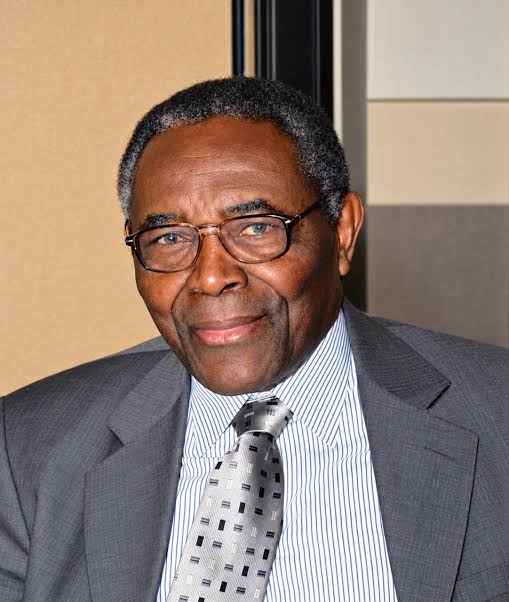
Former NPP National Chairman and former Minority Leader Samuel Arthur Odoi-Sykes has died at the age of 87. His family says he passed away on Monday, October 5. Odoi-Sykes served as MP for Ashiedu Keteke, became Minority Leader in 1980 and chaired the NPP from 1998 to 2001, including during its historic 2000 electoral victory. He was also a lawyer and career diplomat and later served as Ghana’s High Commissioner to Canada from 2001 to 2006.
Former New Patriotic Party National Chairman and former Minority Leader in Parliament Samuel Arthur Odoi-Sykes has died at the age of 87, bringing to a close a long public career that spanned teaching, diplomacy, law, parliamentary politics and senior party leadership during one of the most consequential periods in the NPP’s history.
Odoi-Sykes died on Monday, October 5, 2026, according to a statement from his family. News of his death became public on Wednesday, prompting tributes across Ghana’s political and diplomatic circles to a figure remembered for his role in opposition politics, his service in Parliament and his leadership of the NPP during the period that culminated in the party’s first presidential and parliamentary victory in December 2000.
His family described him as a distinguished lawyer, parliamentarian, diplomat and statesman whose career reflected what they called principle, courage, firm leadership and intellectual independence. Funeral arrangements have not yet been announced.
Odoi-Sykes was a former Member of Parliament for the Ashiedu Keteke constituency and rose to become Minority Leader in 1980, placing him among the prominent opposition figures of Ghana’s Third Republic. He later became one of the founding figures associated with the NPP and served as its National Chairman from 1998 to 2001, a period that ended with the party’s historic transition from opposition to government under John Agyekum Kufuor.
That period remains one of the most important chapters in the history of the NPP because the December 2000 election marked the first time the party won presidential power and a parliamentary majority. The result also represented a peaceful transfer of power between political parties under Ghana’s Fourth Republic, a development widely regarded as an important milestone in the country’s democratic consolidation.
Odoi-Sykes’ role as National Chairman placed him at the center of the party’s organization during that transition. While presidential campaigns naturally focused on Kufuor and the national ticket, party chairmen were responsible for holding together organizational structures, constituency networks, campaign discipline and internal decision-making during a politically competitive period.
His political career, however, began much earlier than the NPP’s formation. Odoi-Sykes entered Parliament after winning the Ashiedu Keteke seat in the 1979 elections and became Minority Leader the following year, serving during a brief democratic period before the military takeover of December 1981 brought the Third Republic to an end.
That experience made him part of an older generation of Ghanaian politicians whose public careers crossed military and civilian eras and who later re-emerged when multiparty constitutional politics returned in the 1990s. His later role in the NPP linked the parliamentary politics of the late 1970s and early 1980s with the democratic party system that developed after the adoption of the 1992 Constitution.
Odoi-Sykes was also a lawyer by training. He was called to the Bar at the Inner Temple in the United Kingdom before being admitted to the Ghana Bar, adding a legal career to a professional life that had already included education and public administration.
He began working as a teacher before joining Ghana’s Ministry of Information and later entering the Foreign Service in 1961. That move began a diplomatic career that took him to several major international capitals and exposed him to Ghana’s foreign relations during the early decades after independence.
His postings included assignments in India, the United States, the Soviet Union and the United Kingdom. Over the course of his diplomatic service, he held positions including First Secretary, Press Attaché, Minister-Counsellor, Deputy Ambassador to the Soviet Union and Deputy High Commissioner to the United Kingdom.
Those roles placed him inside Ghana’s diplomatic establishment during the Cold War, when newly independent African states were navigating relationships with Western governments, the Soviet bloc and the Non-Aligned Movement. Ghana’s foreign policy shifted significantly during those decades depending on the government in power, making diplomatic service a demanding environment for career officials required to represent the state across changing political periods.
Odoi-Sykes’ assignments in Moscow, London, Washington and New Delhi therefore reflected more than routine postings. They placed him in capitals central to global politics at a time when African governments were trying to protect political autonomy while seeking development assistance, trade and diplomatic support from competing international blocs.
His return to political life eventually brought him into direct parliamentary leadership, where he became known for forceful opposition politics. As Minority Leader, he operated within a legislature that lasted only a relatively short period before Ghana’s democratic experiment was interrupted again.
The later emergence of the NPP provided a new political platform for many figures associated with earlier center-right political traditions in Ghana. Odoi-Sykes became one of the people involved in building the party into a national organization capable of competing seriously for power.
The NPP contested the 1992 and 1996 elections unsuccessfully before breaking through in 2000. By the time Odoi-Sykes became National Chairman in 1998, the party was preparing for what would become its most important electoral test up to that point.
The 2000 election resulted in a presidential runoff between Kufuor and then Vice President John Atta Mills. Kufuor won the second round, ending eight years of National Democratic Congress rule under Jerry John Rawlings and producing the first electoral transfer of power between rival parties under the Fourth Republic.
For the NPP, that victory transformed the organization from a long-term opposition party into a governing party. Odoi-Sykes’ tenure as National Chairman ended in 2001, after the transition into government had taken place.
He subsequently returned to diplomatic service at the highest level when he was appointed Ghana’s High Commissioner to Canada, serving from 2001 to 2006 under the Kufuor administration. The posting capped a diplomatic career that had begun decades earlier at a much more junior level.
His service in Canada also demonstrated the unusual breadth of his career. Few public figures move from the professional diplomatic corps into parliamentary politics, then into party leadership and later back into a senior diplomatic appointment.
That versatility formed a central part of the tributes contained in the family’s announcement of his death. The family emphasized not only his political titles but also his intellectual independence and commitment to public service across several institutions.
Odoi-Sykes was born in Accra and received his education at Accra Academy before studying at the University of Ghana, the University of London and Johns Hopkins University. His academic and professional background reflected the profile of a generation of post-independence Ghanaian public servants who received training both at home and abroad before returning to serve in government.
His legal education at the Inner Temple placed him within one of the historic institutions of British legal training, while his time at Johns Hopkins expanded his exposure to international affairs and public policy.
The combination of law, diplomacy and politics would later shape the roles he took on inside Ghana’s public institutions.
His death comes at a moment when the NPP itself is going through another period of internal reorganization. The party held its National Delegates Conference in Kumasi just days before his death, electing a new national executive led by John Boadu as National Chairman and Justin Kodua Frimpong as General Secretary.
The timing provides a historical contrast between different generations of party leadership. Odoi-Sykes chaired the NPP when it was trying to end years in opposition and win power for the first time, while the current leadership is reorganizing the party ahead of future electoral contests after a different phase in its political history.
That contrast is likely to feature in party tributes because his tenure remains connected to the 2000 breakthrough, one of the defining achievements in the NPP’s organizational history.
His death also removes another prominent figure from Ghana’s generation of politicians who participated in parliamentary life before the Fourth Republic and later helped shape the modern multiparty system.
That generation included politicians, lawyers and public servants who lived through successive constitutional experiments, military governments and the eventual return to stable electoral democracy. Their careers often crossed institutional boundaries in ways less common among younger politicians whose professional lives have unfolded entirely under the Fourth Republic.
Odoi-Sykes’ career reflected that older pattern. He was not only a party politician but also a career diplomat, civil servant, teacher and barrister whose work predated the NPP itself.
His family’s description of him as intellectually independent is therefore consistent with a public life that moved through several professional environments rather than being confined entirely to partisan politics.
Although he is most closely associated today with the NPP, his earlier diplomatic work was performed as a state official rather than a party representative. That distinction is important in assessing the breadth of his public service.
His role as a diplomat required him to serve governments of different political orientations, while his later parliamentary and party roles placed him squarely within partisan competition.
The two parts of his career illustrate the distinction between professional state service and elected politics, both of which formed major chapters of his life.
Odoi-Sykes’ service as Minority Leader also carries historical significance because opposition leadership in Ghana has evolved substantially over the decades. The modern Parliament has established formal caucus systems and institutional resources for the Minority and Majority, but opposition politics during the Third Republic operated within a much younger democratic framework.
Serving as Minority Leader in 1980 therefore placed Odoi-Sykes in a role that was institutionally important but vulnerable to the political instability that ultimately ended that Parliament.
The military takeover of 1981 halted that phase of his parliamentary career, and Ghana would not return to constitutional multiparty rule until 1993.
When that return eventually came, Odoi-Sykes became part of the political class that helped rebuild party structures under the new constitutional system.
His involvement in the NPP placed him in a party whose roots drew from earlier political traditions associated with the United Party and Progress Party, but which had to establish itself as a modern organization under the Fourth Republic.
The party’s 2000 victory required years of grassroots organization, fundraising, constituency work and internal coalition-building. Odoi-Sykes’ chairmanship therefore coincided with one of the most intense organizational periods in the party’s development.
His death will likely prompt renewed attention to that history, particularly among younger NPP supporters who entered politics long after the party first came to power.
It may also prompt reflections beyond the party because the 2000 election had national democratic significance regardless of political affiliation. The peaceful transfer of power that followed helped establish the expectation that governments in Ghana could be removed through elections rather than political upheaval.
Odoi-Sykes was one of many figures who played institutional roles in that transition, and his chairmanship made him part of the leadership team responsible for guiding the NPP through it.
His subsequent appointment as High Commissioner to Canada returned him to a diplomatic environment after decades in politics. He served there until 2006, representing Ghana during a period when relations with Canada included development cooperation, trade, education and broader Commonwealth ties.
After leaving active public office, Odoi-Sykes remained part of the country’s older political and diplomatic establishment, with his name continuing to appear in discussions of NPP history and Ghana’s earlier parliamentary era.
His passing at 87 therefore represents not only the death of a former party chairman but the loss of a figure whose career stretched across several eras of Ghanaian public life.
The family said he is survived by his wife, Edith Amorkor Sykes, and four children, Cynthia Omaboe, Mavis Amoa, Vincent Sykes and Frank Sykes.
The announcement did not provide a cause of death, and no further medical details have been publicly released. In the absence of an official disclosure from the family, speculation over the circumstances should be avoided.
Funeral arrangements are expected to be announced later.
Tributes from political parties, former colleagues and diplomatic circles are likely to continue as news of his death spreads. For the NPP, those tributes are expected to focus heavily on his role during the party’s historic 2000 election victory, while wider national reflections are likely to emphasize his service in Parliament, law and diplomacy.
His career offers an unusually broad record of public service across institutions that rarely overlap in one individual’s professional life. He began as a teacher, entered public administration and the Foreign Service, trained and practiced as a lawyer, served in Parliament, led the parliamentary opposition, chaired a major political party and later represented Ghana abroad as a high commissioner.
That range is likely to define how Samuel Arthur Odoi-Sykes is remembered as Ghana’s political establishment marks his passing. His most visible partisan legacy remains his leadership of the NPP during its transition from opposition to government in 2000, but his public career began decades before that victory and extended across diplomacy, law and parliamentary service.
The immediate focus now shifts to the family’s funeral arrangements and to formal tributes expected from the NPP and other national institutions. As those statements emerge, they are likely to place Odoi-Sykes within the broader history of Ghana’s democratic development and foreign service, while recognizing a political figure whose career connected the country’s pre-Fourth Republic parliamentary politics with the party system that continues to shape Ghana today.